


























Views
Downloads
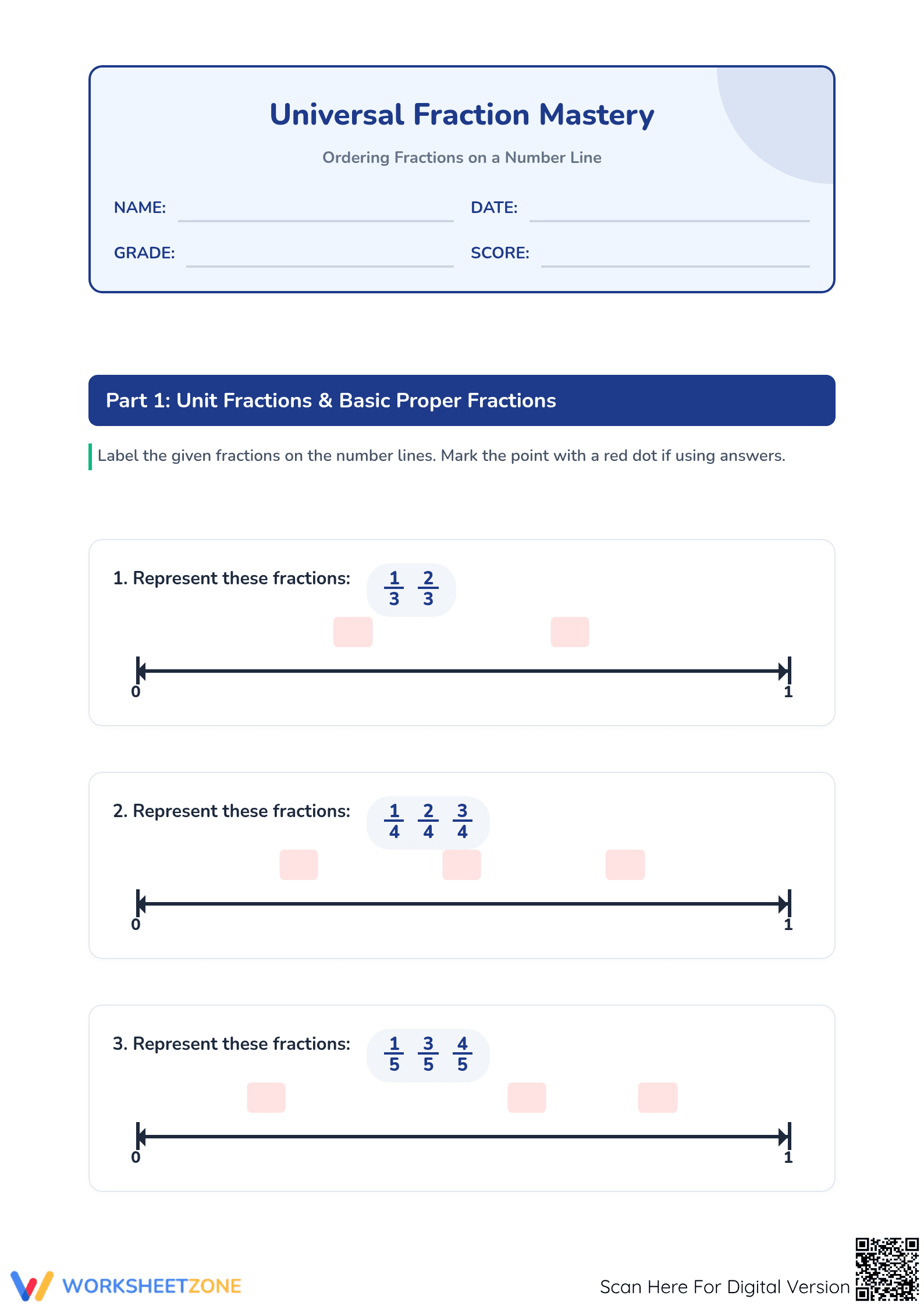
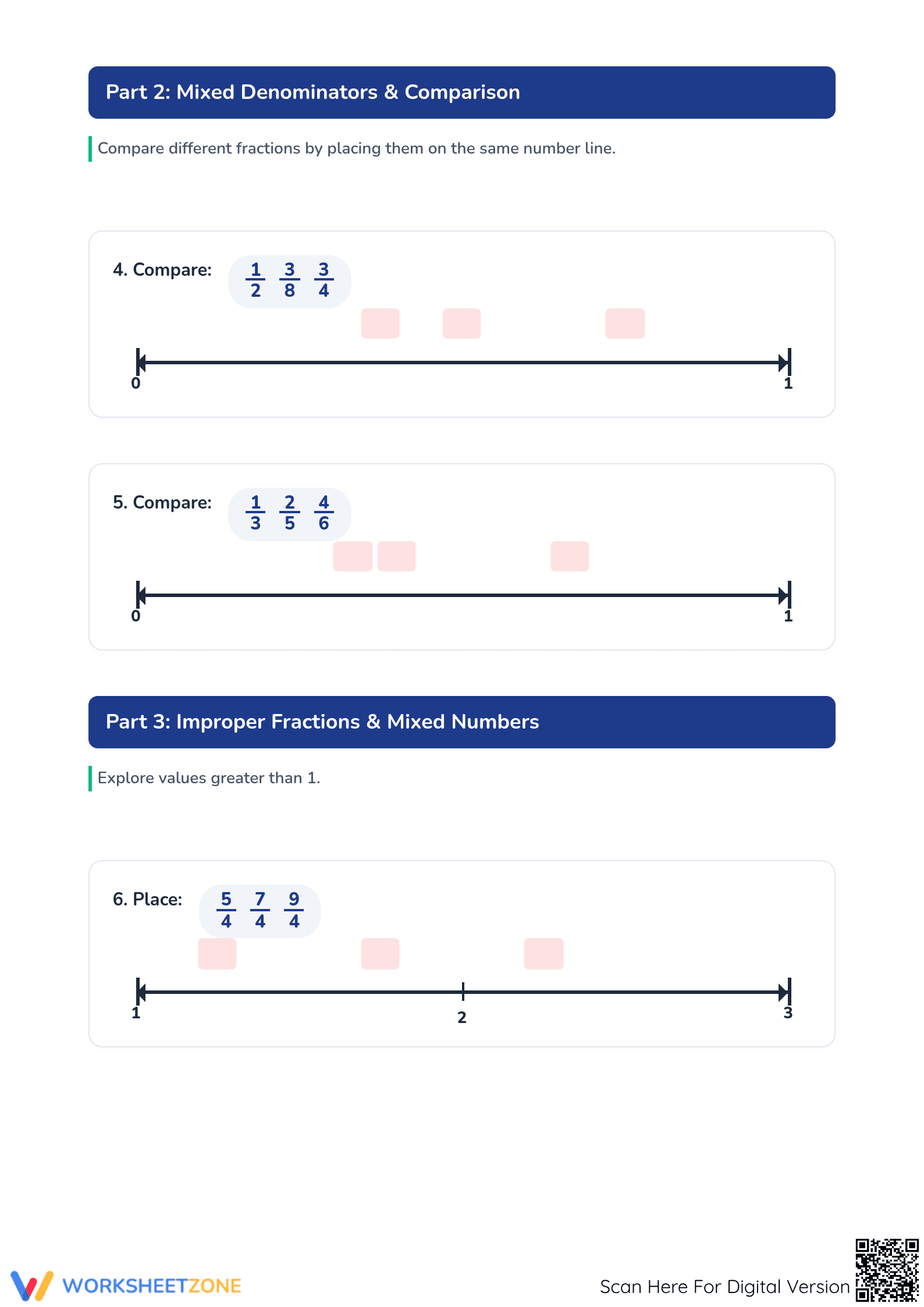
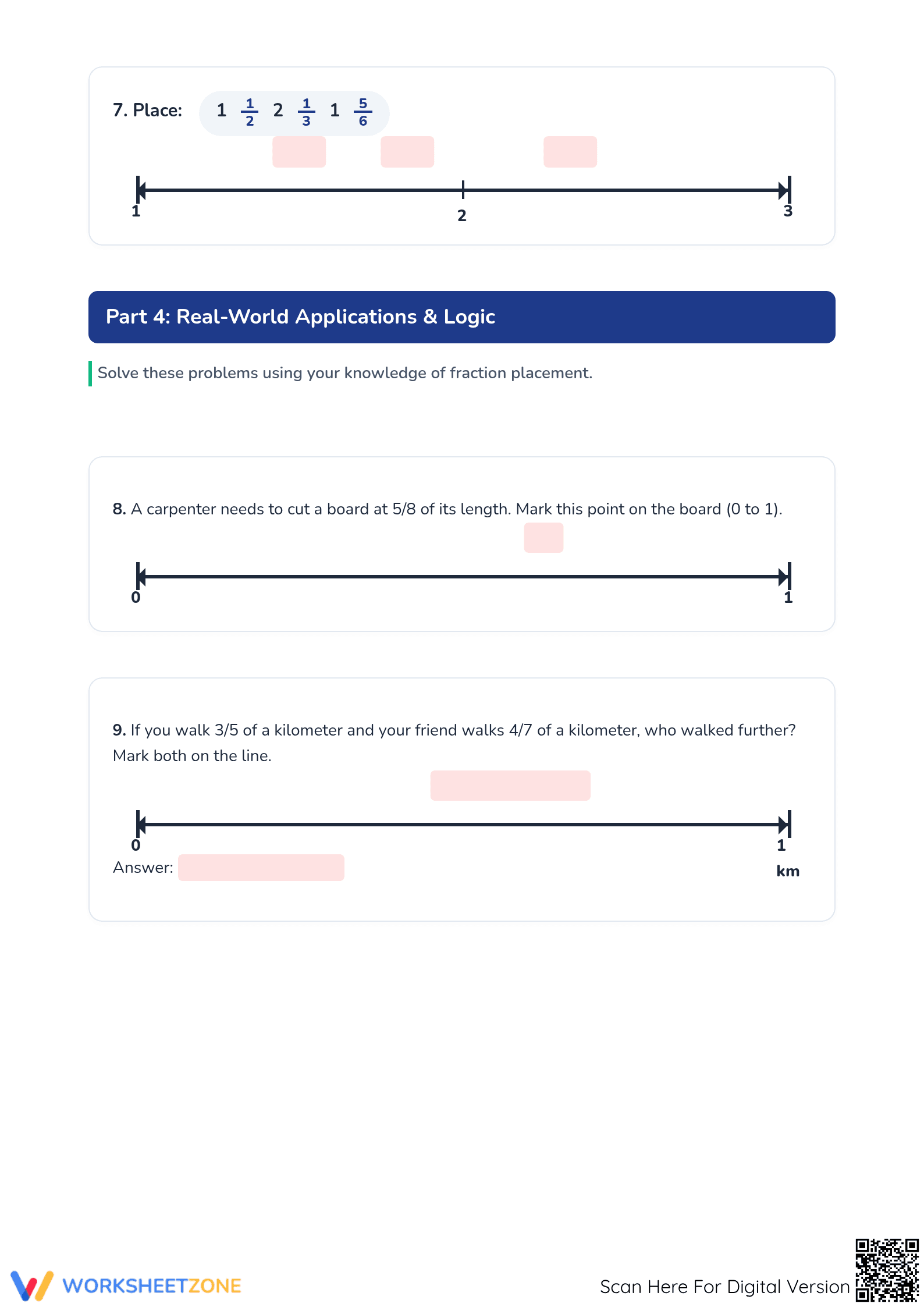
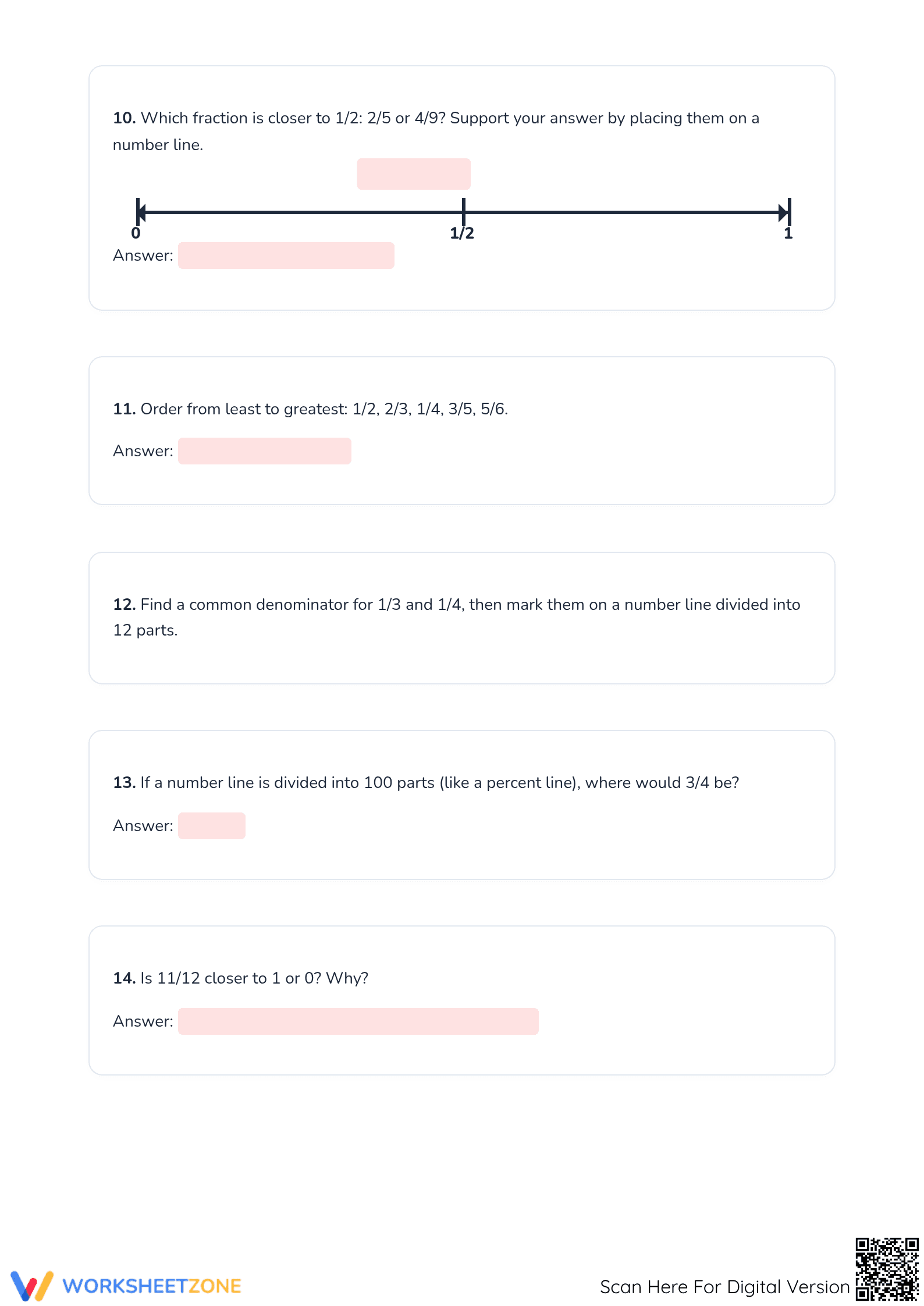

CCSS 4.NF.A.2: Fraction Ordering Worksheet — Essential
Paste this activity's link or code into your existing LMS (Google Classroom, Canvas, Teams, Schoology, Moodle, etc.).
Students can open and work on the activity right away, with no student login required.
You'll still be able to track student progress and results from your teacher account.
Master fraction visualization with this comprehensive number line worksheet. Students move beyond rote memorization to see the relationship between parts and wholes. By placing unit fractions and comparing mixed denominators, learners develop a robust mental model of numerical magnitude and space.
At a Glance
- Grade: 3-10 · Subject: Math
- Standard:
CCSS.MATH.CONTENT.4.NF.A.2— Compare two fractions with different numerators and denominators using visual models- Skill Focus: Fraction placement and ordering
- Format: 5 pages · 20 problems · Answer key included · PDF
- Best For: Comprehensive fraction unit mastery and assessment
- Time: 45–60 minutes
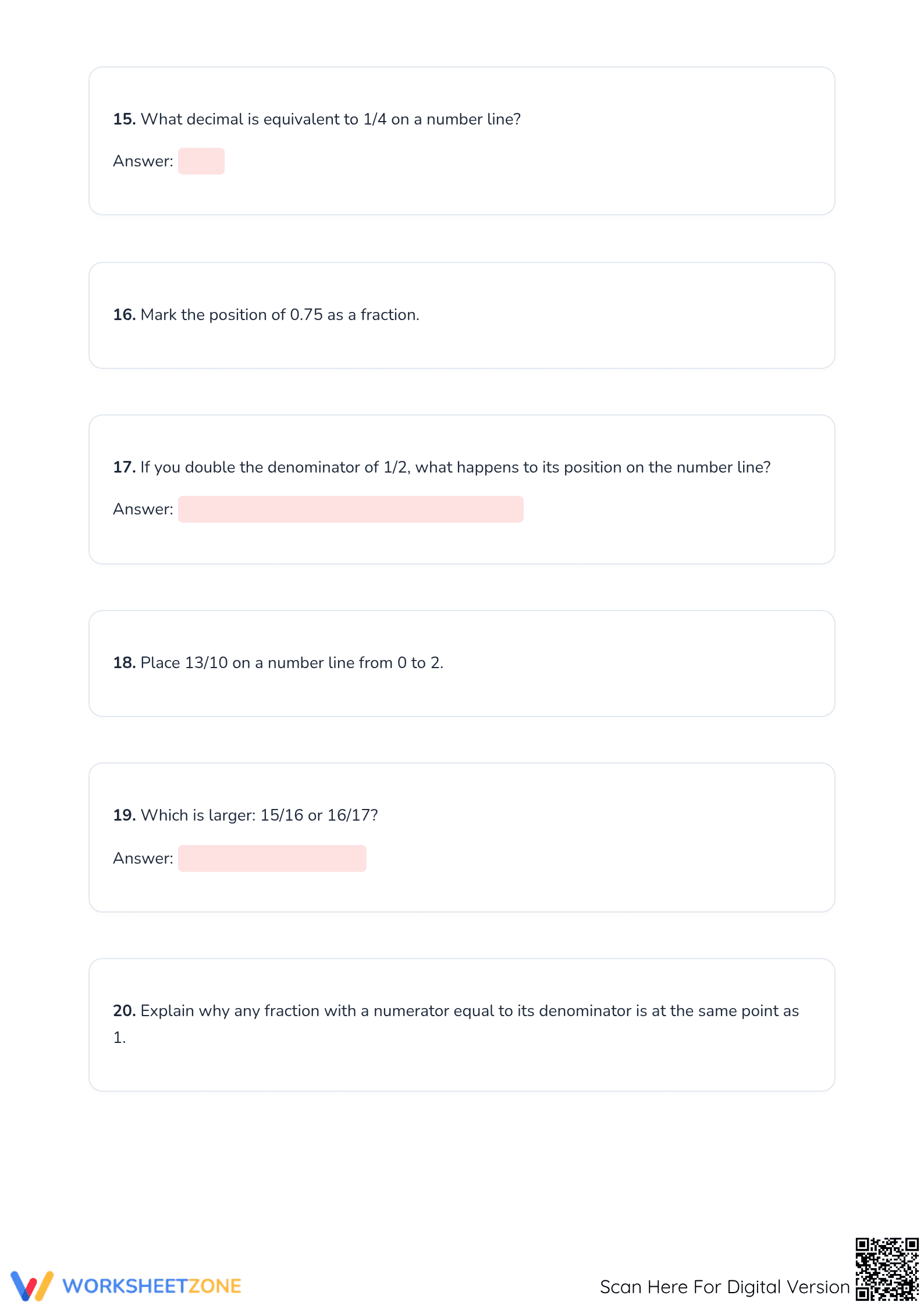
This 5-page PDF contains 20 structured tasks. Students begin with unit fraction labeling before transitioning to mixed denominator comparisons. The set includes dedicated practice for improper fractions and mixed numbers. Finally, learners solve real-world word problems and logic puzzles that bridge the gap between symbols and space.
Mastery Evidence
Each task maps to a specific level of numerical fluency. Part 1 establishes partitions, while Part 2 introduces varying denominators. Part 3 expands the number line beyond one whole, a critical middle-grade hurdle. The final section requires students to explain their reasoning, providing clear evidence of mastery.
Standards Alignment
The primary focus is `CCSS.MATH.CONTENT.4.NF.A.2`, requiring students to compare fractions using visual models. It also supports `CCSS.MATH.CONTENT.3.NF.A.2` by representing fractions on number lines. Both standard codes can be copied directly into lesson plans, IEP goals, or district curriculum mapping tools.
How to Use It
Use this worksheet during the "We Do" and "You Do" phases of instruction. It serves as an excellent formative assessment tool; observe students during Part 2 to identify those struggling with denominator concepts. The expected completion time for the full 20-item set is 45 to 60 minutes.
Who It's For
This resource is for students in Grades 3-10 requiring instruction or remedial support in fraction visualization. It is effective for learners who rely on visual scaffolds to understand number density. Pair this with physical manipulatives to support students bridging the gap between symbols and quantity.
The importance of visual models in developing fraction sense is a cornerstone of modern math education. Research from EdReports 2024 emphasizes that the number line is a superior tool compared to area models for developing a sense of number magnitude and ordering. This worksheet adheres to this shift by focusing exclusively on linear representation. By mastering `CCSS.MATH.CONTENT.4.NF.A.2` through spatial placement, students build the foundational sense required for success in algebra. The 20 problems provided offer the repetition necessary for students to internalize the concept of number density—understanding that infinite values exist between any two points. This approach is cited by NAEP as a key differentiator for high-performing students who can visualize quantities rather than just manipulating digits.


