


























Views
Downloads

Ordering Fractions on Number Line | Printable Math
Paste this activity's link or code into your existing LMS (Google Classroom, Canvas, Teams, Schoology, Moodle, etc.).
Students can open and work on the activity right away, with no student login required.
You'll still be able to track student progress and results from your teacher account.
This comprehensive math worksheet helps students master the essential skill of ordering fractions and mixed numbers on a number line. By visualizing numerical relationships, learners develop a concrete understanding of fraction magnitude beyond simple computation. This resource guides students through plotting, comparing, and solving real-world word problems to ensure a deep grasp of fractional concepts.
At a Glance
At a Glance
- Grade: 3-5 · Subject: Math (Fractions)
- Standard:
CCSS.MATH.CONTENT.4.NF.A.2— Compare two fractions with different numerators and different denominators using a number line- Skill Focus: Plotting and ordering fractions/mixed numbers
- Format: 4 pages · 8 problems · Answer key included · PDF
- Best For: Fraction visualization and comparison practice
- Time: 25–35 minutes
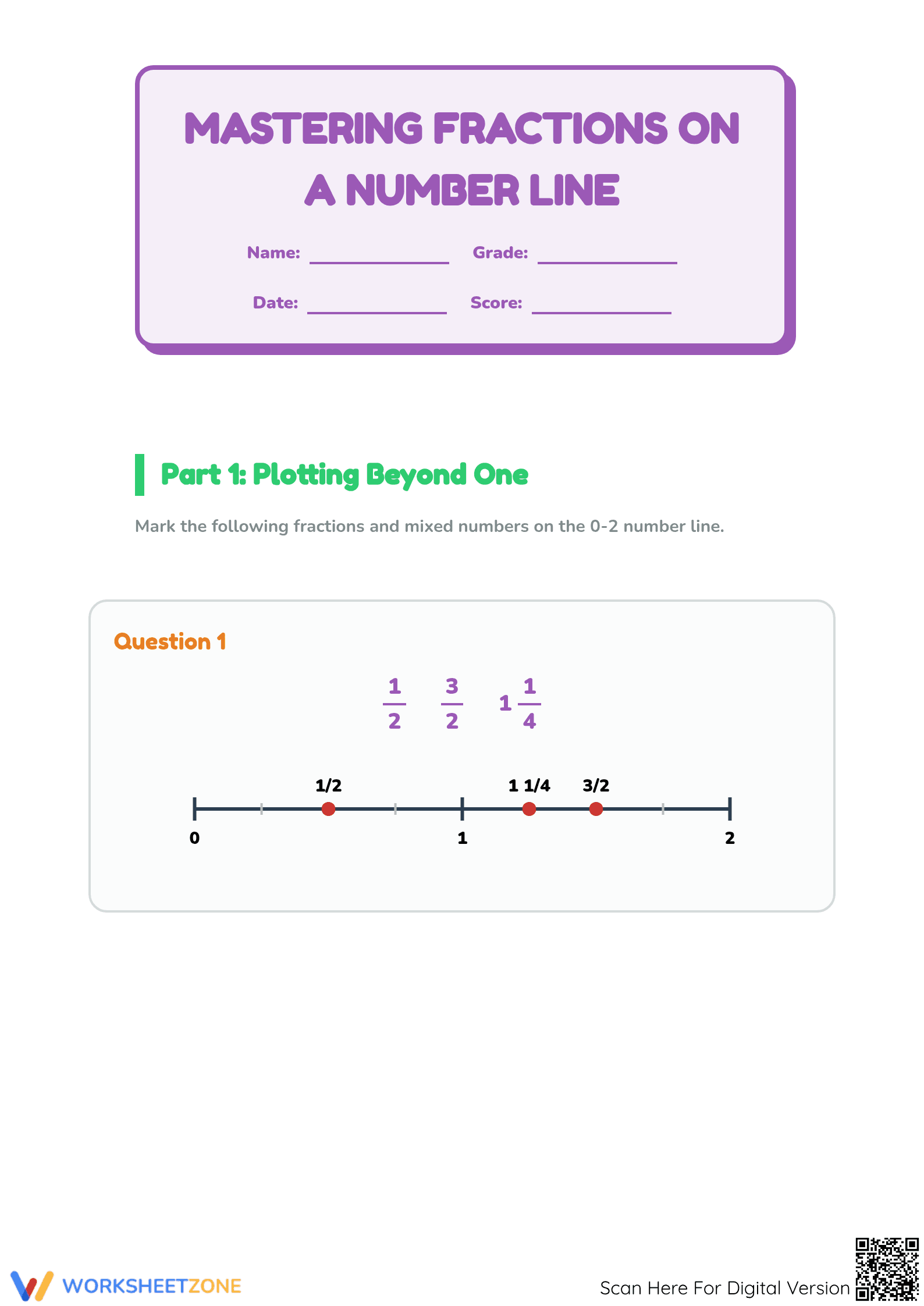
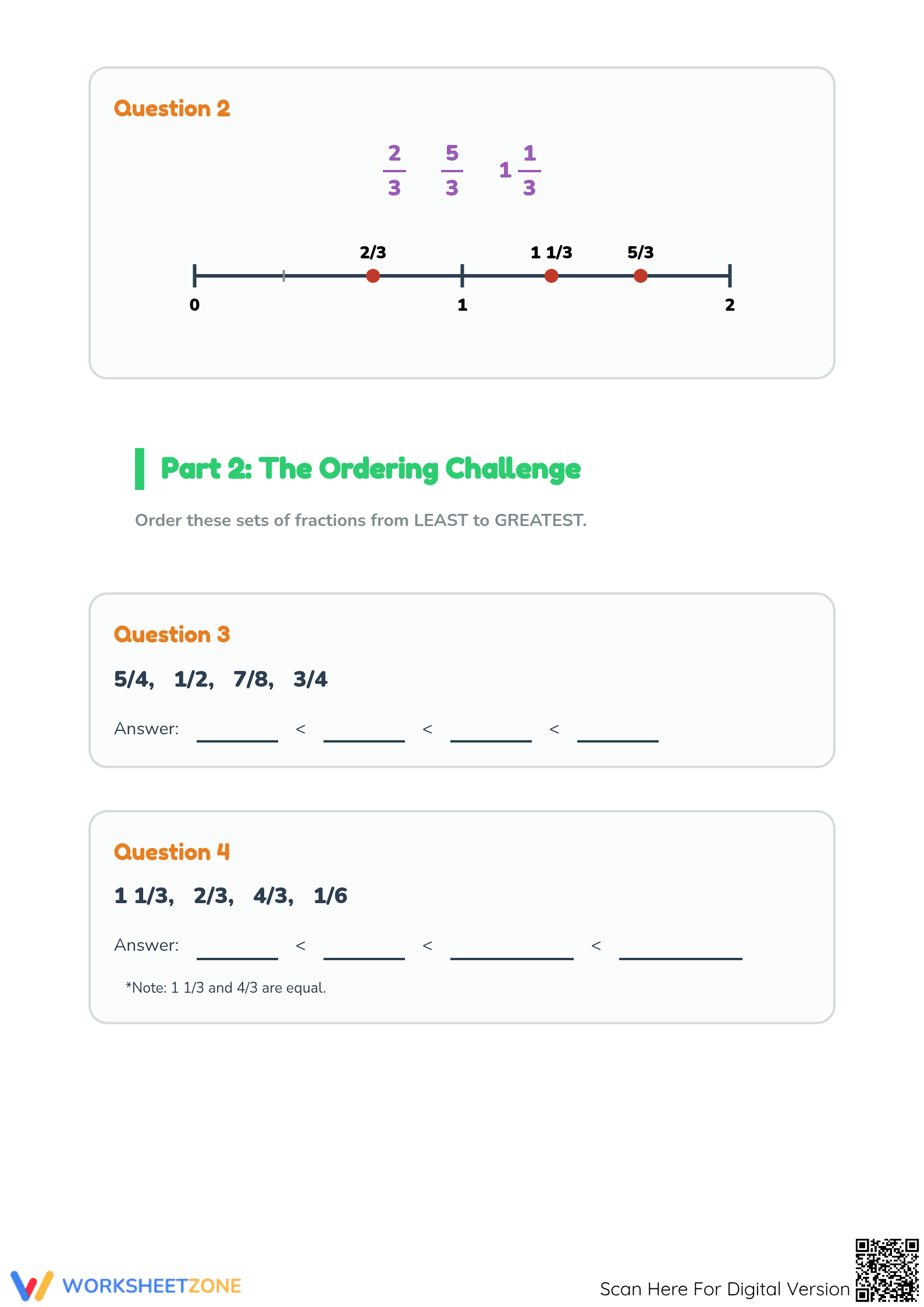
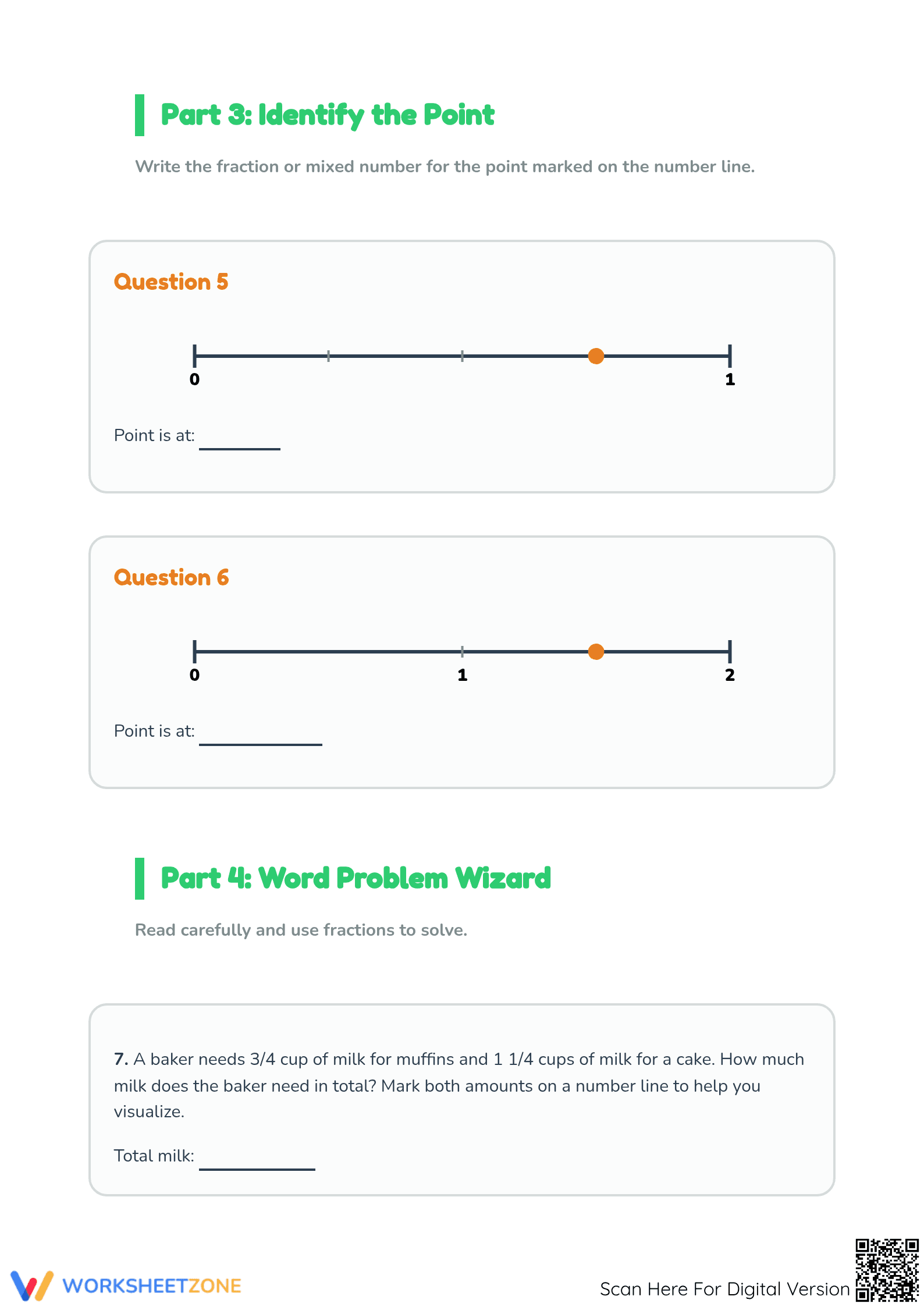
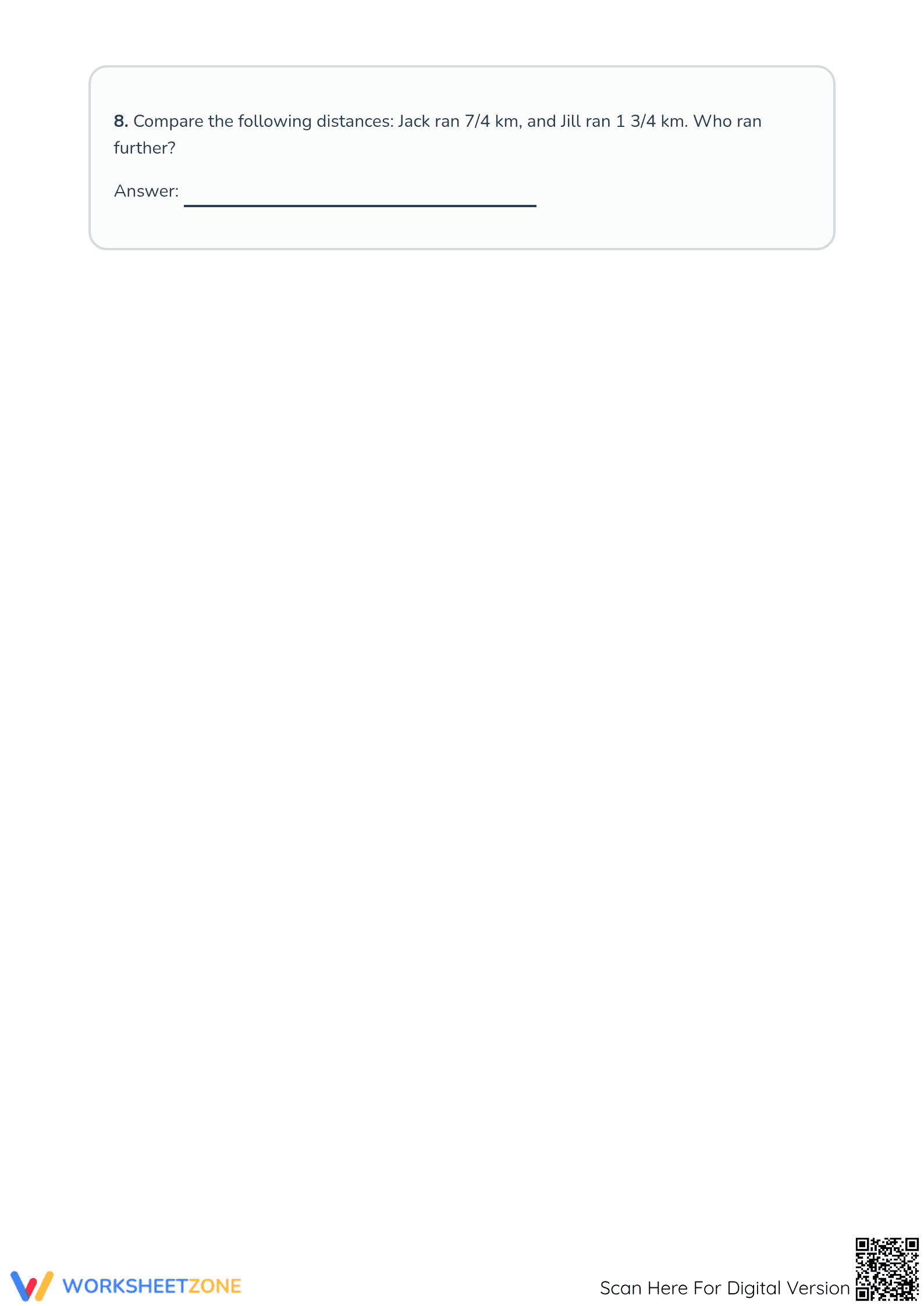
This 4-page PDF contains eight high-quality problems divided into four parts. The first section focuses on plotting mixed numbers beyond one on a 0-2 number line. Part two challenges students to order fraction sets from least to greatest. The third part requires identifying points on a line, while the final section applies these skills to practical word problems involving measurement and distance.
Skill Progression
- Guided practice: Initial questions provide labeled number lines for marking specific fractions, reinforcing the connection between symbolic notation and spatial placement.
- Supported practice: Middle tasks require ordering multiple fractions by determining common denominators or using benchmarks on provided lines.
- Independent practice: Final problems present word-based scenarios where students independently apply comparison logic to solve real-world addition and distance challenges.
This gradual-release approach ensures a smooth transition from simple identification to complex application.
Standards Alignment
Alignment centers on CCSS.MATH.CONTENT.4.NF.A.2, comparing fractions with different numerators and denominators. It also supports CCSS.MATH.CONTENT.3.NF.A.2 regarding number line representation. Both standard codes can be copied directly into lesson plans, IEP goals, or district curriculum mapping tools.
How to Use It
This worksheet is ideal for use during the independent practice portion of a lesson after students have been introduced to fraction benchmarks. Teachers can use the "Identify the Point" section as a quick formative-assessment check to observe if students correctly partition the space between whole numbers. Expect students to take approximately 30 minutes to complete all four sections thoroughly.
Who It's For
This resource is for students in grades 3 through 5 or middle schoolers needing intervention. It pairs well with fraction anchor charts or physical number line manipulatives. The mixed number inclusion helps students transitioning from simple fractions to advanced rational number concepts.
According to research by Fisher & Frey (2014), visual representations like number lines are critical components of effective mathematics instruction. This worksheet applies that framework by moving students from scaffolded plotting to independent problem-solving. By requiring students to order fractions such as 5/4, 1/2, and 3/4, the resource targets the specific cognitive demand of comparing non-unit fractions with varying denominators. The standard CCSS.MATH.CONTENT.4.NF.A.2 emphasizes that such comparisons are valid only when fractions refer to the same whole, a concept reinforced by the consistent scale used in these exercises. This data-driven approach ensures students develop a robust mental model of fractional values rather than just memorizing procedures. Such visual literacy is a significant predictor of success in middle-school algebra and proportional reasoning. This resource serves as a vital bridge between concrete and abstract mathematical thinking.


