


























Views
Downloads

Essential Grade 3-5 Ordering Fractions on a Number Line
Paste this activity's link or code into your existing LMS (Google Classroom, Canvas, Teams, Schoology, Moodle, etc.).
Students can open and work on the activity right away, with no student login required.
You'll still be able to track student progress and results from your teacher account.
1. Master Fraction Placement
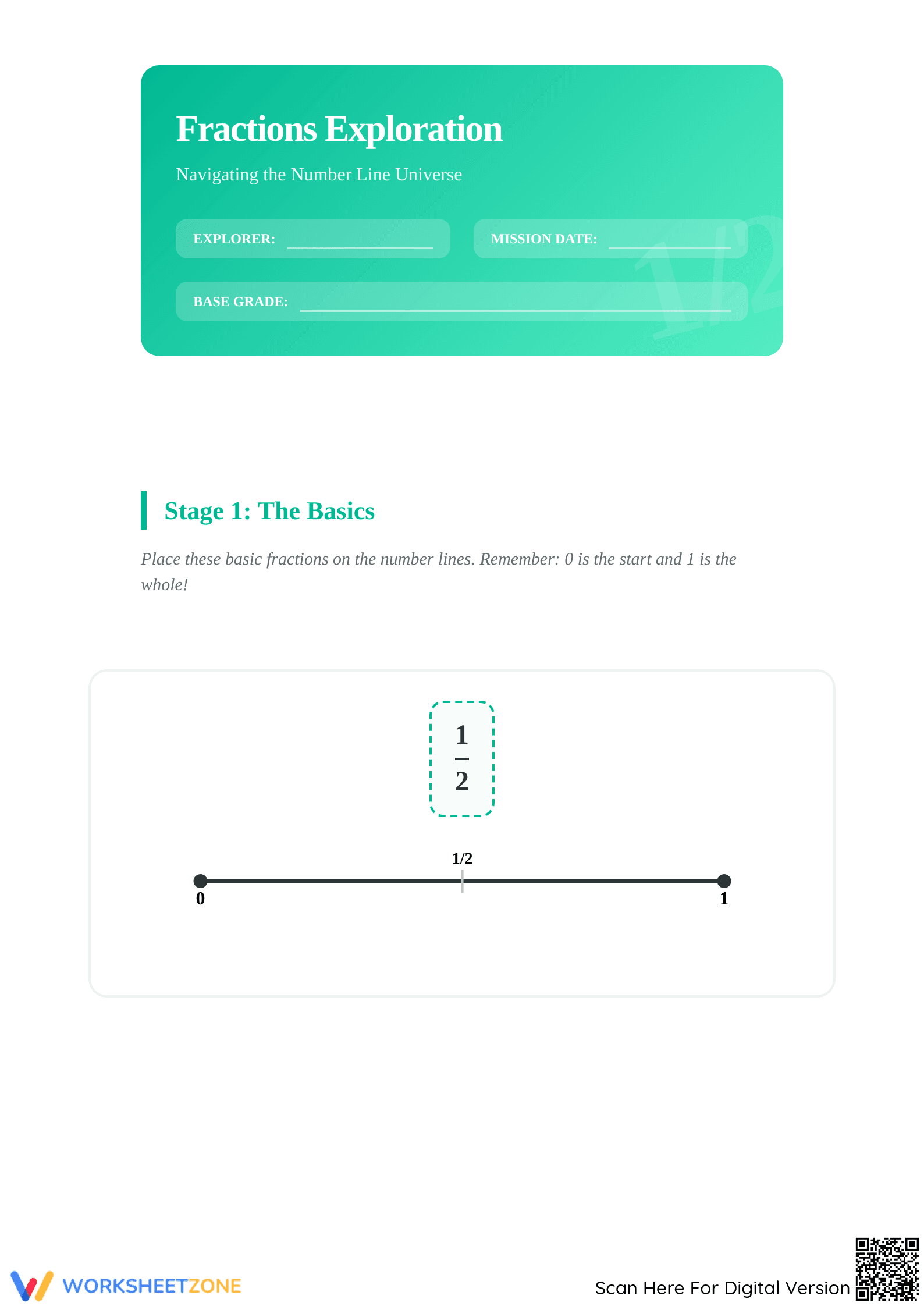
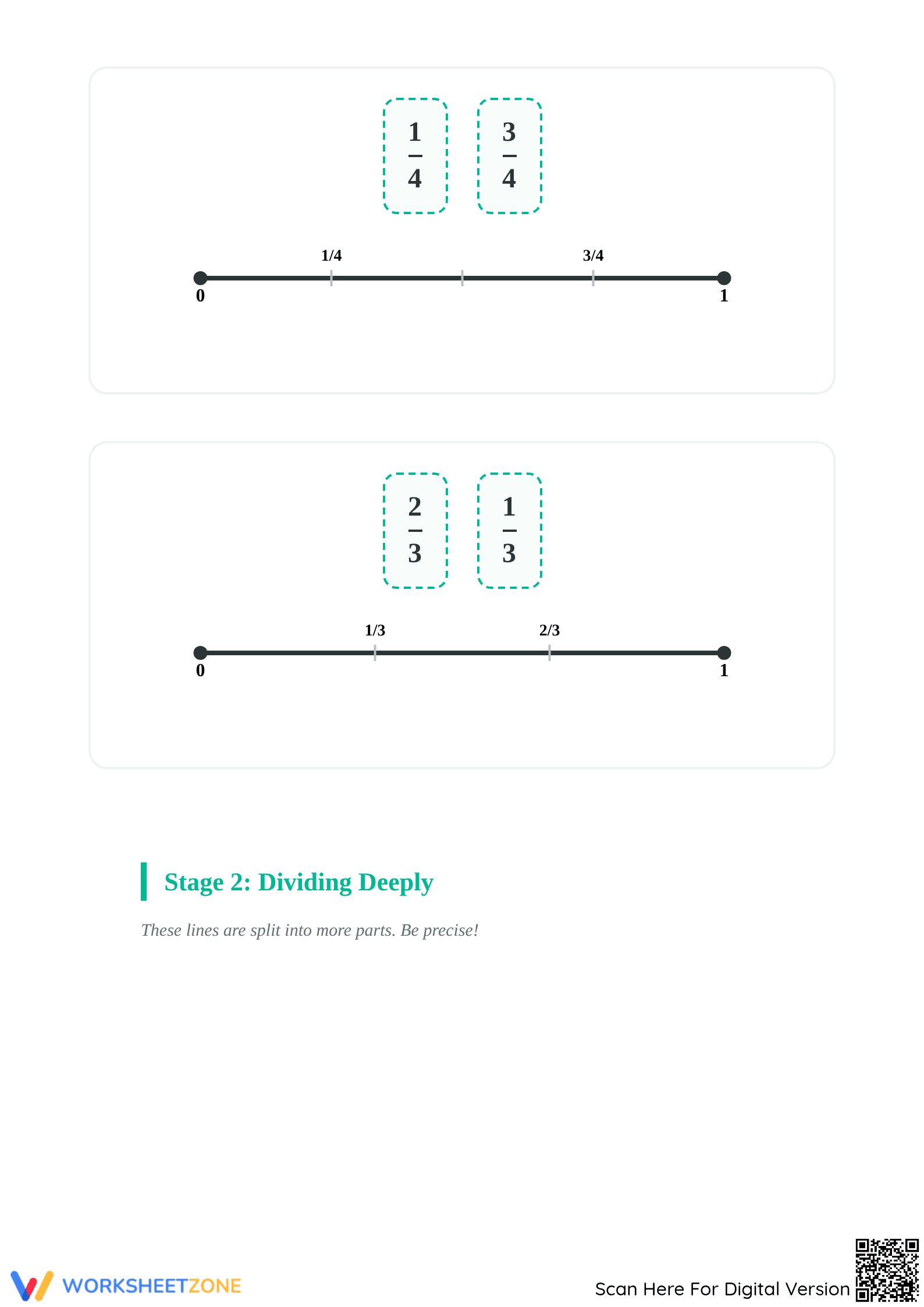
Building a strong conceptual understanding of fractions requires moving beyond area models. This 5-page exploration packet helps students visualize fractions as specific points on a number line. By partitioning intervals and placing unit fractions, students develop the spatial reasoning needed for advanced comparison and arithmetic outcomes in middle school mathematics.
At a Glance
- Grade: 3-5 · Subject: Math
- Standard:
3.NF.A.2— Partition number lines into equal parts and represent fractions as specific locations- Skill Focus: Ordering fractions on a number line
- Format: 5 pages · 11 problems · Answer key included · PDF
- Best For: Conceptual introduction to fractional linear measurement
- Time: 35–45 minutes
What's Inside
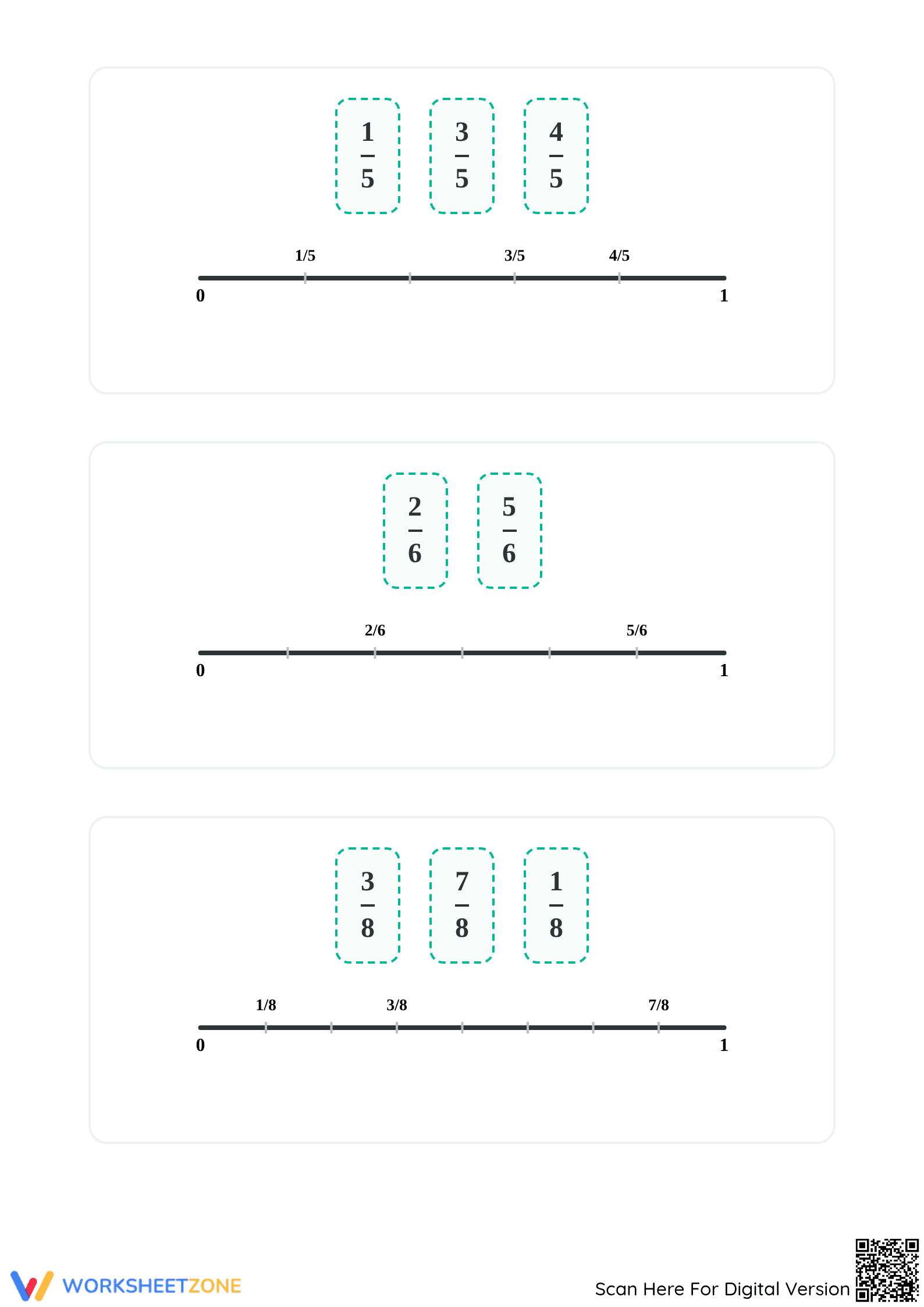
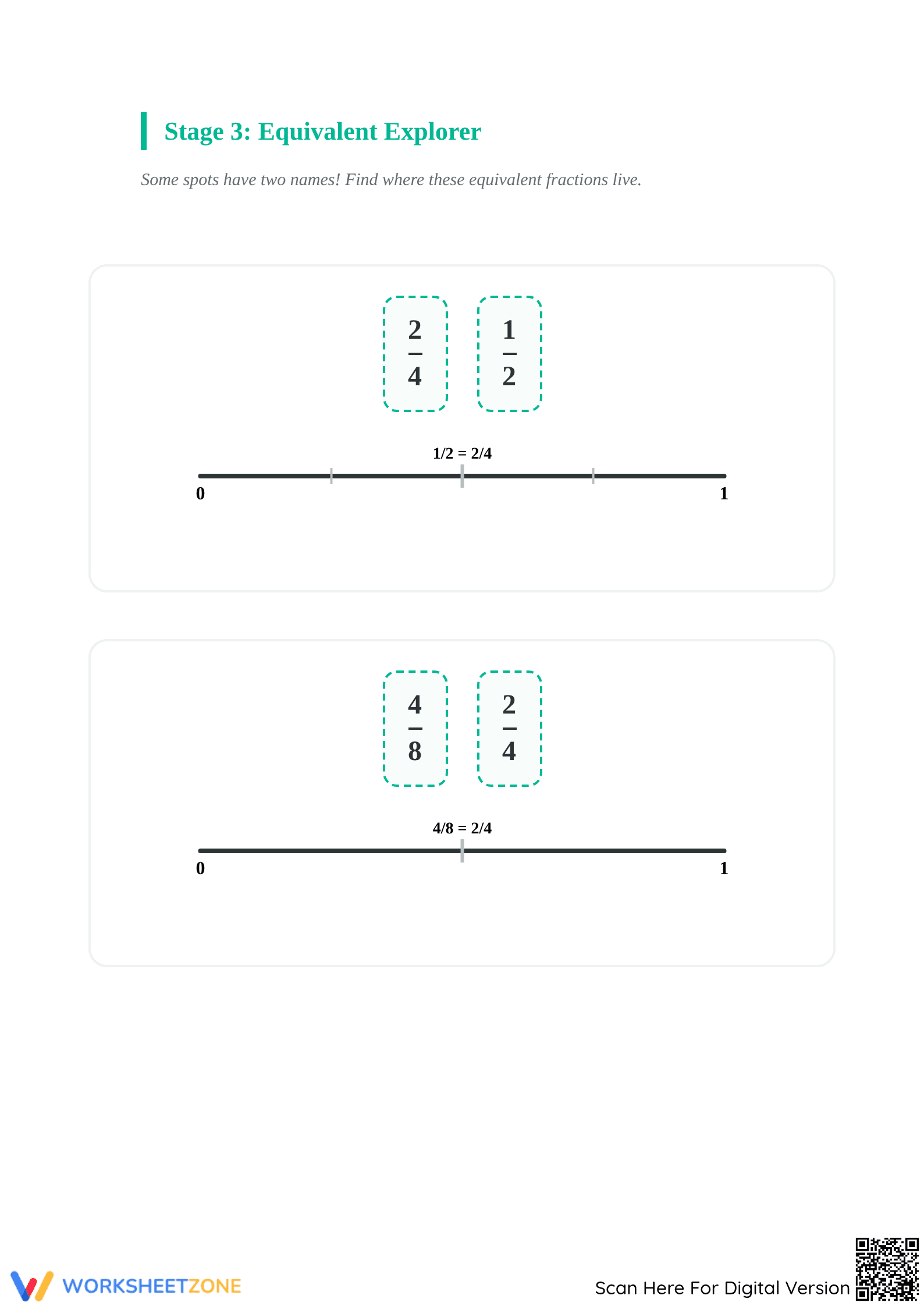
This PDF features four stages of learning across five instructional pages. Students interact with 11 number lines, starting with simple halves before progressing to tenths. The packet includes sections for equivalent fractions and values greater than one. Each page offers clear visual cues and structured labeling boxes to ensure success during independent practice sessions.
Zero-Prep Workflow
1. Print: Spend 60 seconds sending all 5 pages to your printer for a full class set. 2. Distribute: Hand out the packets as students enter for an immediate bell-ringer or main lesson activity. 3. Review: Spend 15 minutes using the included answer key to model partitioning on the board. Total prep time is under 2 minutes.
Standards Alignment
The primary focus is `3.NF.A.2`: "Understand a fraction as a number on the number line; represent fractions on a number line diagram." This resource also supports `4.NF.A.1` through Stage 3 identification. Both standard codes can be copied directly into lesson plans, IEP goals, or district curriculum mapping tools to ensure rigorous compliance.
How to Use It
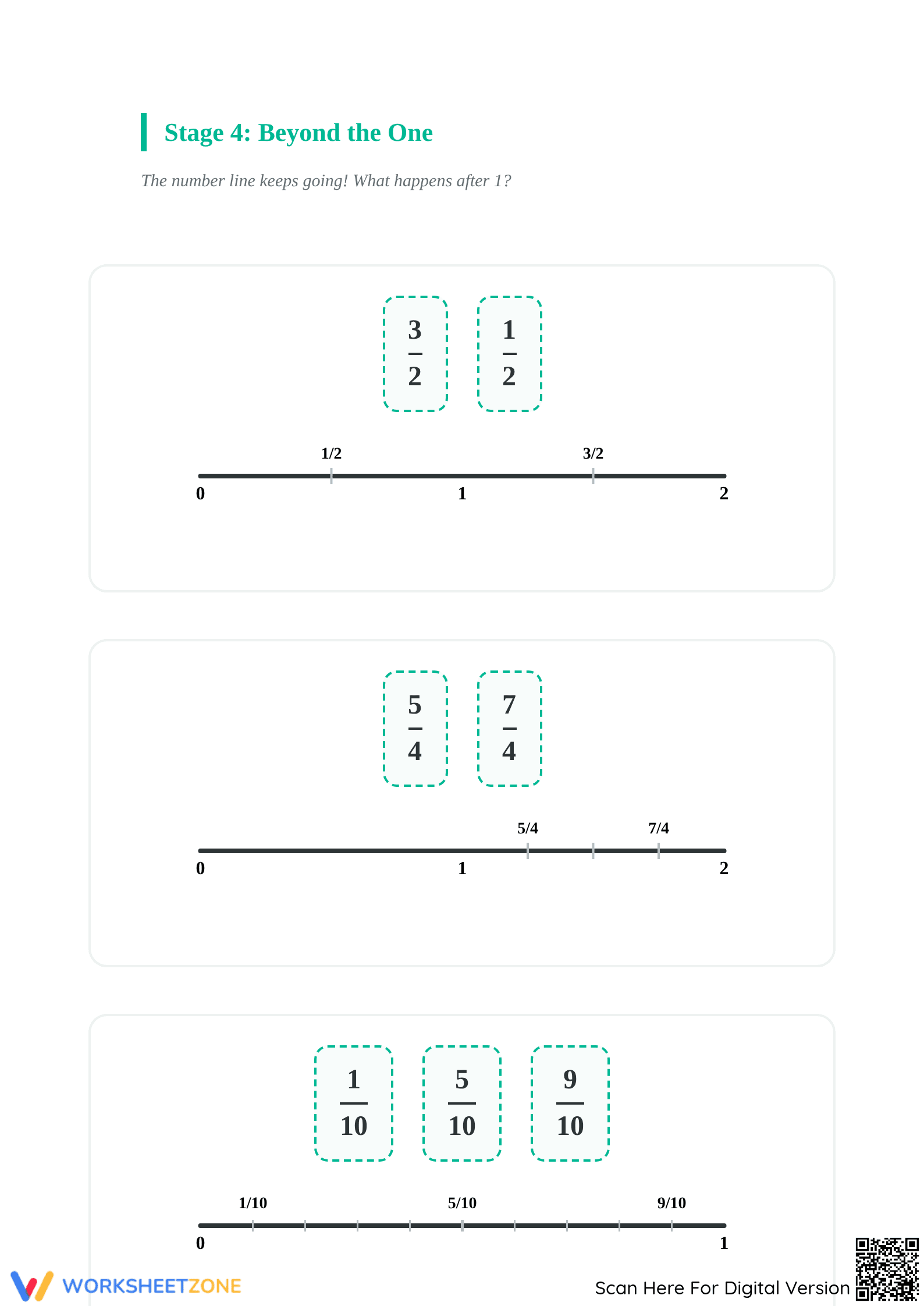
Use this packet during direct instruction to move students from identification to complex placement. It serves as an excellent formative assessment tool; observe if students correctly partition the space between 1 and 2 in Stage 4. Expect students to complete the full exploration within 40 minutes of focused classroom time, ideally after a brief introductory talk.
Who It's For
This resource is designed for Grade 3-5 students who have mastered part-whole relationships but struggle with linear scales. It is effective for students requiring visual scaffolds or Tier 2 intervention groups. Pair this worksheet with a physical meter stick to provide a concrete real-world connection to the number line diagrams provided in the lesson packet.
Research by Fisher & Frey (2014) on gradual release indicates that visual models like number lines are critical for transitioning from concrete to abstract fraction understanding. This 5-page resource aligns with CCSS.MATH.CONTENT.3.NF.A.2, requiring students to represent a fraction 1/b on a line by partitioning intervals into equal parts. By moving through four stages—from basic unit fractions to equivalent values and fractions greater than one—the worksheet provides the scaffolding needed to bridge identification and complex comparison. The inclusion of fractions like 3/2 and 7/4 ensures students grasp that fractions are numbers on a line, not just pieces of a shape. This progression supports NAEP findings that visual-spatial reasoning is a primary predictor of long-term mathematical success and fractional mastery across later grade levels.


