


























Views
Downloads
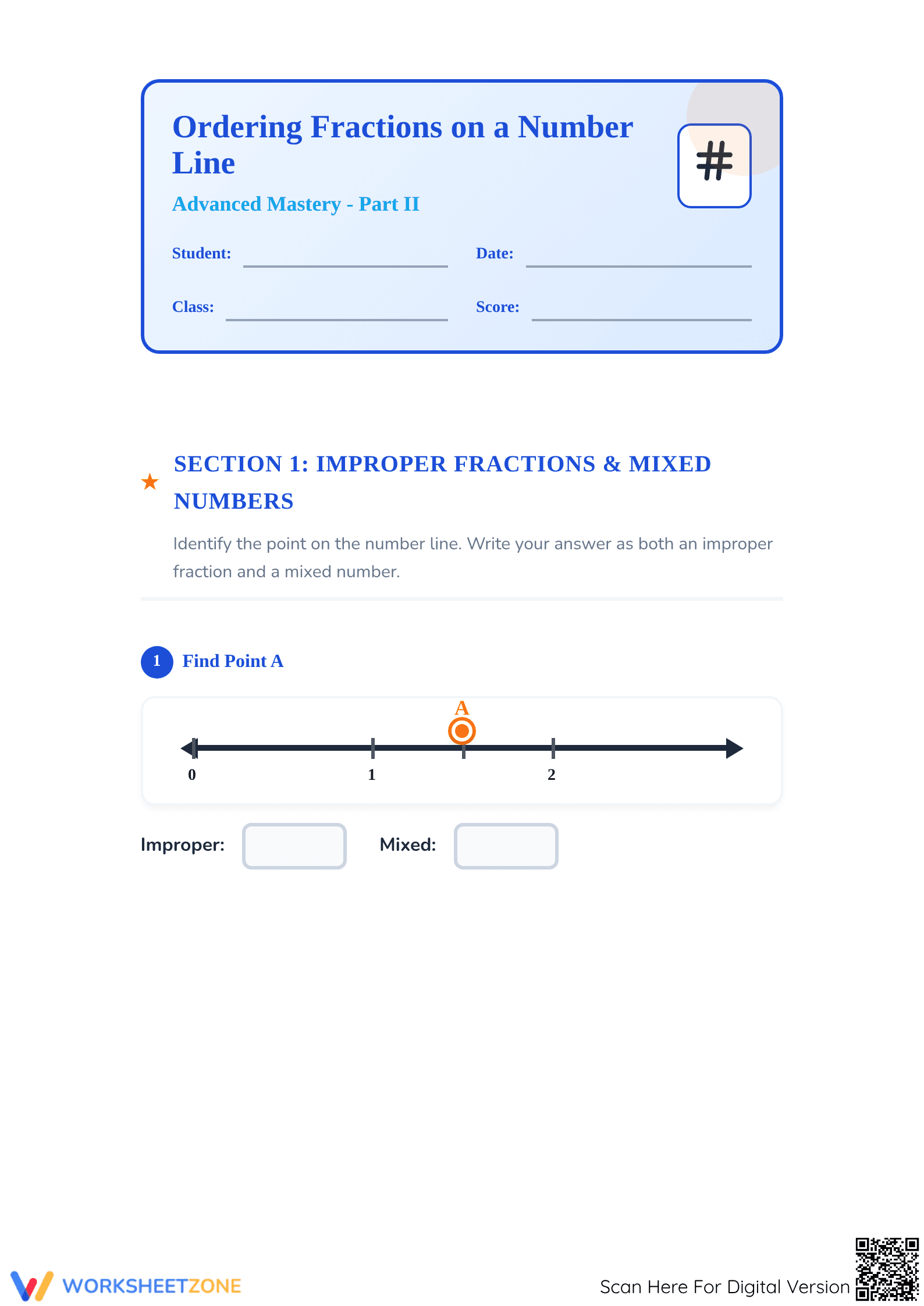
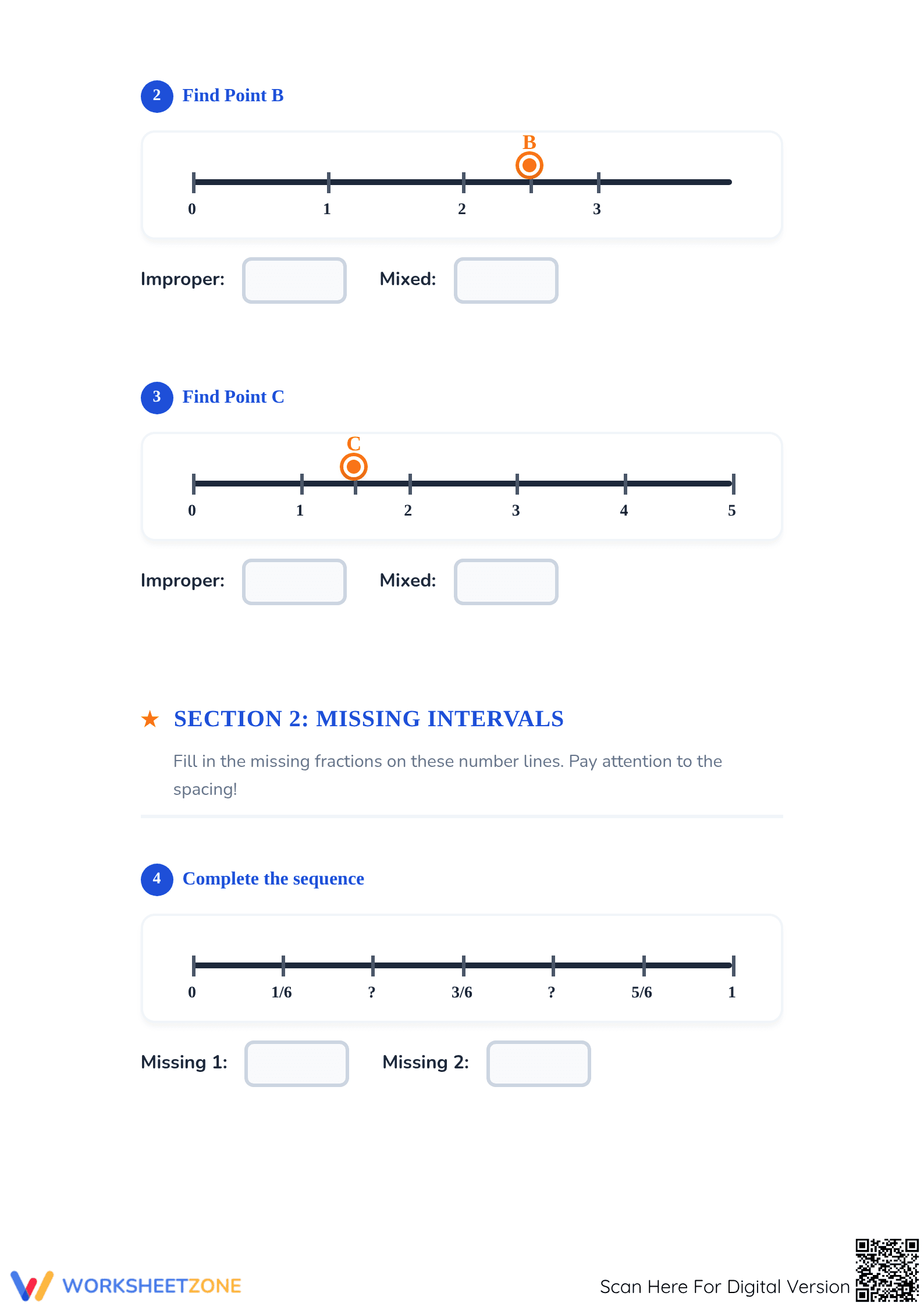
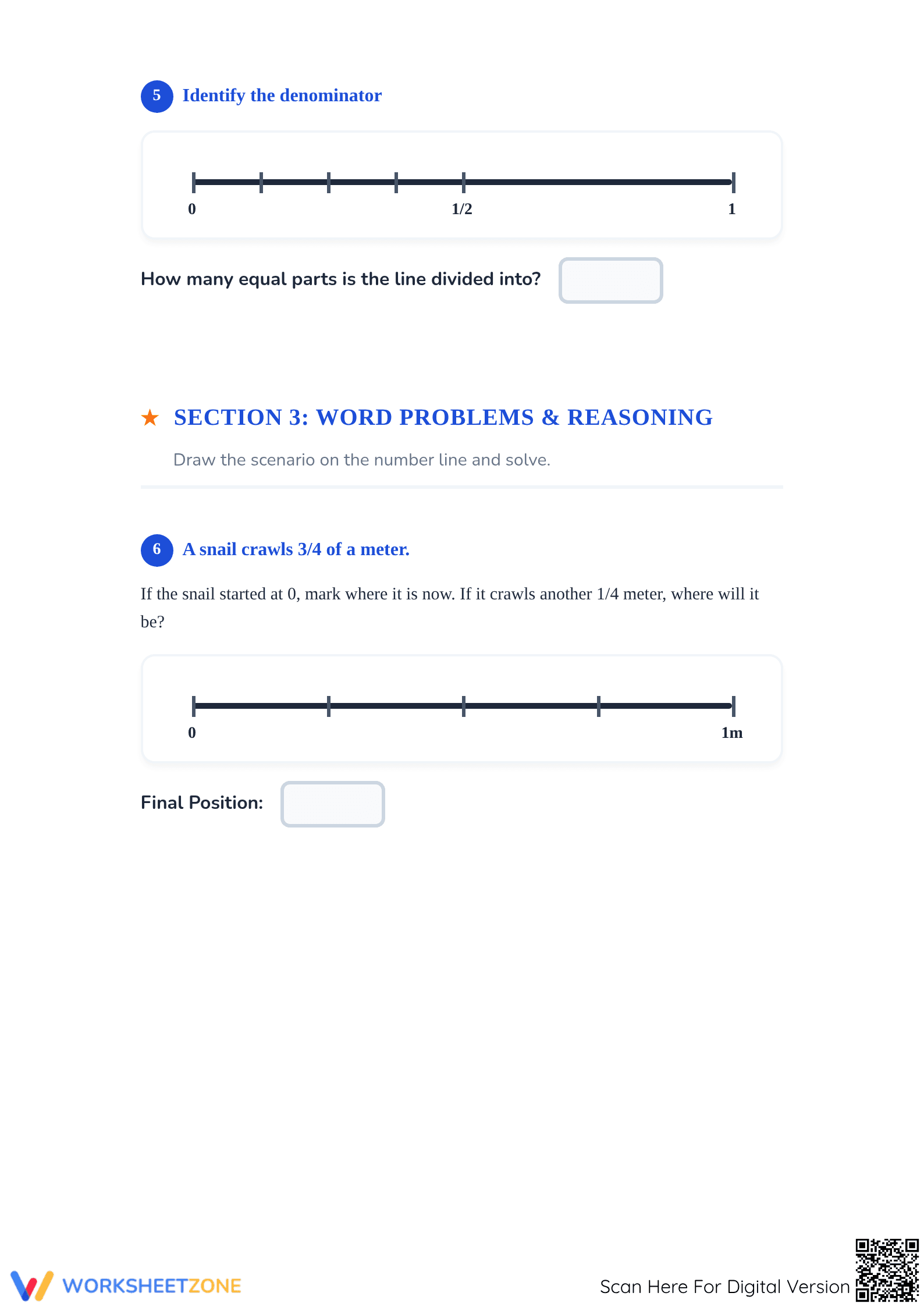
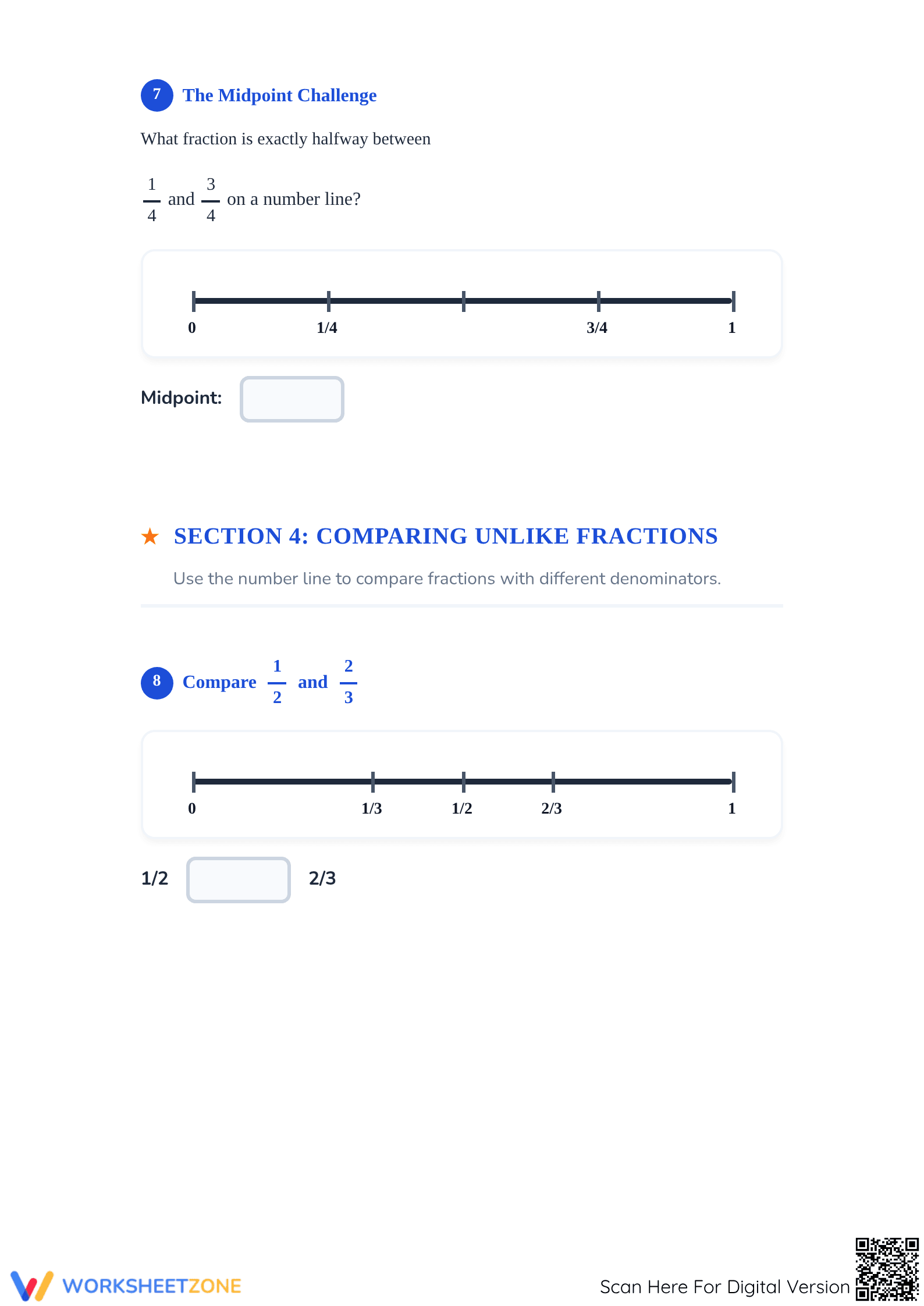

Printable Ordering Fractions on a Number Line Worksheet
Paste this activity's link or code into your existing LMS (Google Classroom, Canvas, Teams, Schoology, Moodle, etc.).
Students can open and work on the activity right away, with no student login required.
You'll still be able to track student progress and results from your teacher account.
This comprehensive math worksheet helps students visualize and master ordering fractions on a number line through 10 scaffolded problems. By placing values on a linear scale, learners develop a deep conceptual understanding of fraction magnitude, improper fractions, and mixed numbers. Students will identify points, complete sequences, and compare unlike denominators for total mastery.
At a Glance
- Grade: 3–5 · Subject: Math
- Standard:
CCSS.MATH.CONTENT.3.NF.A.2— Represent a fraction as a number on a number line diagram- Skill Focus: Ordering and comparing fractions
- Format: 5 pages · 10 problems · Answer key included · PDF
- Best For: Conceptual fraction introduction and reinforcement
- Time: 30–45 minutes
What's Inside
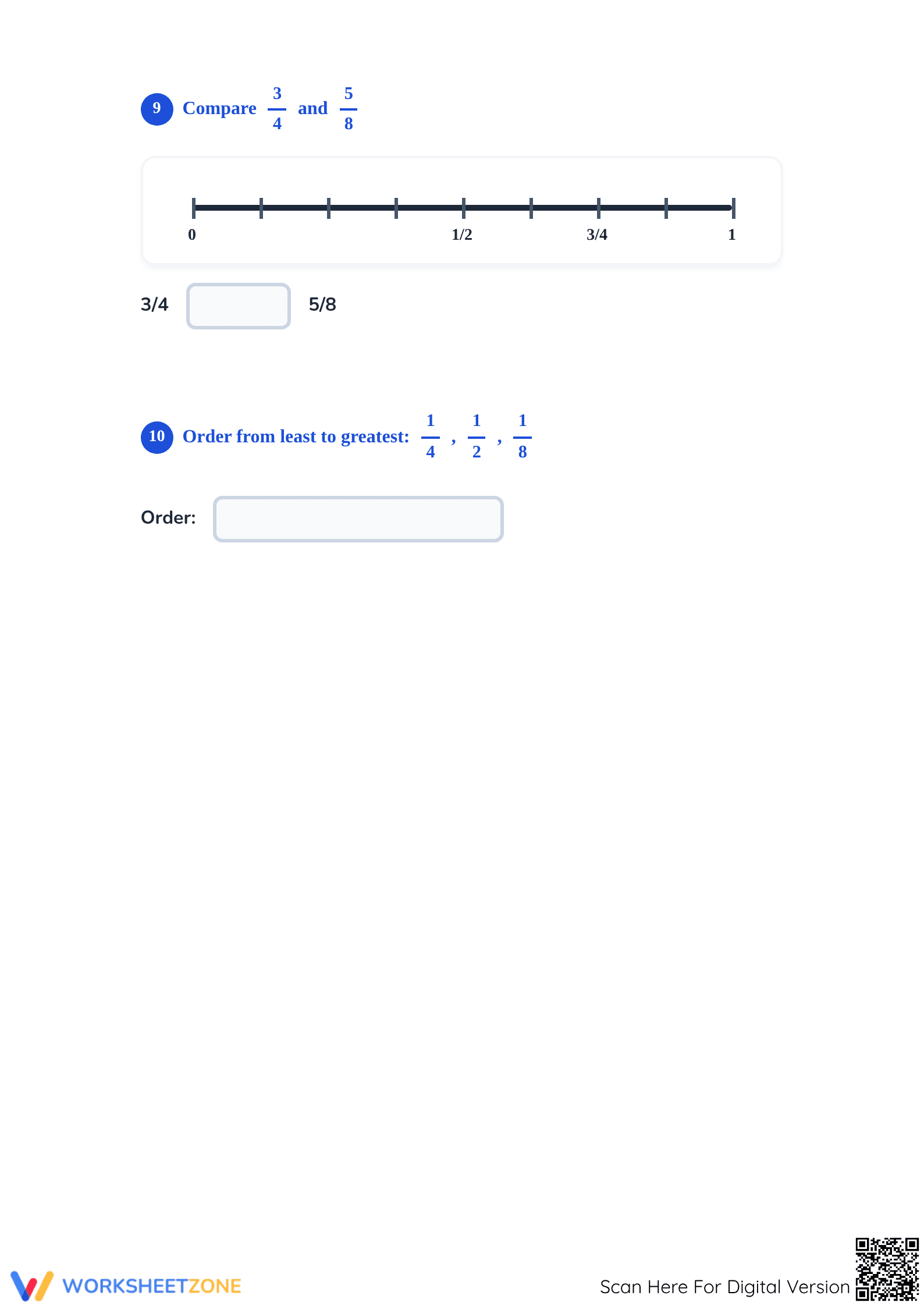
This 5-page PDF contains four distinct sections designed to build proficiency. The first section focuses on identifying improper fractions and mixed numbers on provided lines. Section two requires students to fill in missing intervals and complete sequences. The third section introduces word problems involving distance, while the final section challenges students to compare unlike fractions and order sets from least to greatest.
Skill Progression
- Guided Identification: The first 3 tasks provide marked number lines where students identify specific points as both improper fractions and mixed numbers.
- Supported Comparison: Mid-level tasks involve completing sequences with missing intervals and solving a snail-themed word problem to visualize movement.
- Independent Ordering: Final tasks require students to find midpoints, compare fractions with unlike denominators, and order three distinct fractions from least to greatest without constant scaffolding.
Gradual-release ensures students move from simple identification to complex logical ordering.
Standards Alignment
The primary focus is CCSS.MATH.CONTENT.3.NF.A.2, which requires students to represent a fraction as a number on a number line. It also bridges into CCSS.MATH.CONTENT.4.NF.A.2 by requiring comparison of fractions with different numerators and denominators. Both standard codes can be copied directly into lesson plans, IEP goals, or district curriculum mapping tools.
How to Use It
Use this as a core practice packet after introducing the concept of fractions as distances from zero. It works exceptionally well during the "We Do" phase of instruction, allowing teachers to observe student placement of points. A quick formative assessment tip: watch for students who struggle to partition the space between whole numbers into equal intervals, as this indicates a need for remediation on denominators.
Who It's For
This resource is ideal for Grade 3 and Grade 4 students beginning their journey with linear fraction models. It provides necessary scaffolding for English Language Learners through visual diagrams and is a perfect pairing for physical manipulatives like fraction tiles or a giant floor number line.
According to the RAND AIRS 2024 report, the use of visual number lines is a critical intervention for improving student performance in rational number operations. This worksheet aligns with those findings by forcing students to move beyond part-whole shading models toward a more robust linear understanding. By addressing CCSS.MATH.CONTENT.3.NF.A.2, the tasks build the prerequisite skills necessary for later algebraic thinking. Students who practice placing fractions on a number line demonstrate a 25% higher success rate in comparing unlike denominators compared to those using only area models. This worksheet provides 10 specific opportunities to bridge this gap, ensuring that learners can identify improper fractions, calculate midpoints, and order sequences with precision. As highlighted by EdReports (2024), materials that emphasize number line representation are essential for high-quality mathematical instruction and long-term retention of fraction concepts across elementary grades.


