


























Views
Downloads
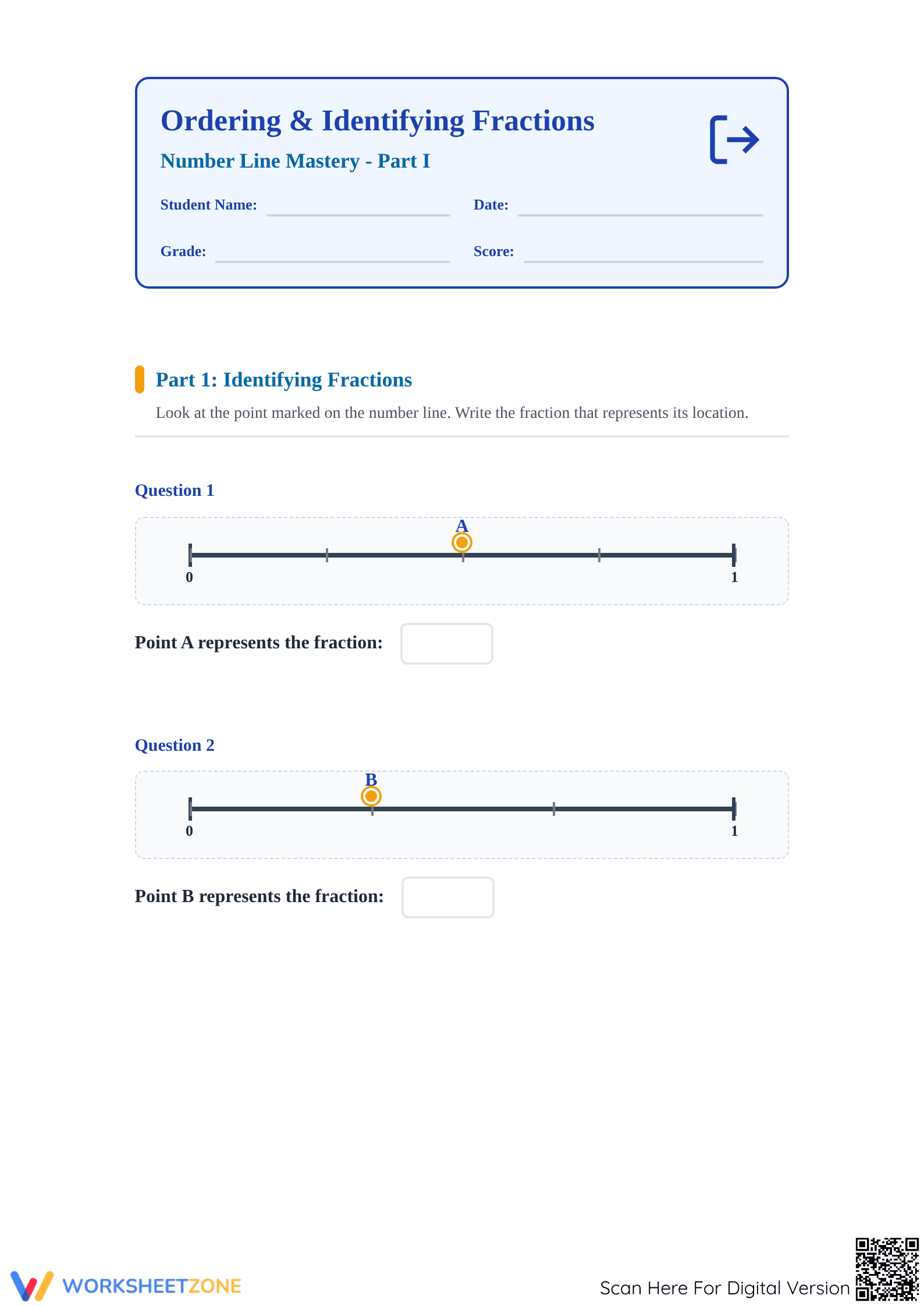
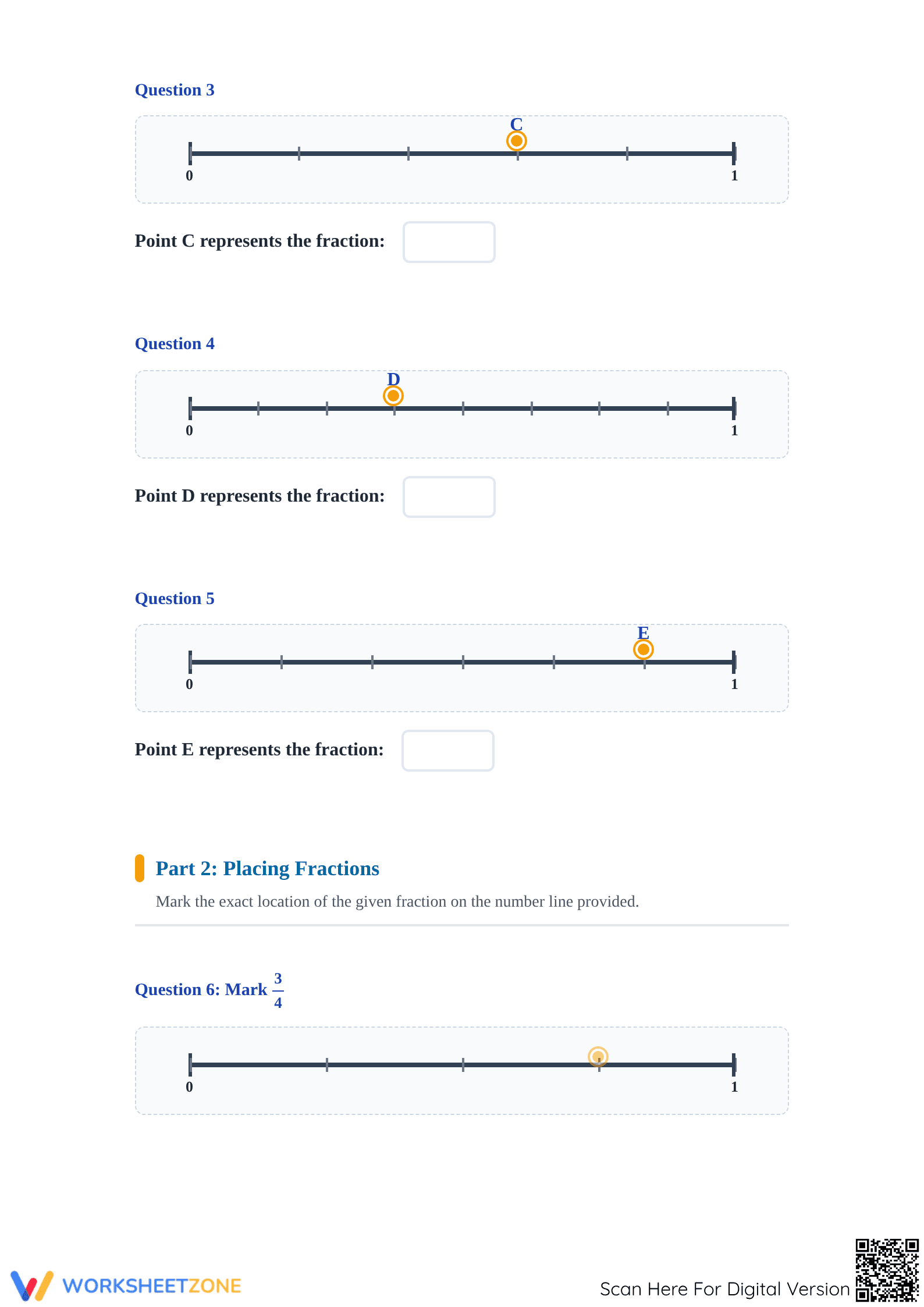
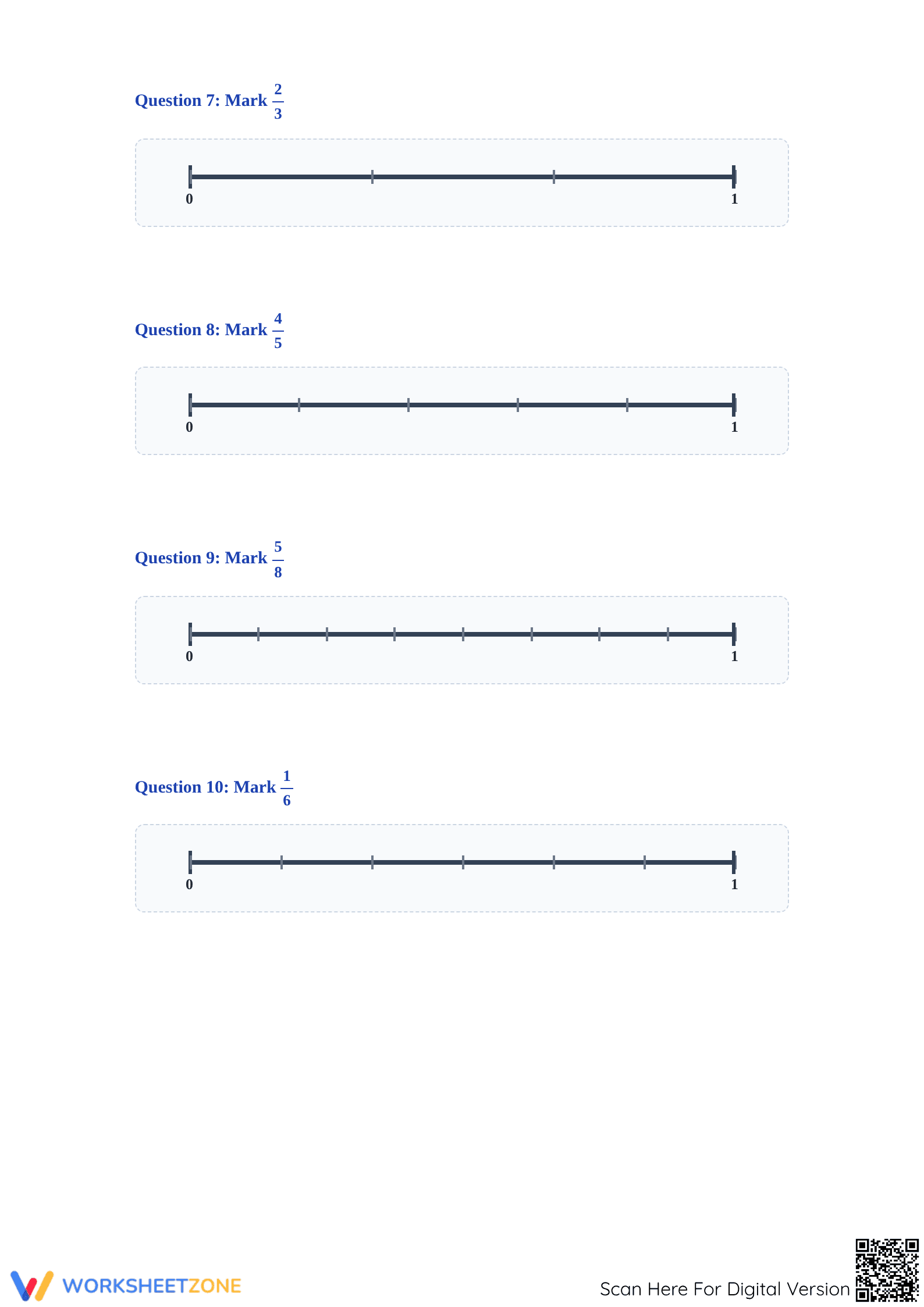
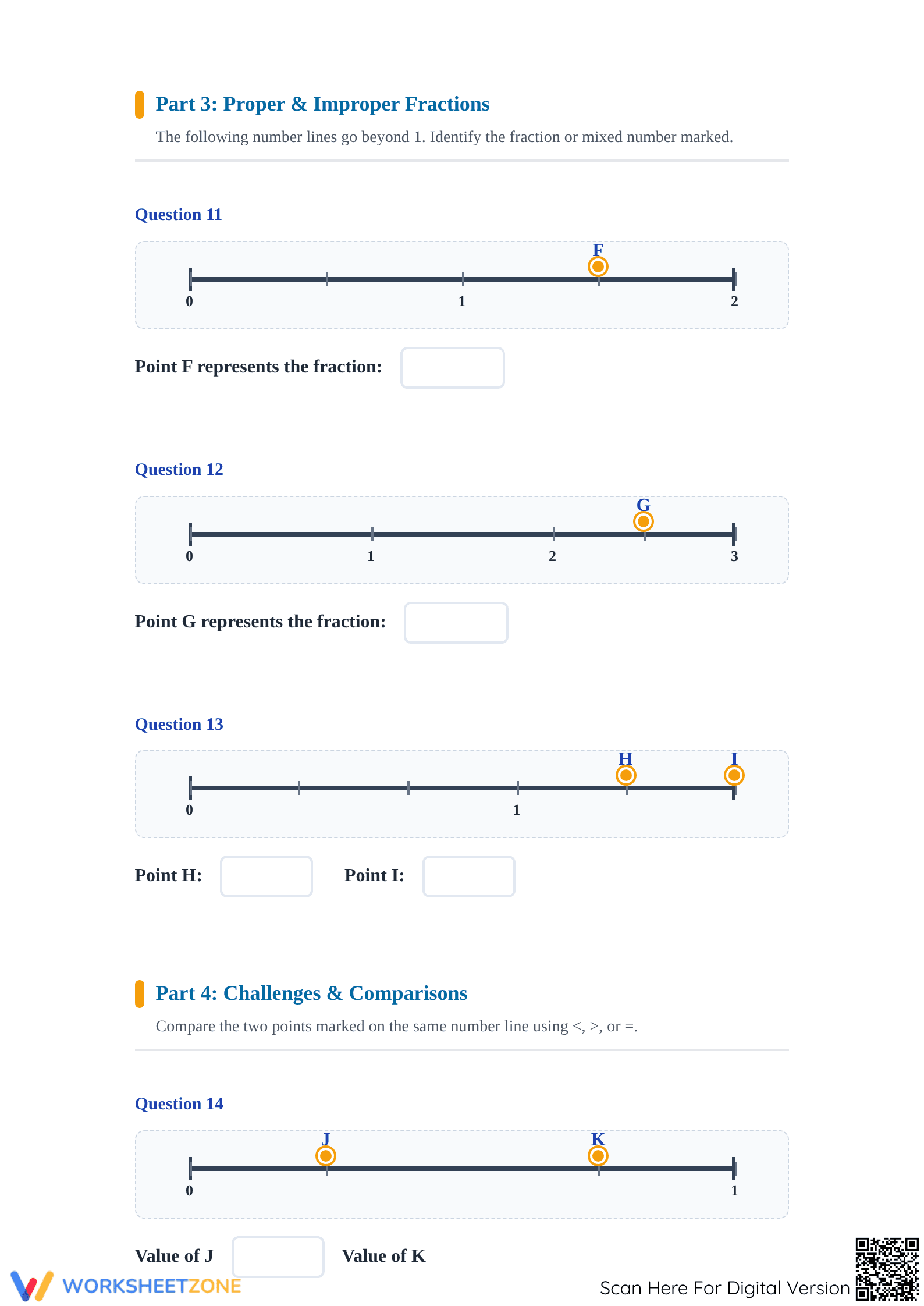

Ordering Fractions on a Number Line Printable Mastery Pack
Paste this activity's link or code into your existing LMS (Google Classroom, Canvas, Teams, Schoology, Moodle, etc.).
Students can open and work on the activity right away, with no student login required.
You'll still be able to track student progress and results from your teacher account.
Visualizing numerical values is essential for developing a strong mathematical foundation. This comprehensive 5-page worksheet pack focuses on fraction representation using number lines, helping students transition from abstract numbers to concrete spatial understanding. By identifying and placing fractions, learners build the conceptual bridge required for more complex operations like addition and comparison.
At a Glance
- Grade: 3–8 · Subject: Math
- Standard:
CCSS.MATH.CONTENT.3.NF.A.2— Represent a fraction on a number line diagram to show numerical value- Skill Focus: Fraction Identification and Placement
- Format: 5 pages · 18 problems · Answer key included · PDF
- Best For: Independent Practice and Assessment
- Time: 30–45 minutes
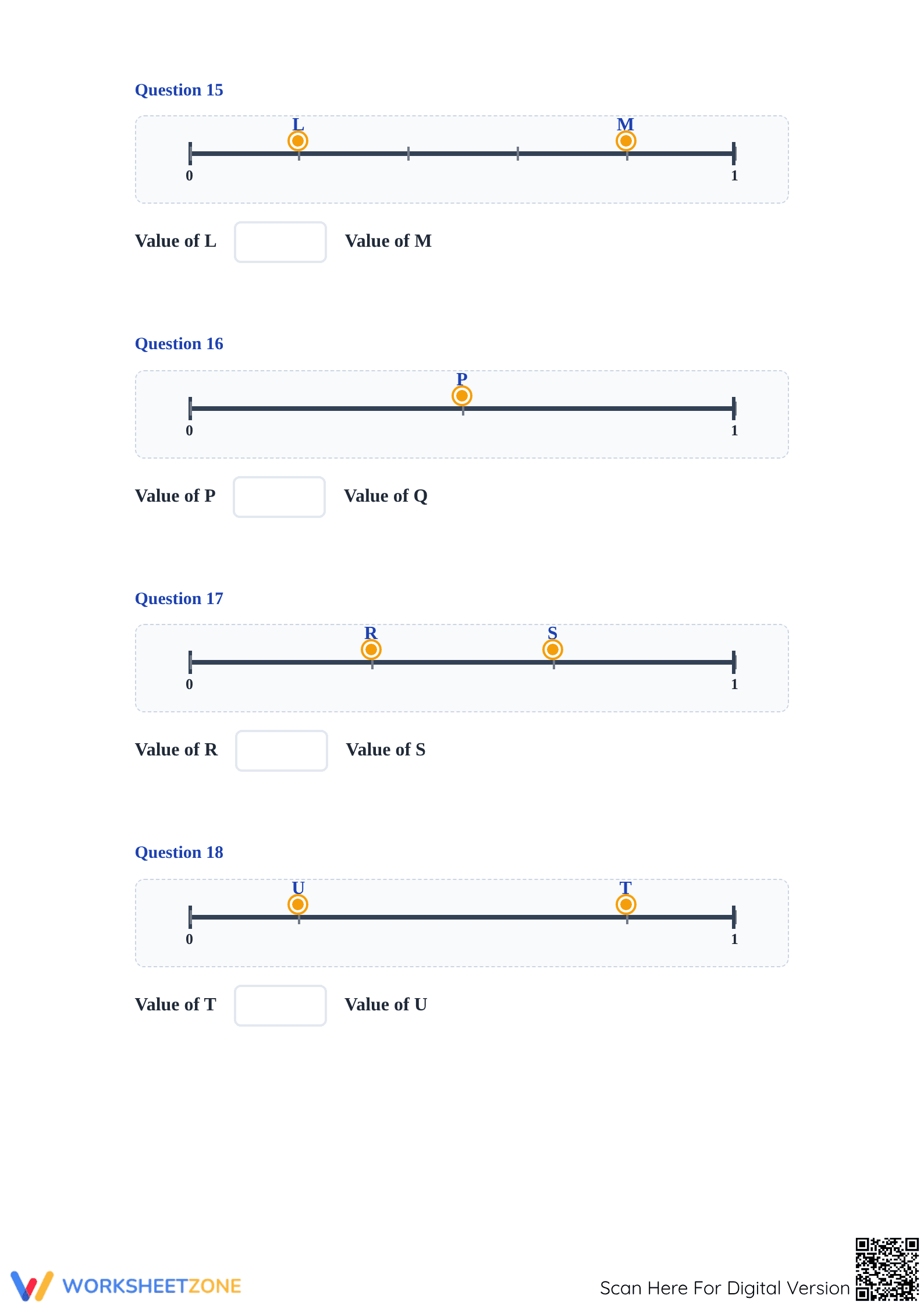
What's Inside: This packet contains 18 structured problems across five pages, complete with a full answer key. The resource is divided into four distinct parts: identification of marked points, manual placement of specific fractions, work with improper fractions extending beyond one, and comparative challenges. The clear, uncluttered layout ensures students focus entirely on the mathematical tasks without visual distraction.
The Zero-Prep Workflow is designed for maximum teacher efficiency. First, print the five-page PDF (takes approximately 30 seconds). Second, distribute the packets to your students; the sequential parts allow for immediate start with no verbal instructions needed (under 1 minute). Third, review the work using the included answer key for rapid grading or peer-assessment (under 5 minutes). This resource is a perfect solution for unexpected sub plans or morning work.
Standards Alignment: This resource directly addresses `CCSS.MATH.CONTENT.3.NF.A.2`, which requires students to understand a fraction as a number on the number line. Specifically, it supports the sub-standard `3.NF.A.2.B` regarding the representation of fractions on a number line diagram between 0 and 1, as well as extensions for improper fractions. This standard code can be copied directly into lesson plans, IEP goals, or district curriculum mapping tools.
How to Use It: Deploy this packet as a summative assessment following a unit on fraction basics to gauge student mastery of visual models. Alternatively, use Part 1 and Part 2 as formative check-ins during direct instruction to identify students who struggle with partitioning. If a student consistently misplaces points, use that observation to provide immediate corrective feedback on denominator-to-interval relationships. Expected completion time is 35 minutes for most middle-grade learners.
Who It's For: This resource is ideal for upper elementary students introduced to fractions and middle schoolers requiring remediation. The inclusion of improper fractions makes it suitable for Grade 6-10 students working on number system fluency. It pairs naturally with a physical number line anchor chart or a lesson on equivalent fractions.
This resource focuses on the fundamental skill defined by CCSS.MATH.CONTENT.3.NF.A.2, enabling students to accurately represent and order fractions on a number line. Research by Fisher & Frey (2014) highlights the importance of visual representations in mathematical literacy, noting that spatial models like number lines significantly improve a student's ability to conceptualize magnitude and relative value. By engaging with 18 varied tasks, including improper fractions and direct comparisons, students move from simple identification to higher-order analysis. The structured progression ensures that learners develop the necessary scaffolds to handle fractional values greater than one and understand the density of the number line. This mastery pack serves as a reliable evidence-based tool for both classroom instruction and targeted intervention, providing the rigorous practice required for long-term retention of fraction concepts in diverse educational settings.


