


























Views
Downloads
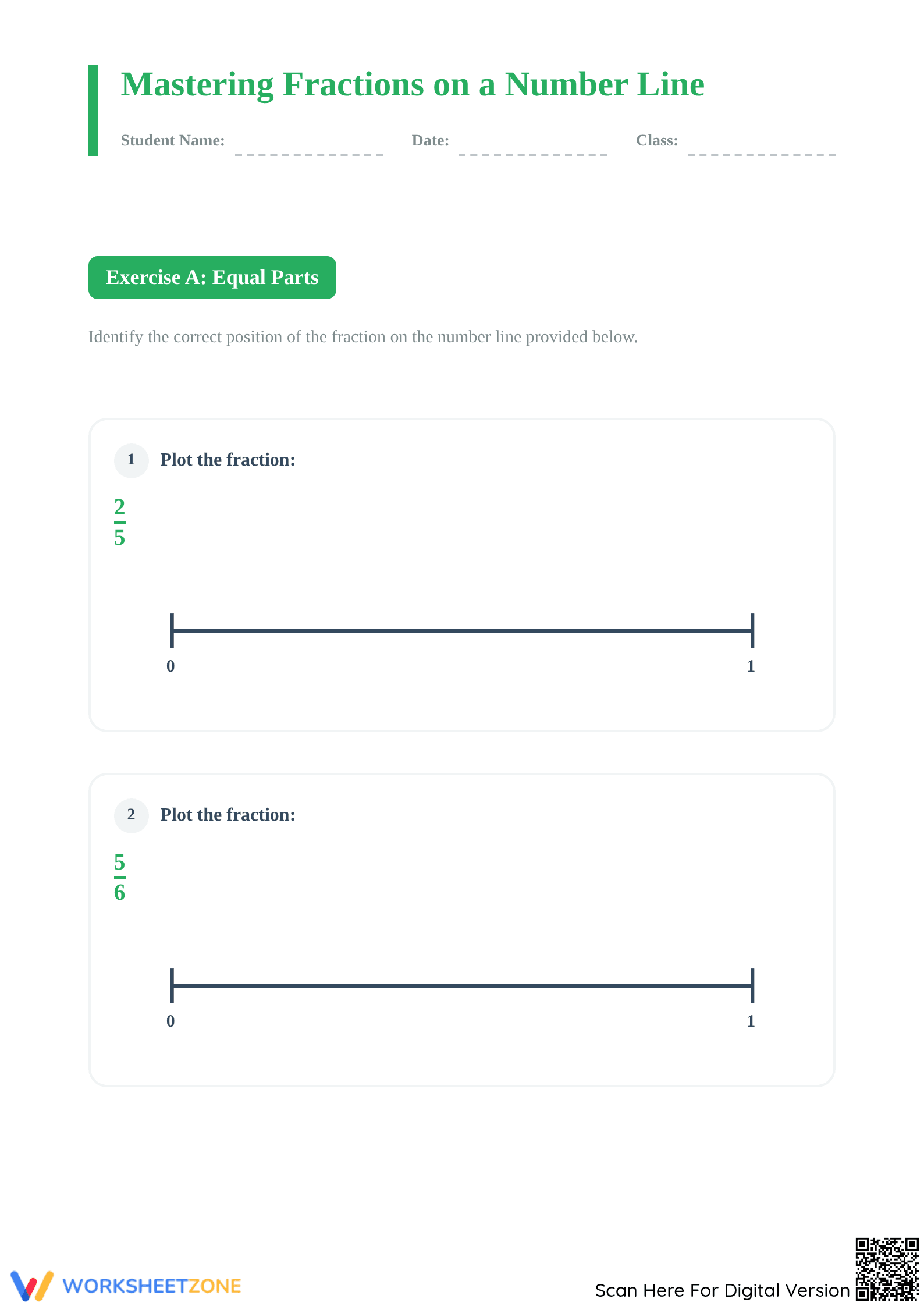
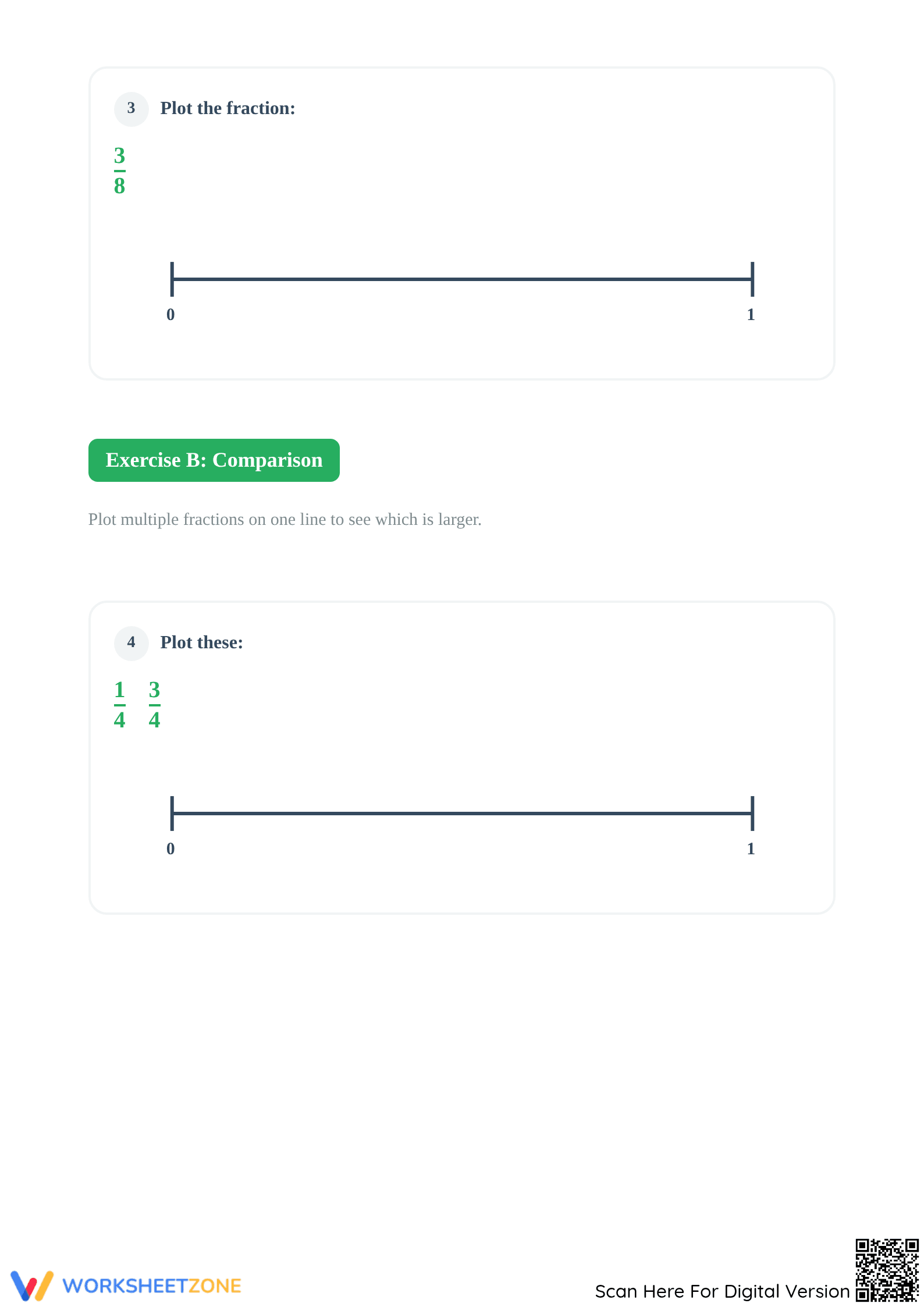
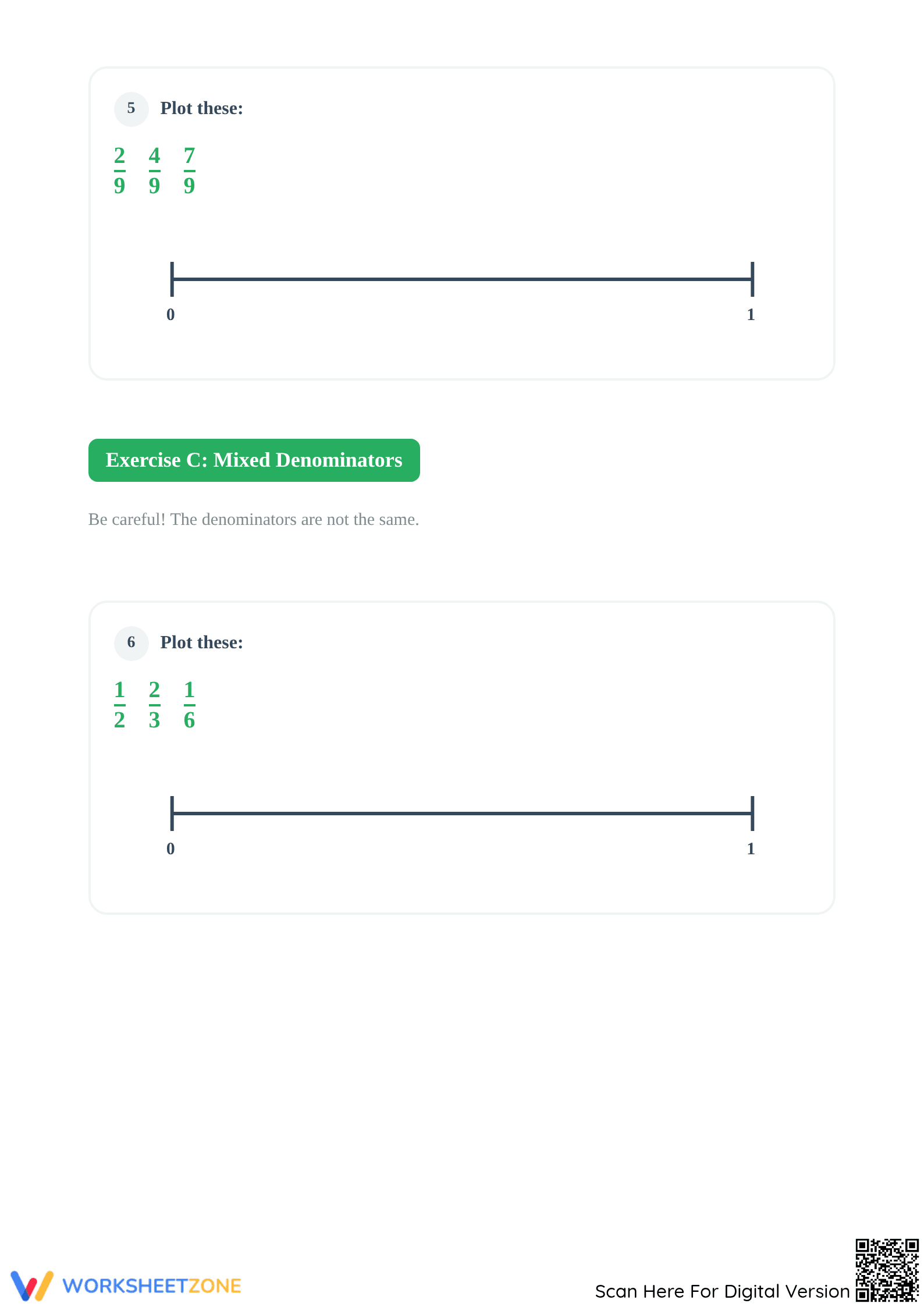
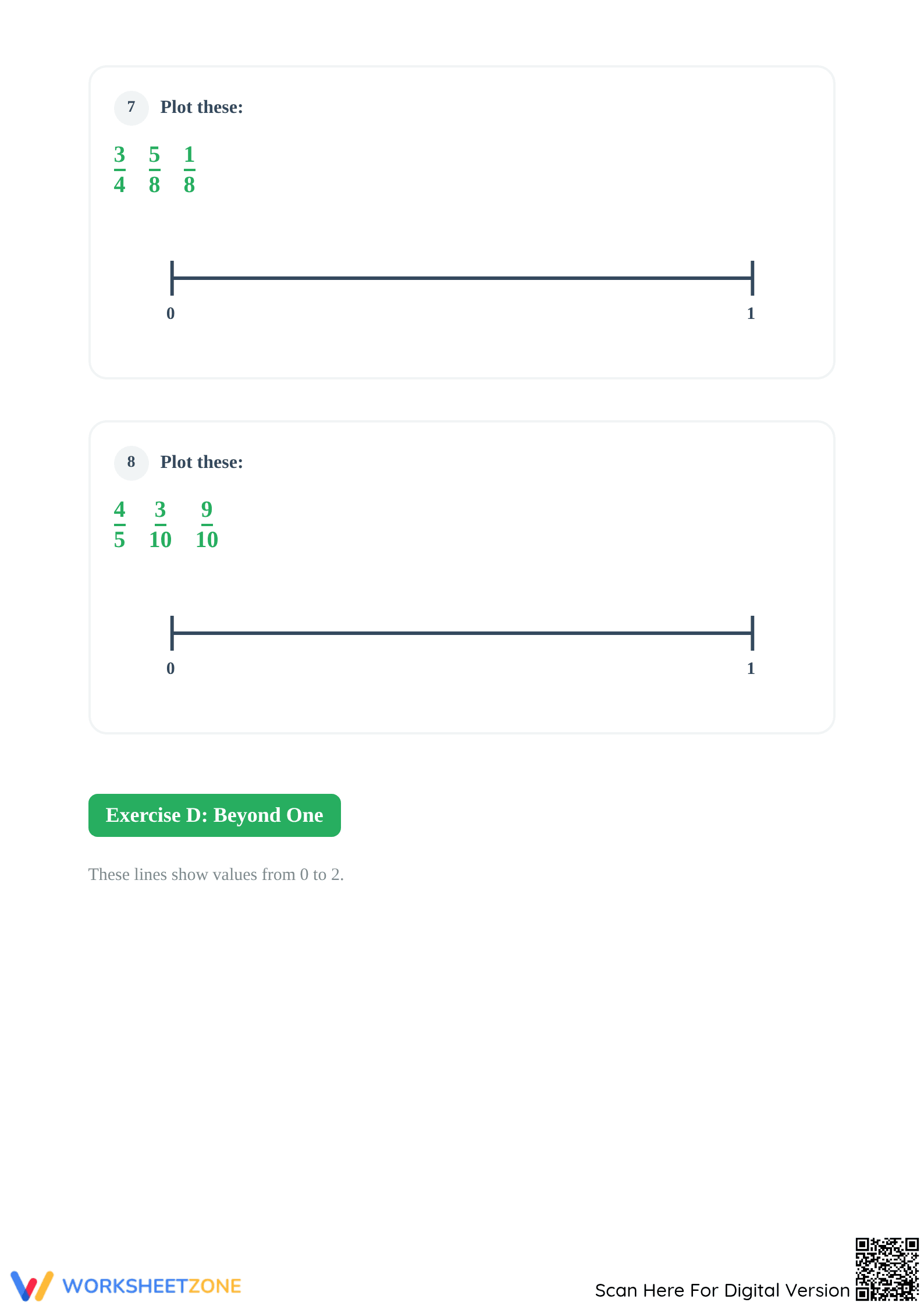

Printable Ordering Fractions on a Number Line Worksheet
Paste this activity's link or code into your existing LMS (Google Classroom, Canvas, Teams, Schoology, Moodle, etc.).
Students can open and work on the activity right away, with no student login required.
You'll still be able to track student progress and results from your teacher account.
Visualizing fractions on a number line is a critical milestone for elementary students transitioning from whole numbers to rational concepts. This worksheet provides a systematic approach to plotting, comparing, and ordering fractions with both like and unlike denominators. By grounding abstract numbers in a physical space, students develop a more robust understanding of mathematical magnitude.
At a Glance
- Grade: 3–5 · Subject: Math
- Standard:
CCSS.MATH.CONTENT.3.NF.A.2— Represent a fraction 1/b on a number line diagram by defining the interval- Skill Focus: Plotting and ordering fractions
- Format: 5 pages · 10 problems · Answer key included · PDF
- Best For: Visualizing fraction magnitude and relative order
- Time: 25–35 minutes
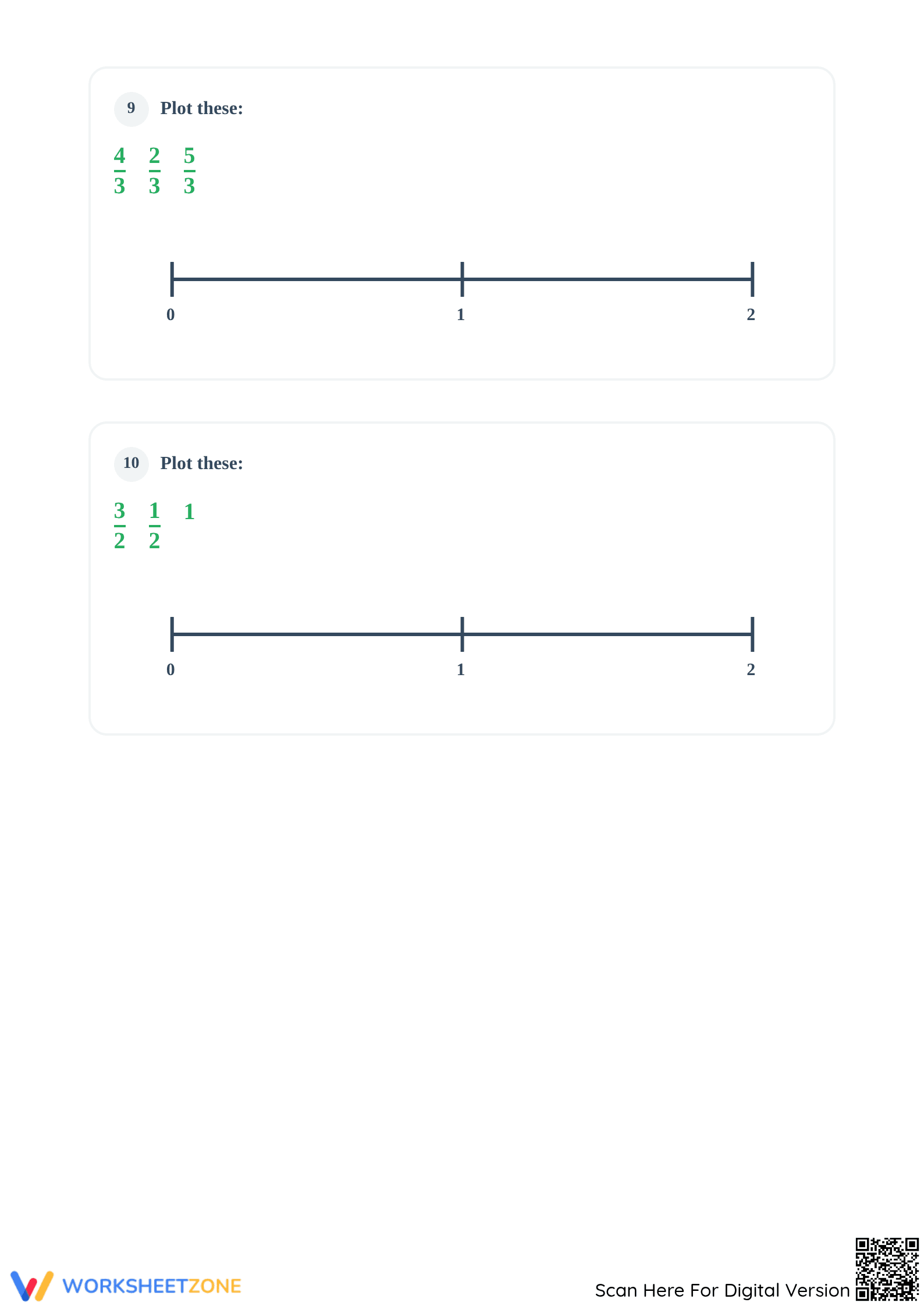
What's Inside: This comprehensive 5-page resource contains 10 structured tasks divided into four specialized exercises. The packet includes clean number line diagrams with clear 0, 1, and 2 markers, providing ample space for student plotting. A full answer key is provided, showing the exact placement of every fraction for quick grading or student self-correction.
Skill Progression
- Guided Practice: Students begin with Exercise A, focusing on equal parts where they plot single unit and non-unit fractions to build basic spatial awareness of intervals.
- Supported Practice: Exercises B and C introduce multiple fractions on a single line, challenging students to compare magnitudes and order fractions with both common and mixed denominators.
- Independent Practice: The final section, Exercise D, extends learning beyond the whole number one, requiring students to plot improper fractions on a 0-to-2 number line.
This sequence follows a gradual-release model, ensuring students master foundational placement before tackling complex comparisons.
Standards Alignment
This worksheet is primarily aligned to `CCSS.MATH.CONTENT.3.NF.A.2`: Understand a fraction as a number on the number line; represent fractions on a number line diagram. It also supports `CCSS.MATH.CONTENT.4.NF.A.2` by requiring students to compare and order fractions with different numerators and denominators. Both standard codes can be copied directly into lesson plans, IEP goals, or district curriculum mapping tools.
How to Use It
This resource is ideal for use during the "We Do" phase of a lesson on rational number density. Distribute Exercise B after direct instruction to observe how students handle relative placement. Use Exercise D as a formative assessment exit ticket to verify if students can visualize values greater than one. Students typically complete the full set in 30 minutes.
Who It's For
The clear visual layout is perfect for general education students in Grades 3-5 and provides essential scaffolding for middle school students requiring RTI support. This worksheet pairs naturally with fraction tiles or circular area models to help students connect different representations of the same rational value during small-group math interventions.
Educational research highlights that the number line is an essential mental model for understanding fraction magnitude and equivalence. According to the RAND AIRS 2024 report, students who utilize visual-spatial representations like number lines show a 22% higher proficiency in comparing fractions with unlike denominators compared to those using abstract algorithms alone. This worksheet facilitates this visual shift by moving from simple unit identification to complex ordering of improper fractions. By mapping values from zero to two, students bridge the gap between parts of a whole and rational number density. The structured exercises align directly with CCSS.MATH.CONTENT.3.NF.A.2, ensuring that learners develop the precision required for middle school algebraic reasoning. Teachers can rely on this resource to provide the scaffolded practice necessary for mastery of rational number placement. This document serves as a high-quality instructional tool for data-driven classrooms focusing on CCSS standards.


