


























Views
Downloads

Grade 3-5 Ordering Fractions — Printable No-Prep Worksheet
Paste this activity's link or code into your existing LMS (Google Classroom, Canvas, Teams, Schoology, Moodle, etc.).
Students can open and work on the activity right away, with no student login required.
You'll still be able to track student progress and results from your teacher account.
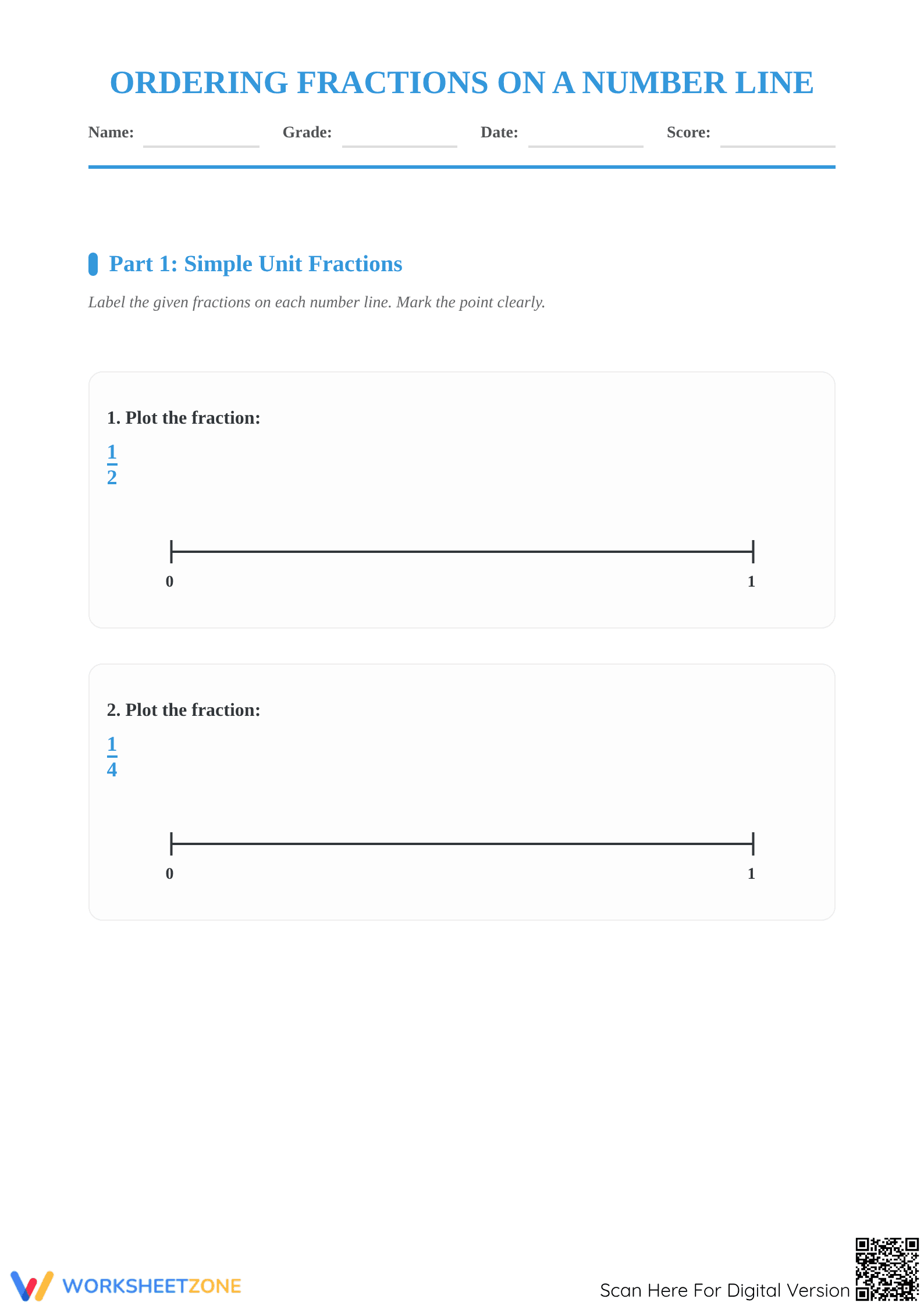
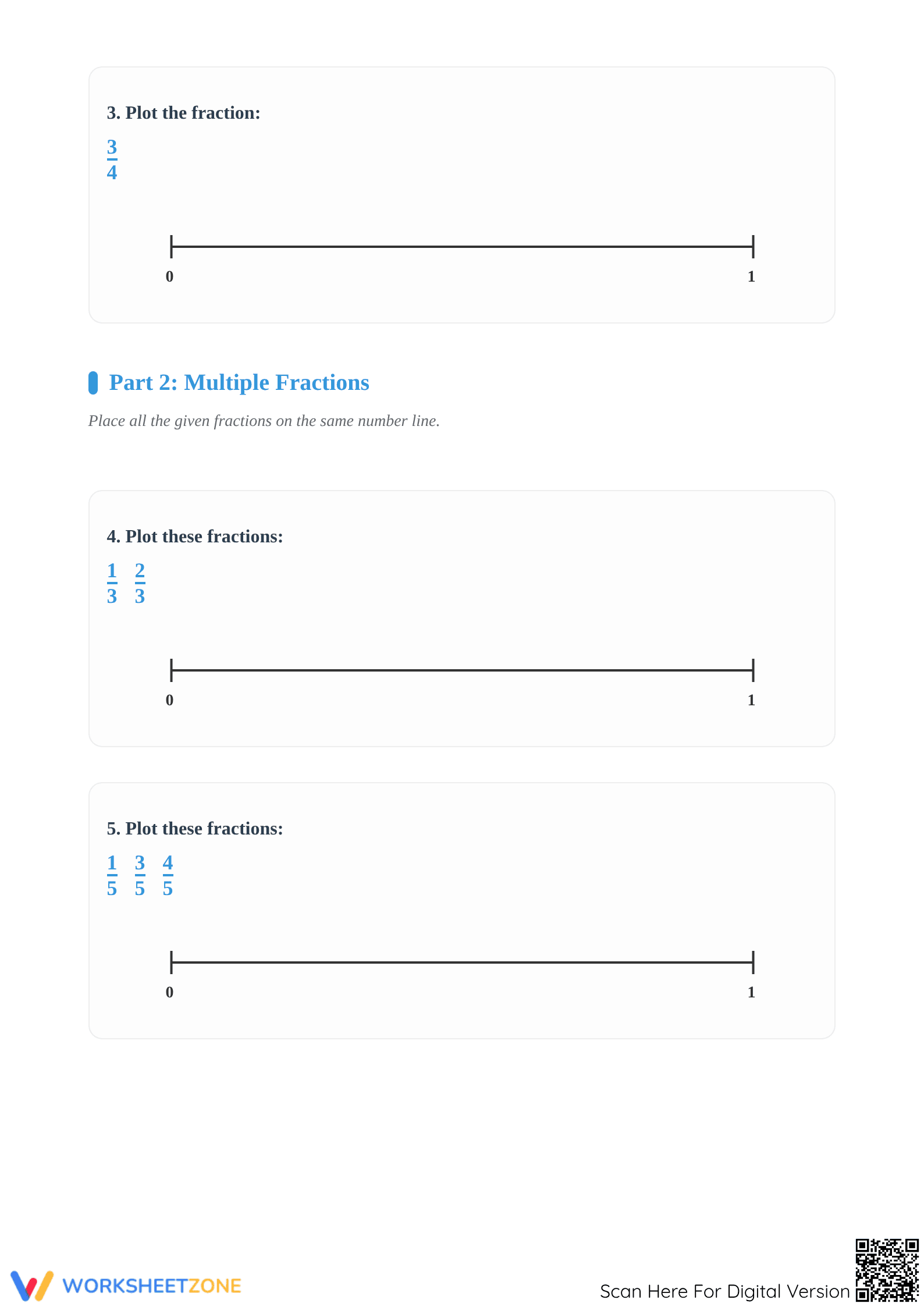
Students master fractional visualization with this comprehensive ordering fractions on a number line worksheet. By plotting unit fractions, comparing different denominators, and navigating values greater than one, learners develop a robust mental model of number magnitude. This resource ensures students can accurately position and compare fractions, a foundational skill for middle school algebraic readiness.
At a Glance
- Grade: 3–5 · Subject: Math (Fractions)
- Standard:
3.NF.A.2— Represent a fraction on a number line diagram by defining the interval.- Skill Focus: Plotting and ordering fractions
- Format: 5 pages · 15 problems · Answer key included · PDF
- Best For: Independent practice and formative assessment
- Time: 30–45 minutes
What's Inside
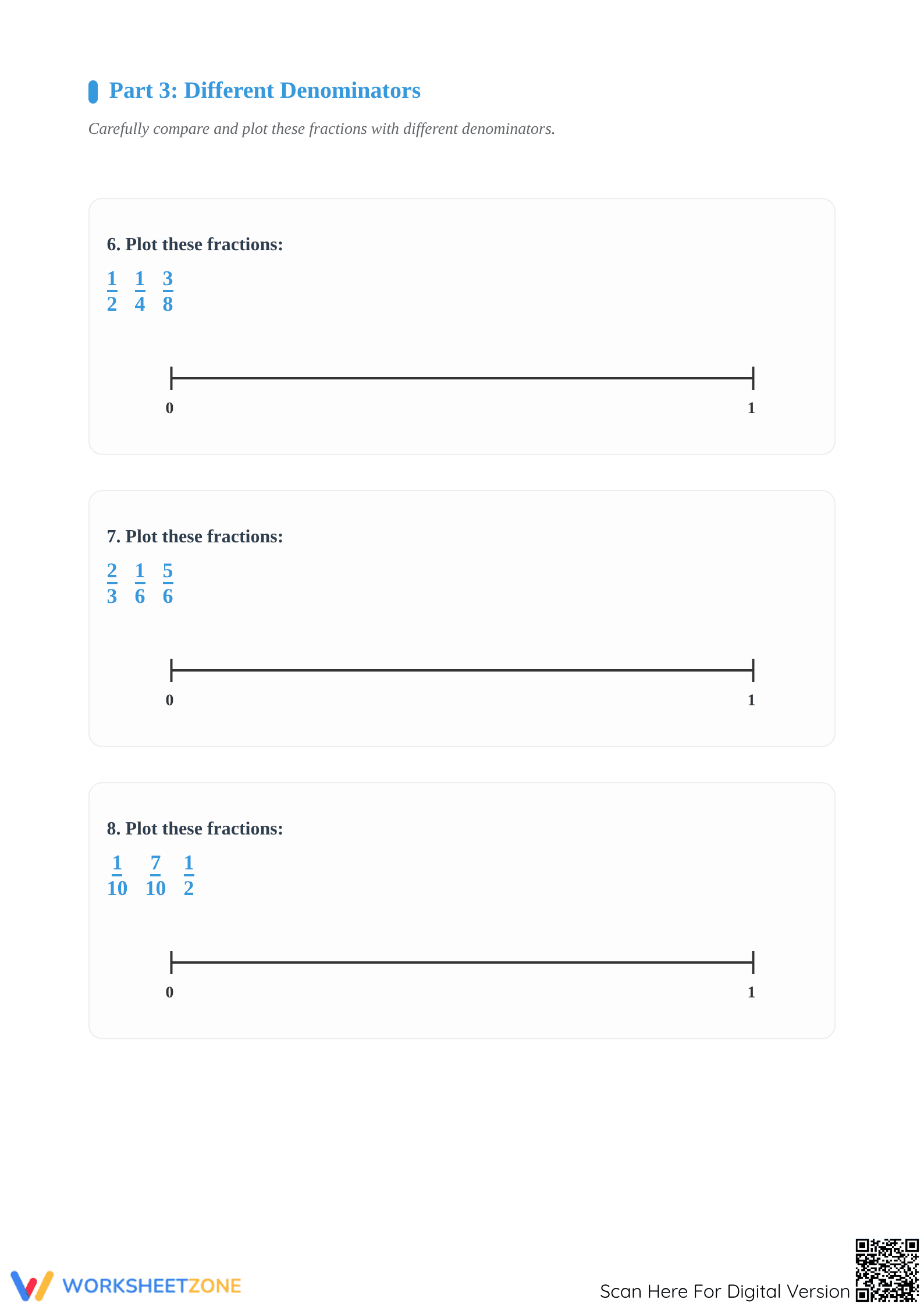
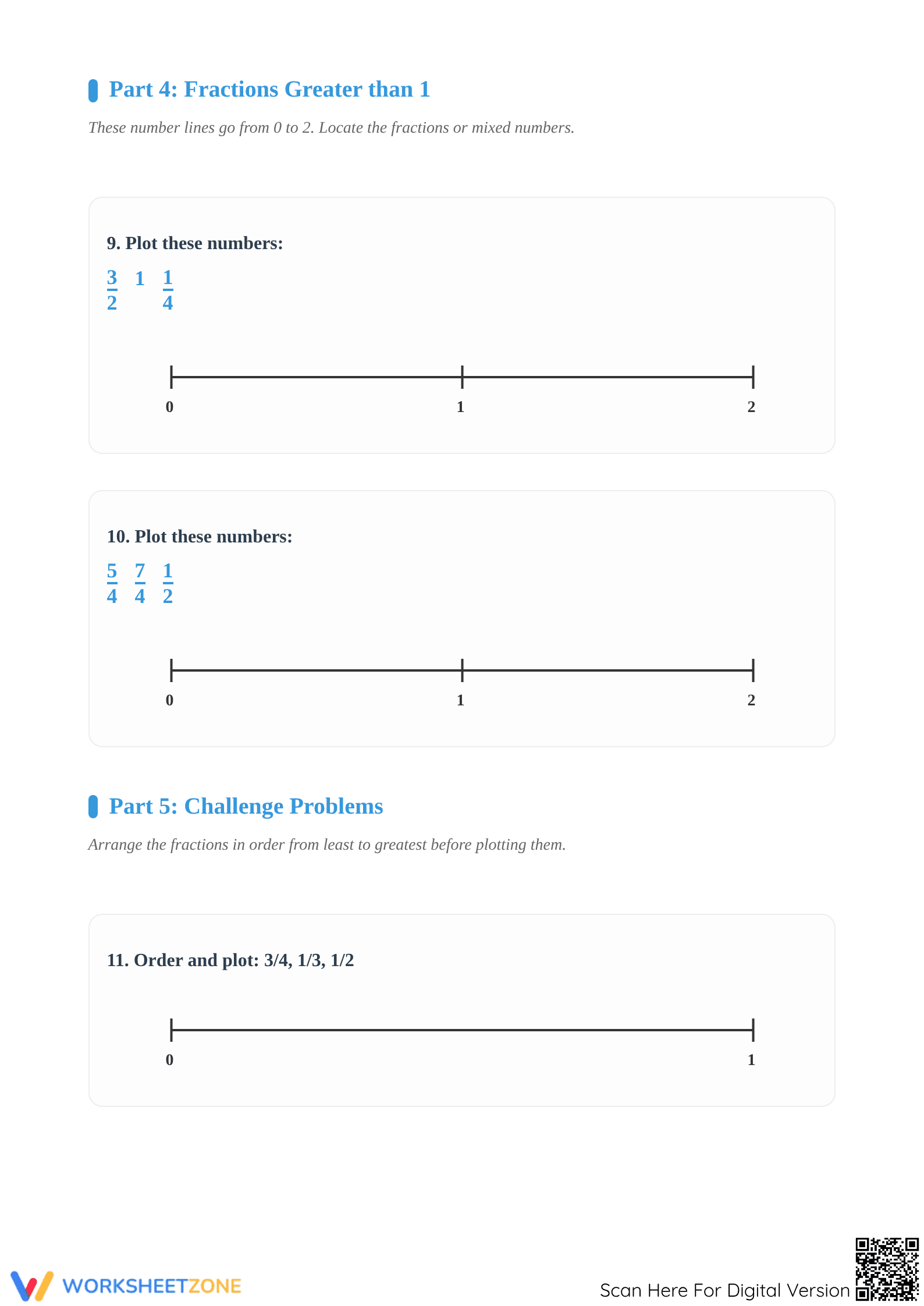
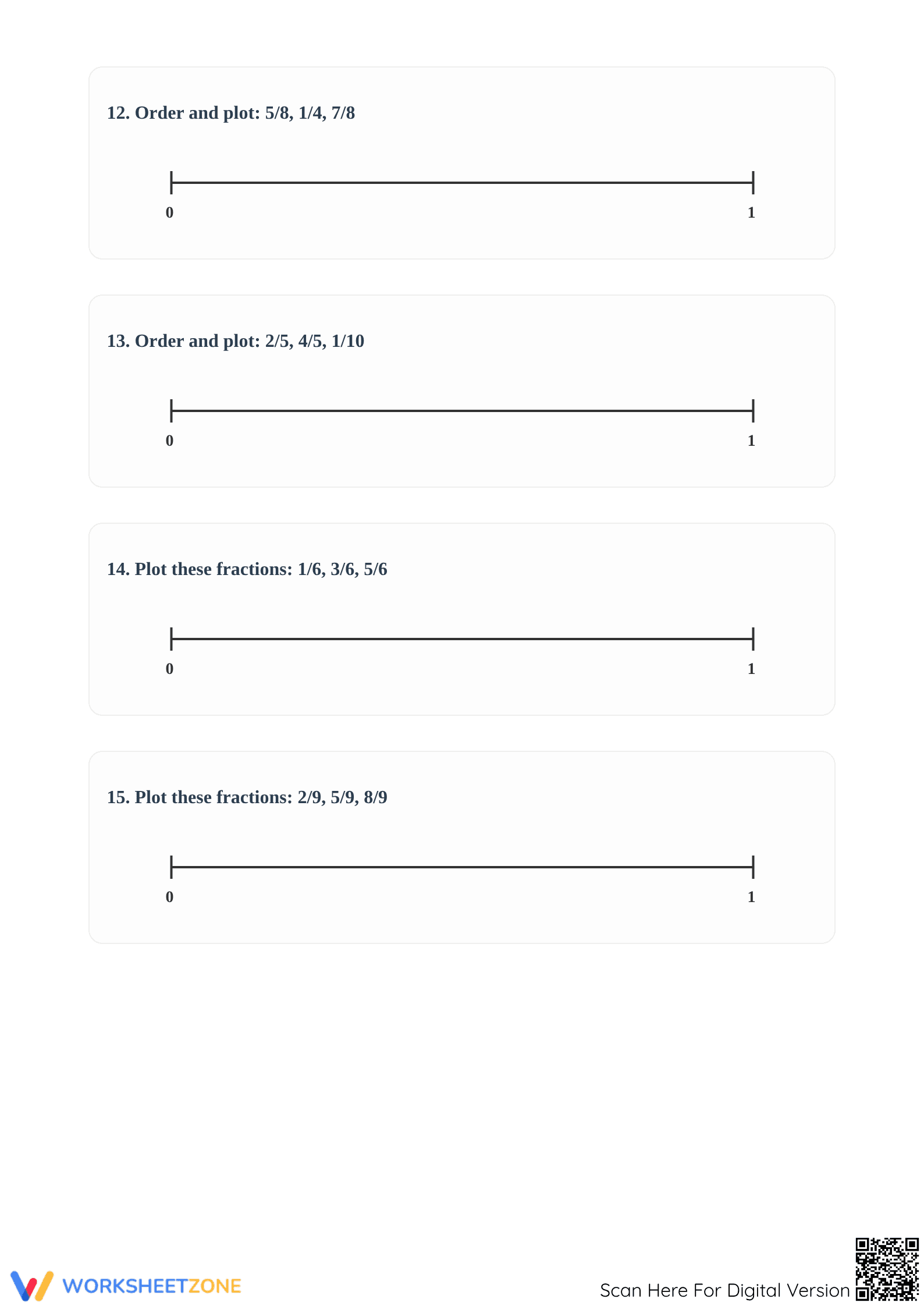
This five-page packet is organized into five parts to scaffold learning. It begins with simple unit fractions and progresses to multiple fractions with common denominators. The middle sections introduce different denominators, while the final pages cover fractions greater than one and complex ordering tasks. Each problem features a clear number line with labeled endpoints, allowing students to focus on partitioning and plotting. A complete answer key is provided for all 15 tasks to facilitate grading.
Zero-Prep Workflow
This resource requires minimal preparation, making it ideal for sub plans. First, print the packet or select specific pages based on your lesson (30 seconds). Second, distribute the worksheets; the clear headings allow students to work independently with little teacher guidance (1 minute). Third, review the completed work using the answer keys to identify misconceptions regarding denominator size or improper fractions (1 minute). Total prep time is under two minutes, maximizing your instructional focus.
Standards Alignment
Aligned with `3.NF.A.2`, this worksheet requires students to understand fractions as numbers on a line. It addresses representing fractions 1/b and a/b on a number line diagram. Advanced sections support `4.NF.A.2` by comparing fractions with different denominators. Both standard codes can be copied directly into lesson plans or IEP goals to ensure instructional compliance and transparency for administrators or parents.
How to Use It
Use this packet as a summative assessment to verify conceptual visualization. Observe how students handle "Part 3: Different Denominators"; difficulty partitioning indicates a need for equivalent fraction instruction. Expected completion time is 40 minutes, though it can be broken into 10-minute segments for warm-ups. It serves as an excellent tool for identifying students who require targeted intervention before moving to fraction addition.
Who It's For
This resource is designed for students in grades 3 through 5 developing fractional number sense. It is particularly beneficial for visual learners who thrive on spatial relationships. Pair this worksheet with fraction tiles to allow students to compare physical sizes before plotting exact linear locations. It is an essential addition to any elementary math classroom curriculum.
Effective math instruction requires a transition from concrete manipulatives to representational models, a bridge provided by this ordering fractions on a number line worksheet. According to EdReports 2024, high-quality materials must prioritize the "major work of the grade," including developing an understanding of fractions as numbers. Research indicates that the number line is a superior model for comparison as it provides a consistent scale for all numbers. By asking students to plot fractions with different denominators on the same line, this worksheet forces a confrontation with the inverse relationship between denominator size and part size. This cognitive load is essential for moving students toward mathematical mastery and preventing "whole number bias" errors. The standard code 3.NF.A.2 is central to this progression, ensuring students can quote evidence of their understanding through precise plotting and ordering.


