


























Views
Downloads

Odd and Even Numbers Worksheet | Grade 2 Essential Math
Paste this activity's link or code into your existing LMS (Google Classroom, Canvas, Teams, Schoology, Moodle, etc.).
Students can open and work on the activity right away, with no student login required.
You'll still be able to track student progress and results from your teacher account.
This Essential Grade 2 math worksheet helps students master the foundational concept of odd and even numbers. Through a visually engaging pencil-themed activity, learners identify and categorize numbers to build numerical fluency. This resource ensures students can confidently distinguish between parity types, a critical skill for early algebraic thinking and multiplication readiness.
At a Glance
- Grade: 2 · Subject: Math
- Standard:
2.OA.C.3— Determine if a number is odd or even by pairing objects- Skill Focus: Odd and even numbers
- Format: 1 page · 10 problems · Answer key included · PDF
- Best For: Small group practice or quick assessment
- Time: 10–15 minutes
What's Inside
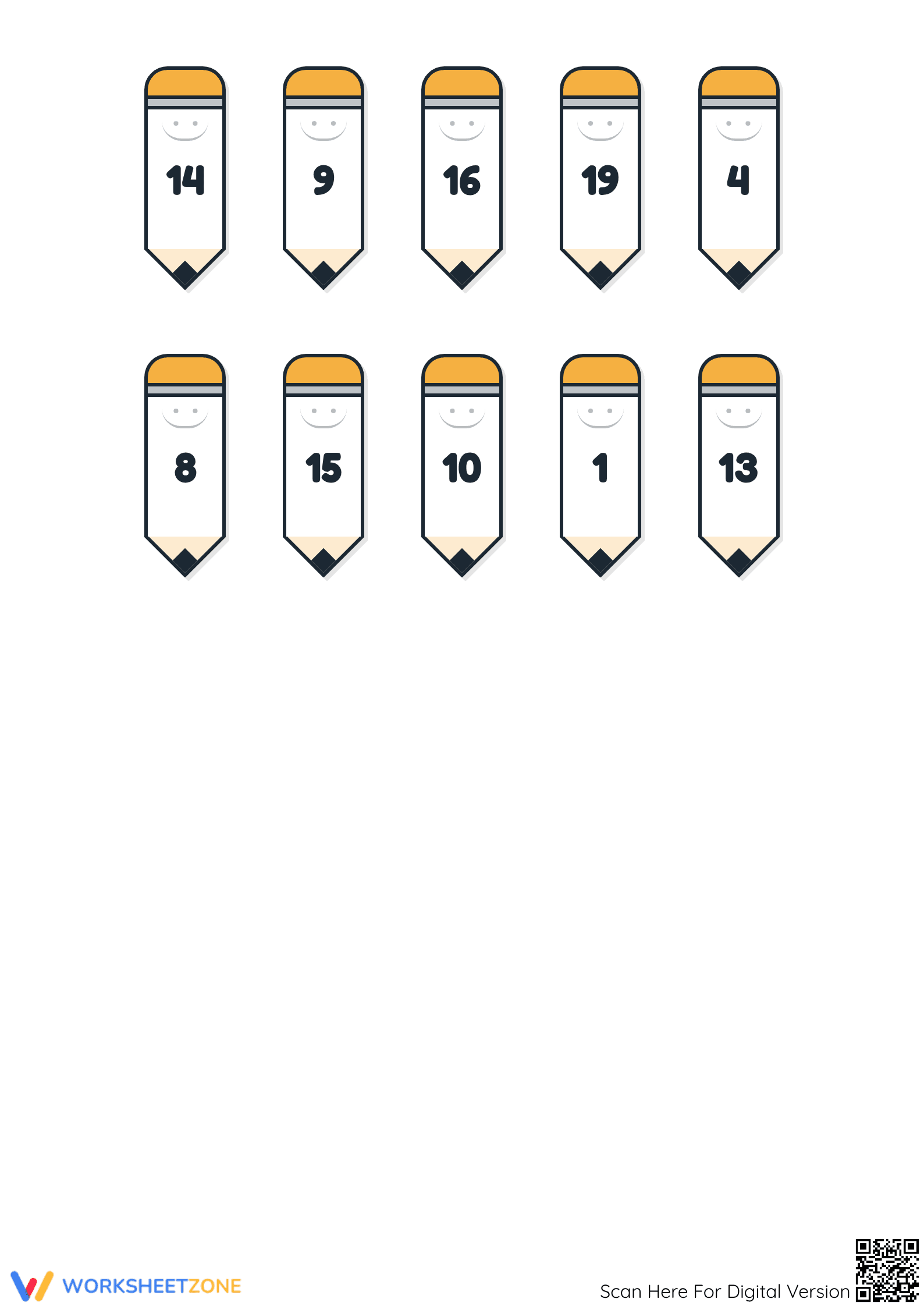
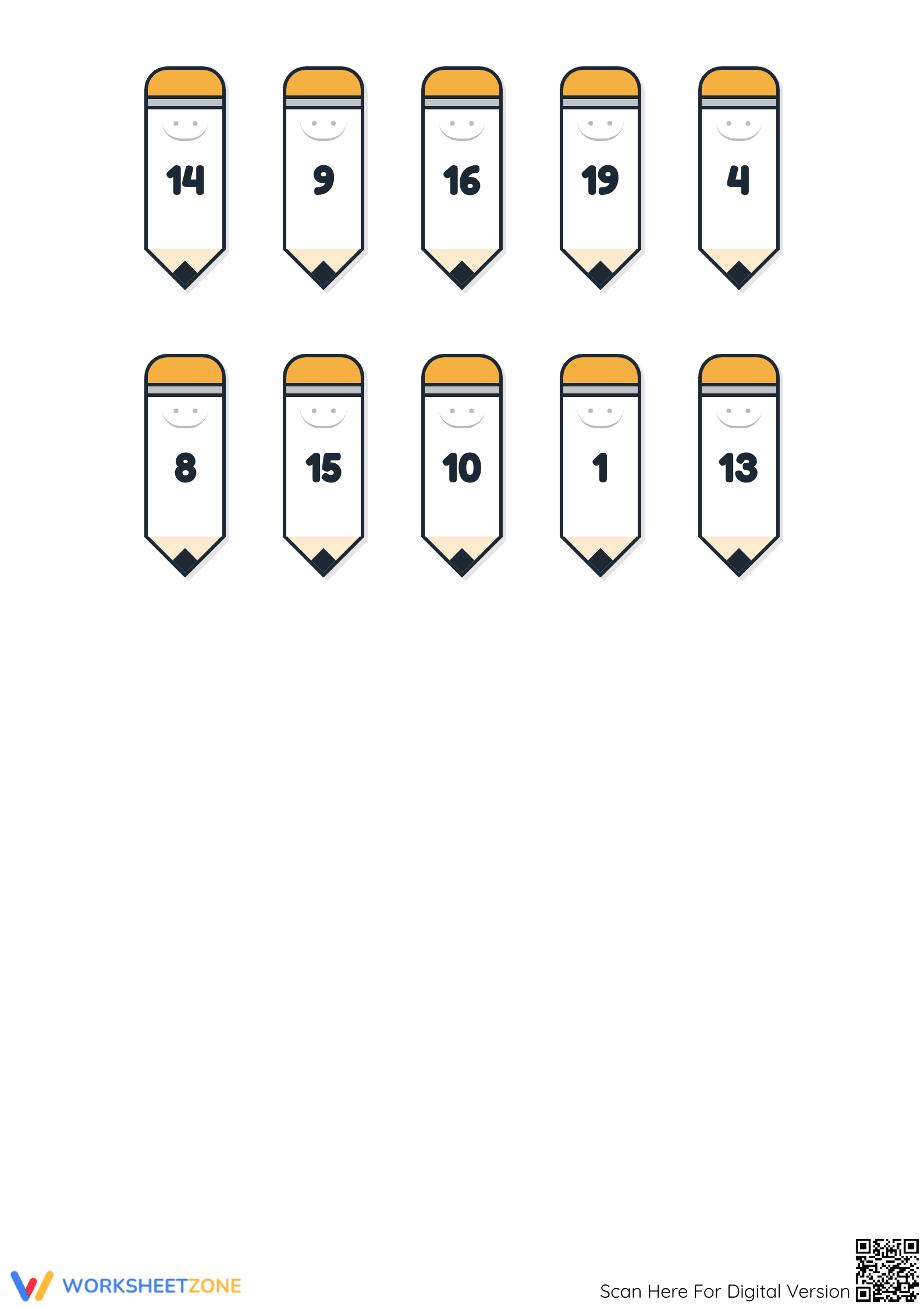
This single-page PDF features 10 numbered pencil graphics, each containing a unique value between 1 and 20. The clean, professional layout minimizes distractions, making it ideal for young learners. It includes a comprehensive answer key for immediate feedback and is designed for high-contrast printing to ensure accessibility in all classroom environments.
Skill Progression
- Guided Practice: Teachers can use the first pencil (number 14) to demonstrate how to pair items or check the ones digit to determine parity.
- Supported Practice: Students work through the next four items (9, 16, 19, 4), using provided workspace to draw pairs or apply divisibility rules.
- Independent Practice: The final five pencils (8, 15, 10, 1, 13) allow students to demonstrate mastery without teacher intervention.
This worksheet follows a gradual release of responsibility, transitioning students from teacher-led modeling to independent numerical categorization and mastery.
Standards Alignment
The primary standard addressed is `2.OA.C.3`: "Determine whether a group of objects (up to 20) has an odd or even number of members, e.g., by pairing objects or counting them by 2s; write an equation to express an even number as a sum of two equal addends." This resource provides direct evidence of a student's ability to categorize numbers based on these mathematical properties. Both standard codes can be copied directly into lesson plans, IEP goals, or district curriculum mapping tools.
How to Use It
Use this worksheet during the "Independent Practice" phase of a lesson on number properties. It serves as an excellent formative assessment tool; observe if students are pairing dots or looking at the last digit. Expect students to complete the 10 tasks in approximately 12 minutes, making it a perfect exit ticket or morning work activity for daily math warm-ups.
Who It's For
This resource is designed for Grade 2 students but is highly effective for Grade 1 enrichment or Grade 3 intervention. It is particularly helpful for students who benefit from visual cues and structured layouts. Pair this worksheet with physical manipulatives or a digital "Odd/Even" sorting game to provide a multi-sensory learning experience that reinforces parity concepts.
The `2.OA.C.3` standard requires students to distinguish between odd and even numbers, a prerequisite for understanding multiplication and division. According to RAND AIRS 2024, early mastery of number properties is a strong predictor of success in middle-school algebraic reasoning. This worksheet provides structured practice in identifying odd and even sets, ensuring students move beyond rote memorization toward conceptual understanding. By engaging with 10 distinct pencil-themed problems, learners internalize the patterns associated with parity. Research from Fisher & Frey (2014) emphasizes that "check for understanding" tasks, like this parity identification sheet, are essential for closing achievement gaps in foundational mathematics. This resource provides a clear, printable path to mastery that can be integrated into any CCSS-aligned curriculum or used as a standalone assessment for student progress monitoring and data collection.


