


























Views
Downloads

Essential Place Value: Numbers to 20 Worksheet | Grade 1
Paste this activity's link or code into your existing LMS (Google Classroom, Canvas, Teams, Schoology, Moodle, etc.).
Students can open and work on the activity right away, with no student login required.
You'll still be able to track student progress and results from your teacher account.
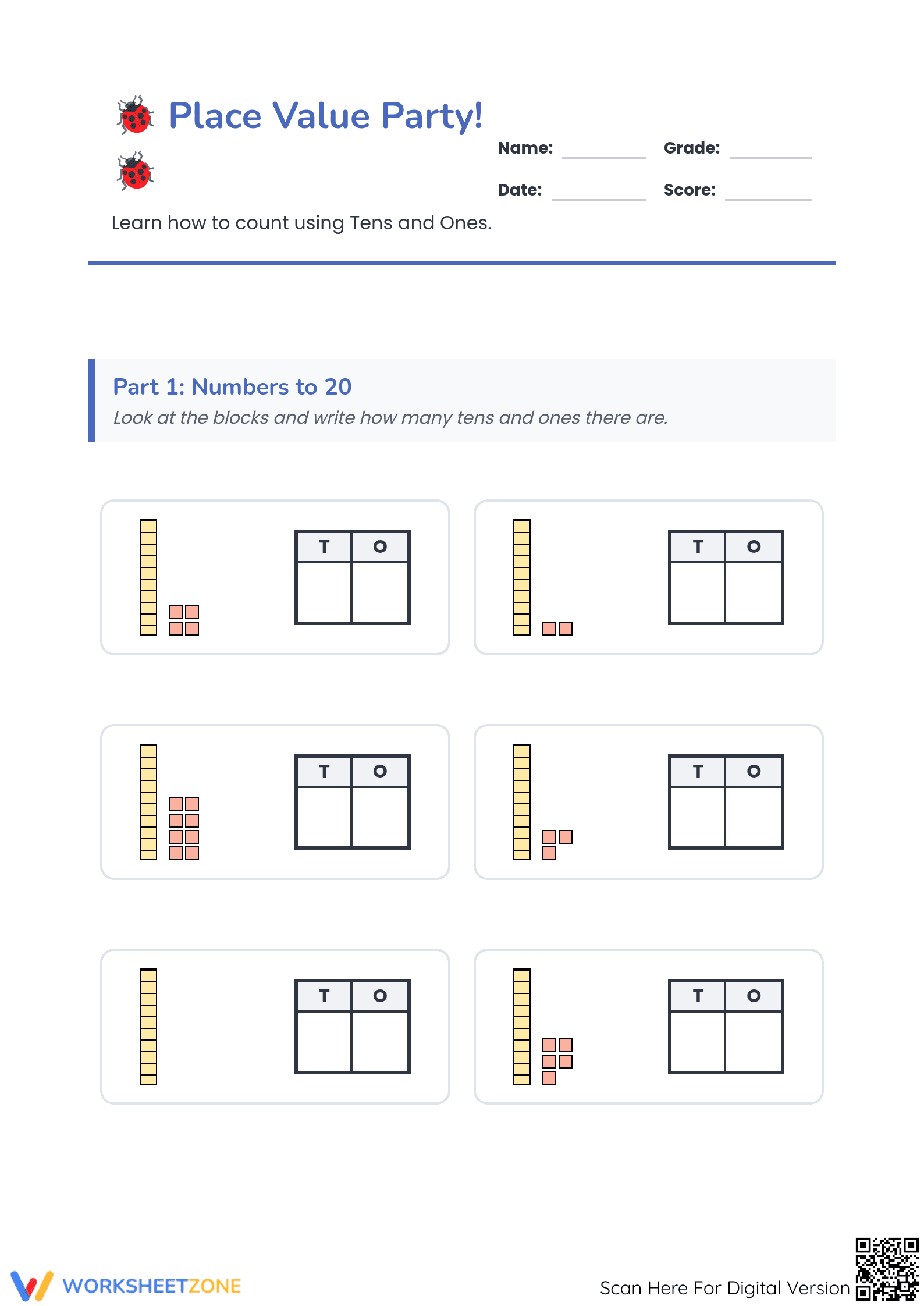
This comprehensive Numbers to 20 worksheet focuses on the fundamental concept of place value for first-grade students. By using visual base-ten blocks, learners identify tens and ones to build a concrete understanding of two-digit numbers. This essential math resource ensures students move beyond rote counting toward true numerical mastery and base-ten fluency.
At a Glance
- Grade: 1 · Subject: Math
- Standard:
1.NBT.B.2— Understand that the two digits of a two-digit number represent tens and ones- Skill Focus: Place value (tens and ones)
- Format: 4 pages · 48 problems · Answer key included · PDF
- Best For: Daily math centers and independent practice
- Time: 15–20 minutes
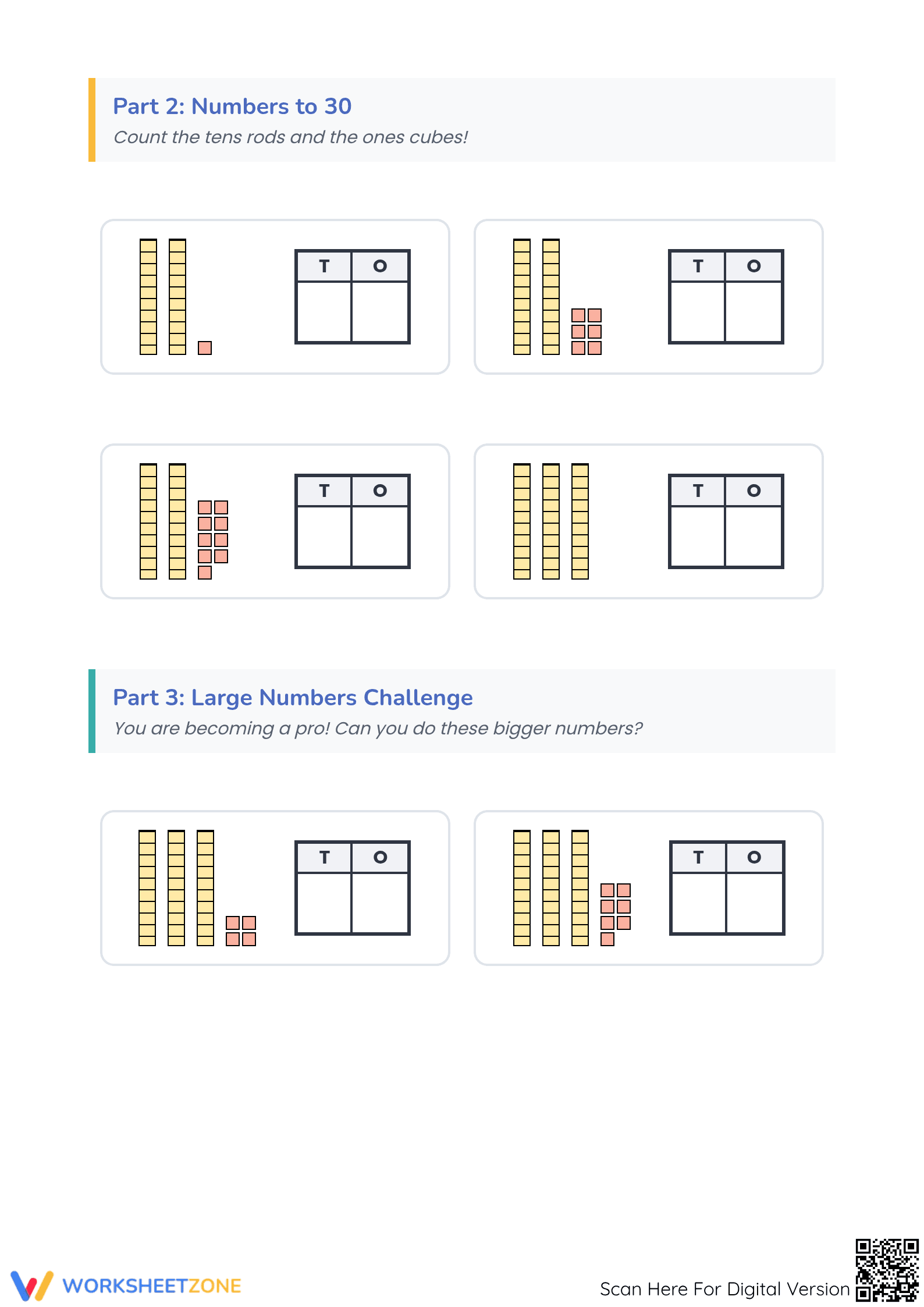
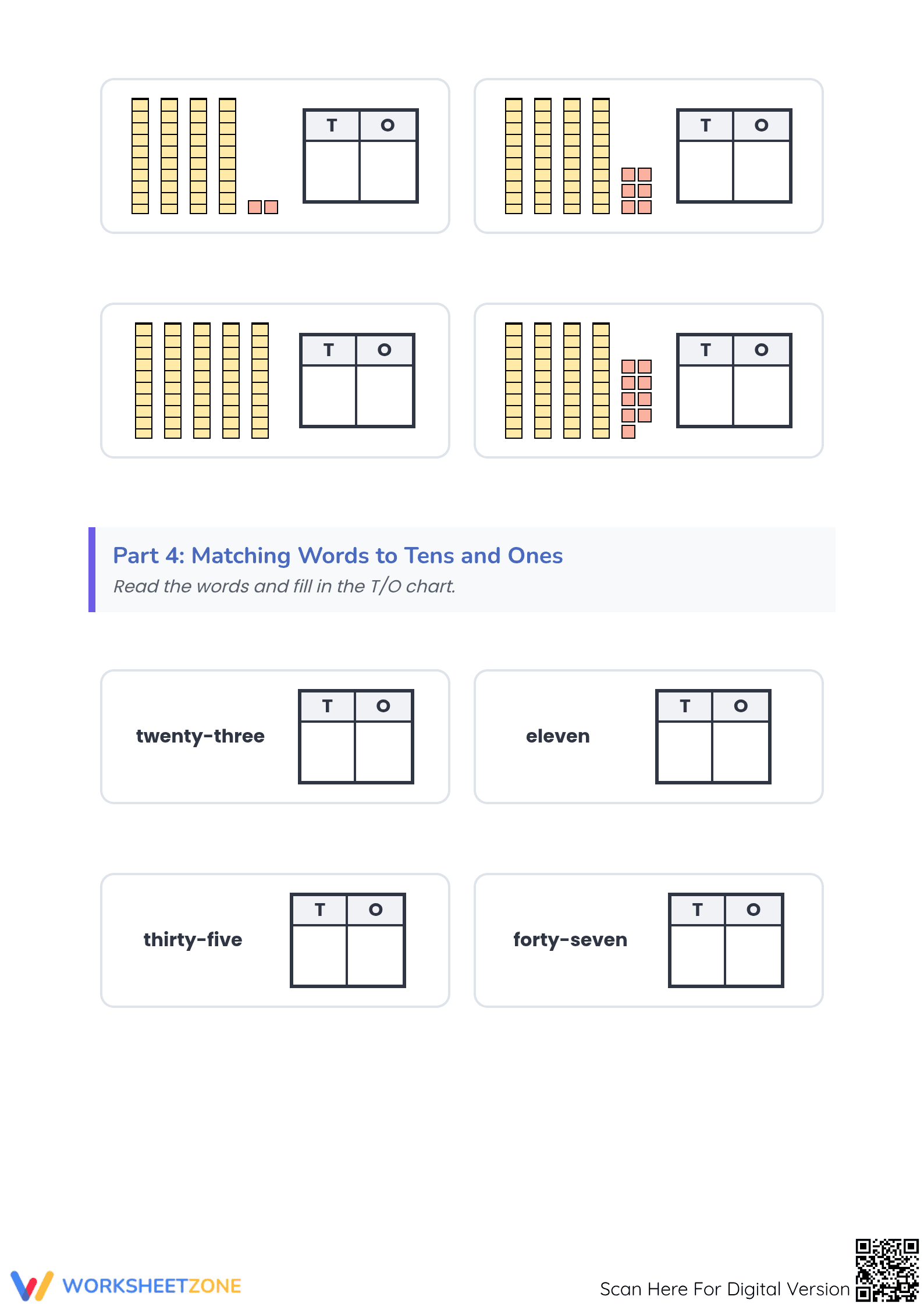
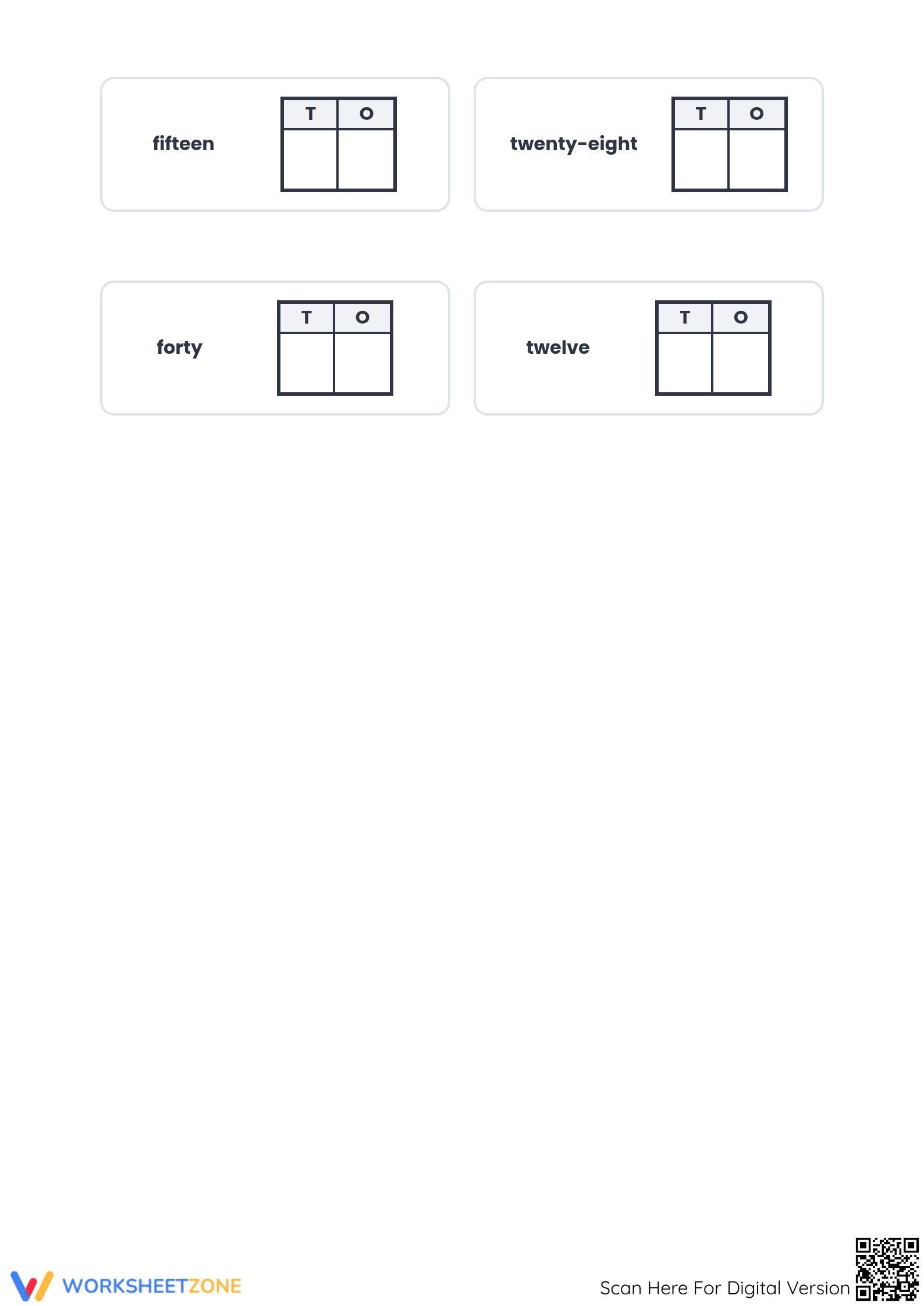
This four-page PDF includes 48 structured problems designed to reinforce place value concepts. Each page features clear visual representations using base-ten rods and unit cubes. Students practice counting blocks to determine total values and decomposing numbers into their constituent tens and ones. A complete answer key is provided, allowing for quick grading or student self-correction during independent work time.
Skill Progression
- Guided Practice: Learners engage in identifying numbers up to 20 by counting pre-drawn base-ten blocks with immediate visual reinforcement.
- Supported Practice: Students transition to decomposing numbers by filling in tens and ones charts based on specific visual cues.
- Independent Practice: Final tasks require students to write full numerical representations and explain the value of each digit.
This gradual-release model moves from concrete visual models to abstract numerical identification, following the I Do, We Do, You Do instructional framework.
Standards Alignment
This resource is aligned to `CCSS.MATH.CONTENT.1.NBT.B.2`, which requires students to understand that the two digits of a two-digit number represent amounts of tens and ones. It specifically addresses numbers 11 through 19 as a ten and some ones. This standard code can be copied directly into lesson plans, IEP goals, or district curriculum mapping tools.
How to Use It
Use this worksheet during direct instruction to demonstrate the relationship between digits and physical quantities. It is also an effective tool for formative assessment; observe if students correctly identify the "1" in "15" as a ten rather than a single unit. The 20-minute completion time makes it ideal for math rotations or as a focused homework assignment following a place value lesson.
Who It's For
This resource is specifically designed for Grade 1 students but serves as an excellent intervention tool for Grade 2 or Grade 3 learners needing place value review. It pairs naturally with physical base-ten blocks or a digital interactive whiteboard lesson. The clear layout supports diverse learners, including those requiring visual aids to grasp abstract math concepts.
Place value understanding in the early grades is a critical predictor of later mathematical achievement in multi-digit operations and algebraic thinking. According to the RAND AIRS 2024 report, the use of visual representations, such as base-ten blocks, significantly enhances a student's ability to transition from concrete counting to abstract numerical reasoning. This worksheet leverages these evidence-based strategies by providing repetitive, structured exposure to the base-ten system within the 11–20 number range. By focusing on decomposing numbers into tens and ones, students develop the foundational schemas necessary for regrouping and more complex arithmetic. The CCSS.MATH.CONTENT.1.NBT.B.2 standard emphasizes that a "ten" can be thought of as a bundle of ten ones—a concept central to this resource's design. Educators can utilize these findings to justify the integration of visual place value models as a core component of their foundational mathematics curriculum.


