


























Views
Downloads

Printable Number Tracing 1-10 Worksheet | Kindergarten
Paste this activity's link or code into your existing LMS (Google Classroom, Canvas, Teams, Schoology, Moodle, etc.).
Students can open and work on the activity right away, with no student login required.
You'll still be able to track student progress and results from your teacher account.
This comprehensive 4-page number packet provides Kindergarten students with a structured pathway to mastering numerals 1 through 10. By integrating tracing, counting, and matching, the worksheet ensures learners build a multi-sensory understanding of number symbols and their corresponding quantities in a single printable resource.
At a Glance
- Grade: Kindergarten · Subject: Math
- Standard:
CCSS.MATH.CONTENT.K.CC.A.3— Write numbers from 0 to 20 and represent objects with written numerals- Skill Focus: Numeral formation and cardinality
- Format: 4 pages · 41 problems · Answer key included · PDF
- Best For: Initial number introduction and remedial practice
- Time: 20–30 minutes
What's Inside
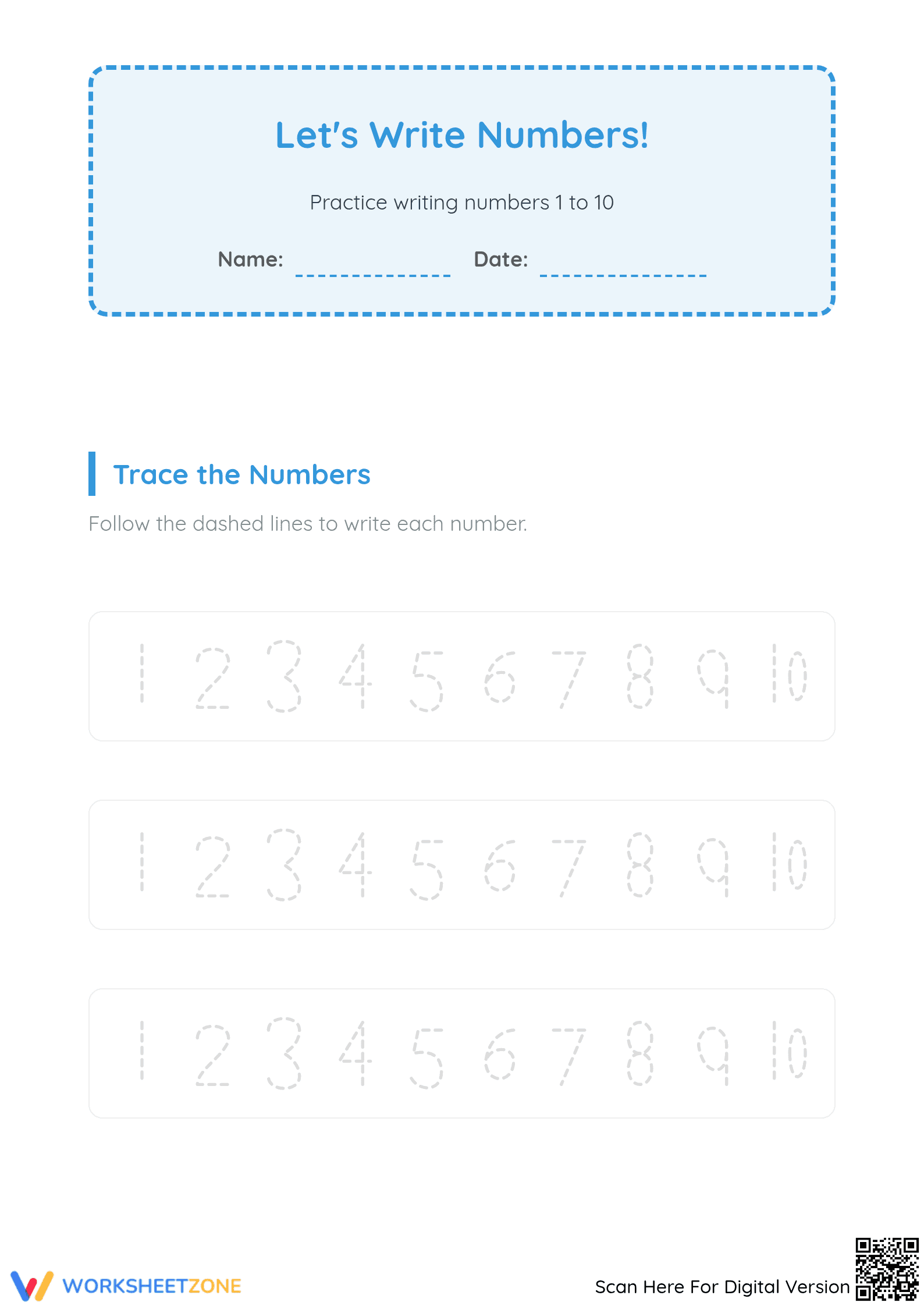
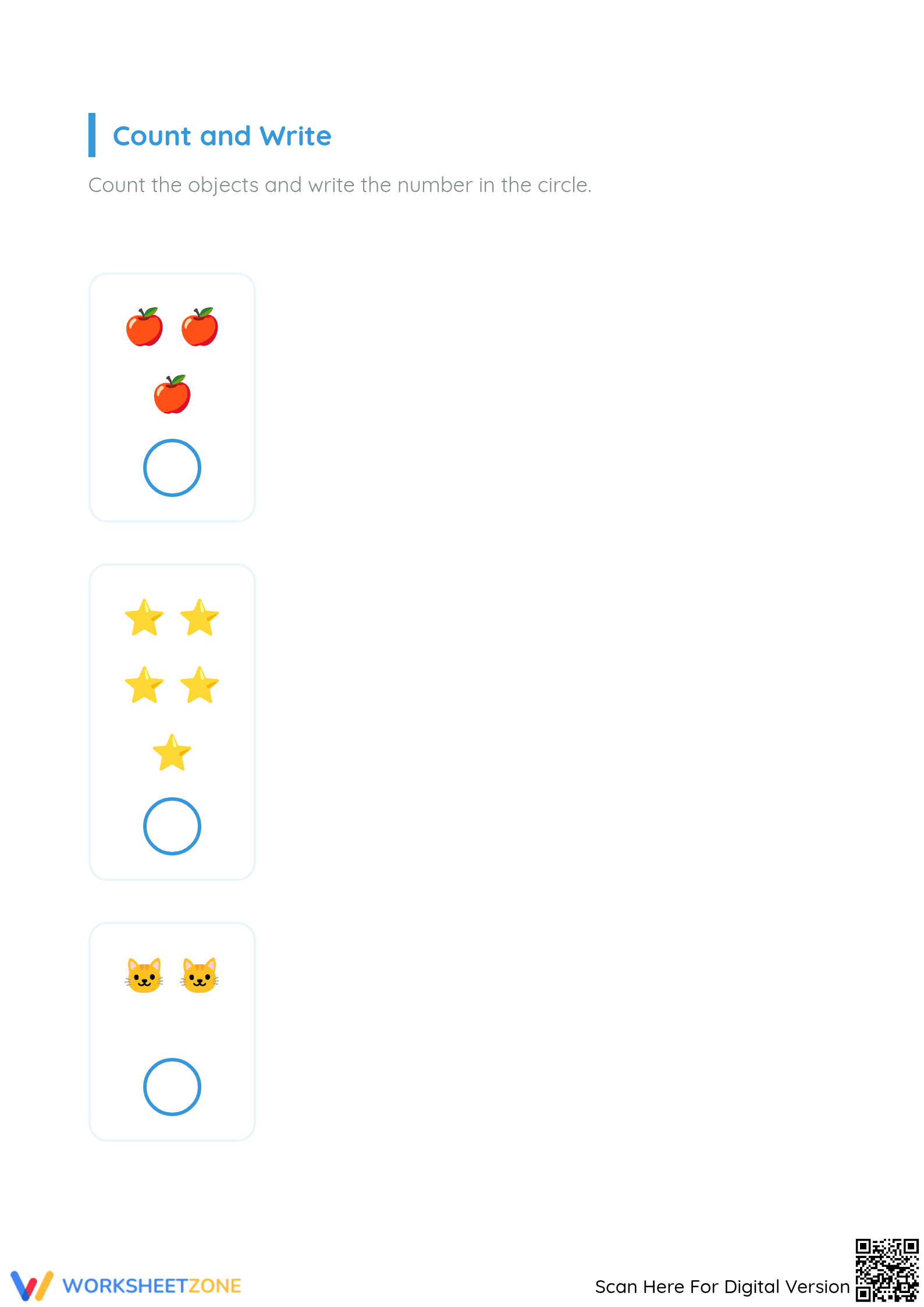
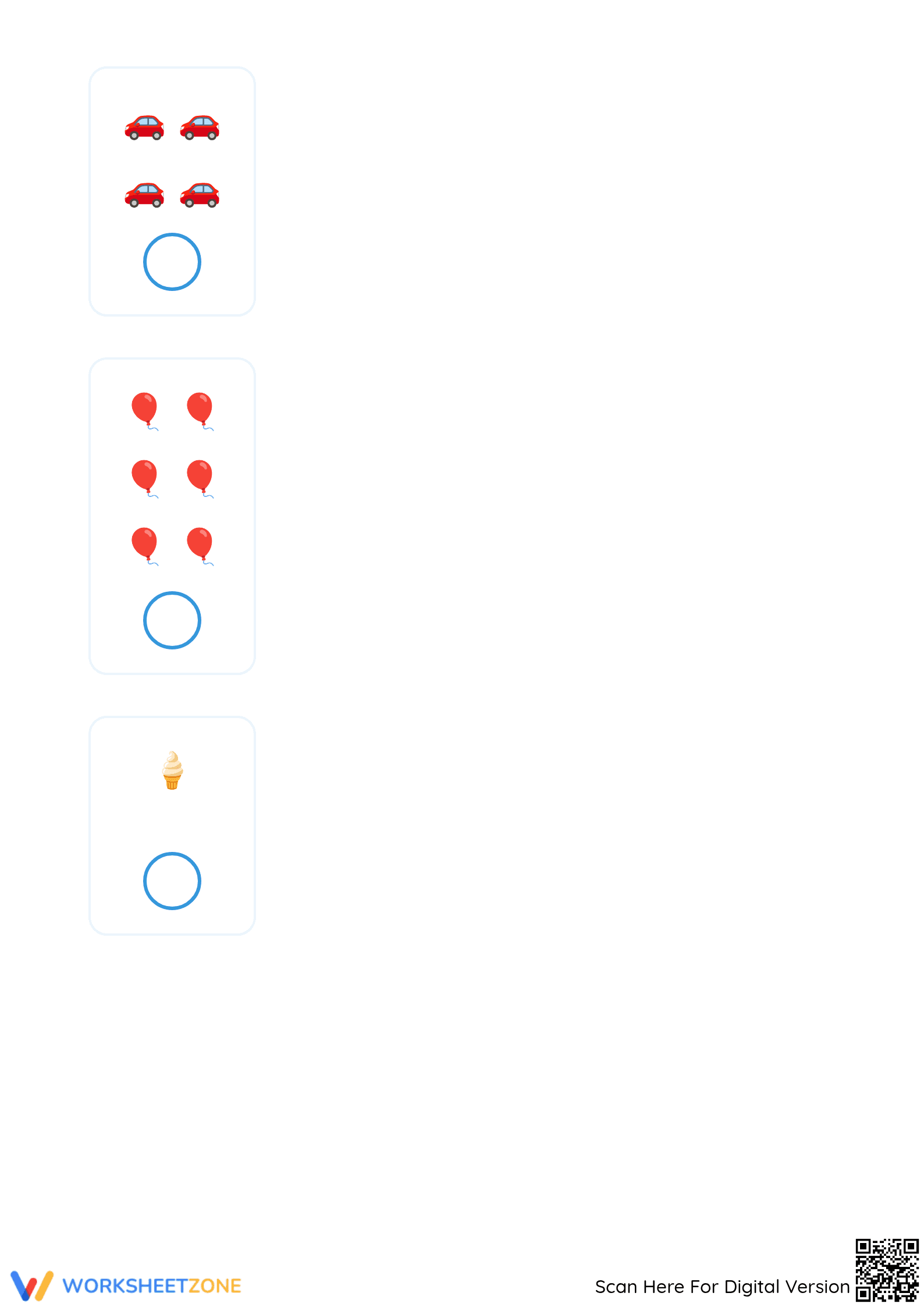
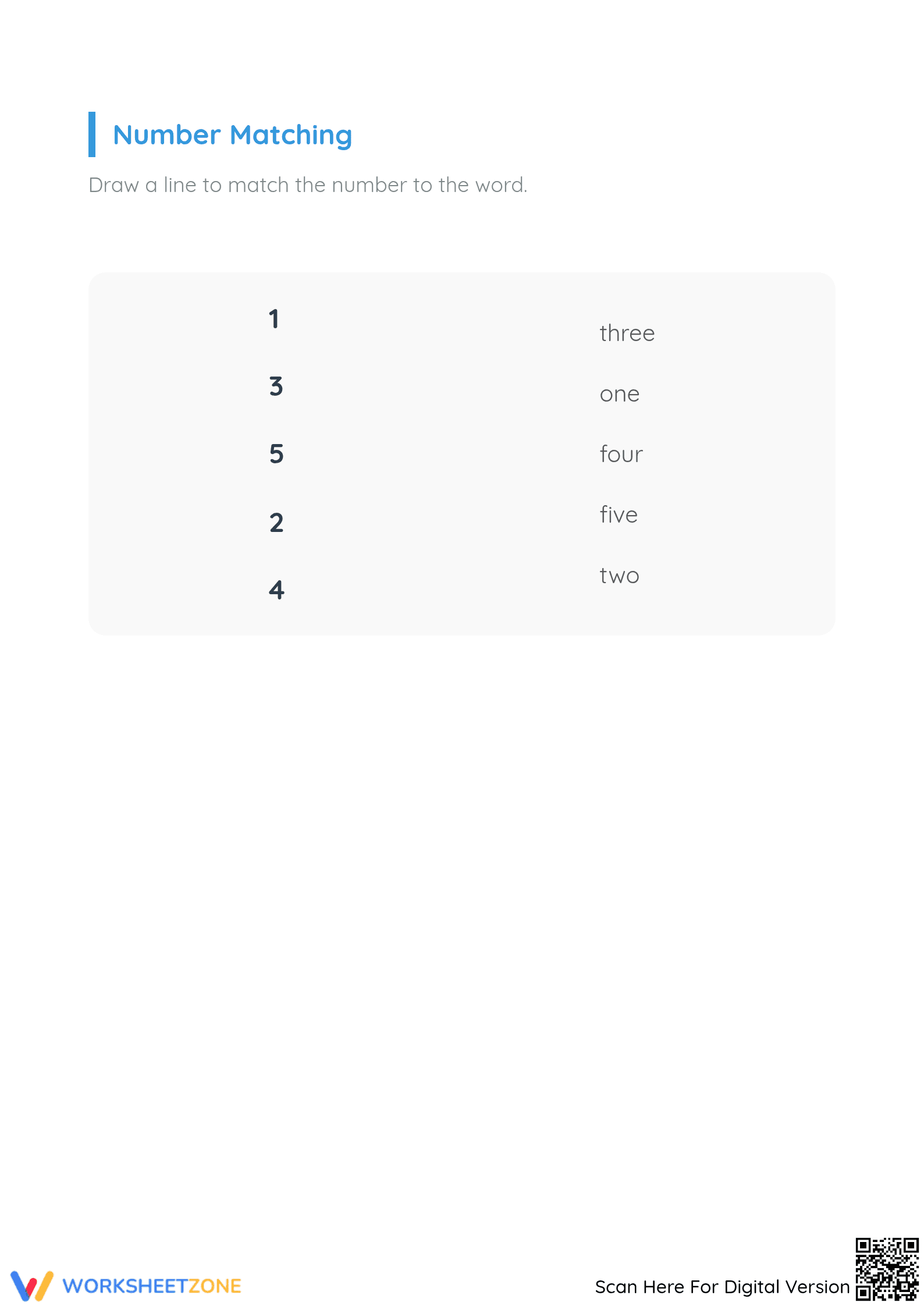
This educational resource contains four distinct pages designed to scaffold number literacy. It begins with guided tracing for numbers 1–10, followed by "Count and Write" activities featuring illustrations of everyday objects like apples and balloons. The final page includes a numeral-to-word matching exercise, all supported by a complete answer key for rapid checking.
Skill Progression
The instructional design follows a clear gradual-release model across 41 targeted tasks.
- Guided Practice: 30 tracing tasks allow students to develop fine motor control by following dashed lines for each numeral.
- Supported Practice: 6 counting problems require students to identify quantities and independently write the corresponding digit in a provided space.
- Independent Practice: 5 matching tasks challenge students to bridge the gap between abstract numerals and their written word forms (e.g., "3" to "three").
This structure effectively transitions students from "I Do" (tracing) to "You Do" (matching) within a single lesson sequence.
Standards Alignment
This worksheet is directly aligned with `CCSS.MATH.CONTENT.K.CC.A.3`, which requires students to write numbers from 0 to 20 and represent a number of objects with a written numeral. Additionally, it supports foundational fine motor skills essential for early handwriting. Both standard codes can be copied directly into lesson plans, IEP goals, or district curriculum mapping tools.
How to Use It
For maximum impact, use this packet during a small-group rotation after a whole-class introduction to the number line. Teachers should observe students during the "Count and Write" section to ensure one-to-one correspondence between their finger and the objects. This resource serves as an excellent formative assessment; if a student struggles with the matching page, it indicates a need for more direct instruction on number-word vocabulary. Expect a 25-minute completion time.
Who It's For
This resource is tailored for Preschoolers beginning their mathematical journey and Kindergartners reinforcing their writing skills. It is particularly effective for English Language Learners (ELLs) who benefit from the visual cues in the counting sections and the explicit vocabulary bridge on the matching page. It pairs naturally with a number line anchor chart or a manipulative-based counting lesson.
The integration of tracing and counting in early mathematics is a proven strategy for developing cardinality and algebraic thinking. According to Fisher & Frey (2014), the gradual-release framework—starting with high-scaffold tracing and moving toward independent matching—is essential for long-term retention in early childhood education. This worksheet addresses the core requirements of CCSS.MATH.CONTENT.K.CC.A.3 by requiring students to not only replicate the shape of a numeral but also apply it to represent a specific quantity of objects. By engaging multiple cognitive pathways, from visual matching to motor-based formation, students build a robust foundation for the more complex arithmetic operations they will encounter in first grade. This evidence-based approach ensures that learners move beyond mere rote memorization toward a functional mastery of numbers 1 through 10, facilitating smoother transitions into advanced cardinality and base-ten concepts as defined by current NAEP standards.


