


























Views
Downloads
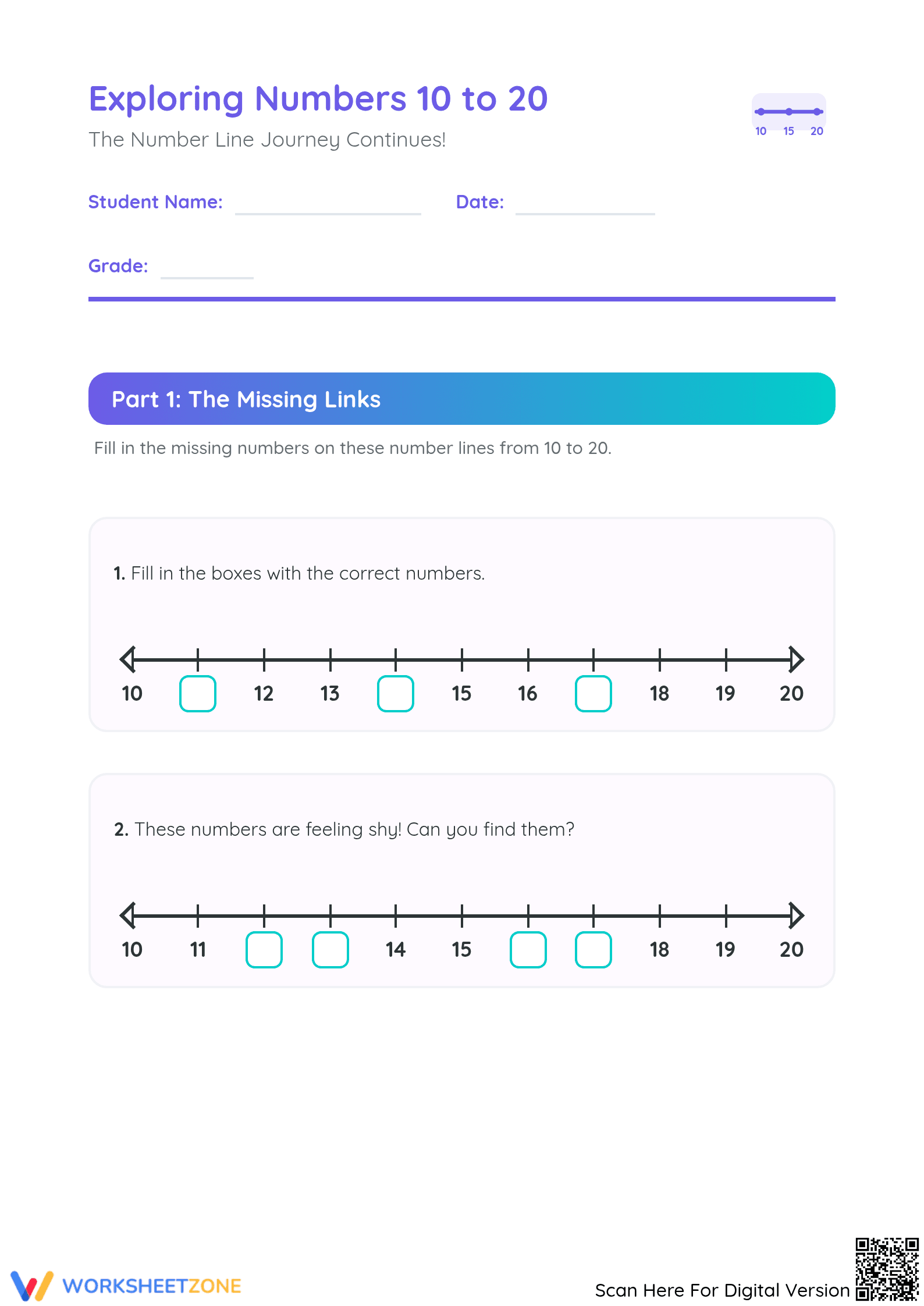
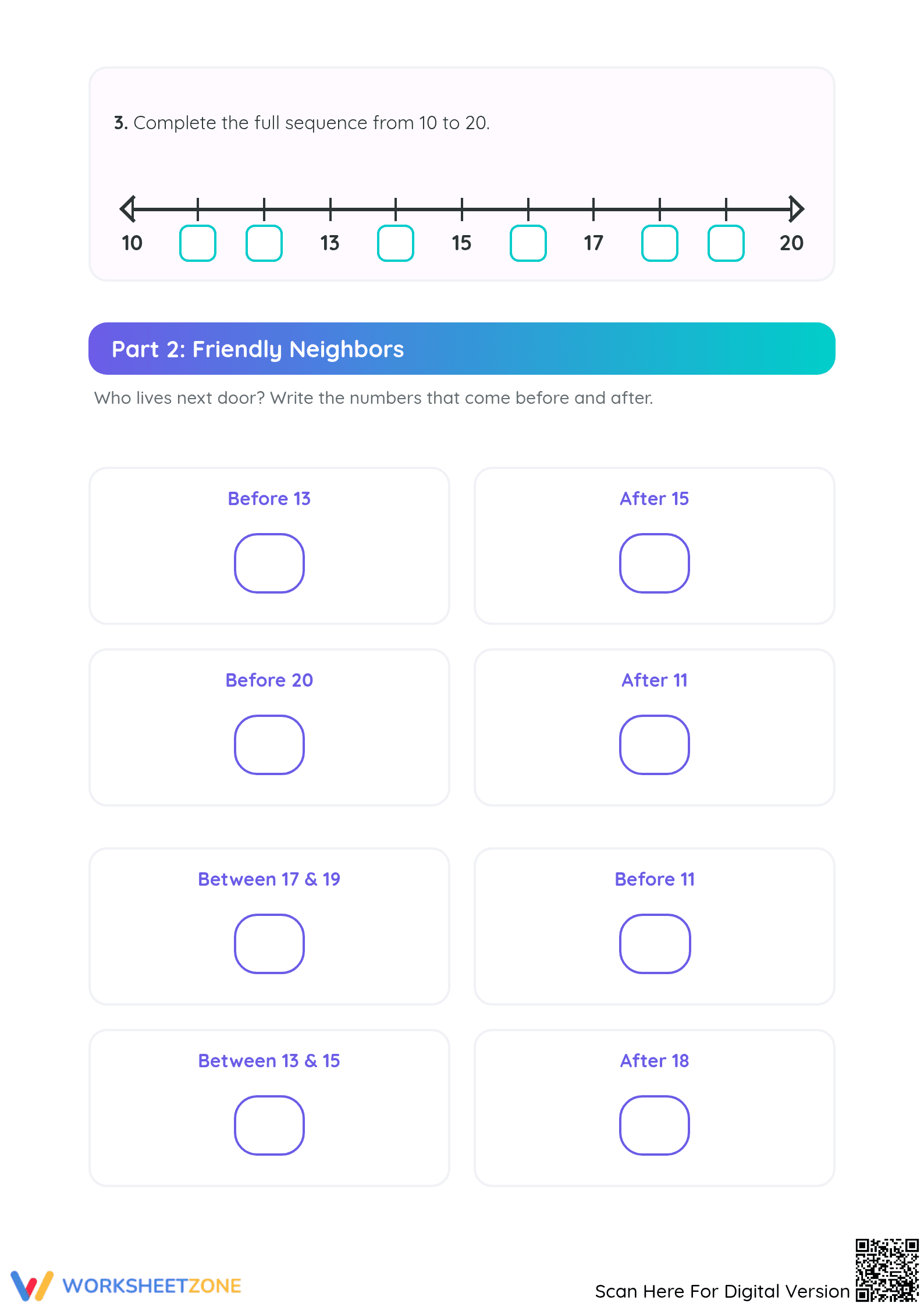
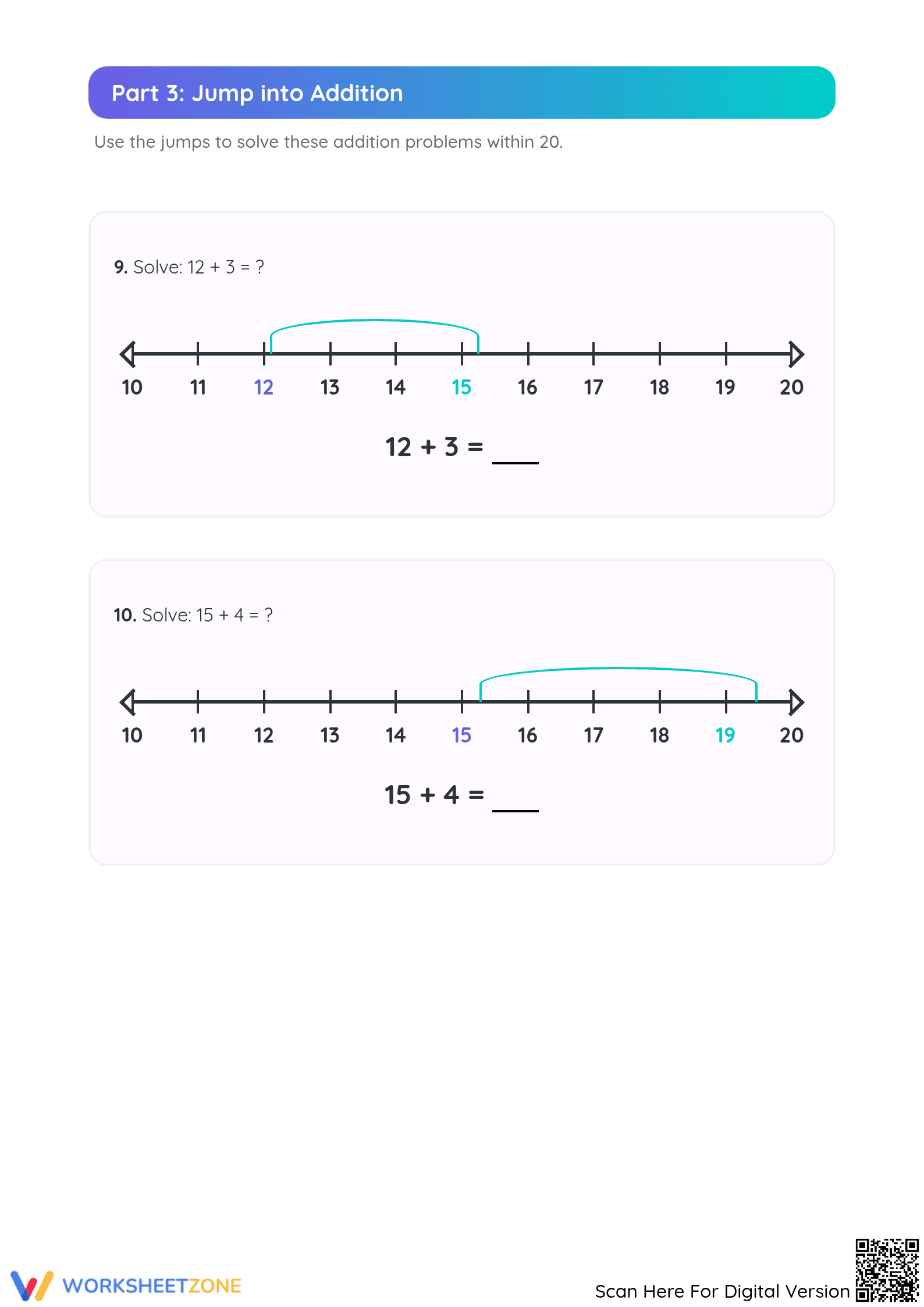
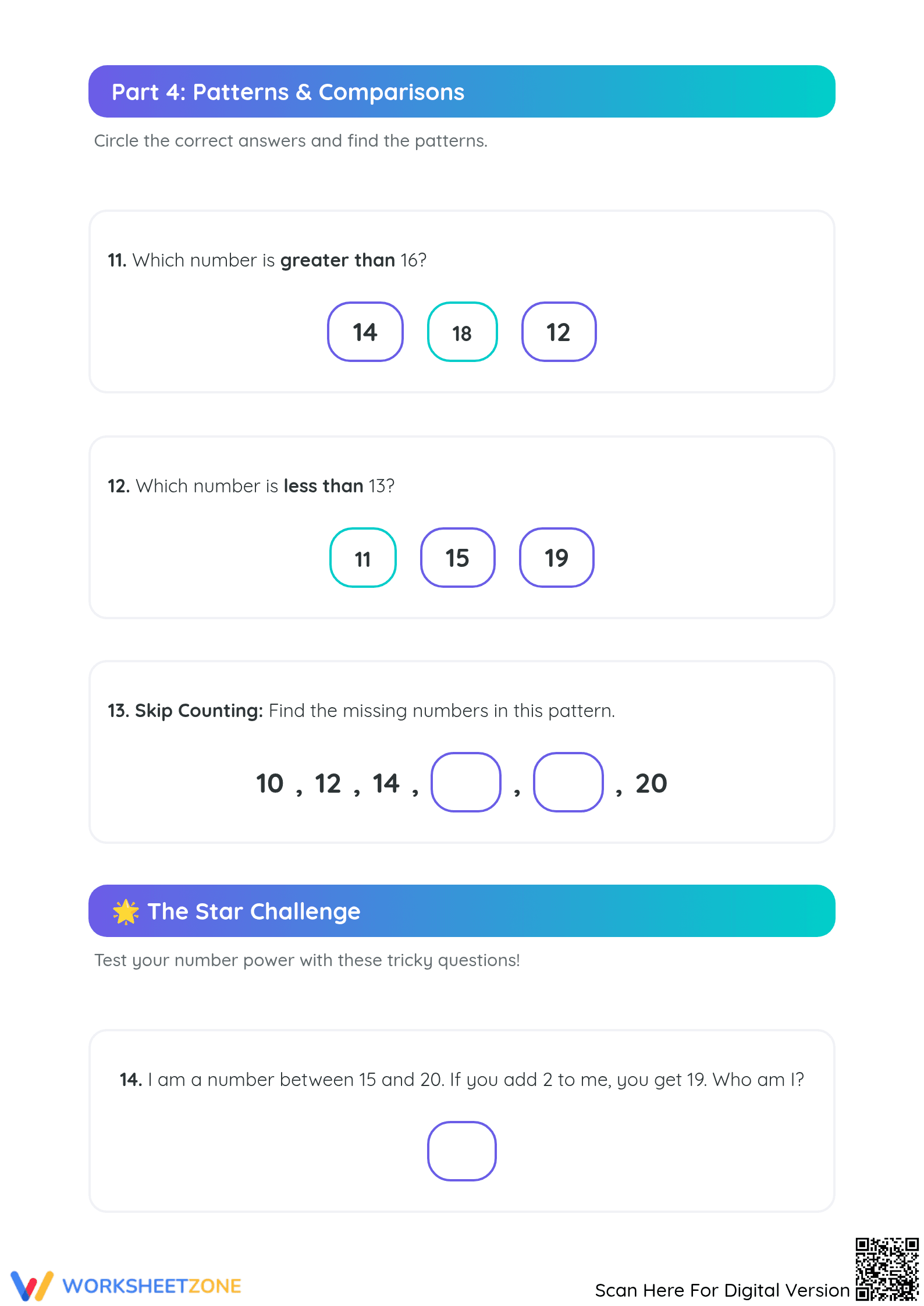
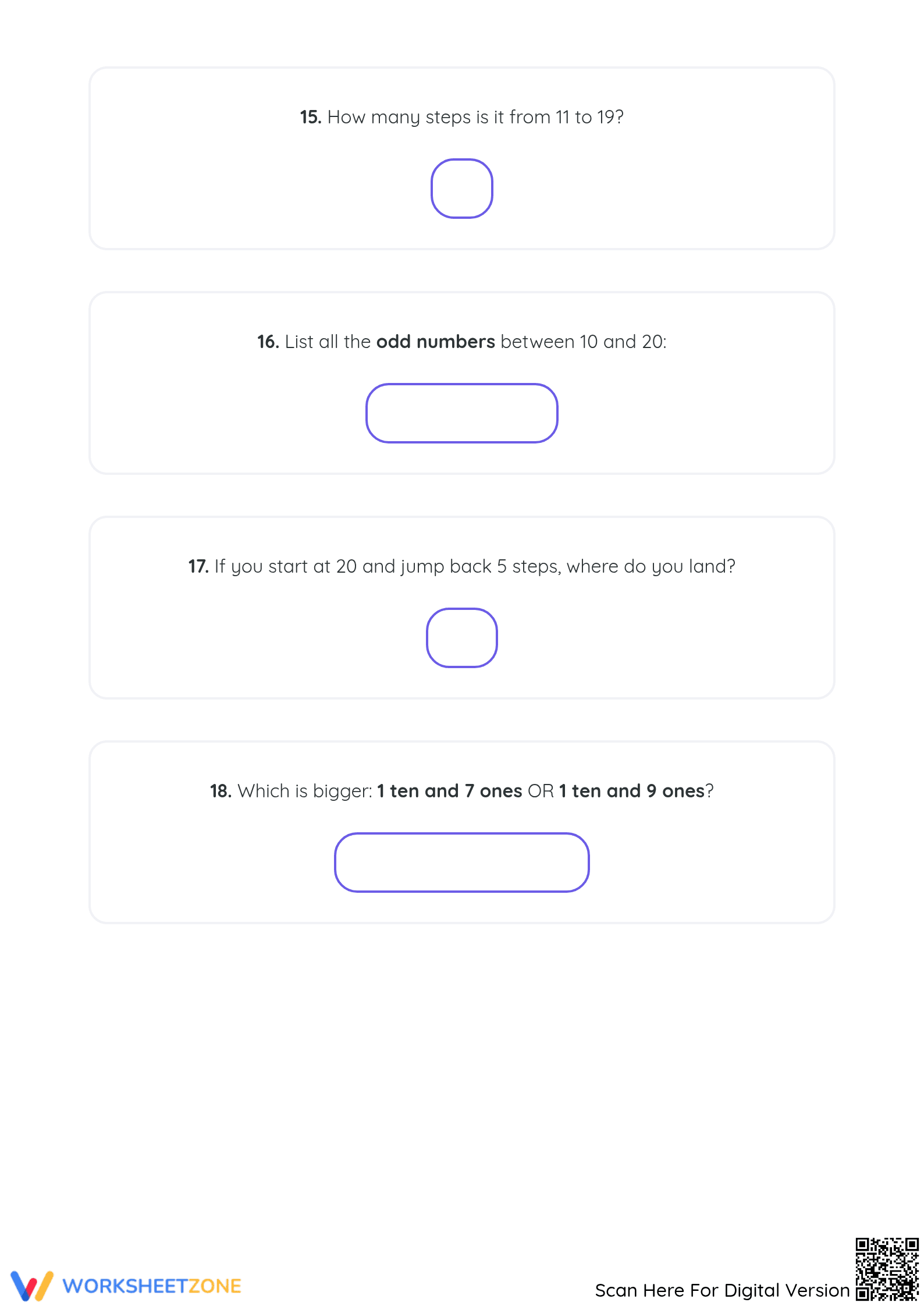

Grade 1 Number Line 10-20 — Printable No-Prep Worksheet
Paste this activity's link or code into your existing LMS (Google Classroom, Canvas, Teams, Schoology, Moodle, etc.).
Students can open and work on the activity right away, with no student login required.
You'll still be able to track student progress and results from your teacher account.
Mastering Numbers 10-20 on the Number Line
This worksheet provides essential practice for first-grade students in identifying and writing missing numbers on a number line from 10 to 20. Through a series of focused tasks, learners strengthen their number sense and understanding of numerical order, a foundational skill for future math concepts. It’s designed for immediate classroom use.
At a Glance
- Grade: 1 · Subject: Math
- Standard:
CCSS.MATH.CONTENT.1.NBT.A.1— Read, write, and represent numbers in sequence.- Skill Focus: Finding missing numbers on a number line (10-20)
- Format: 5 pages · 20 problems · Answer key included · PDF
- Best For: Independent practice, math centers, homework
- Time: 10–15 minutes
What's Inside
This resource contains a five-page PDF. The first four pages feature 20 distinct problems, with five number line tasks per page. Each task challenges students to fill in the missing numbers in the 10-20 range. The final page provides a complete answer key for quick grading.
A Seamless Workflow for Busy Teachers
This worksheet is built for efficiency, letting you reclaim valuable prep time. Here is a simple process for using it:
- Print (1 minute): The PDF is formatted for standard paper and is ready to print. No complex assembly required.
- Distribute (1 minute): Hand out the pages for independent work, a math center, or homework. The instructions are self-evident.
- Review (5 minutes): Use the included answer key for fast grading or to allow student self-checking.
With a total prep time under two minutes, this is an ideal choice for a sub plan.
Alignment with Common Core Standards
This worksheet directly supports skills outlined in the Common Core State Standards. The primary standard is CCSS.MATH.CONTENT.1.NBT.A.1, which involves counting, reading, and writing numerals to represent a number. This activity provides focused practice on sequencing numerals on a number line. It also reinforces foundational Kindergarten concepts. Both standard codes can be copied directly into lesson plans, IEP goals, or district curriculum mapping tools.
Flexible Classroom Implementation
This worksheet is versatile enough for multiple instructional moments. Use it as independent practice after a whole-group lesson on number lines to solidify understanding. Alternatively, place it in a math center for a self-directed activity. For formative assessment, observe if students are counting on or if they instantly recognize the missing numeral by its position. Most students will complete the 20 problems in approximately 10 to 15 minutes.
Perfect for First Grade Learners
This resource is designed for first-grade students developing their understanding of numbers. The clear layout and focused task make it accessible for all learners in a typical Grade 1 classroom. For students needing support, pair this with a physical manipulative like a beaded number line. It serves as an excellent follow-up to a lesson on number sequencing between 10 and 20.
Foundational number sense, particularly the ability to navigate a number line, is a critical predictor of later mathematical achievement. This worksheet provides targeted practice aligned with CCSS.MATH.CONTENT.1.NBT.A.1, helping students visualize the sequence and magnitude of numbers 10 through 20. Research consistently shows that fluency with number order is essential for building the mental models required for addition, subtraction, and place value. According to the RAND AIRS 2024 report on elementary mathematics, interventions that include visual representations like number lines contribute to significant gains in student proficiency. By engaging with these 20 structured problems, students move from rote counting to a more robust conceptual understanding of numerical relationships. This simple, print-ready tool provides the focused repetition needed to secure this critical skill for all learners in the classroom.


