


























1 / 3
0
Views
0
Downloads

0.0
0
Save
0 Likes
Share
Practice Newton's Laws with this Worksheet
0 Views
0 Downloads
Paste this activity's link or code into your existing LMS (Google Classroom, Canvas, Teams, Schoology, Moodle, etc.).
Students can open and work on the activity right away, with no student login required.
You'll still be able to track student progress and results from your teacher account.
Information
Description
What It Is:
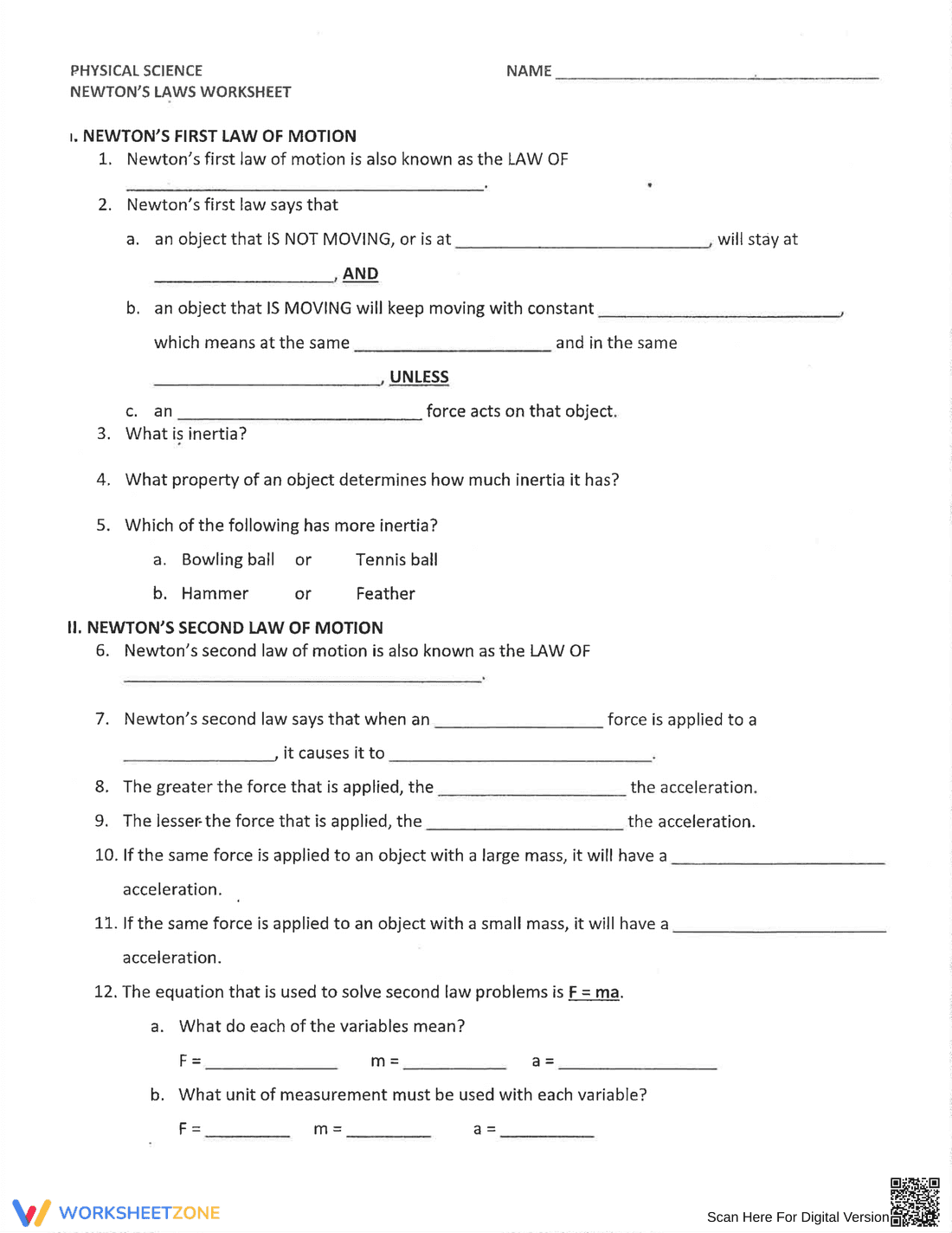
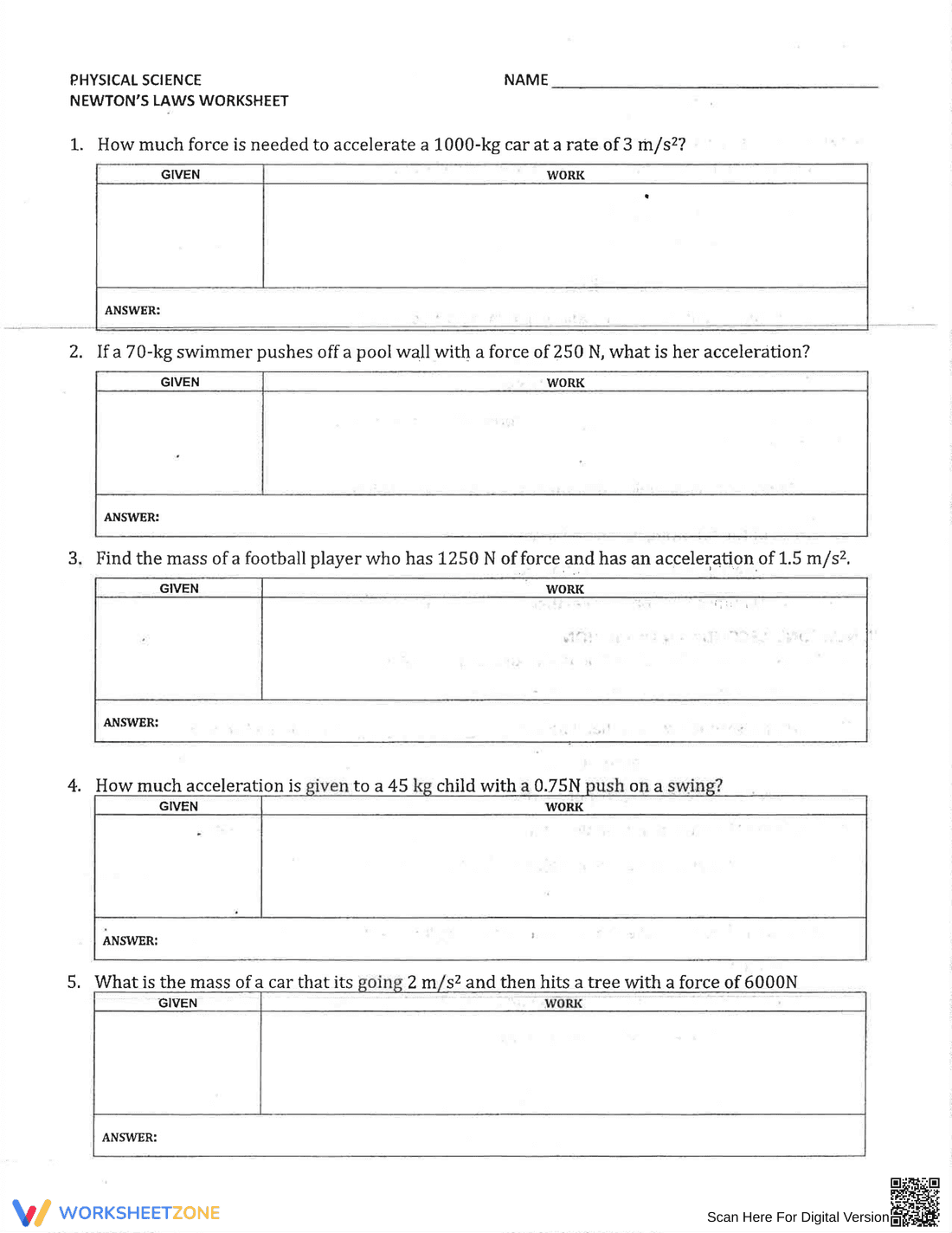
This is a physical science worksheet focused on Newton's Laws of Motion. It includes fill-in-the-blank questions about Newton's First Law of Motion (inertia), asking students to define inertia and identify factors influencing it. The worksheet also covers Newton's Second Law of Motion, exploring the relationship between force, mass, and acceleration (F=ma), and asks students to define the variables and their units of measurement.
Grade Level Suitability:
This worksheet is suitable for grades 7-9. The concepts covered, such as inertia and the relationship between force, mass, and acceleration, are typically introduced in middle school physical science courses. The questions require understanding of basic physics principles and vocabulary.
Why Use It:
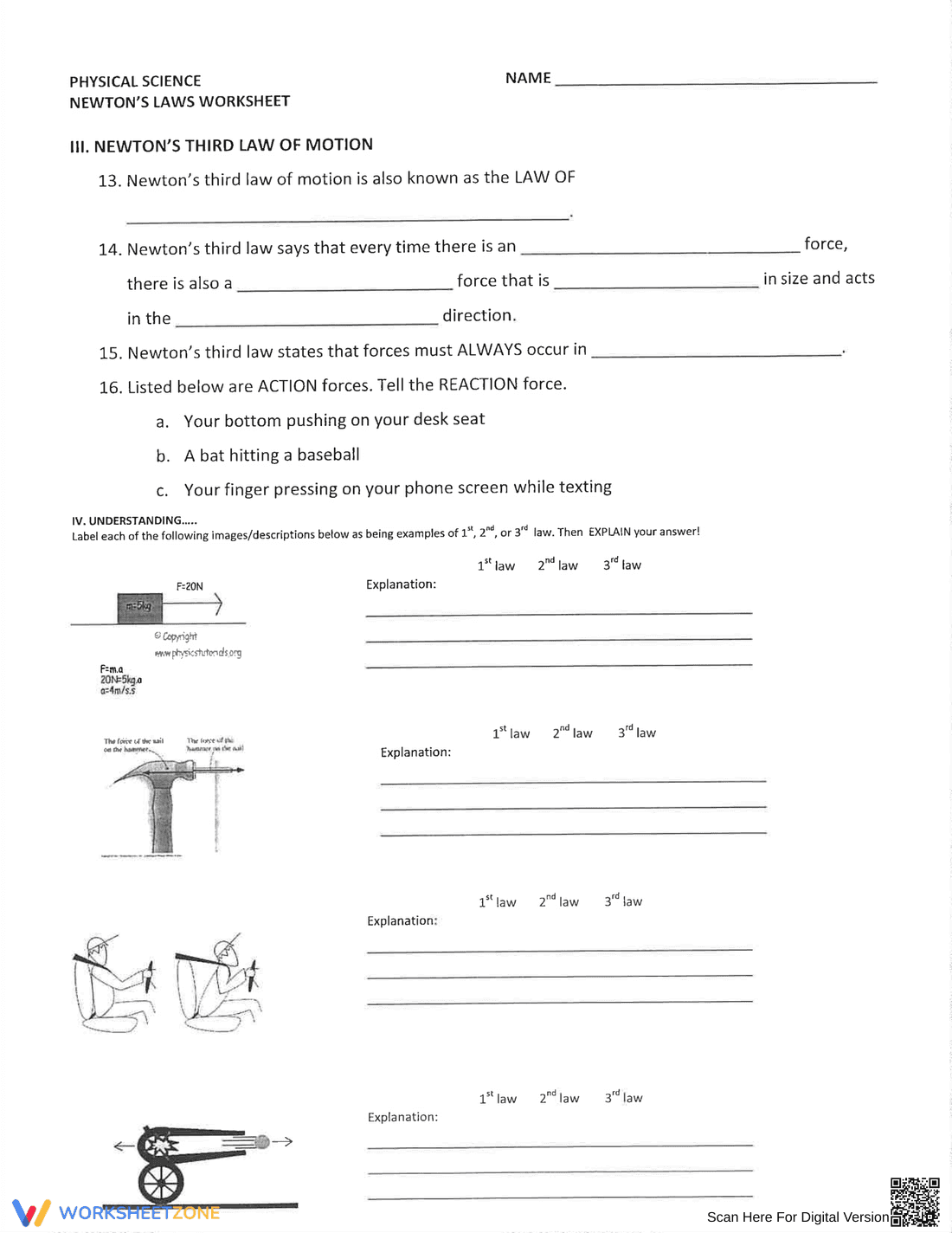
This worksheet reinforces understanding of Newton's Laws of Motion through a variety of question types. It helps students solidify their knowledge of key concepts like inertia, force, mass, and acceleration, and the relationship between them. It also promotes critical thinking by asking students to apply these laws to different scenarios.
How to Use It:
Students should read the instructions and questions carefully before attempting to answer. They should fill in the blanks with the correct terms or phrases based on their understanding of Newton's Laws of Motion. For the questions about F=ma, students should define each variable and specify the appropriate unit of measurement for each. This can be used as in-class work, homework, or a review activity.
Target Users:
This worksheet is designed for middle school students studying physical science, particularly those learning about Newton's Laws of Motion. It can also be used by teachers as a supplementary resource or assessment tool.
This is a physical science worksheet focused on Newton's Laws of Motion. It includes fill-in-the-blank questions about Newton's First Law of Motion (inertia), asking students to define inertia and identify factors influencing it. The worksheet also covers Newton's Second Law of Motion, exploring the relationship between force, mass, and acceleration (F=ma), and asks students to define the variables and their units of measurement.
Grade Level Suitability:
This worksheet is suitable for grades 7-9. The concepts covered, such as inertia and the relationship between force, mass, and acceleration, are typically introduced in middle school physical science courses. The questions require understanding of basic physics principles and vocabulary.
Why Use It:
This worksheet reinforces understanding of Newton's Laws of Motion through a variety of question types. It helps students solidify their knowledge of key concepts like inertia, force, mass, and acceleration, and the relationship between them. It also promotes critical thinking by asking students to apply these laws to different scenarios.
How to Use It:
Students should read the instructions and questions carefully before attempting to answer. They should fill in the blanks with the correct terms or phrases based on their understanding of Newton's Laws of Motion. For the questions about F=ma, students should define each variable and specify the appropriate unit of measurement for each. This can be used as in-class work, homework, or a review activity.
Target Users:
This worksheet is designed for middle school students studying physical science, particularly those learning about Newton's Laws of Motion. It can also be used by teachers as a supplementary resource or assessment tool.


