


























Views
Downloads

Kindergarten Name Tracing — Printable No-Prep Worksheet
Paste this activity's link or code into your existing LMS (Google Classroom, Canvas, Teams, Schoology, Moodle, etc.).
Students can open and work on the activity right away, with no student login required.
You'll still be able to track student progress and results from your teacher account.
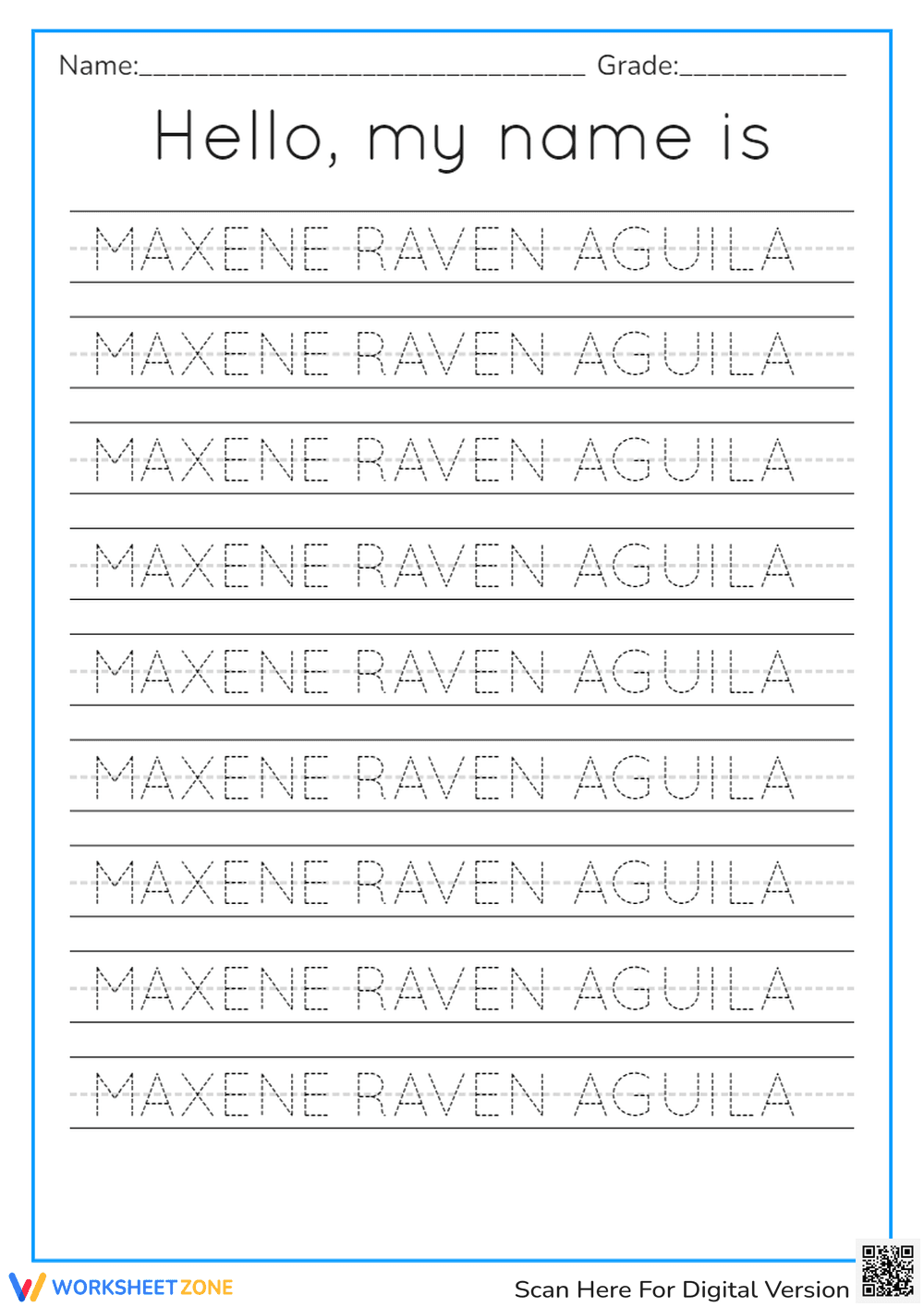
This printable handwriting worksheet helps early learners master name writing through structured repetition. Students trace the name Maxene Raven Aguila to build muscle memory, fine motor control, and proper letter stroke sequences. By practicing these specific letter shapes, children transition from basic scribbling to controlled, legible manuscript printing.
At a Glance
- Grade: Kindergarten · Subject: Handwriting
- Standard:
CCSS.ELA-LITERACY.L.K.1.A— Print upper- and lowercase letters- Skill Focus: Name tracing and letter formation
- Format: 2 pages · 20 tasks · No answer key needed · PDF
- Best For: Morning work and fine motor practice
- Time: 10–15 minutes
What's Inside
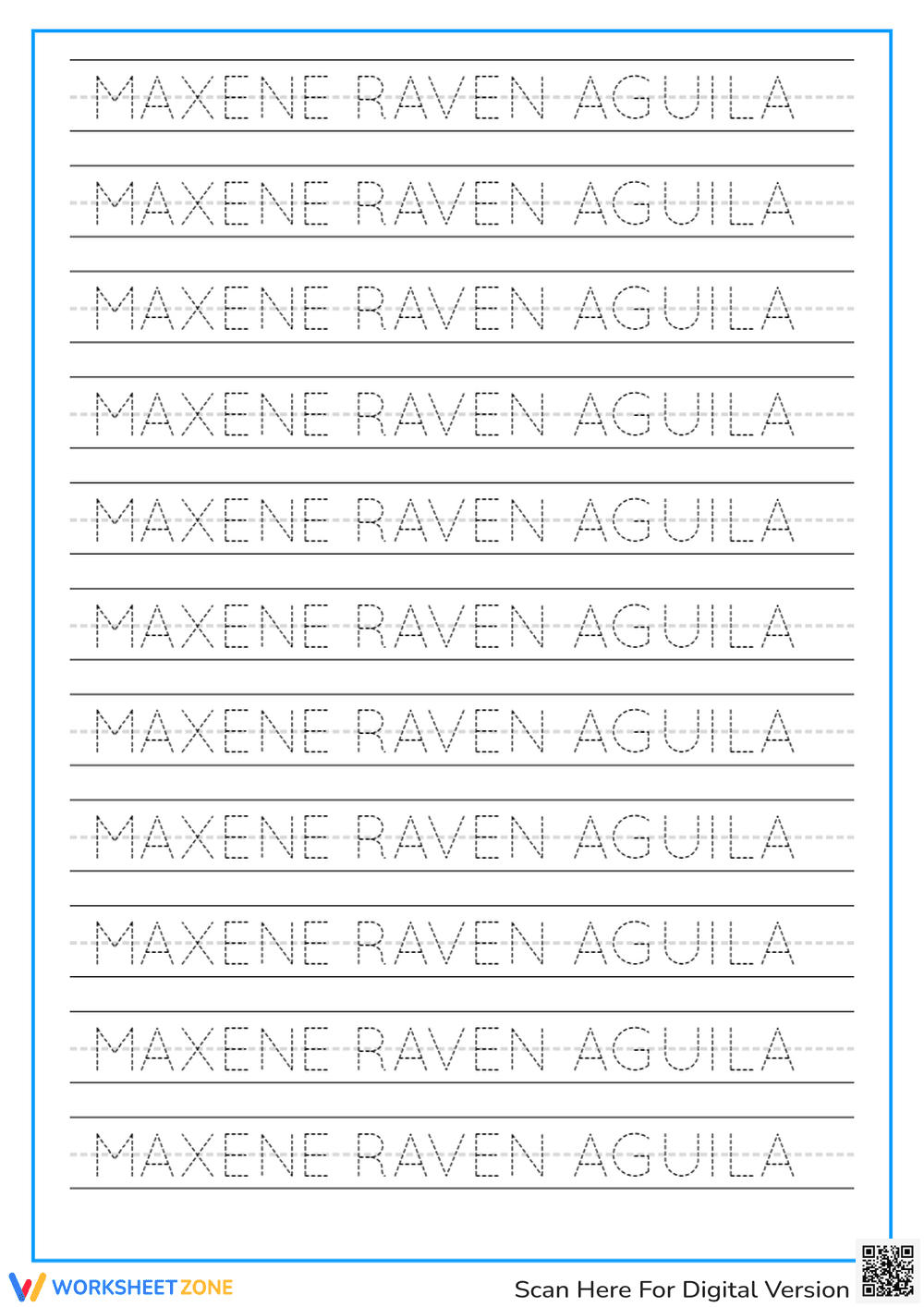
This resource contains two pages of clean, uncluttered tracing lines designed specifically for young writers. The first page features a friendly greeting followed by nine tracing lines, while the second page provides eleven additional lines for extended practice. Each line displays the name in a clear, dashed font with standard primary guidelines to support consistent letter height and spacing.
Zero-Prep Workflow
The zero-prep workflow makes this resource exceptionally easy to integrate into daily routines. First, print the two pages, which takes less than one minute. Next, distribute the sheets to students during morning arrival or transition times, requiring zero setup. Finally, review student progress by scanning the pages for pencil grip and stroke direction, taking under two minutes of teacher time. This layout is ideal for emergency sub plans or independent centers.
Standards Alignment
This activity aligns directly with CCSS.ELA-LITERACY.L.K.1.A, which requires students to print many upper- and lowercase letters. By tracing a full name, students practice both capital and lowercase letter structures in a meaningful context. Both standard codes can be copied directly into lesson plans, IEP goals, or district curriculum mapping tools.
How to Use It
Use this worksheet during morning arrival as a settling activity to start the school day. Alternatively, assign it during small-group literacy centers to target fine motor development. Teachers should observe students during the first three lines to check for correct top-to-bottom stroke direction. Expect students to complete both pages in approximately 10 to 15 minutes.
Who It's For
This worksheet is designed for kindergarten and first-grade students who are learning to write their names independently. It serves as an excellent intervention tool for learners needing extra fine motor support. Pair this worksheet with physical letter tiles or sensory sand trays to reinforce letter shapes before writing.
Early childhood writing research emphasizes that repetitive tracing of personally meaningful words, such as a student's own name, accelerates letter recognition and fine motor control. According to the Fisher & Frey (2014) framework for gradual release of responsibility, structured tracing provides the necessary scaffolding that precedes independent writing. This worksheet targets standard CCSS.ELA-LITERACY.L.K.1.A by offering 20 distinct opportunities to trace letters, helping students internalize the spatial relationships and stroke sequences required for legible handwriting. By focusing on a specific name, the activity connects abstract letter shapes to a concrete, high-interest word, which increases student engagement and retention. Educators can confidently integrate this resource into daily handwriting routines to support foundational literacy development and prepare young learners for more complex writing tasks in later grades.


