


























Views
Downloads
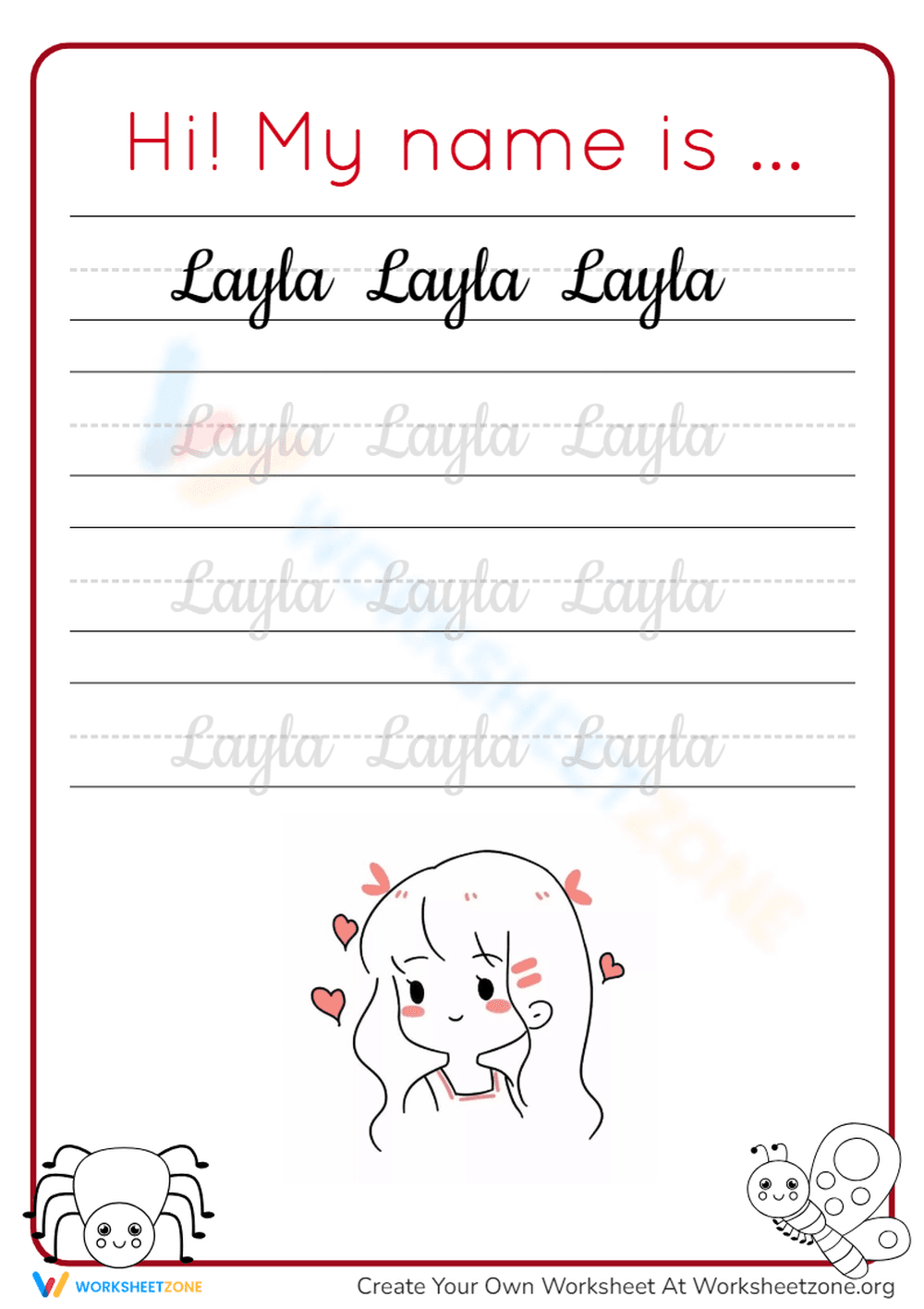

Printable Cursive Name Tracing Worksheet for Kids
Paste this activity's link or code into your existing LMS (Google Classroom, Canvas, Teams, Schoology, Moodle, etc.).
Students can open and work on the activity right away, with no student login required.
You'll still be able to track student progress and results from your teacher account.
This printable cursive name tracing worksheet helps kindergarten and first-grade students master writing their names in cursive. By tracing the target name twelve times across structured guidelines, children build muscle memory and letter-connection skills. This activity transitions early learners from print to cursive writing while reinforcing spelling.
At a Glance
- Grade: Kindergarten · Subject: Handwriting
- Standard:
CCSS.ELA-LITERACY.L.K.1.a— Print or write upper and lowercase letters legibly- Skill Focus: Cursive name tracing and letter connections
- Format: 1 page · 12 tasks · No answer key · PDF
- Best For: Morning work or independent handwriting practice
- Time: 10–15 minutes
What's Inside
This single-page PDF features a clean, structured layout designed for young learners. At the top, a bold header introduces the student's name, followed by one solid cursive model and three dashed tracing lines. Each line contains three repetitions of the name, providing twelve total practice opportunities. The bottom of the page includes cute, black-and-white illustrations of a girl, a spider, and a butterfly, offering a creative coloring reward for students who complete their writing tasks.
Zero-Prep Workflow
This worksheet requires zero preparation, making it an excellent resource for busy mornings or emergency sub plans. First, print the single-page PDF document, which takes less than one minute. Second, distribute the sheet to students along with pencils and crayons for the coloring elements. Third, review the completed tracing lines to check for proper pencil grip and letter formation. The entire setup takes under two minutes, allowing you to focus on guiding students who need extra physical support.
Standards Alignment
This resource aligns directly with CCSS.ELA-LITERACY.L.K.1.a, which focuses on printing or writing upper- and lowercase letters. While cursive is often introduced later, this early exposure helps advanced kindergarteners and first graders develop the fluid strokes necessary for cursive handwriting. Both standard codes can be copied directly into lesson plans, IEP goals, or district curriculum mapping tools.
How to Use It
Use this worksheet during morning arrival to establish a calm, focused routine as students enter the classroom. Alternatively, assign it as a quiet center activity during small-group rotations. While students work, observe their stroke direction on the letter connections to assess fine motor control. Most children will complete the tracing and coloring within ten to fifteen minutes.
Who It's For
This activity is designed for kindergarteners and first graders learning cursive letter connections. It serves as an excellent intervention tool for students struggling with fine motor control or letter spacing. Pair this worksheet with a cursive alphabet desk strip or a tactile sand-tracing tray to reinforce letter shapes before writing on paper.
This handwriting resource supports early literacy development by targeting the letter formation skills outlined in CCSS.ELA-LITERACY.L.K.1.a. According to research by Fisher & Frey (2014) on the gradual release of responsibility, structured tracing activities provide the necessary scaffolding for young learners before they transition to independent writing. By practicing cursive name tracing twelve times on guided lines, students build the muscle memory required for fluid handwriting. The coloring elements serve as a low-stakes motivator, keeping young learners engaged while they develop fine motor control. Educators can easily integrate this single-page worksheet into daily writing routines to monitor progress in letter legibility and pencil grip. This self-contained practice sheet ensures that early writers receive targeted, repetitive practice to solidify their understanding of letter shapes and connections.


