


























Views
Downloads


Printable Multiplying 10 Skip Counting Worksheet
Paste this activity's link or code into your existing LMS (Google Classroom, Canvas, Teams, Schoology, Moodle, etc.).
Students can open and work on the activity right away, with no student login required.
You'll still be able to track student progress and results from your teacher account.
Build foundational numeracy and multiplication fluency with this comprehensive printable resource. Students master the 10 times table by bridging the gap between skip counting and formal multiplication equations. This four-page packet provides a structured progression that ensures students understand the conceptual relationship between repeated addition and multiplicative reasoning while developing rapid recall of facts.
At a Glance
- Grade: 3 · Subject: Math
- Standard:
CCSS.MATH.CONTENT.3.OA.C.7— Fluently multiply within 100 using strategies such as the relationship between multiplication and addition- Skill Focus: Multiplication by 10 and skip counting
- Format: 4 pages · 24 problems · Answer key included · PDF
- Best For: Daily math centers or independent practice
- Time: 20–30 minutes
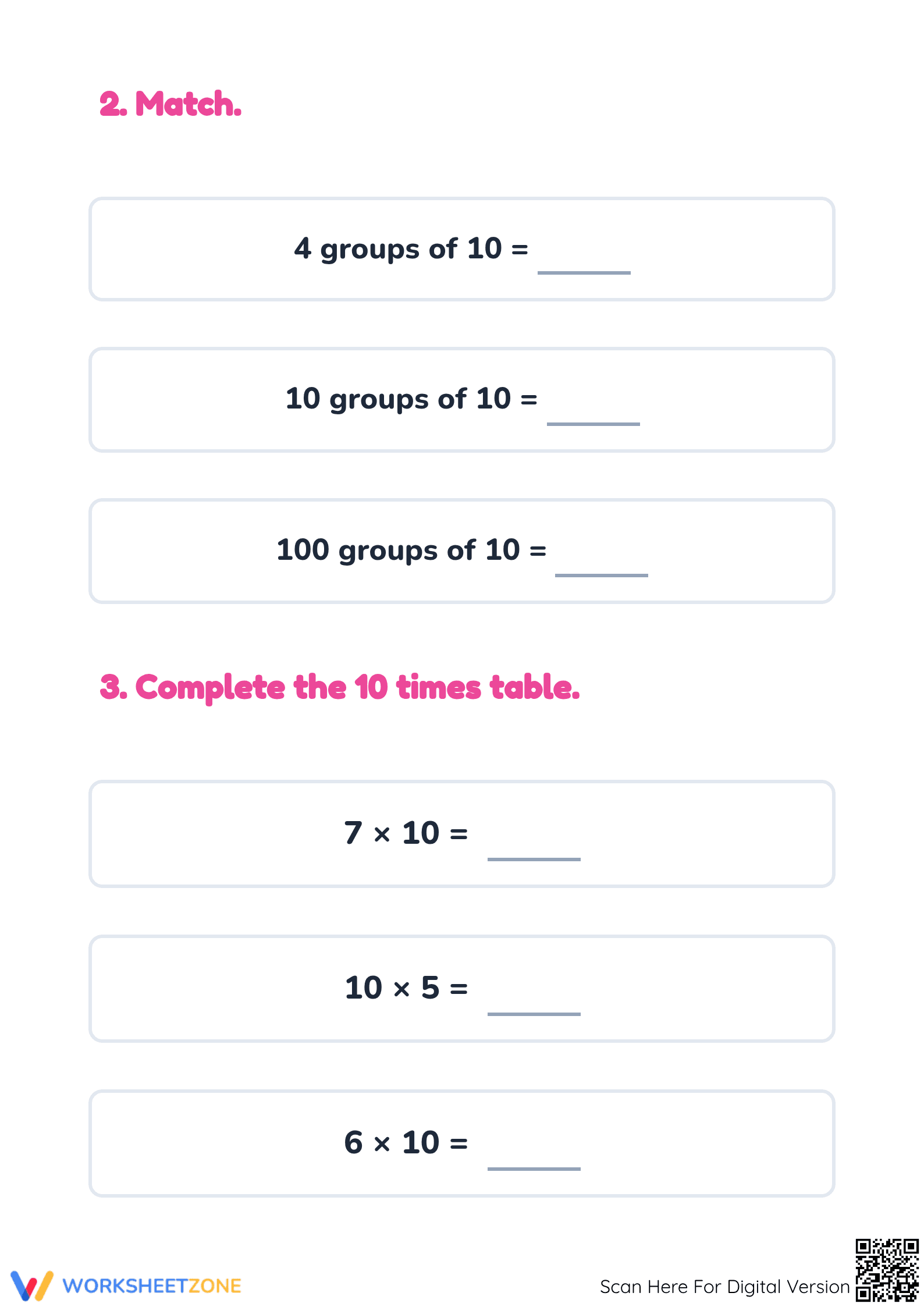
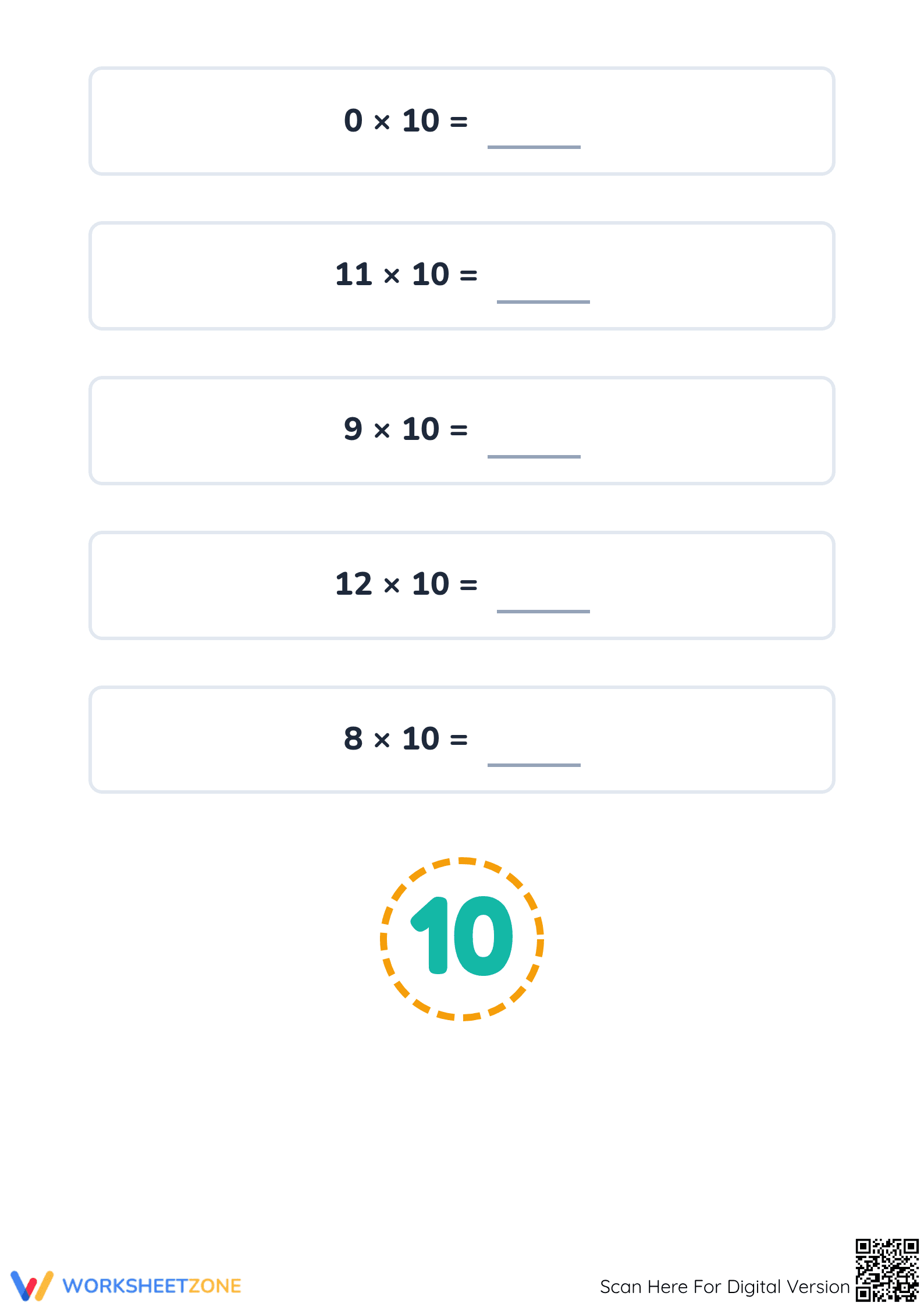
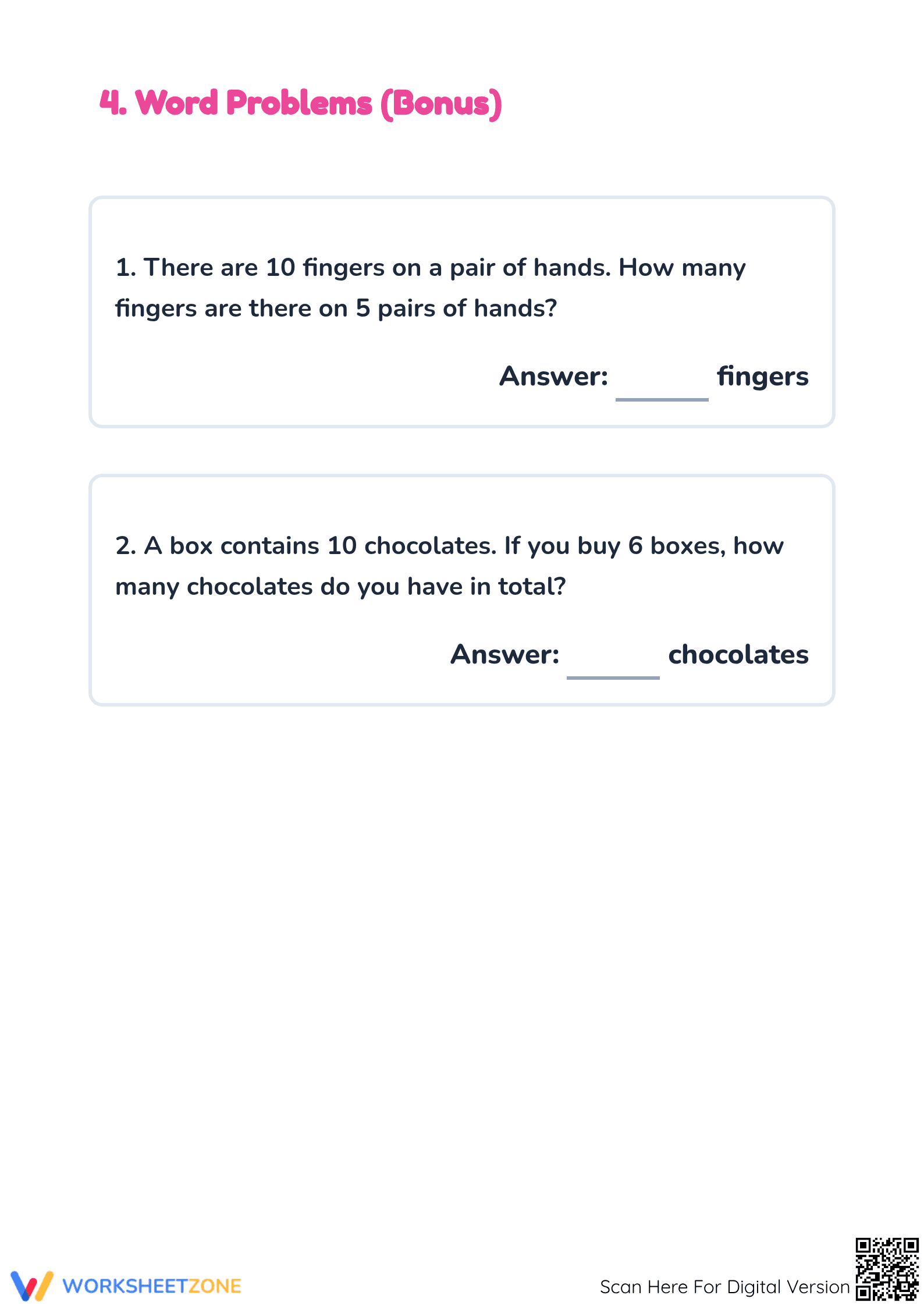
This classroom-ready packet includes four distinct pages designed to solidify multiplication concepts. Inside, you will find sequence completion tasks that reinforce skip counting by 10s up to 270, matching exercises that connect verbal groups to numerical equations, and a dedicated section for 10 times table fact fluency. The final page features bonus word problems that challenge students to apply their knowledge to real-world scenarios, such as counting fingers on hands or items in boxes.
The zero-prep workflow is optimized for busy educators. First, print the four-page PDF in less than a minute. Next, distribute the packets to students for independent work or guided small-group instruction. Finally, use the included answer key for rapid grading or student self-correction. This resource requires exactly zero minutes of teacher setup time beyond printing, making it an essential choice for emergency sub plans or morning work routines.
The primary alignment for this resource is `CCSS.MATH.CONTENT.3.OA.C.7`, focusing on the student's ability to fluently multiply within 100. It also supports `CCSS.MATH.CONTENT.2.NBT.A.2` through intensive skip-counting practice. Both standard codes can be copied directly into lesson plans, IEP goals, or district curriculum mapping tools to ensure instructional compliance and tracking.
Use this worksheet as a formative assessment during your multiplication unit to identify students who may need additional scaffolding with place value concepts. It is particularly effective as a post-instruction review after introducing the "add a zero" rule for multiplying by 10. For a high-leverage observation, watch how students handle the transition from the number line sequence to the abstract word problems to gauge their conceptual depth.
This resource is specifically designed for Grade 3 students but provides excellent remediation for Grade 4 learners or extension opportunities for advanced Grade 2 students. It pairs naturally with place value disks or base-ten blocks to provide a concrete representation of the "groups of 10" practiced on page two. The clear layout is accessible for students requiring minimal visual distractions.
According to the RAND AIRS 2024 report on mathematics instruction, the integration of skip counting as a scaffolding strategy is a proven method for bridging additive and multiplicative thinking in early elementary learners. By connecting the familiar rhythm of counting by tens to the formal structure of multiplication equations, students build a stronger mental model of number properties. This worksheet utilizes these evidence-based strategies to move students from procedural counting to the fluent recall required by `CCSS.MATH.CONTENT.3.OA.C.7`. Research indicates that students who master tens-based multiplication early demonstrate higher confidence when approaching more complex multi-digit multiplication in later grades. This resource provides the necessary volume of practice to ensure that the relationship between groups and totals is fully internalized, satisfying the rigorous demands of modern state and national standards.


