


























Views
Plays
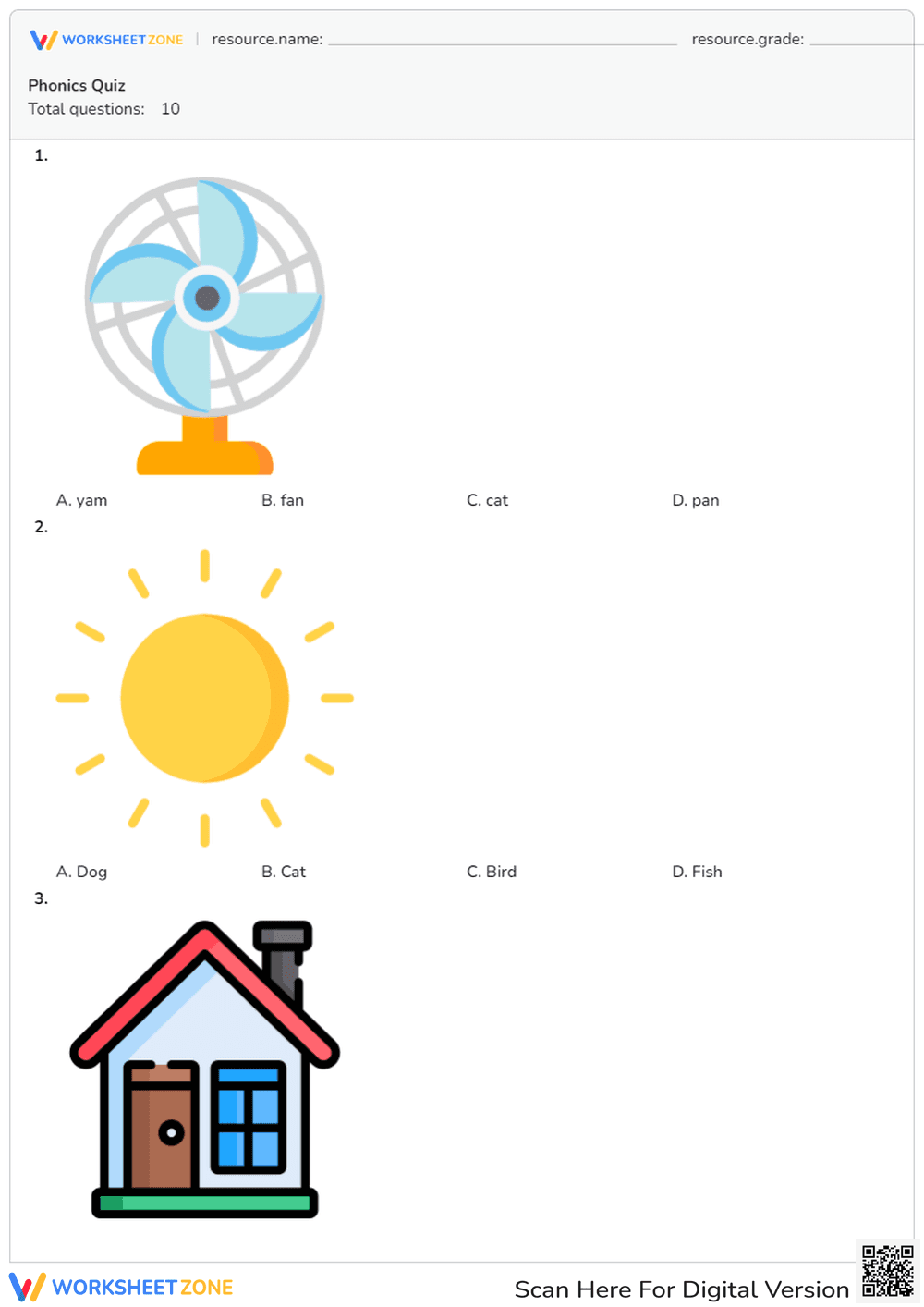
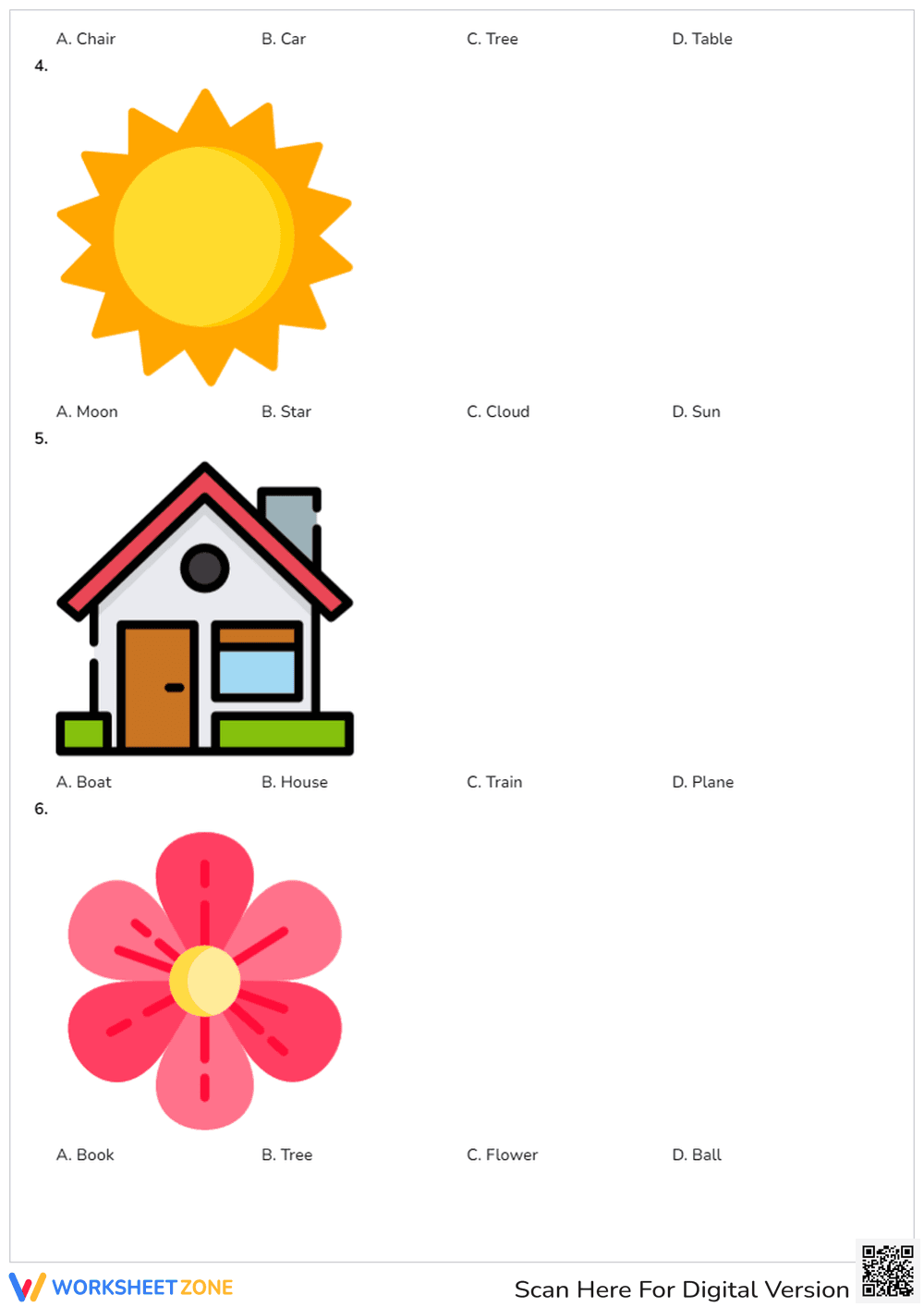
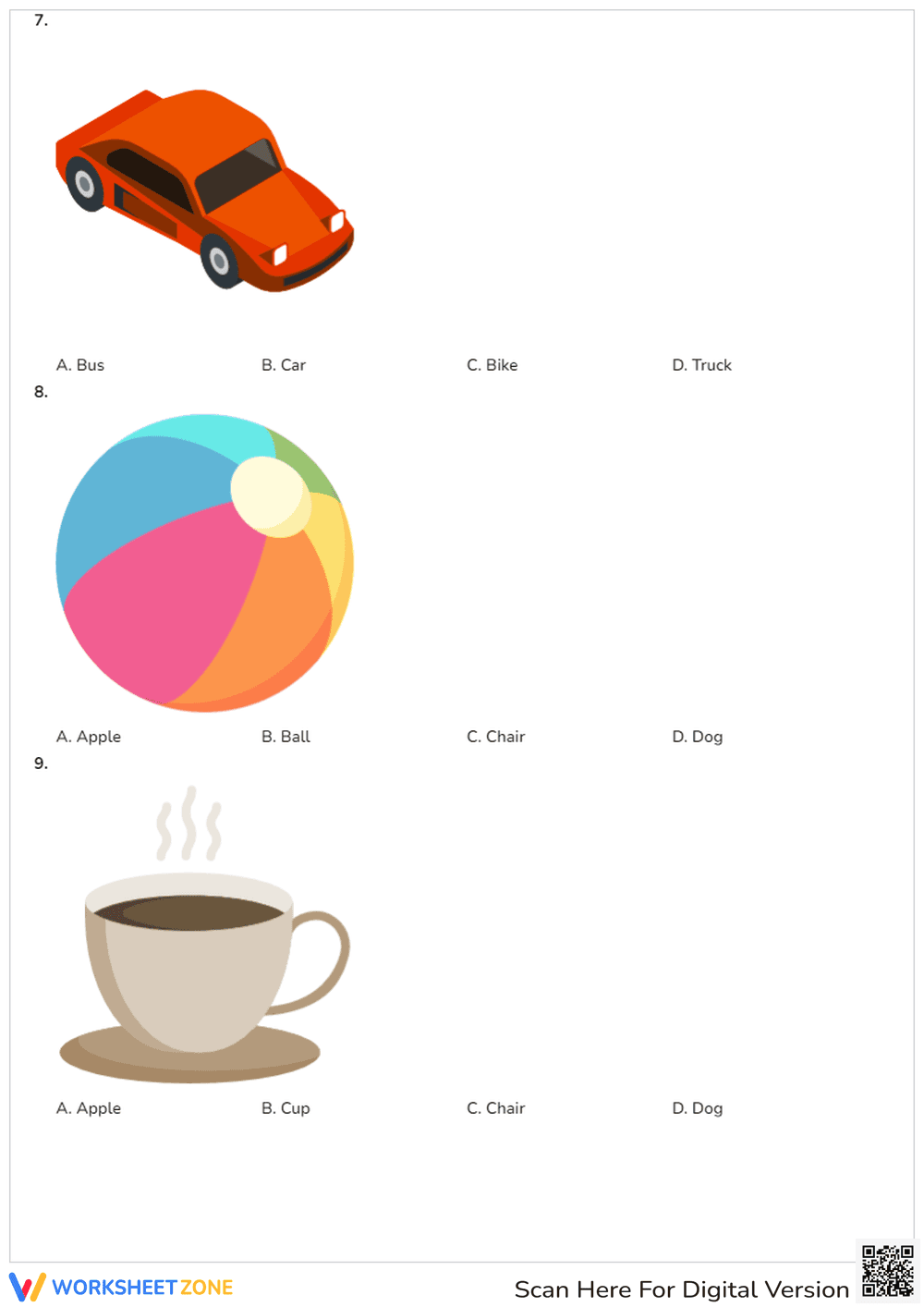
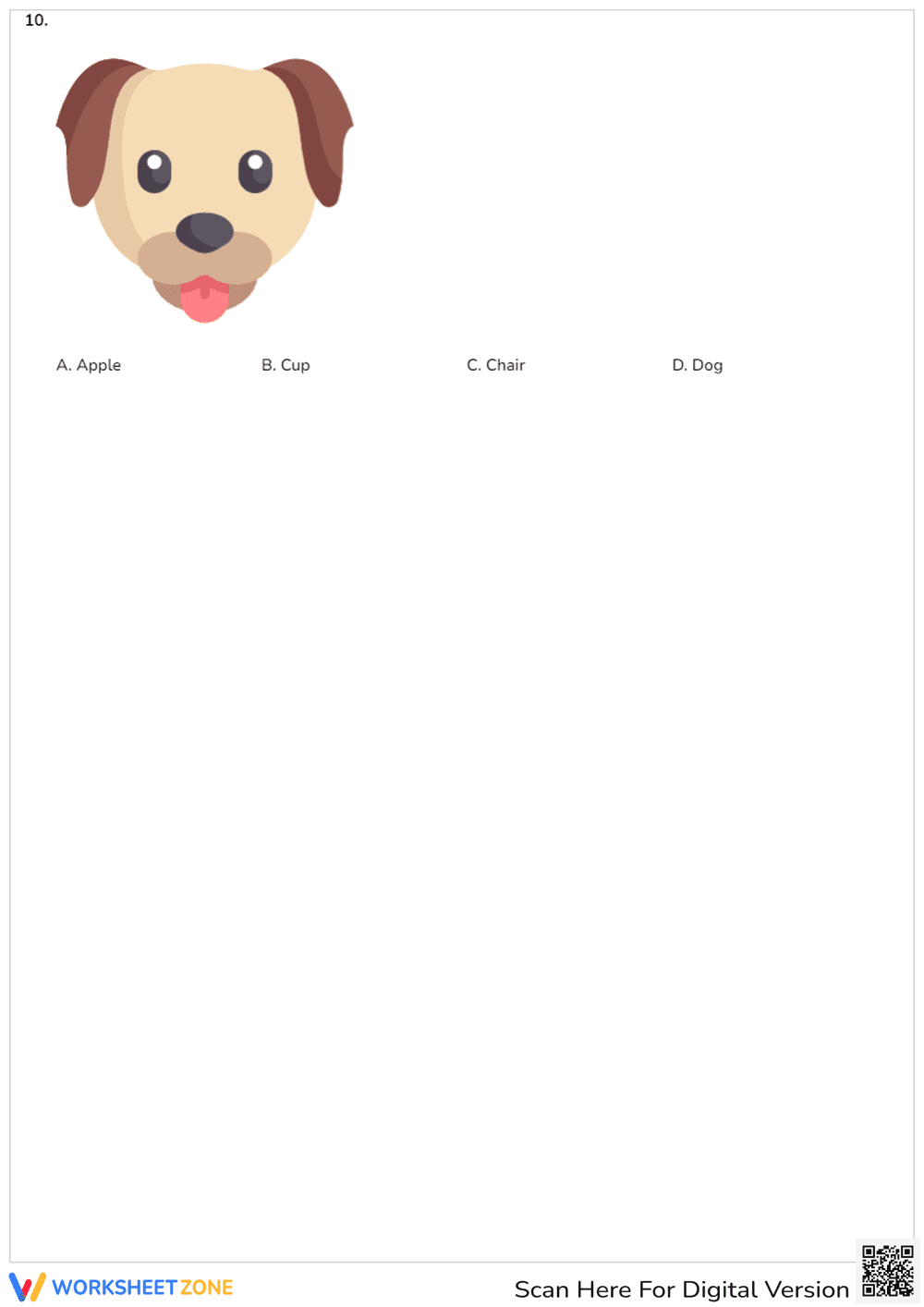

Grade K-1 Object Recognition — Printable No-Prep Worksheet
Paste this activity's link or code into your existing LMS (Google Classroom, Canvas, Teams, Schoology, Moodle, etc.).
Students can open and work on the activity right away, with no student login required.
You'll still be able to track student progress and results from your teacher account.
This foundational ELA worksheet helps early learners build essential vocabulary and decoding skills through visual association. By matching familiar everyday items to their corresponding written words, students strengthen their object recognition and early reading fluency in a highly engaging, accessible format.
At a Glance
- Grade: K-1 · Subject: ELA
- Standard:
CCSS.ELA-LITERACY.RF.K.3— Apply phonics and word analysis skills to decode words- Skill Focus: Object Recognition & Vocabulary
- Format: 4 pages · 10 problems · PDF
- Best For: Independent practice or formative assessment
- Time: 10–15 minutes
This comprehensive four-page resource features ten distinct multiple-choice questions designed specifically for young readers. Each problem presents a clear, colorful illustration of a common object—such as a house, flower, sun, or dog—paired with four simple text options. The uncluttered layout minimizes distractions, allowing students to focus entirely on sounding out the words and making the correct visual-to-text connection.
Zero-Prep Workflow
- Print (1 minute): The straightforward PDF format ensures high-quality printing in either color or grayscale, ready for immediate classroom use.
- Distribute (1 minute): Hand out the four-page packets to students. The intuitive multiple-choice design requires minimal verbal instruction.
- Review (3 minutes): Quickly assess student understanding by reviewing the selected answers, making this an ideal tool for morning work or a reliable substitute teacher plan.
Total teacher preparation time is under two minutes, providing a smooth addition to any early literacy curriculum.
Standards Alignment
This resource is directly aligned to CCSS.ELA-LITERACY.RF.K.3: "Know and apply grade-level phonics and word analysis skills in decoding words." By requiring students to read simple options and match them to visual cues, the worksheet reinforces early decoding and sight word recognition. Both standard codes can be copied directly into lesson plans, IEP goals, or district curriculum mapping tools.
How to Use It
Deploy this worksheet during independent literacy centers to reinforce vocabulary introduced during whole-group instruction. It serves as an excellent formative assessment tool; teachers can observe whether students are actively sounding out the initial consonants of the multiple-choice options or relying on sight word memorization. Expected completion time ranges from 10 to 15 minutes, making it a perfect fit for morning work or a quick transition activity.
Who It's For
This activity is tailored for Kindergarten and first-grade students developing their foundational reading skills. It is particularly effective for English Language Learners (ELLs) who benefit from strong visual supports when acquiring new vocabulary. Pair this worksheet with a classroom anchor chart featuring common nouns or a read-aloud session focused on everyday objects to maximize student comprehension.
Integrating visual supports with text decoding is a proven strategy for early literacy development. According to Fisher & Frey (2014), providing students with clear visual scaffolds significantly enhances their ability to acquire and retain new vocabulary in the primary grades. This worksheet directly aligns with CCSS.ELA-LITERACY.RF.K.3 by requiring learners to apply phonics and word analysis skills to decode words accurately. As students analyze the colorful illustrations and carefully evaluate the four text options, they successfully bridge the critical gap between spoken language and written text. This targeted, independent practice not only builds essential reading fluency but also fosters academic confidence in young learners as they reach early literacy milestones. Utilizing structured, image-based multiple-choice tasks ensures that foundational vocabulary acquisition remains both accessible and highly effective for diverse early childhood classrooms.


