


























Views
Downloads
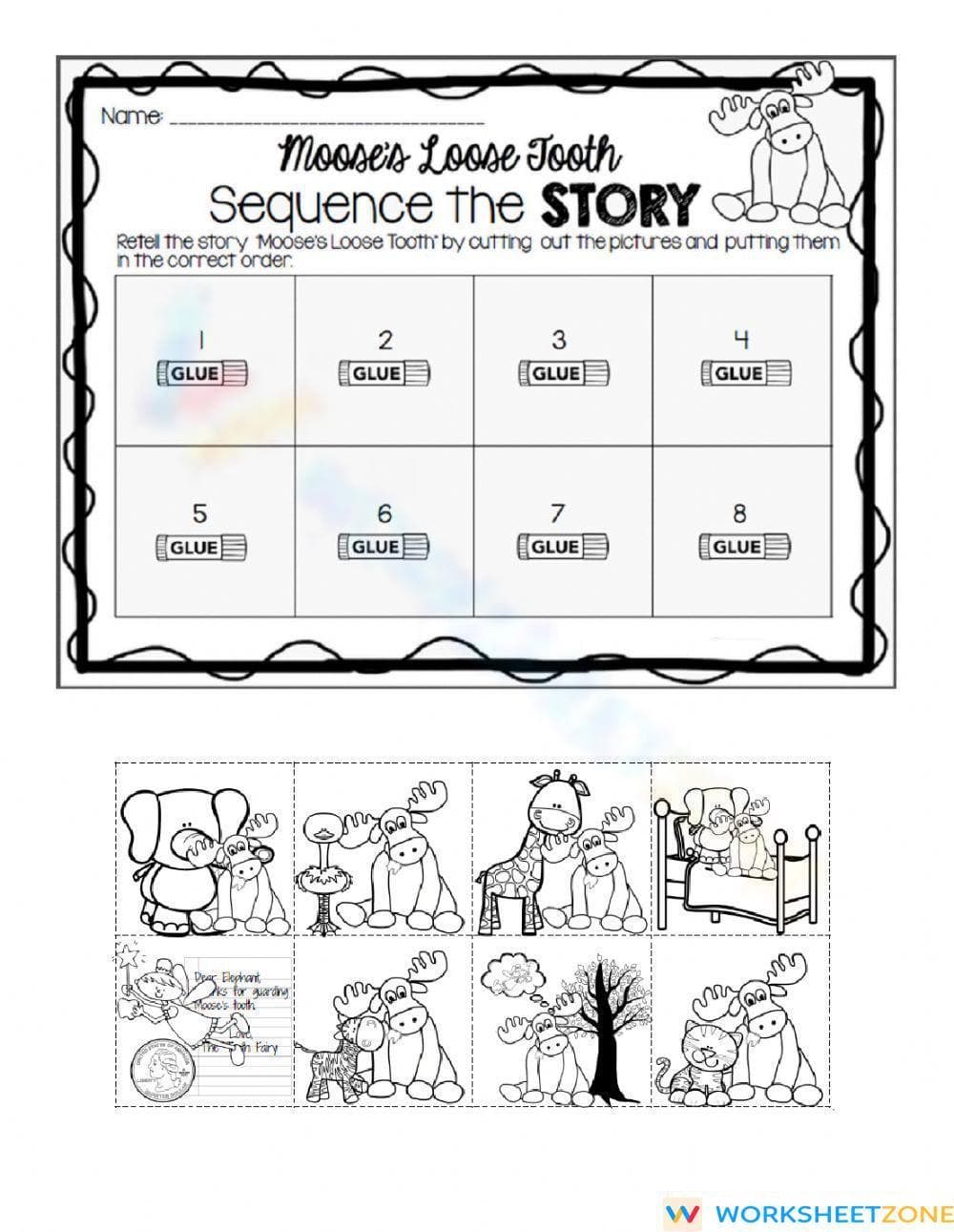

Grade 1 Story Sequencing — Printable No-Prep Worksheet
Paste this activity's link or code into your existing LMS (Google Classroom, Canvas, Teams, Schoology, Moodle, etc.).
Students can open and work on the activity right away, with no student login required.
You'll still be able to track student progress and results from your teacher account.
This ready-to-use worksheet helps first-graders practice retelling stories by sequencing major events. Through a hands-on, cut-and-paste activity, learners will place eight picture cards in the correct narrative order, providing focused practice on a key reading comprehension skill in an engaging format.
At a Glance
- Grade: K–1 · Subject: English Language Arts (ELA)
- Standard:
CCSS.ELA-LITERACY.RL.1.2— Retell stories, including key details, to show understanding.- Skill Focus: Story Sequencing, Retelling
- Format: 1 page · 8 pictures to sequence · Answer key not included · PDF
- Best For: Reading centers, independent practice, story comprehension check
- Time: 15–20 minutes
This single-page PDF contains a grid with eight numbered boxes and a set of eight picture cards depicting key scenes from a story. Clear cutting lines are provided for easy student preparation. The all-in-one format makes it simple to print and distribute for immediate use.
A Zero-Prep Workflow
Designed for immediate classroom use, this worksheet follows a simple workflow that saves teacher time. The total prep is under two minutes.
- Print (30 seconds): Print one copy of the single-page PDF for each student.
- Distribute (1 minute): Hand out the worksheet with scissors and glue. Instructions on the page allow students to begin immediately.
- Review (5 minutes): After completion, facilitate a quick whole-class review. This makes it an ideal activity for a substitute teacher or a quick ELA block filler.
Standards Alignment
This worksheet directly addresses CCSS.ELA-LITERACY.RL.1.2, which requires students to "retell stories, including key details, and demonstrate understanding of their central message or lesson." The sequencing task provides concrete evidence of a student's ability to recall and organize key story events. The standard code can be copied directly into lesson plans or curriculum maps.
How to Use It
Use this resource as a follow-up activity after a class read-aloud. It’s excellent for independent practice in a literacy center or as a take-home assignment. For a formative assessment, observe if students can place the first, middle, and last pictures correctly to gauge their grasp of narrative arcs. Expect completion time to be between 15 and 20 minutes.
Who It's For
This worksheet is for kindergarten and first-grade students developing reading comprehension and fine motor skills. The hands-on task is effective for kinesthetic learners. For students needing support, consider numbering the first two pictures. This activity pairs well with a story-mapping anchor chart created during the initial read-aloud.
Sequencing is a fundamental component of reading comprehension, enabling students to understand plot structure and make predictions. This worksheet provides direct practice in this skill, aligning with the evidence-based recommendations in the RAND AIRS 2024 report on foundational literacy. The task requires students to identify and organize key details from a narrative, a process central to standard CCSS.ELA-LITERACY.RL.1.2. By asking learners to "retell stories, including key details," the standard emphasizes the importance of recalling events in a logical order. This hands-on, cut-and-paste format provides a low-stakes, high-engagement method for students to demonstrate their understanding of a story's beginning, middle, and end. The activity serves as a tangible artifact of student learning, easily collected as a formative assessment to inform future instruction on narrative text structure and comprehension strategies.


