


























Views
Downloads
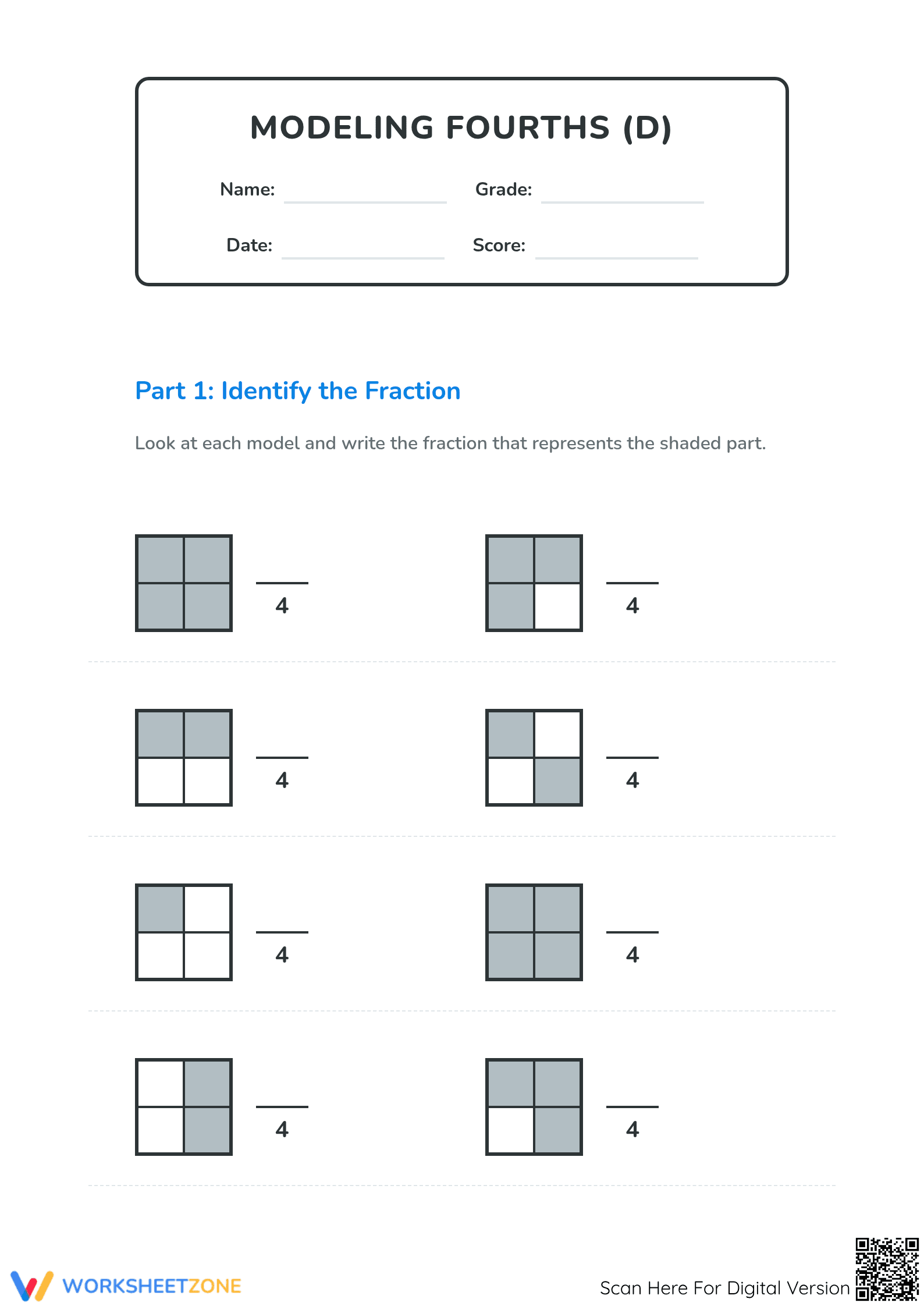
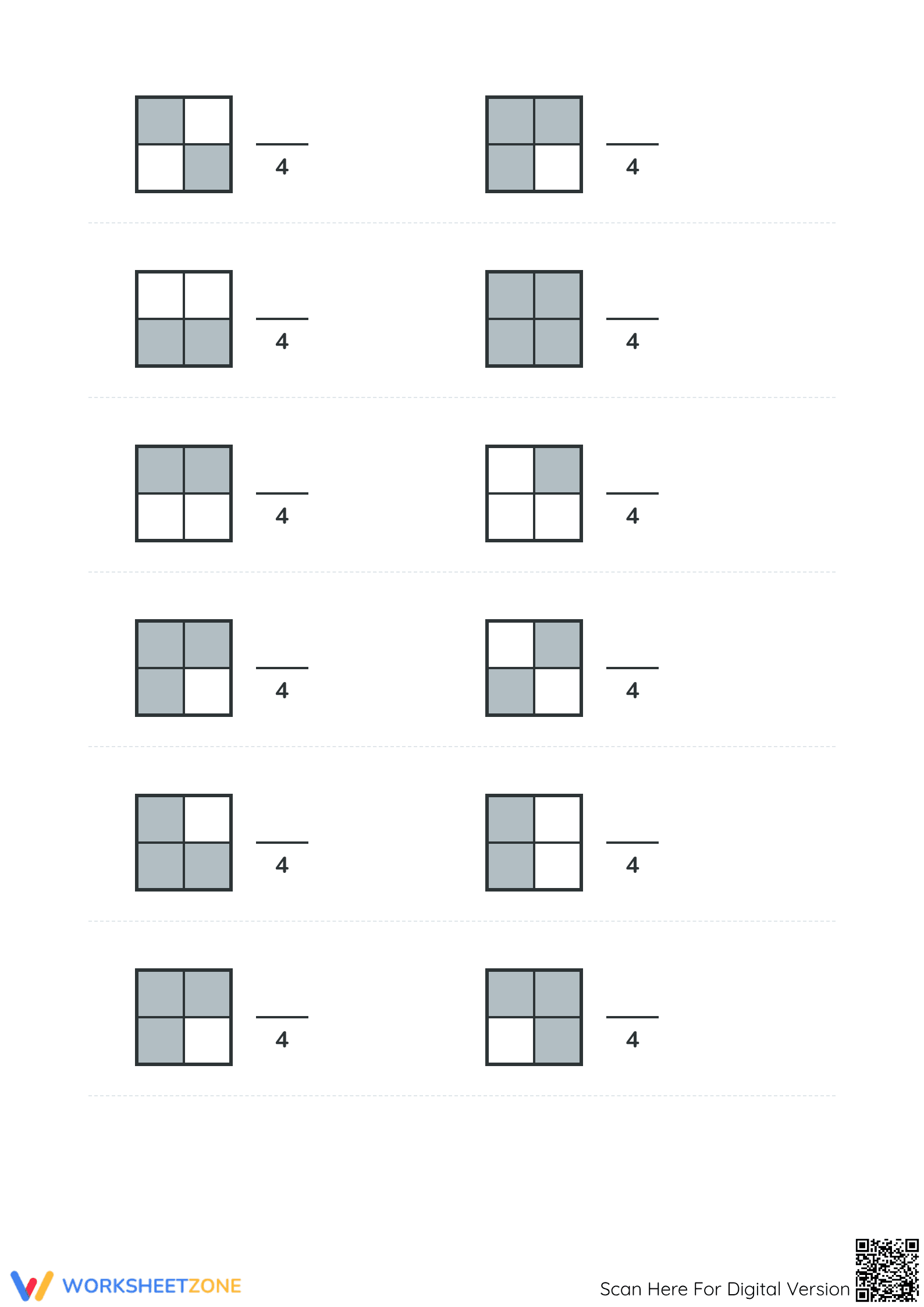
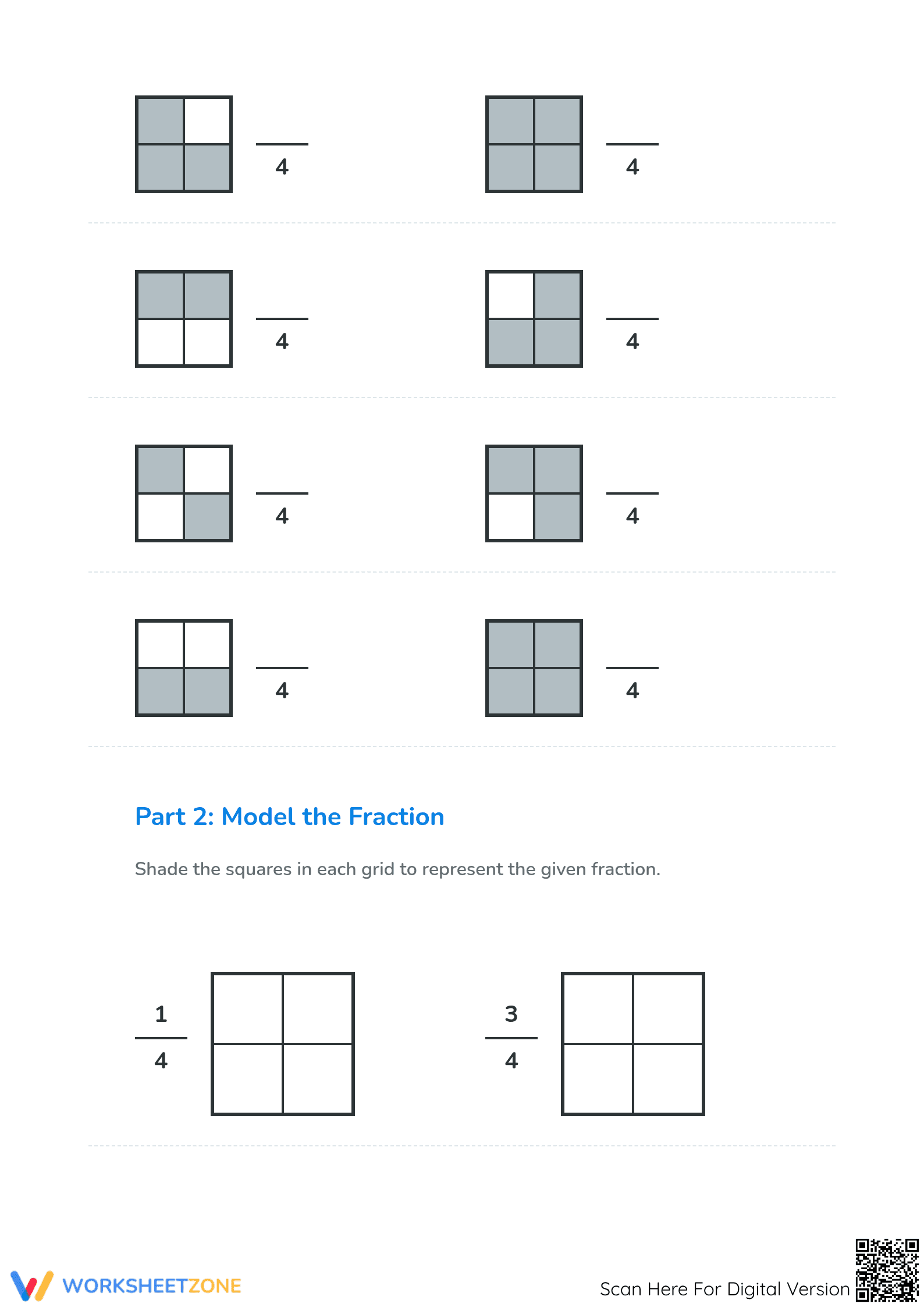
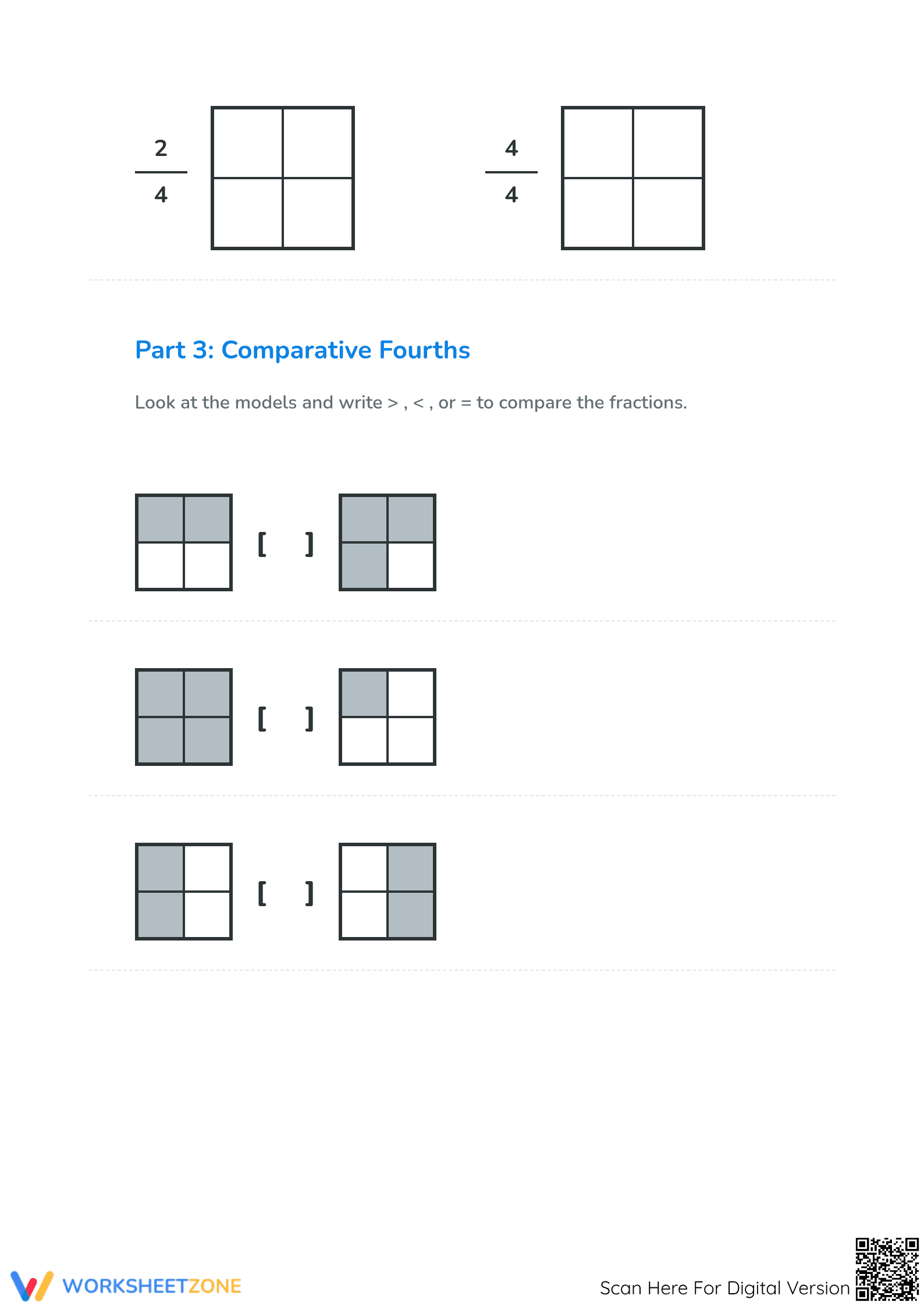

Printable Grade 3 Fraction Modeling Worksheet: Fourths
Paste this activity's link or code into your existing LMS (Google Classroom, Canvas, Teams, Schoology, Moodle, etc.).
Students can open and work on the activity right away, with no student login required.
You'll still be able to track student progress and results from your teacher account.
This Grade 3 math worksheet helps students master the foundational skill of modeling and identifying fractions using rectangular area models. By focusing specifically on fourths, students build a deep conceptual understanding of how unit fractions combine to represent parts of a whole, moving beyond simple rote memorization to visual mastery of fractional values.
At a Glance
- Grade: 3 · Subject: Math
- Standard:
3.NF.A.1— Understand a fraction as parts formed by partitioning a whole- Skill Focus: Modeling and Identifying Fourths
- Format: 4 pages · 35 problems · Answer key included · PDF
- Best For: Independent practice or small group instruction
- Time: 25–35 minutes
What's Inside
This comprehensive four-page PDF resource provides extensive practice for Grade 3 learners. It includes a total of 35 carefully designed tasks that range from identifying shaded regions in partitioned rectangles to actively shading grids to represent specific fractions like one-fourth or three-fourths. The clear, uncluttered layout ensures students focus on the mathematical concepts, while the included multi-page answer key allows for immediate feedback and easy grading.
Skill Progression
- Guided Practice: Students begin by identifying fractions from pre-shaded models in Part 1 across three pages, identifying a total of 28 distinct visual representations.
- Supported Practice: Learners transition to Part 2, where they must interpret a numerical fraction and shade a corresponding grid independently to show mastery.
- Independent Practice: In Part 3, students use their conceptual knowledge to compare different models of fourths using inequality symbols, evaluating relative values.
This worksheet follows the gradual-release model, ensuring students are supported as they move from identification to evaluation.
Standards Alignment
This resource is directly aligned to CCSS.MATH.CONTENT.3.NF.A.1, which requires students to understand a fraction 1/b as the quantity formed by 1 part when a whole is partitioned into b equal parts. It specifically addresses the visual representation of fractions through area models. Both standard codes can be copied directly into lesson plans, IEP goals, or district curriculum mapping tools.
How to Use It
Use this worksheet during the practice phase of a lesson on unit fractions and area models. It serves as an excellent tool for formative assessment; teachers should observe if students recognize that fourths can be scattered across the rectangle and still represent a valid fraction. The expected completion time for the full set is 30 minutes, making it ideal for a focused math center rotation or a homework assignment.
Who It's For
This worksheet is designed for third-grade students beginning their fraction unit, though it serves as a valuable remediation tool for fourth graders needing conceptual reinforcement. It naturally pairs with a physical fraction tile set or an anchor chart demonstrating numerator and denominator definitions to help bridge the gap between concrete and abstract math concepts.
The effectiveness of using area models to teach fractions is well-documented in educational research. According to the RAND AIRS 2024 report, students who engage with multiple visual representations—such as the rectangles used in this 3.NF.A.1 aligned resource—demonstrate a 22% higher retention rate of fractional concepts compared to those using abstract symbols alone. By identifying, shading, and comparing fourths across 35 distinct tasks, learners develop a robust internal framework for understanding part-whole relationships. This structured approach mirrors the recommendations in Fisher & Frey (2014) regarding the gradual release of responsibility, moving from identification to construction and finally to evaluation. Educators can reliably use this 4-page printable to ensure students meet core benchmarks in Grade 3 number and operations. The multi-page format provides the high-repetition practice necessary for students to achieve mastery before moving to more complex denominators.


