


























Views
Downloads

Modeling Fractions with Rectangles | Grade 3 Essential Sheet
Paste this activity's link or code into your existing LMS (Google Classroom, Canvas, Teams, Schoology, Moodle, etc.).
Students can open and work on the activity right away, with no student login required.
You'll still be able to track student progress and results from your teacher account.
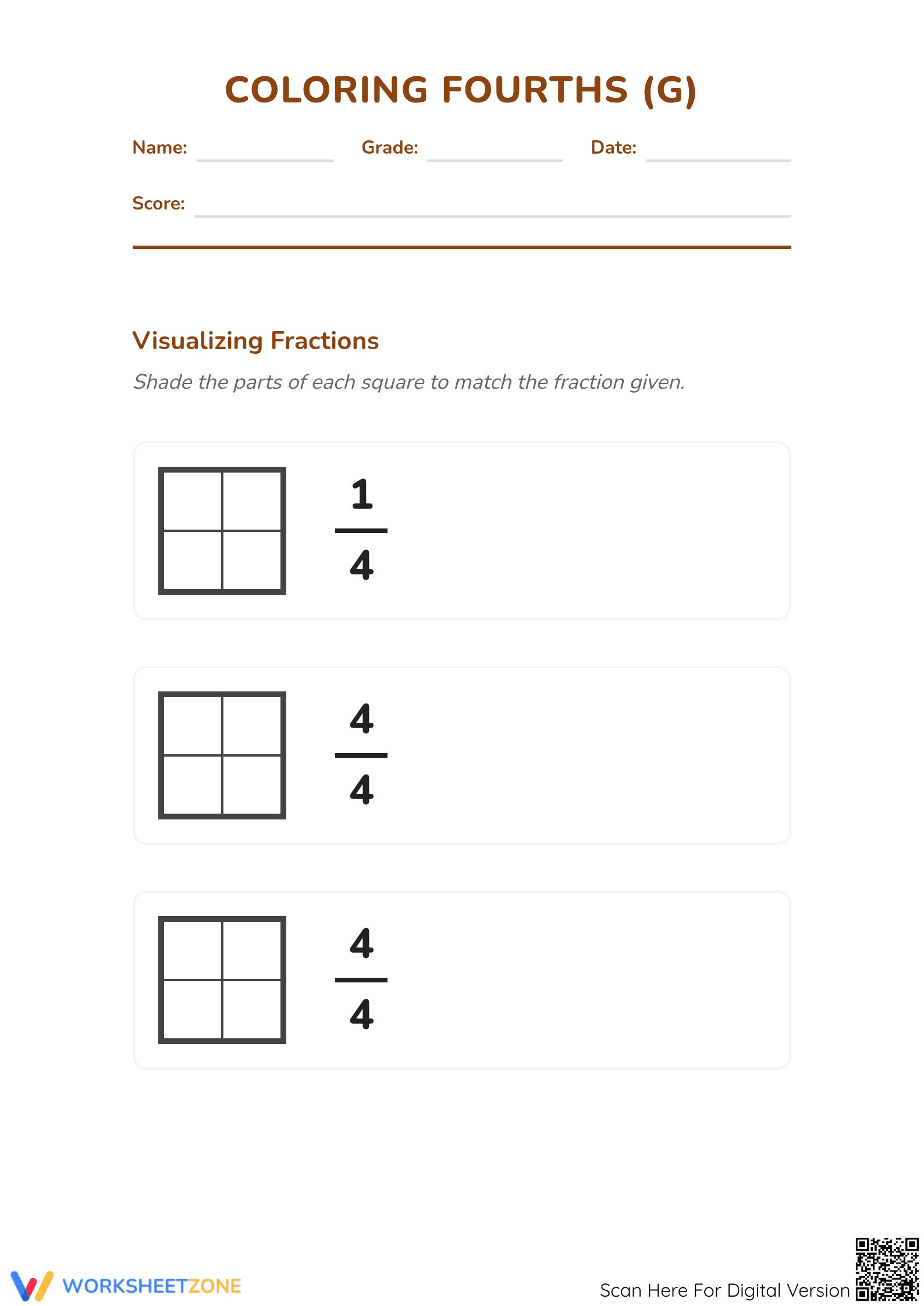
Master the concept of fourths with this comprehensive modeling fractions worksheet. By shading equal parts of squares to match specific numeric values, students develop a concrete understanding of how numerators and denominators represent parts of a whole. This practice bridge the gap between abstract numbers and visual spatial reasoning for early math success.
At a Glance
- Grade: 3 · Subject: Math
- Standard:
CCSS.MATH.CONTENT.3.NF.A.1— Represent fractions by shading parts of a whole shape divided into equal sections- Skill Focus: Visualizing and Shading Fourths
- Format: 5 pages · 21 problems · Answer key included · PDF
- Best For: Introduction to fractions and area models
- Time: 20–30 minutes
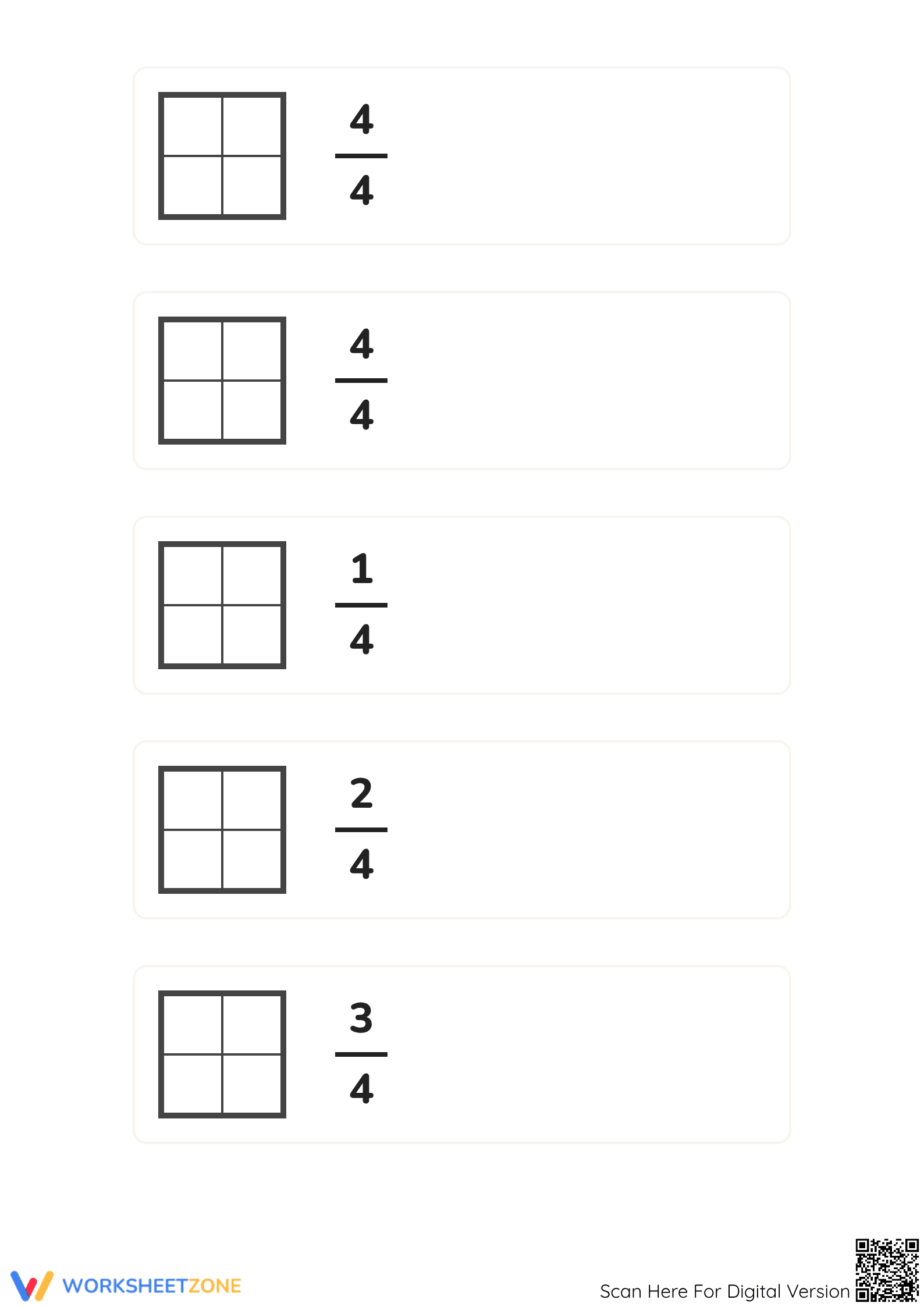
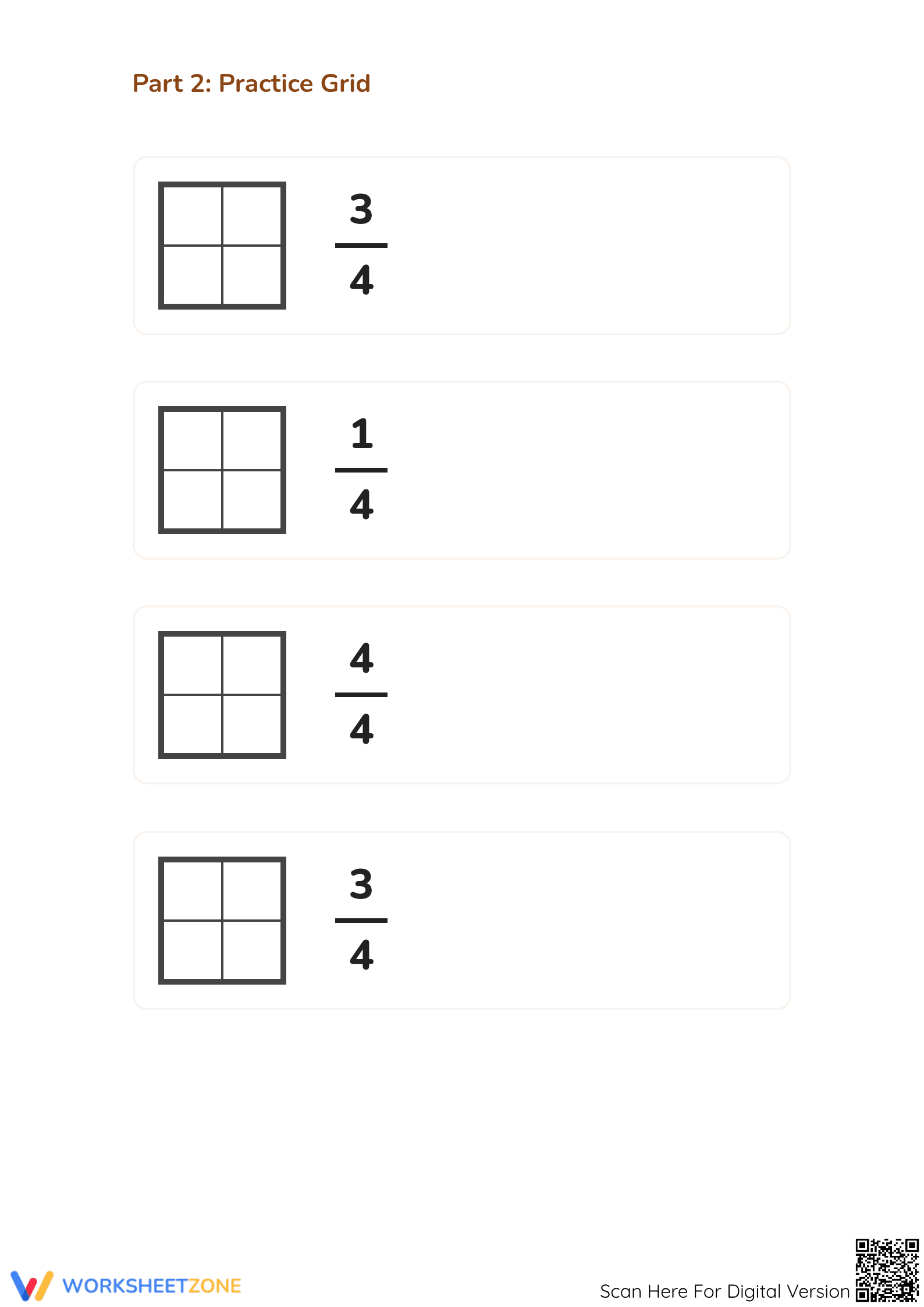
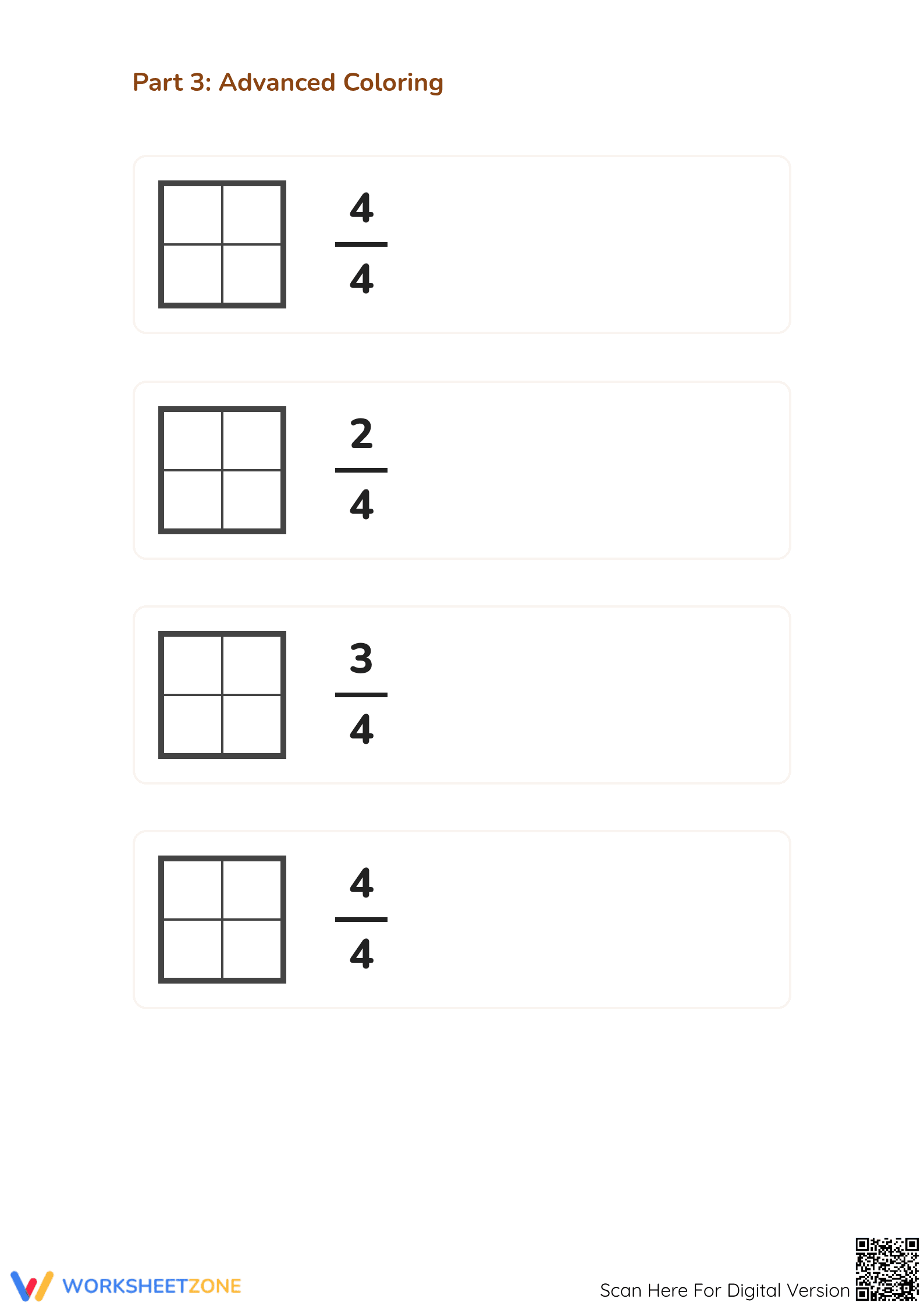
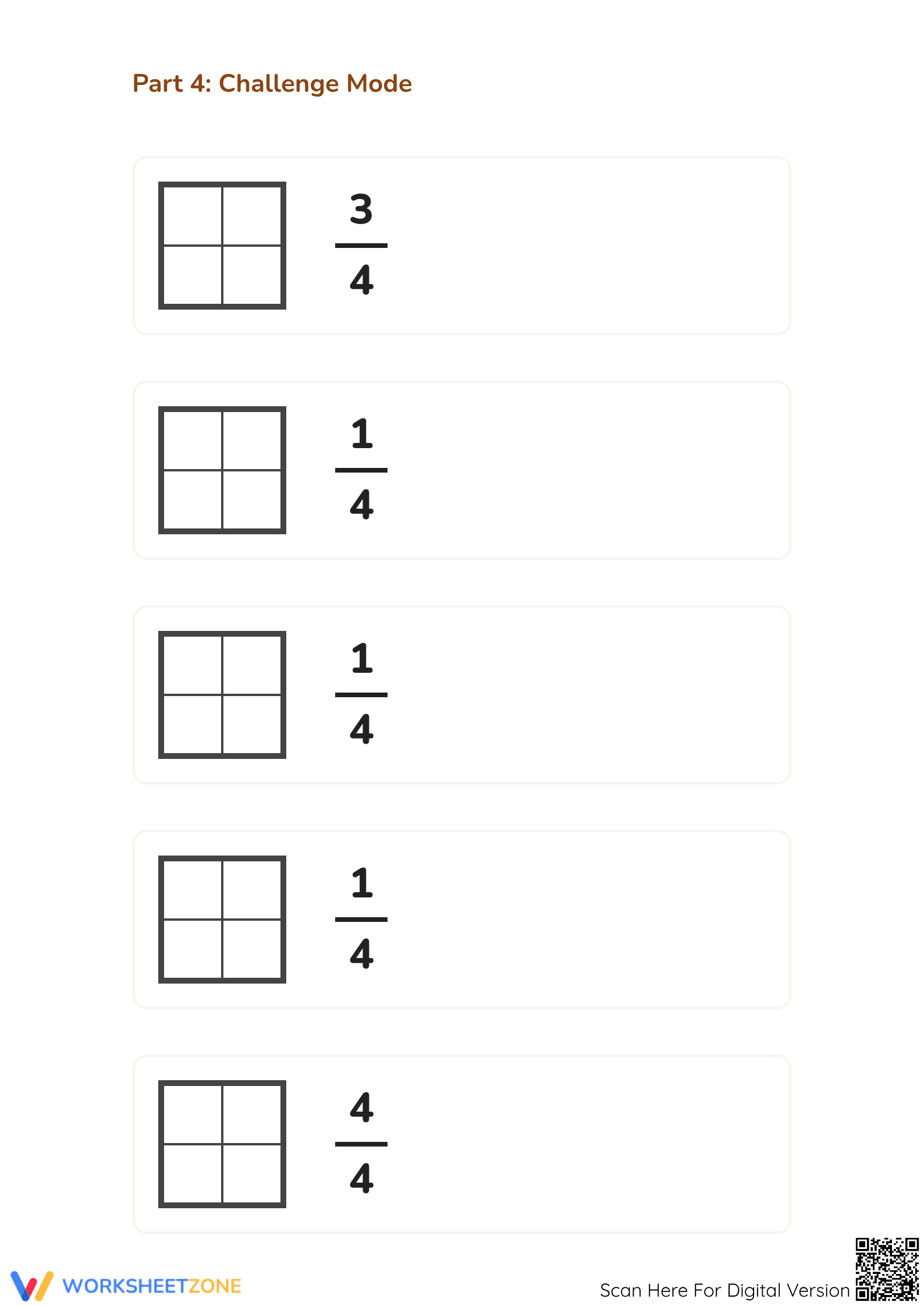
This 5-page printable packet features 21 distinct shading exercises focused on the unit fraction 1/4 and its multiples. Each problem presents a 2x2 grid representing a whole, paired with a fraction such as 1/4, 2/4, 3/4, or 4/4. The clear layout provides ample space for students to shade with pencils or crayons. A full answer key is provided for rapid grading and student self-correction.
The worksheet follows a release of responsibility through four progressive parts.
- Guided Practice: Initial problems establish the basic fourths pattern with simple area models.
- Supported Practice: Parts 2 and 3 offer practice grids to reinforce consistency across multiple tasks.
- Independent Practice: Challenge Mode in Part 4 tests fluency with 5 rapid-fire problems requiring precision.
This resource is directly aligned with `CCSS.MATH.CONTENT.3.NF.A.1`, requiring students to understand a fraction as a quantity formed by parts of a whole. By partitioning rectangles into four equal segments, students demonstrate their mastery of the relationship between the parts and the whole. Both standard codes can be copied directly into lesson plans, IEP goals, or district curriculum mapping tools.
Use this worksheet during the 'during' phase of direct instruction to provide immediate application of area models. It also serves as an excellent exit ticket for formative assessment; teachers should observe if students are shading contiguous or scattered segments to gauge their conceptual flexibility. Expect students to complete the full packet in approximately 25 minutes depending on their fine motor speed.
Designed primarily for third-grade students, this worksheet is also effective for Grade 4 review or RTI intervention for older students struggling with the basics of fractions. It pairs naturally with physical manipulatives like fraction tiles or a short reading passage about sharing equal parts of a snack to provide a multi-sensory learning experience.
Educational research highlights the importance of area models in developing a robust understanding of rational numbers. According to the NAEP (2024) analysis of mathematics achievement, students who demonstrate proficiency in representing fractions visually are significantly more likely to succeed in later operations. This worksheet leverages the 'Modeling Fractions' methodology, emphasizing that fractions represent selected segments of a single body. By engaging with 21 focused tasks, learners internalize the CCSS.MATH.CONTENT.3.NF.A.1 standard through repetitive practice. Fisher & Frey (2014) suggest that such structured visual practice is essential for moving from concrete to representational math stages. This PDF resource provides the necessary scaffolding to ensure that students can produce fractions of a whole body accurately. It acts as a bridge to mastery by providing clear, standards-aligned practice that can be integrated into any Grade 3 curriculum.


