


























Views
Downloads
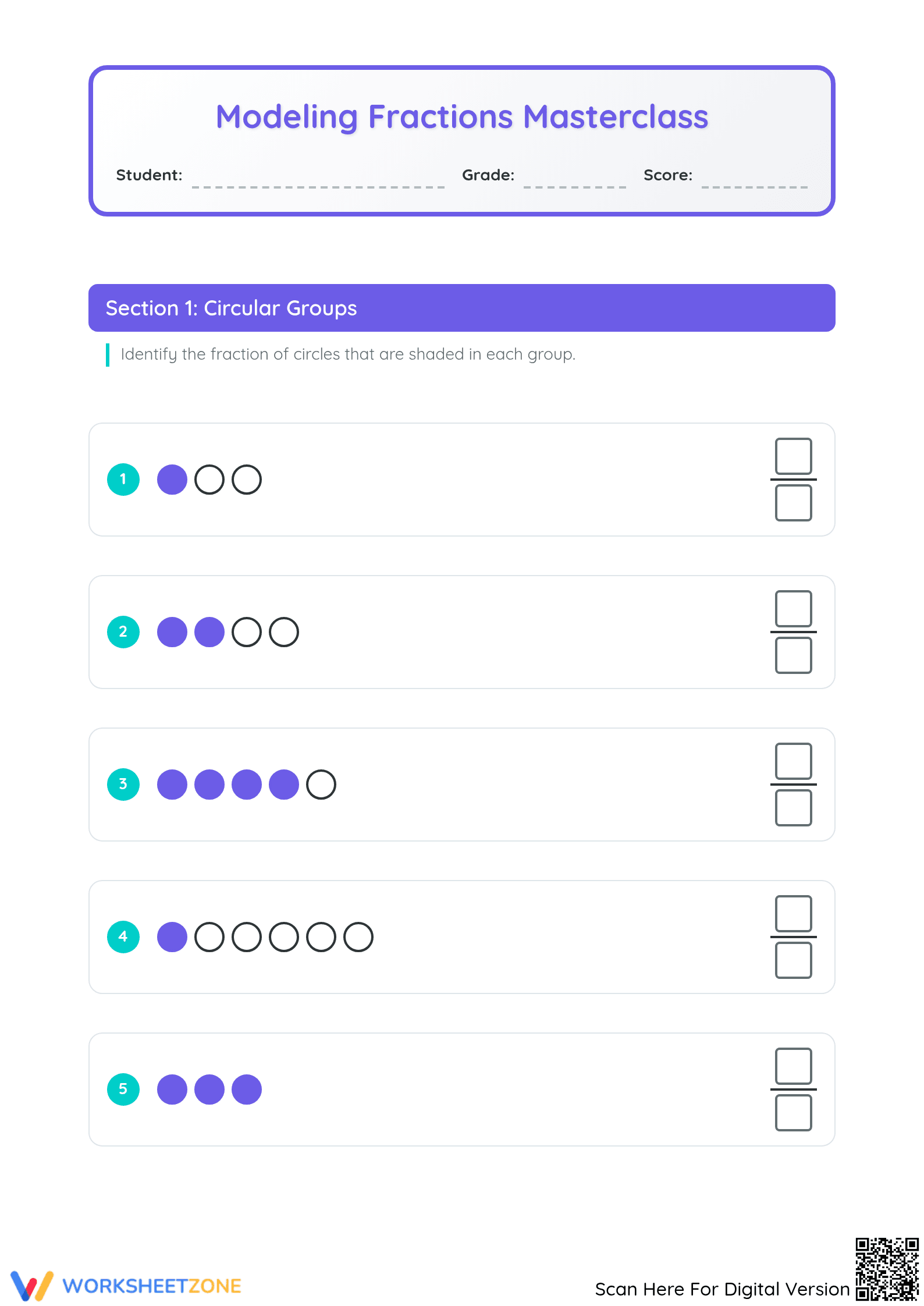
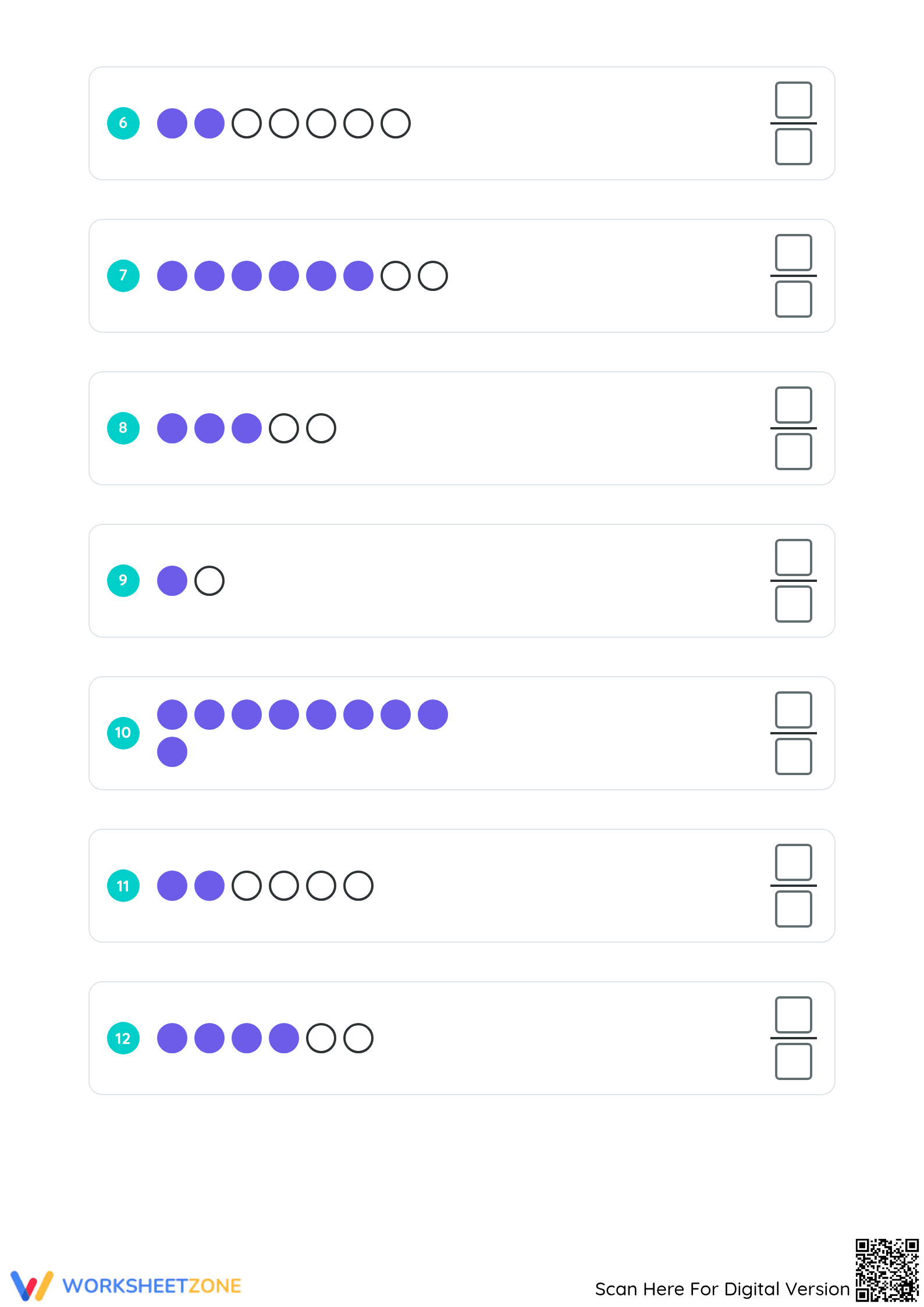

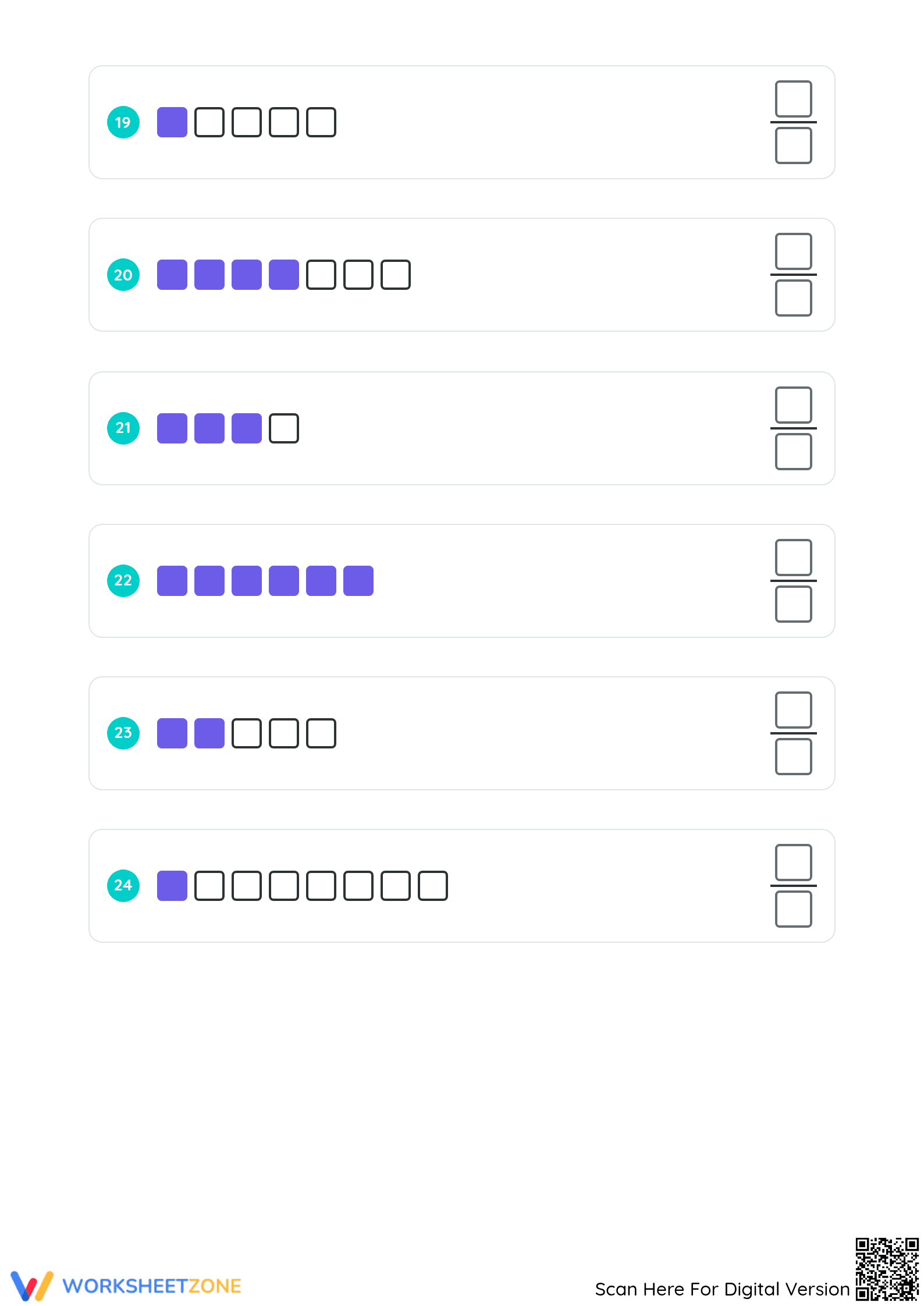


Printable Modeling Fractions with Groups of Shapes Worksheet
Paste this activity's link or code into your existing LMS (Google Classroom, Canvas, Teams, Schoology, Moodle, etc.).
Students can open and work on the activity right away, with no student login required.
You'll still be able to track student progress and results from your teacher account.
This essential modeling fractions worksheet empowers students to master the foundational concept of fractions as parts of a group. By identifying shaded portions within circular, square, and star-shaped sets, learners develop a concrete understanding of numerators and denominators. This resource ensures students can accurately represent values using visual models, bridging abstract numbers and tangible quantities.
At a Glance
- Grade: 3 · Subject: Math
- Standard:
CCSS.MATH.CONTENT.3.NF.A.1— Understand a fraction 1/b as the quantity formed by 1 part- Skill Focus: Modeling fractions of a set
- Format: 5 pages · 31 problems · Answer key included · PDF
- Best For: Independent practice and assessment
- Time: 25–35 minutes
What's Inside
The "Modeling Fractions Masterclass" contains five pages of practice designed to build fractional reasoning. Students encounter 31 tasks divided into three sections: Circular Groups, Square Sets, and Star Patterns. Each problem provides a clear visual prompt where students write the fraction in a dedicated box. The included answer key allows for immediate feedback and easy grading, while varying set sizes encourage active counting.
Skill Progression
- Guided Practice: Problems 1–12 (Circular Groups) establish the relationship between parts and wholes using simple denominators and high visual scaffolding.
- Supported Practice: Problems 13–24 (Square Sets) require students to apply knowledge to different geometric configurations with reduced structural cues.
- Independent Practice: Problems 25–31 (Star Patterns) challenge students to count points and shaded areas in intricate visual models without scaffolding.
This "I Do, We Do, You Do" approach ensures that students build a robust mental model of fractions before moving toward more complex operations.
Standards Alignment
The primary focus is CCSS.MATH.CONTENT.3.NF.A.1: "Understand a fraction 1/b as the quantity formed by 1 part when a whole is partitioned into b equal parts." By requiring students to define the numerator and denominator, the worksheet reinforces structural logic. This code can be copied directly into lesson plans, IEP goals, or district curriculum mapping tools to ensure vertical alignment.
How to Use It
This worksheet is ideal for independent practice following instruction on fractions of a set. Teachers can assign sections as quick-checks or use the packet as a summative assessment. For a formative assessment observation, watch as students count the total shapes; students who struggle with the denominator may need support with one-to-one correspondence. Expected completion time is 30 minutes.
Who It's For
Designed for Grade 3, this is also an excellent intervention tool for Grade 4 or 5 learners requiring reinforcement. The clear layout provides necessary predictability for English Language Learners and students with processing challenges. Pair this worksheet with hands-on manipulative lessons using counters or an anchor chart displaying the parts of a fraction to complete the instructional cycle.
Effective mathematics instruction relies on multiple representations to help students transition from concrete to abstract reasoning. According to EdReports (2024), high-quality materials must provide opportunities for students to engage with visual models that represent fractions as both areas and sets. This worksheet fulfills that requirement by presenting 31 diverse problems aligned to CCSS.MATH.CONTENT.3.NF.A.1. By asking students to identify the fraction of shaded shapes within a group, the resource targets the "fractions as parts of a set" skill, which is a critical precursor to understanding fractions on a number line. Research from ScienceDirect TpT Analysis indicates that repetitive, focused practice with visual sets significantly reduces cognitive load for early learners. Educators can use these tasks to gather evidence of student mastery and inform future small-group instruction, ensuring that every learner develops a deep, lasting comprehension of fractional units and numerical relationships.


