


























Views
Downloads

Printable Modeling Fractions with Groups Worksheet | Grade 3
Paste this activity's link or code into your existing LMS (Google Classroom, Canvas, Teams, Schoology, Moodle, etc.).
Students can open and work on the activity right away, with no student login required.
You'll still be able to track student progress and results from your teacher account.
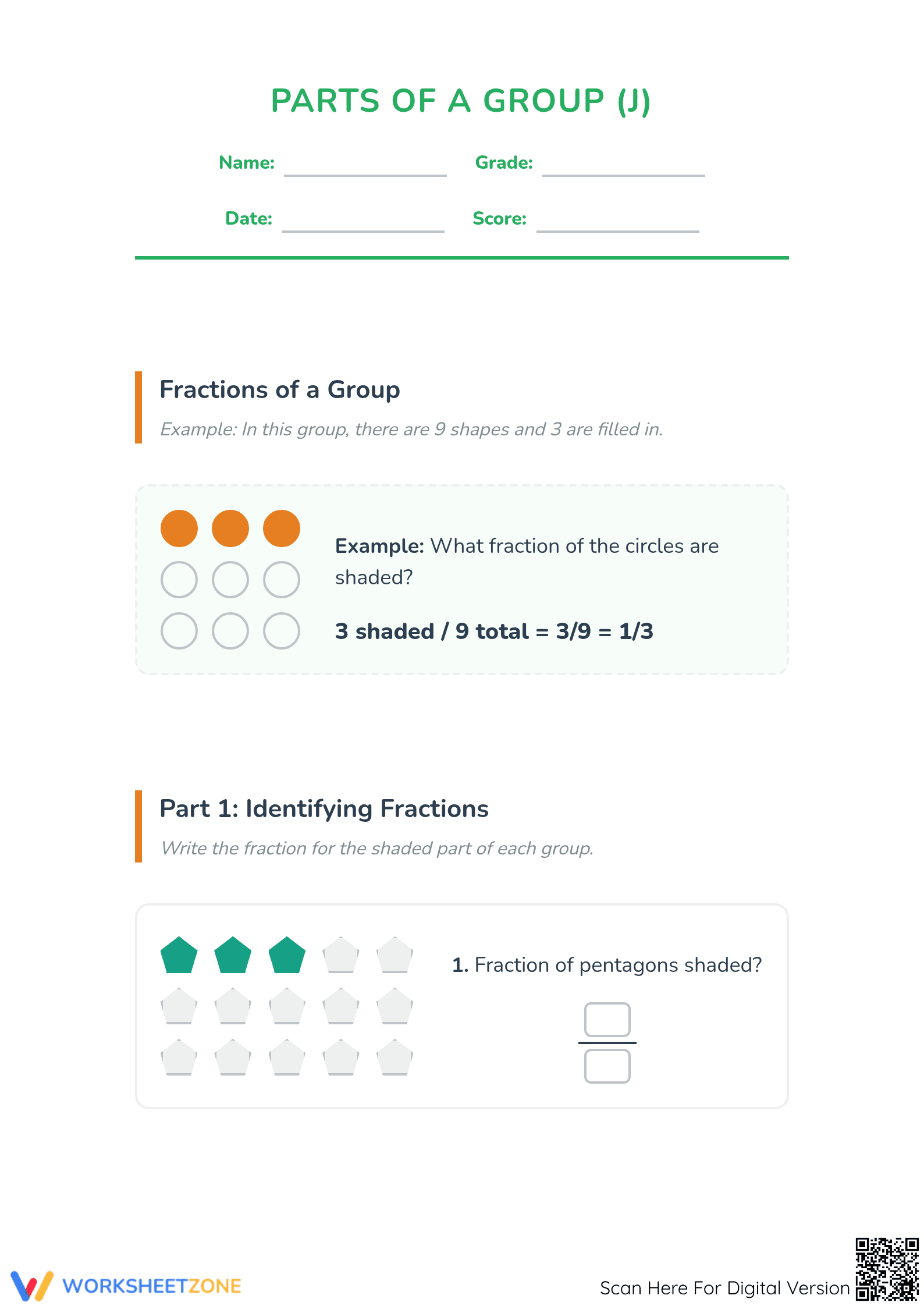
Mastering the concept of fractions starts with visualizing parts of a whole and parts of a set. This comprehensive worksheet guides students through modeling fractions using groups of familiar shapes. By translating visual clusters into numerical fractions, learners build a concrete understanding of numerators and denominators. This resource ensures students can confidently identify and write fractions of a group.
At a Glance
- Grade: 3 · Subject: Math
- Standard:
3.NF.A.1— Understand a fraction as the quantity formed by parts of a partitioned whole.- Skill Focus: Representing fractions of a set
- Format: 5 pages · 14 problems · Answer key included · PDF
- Best For: Initial instruction and independent skill practice
- Time: 25–35 minutes
What's Inside
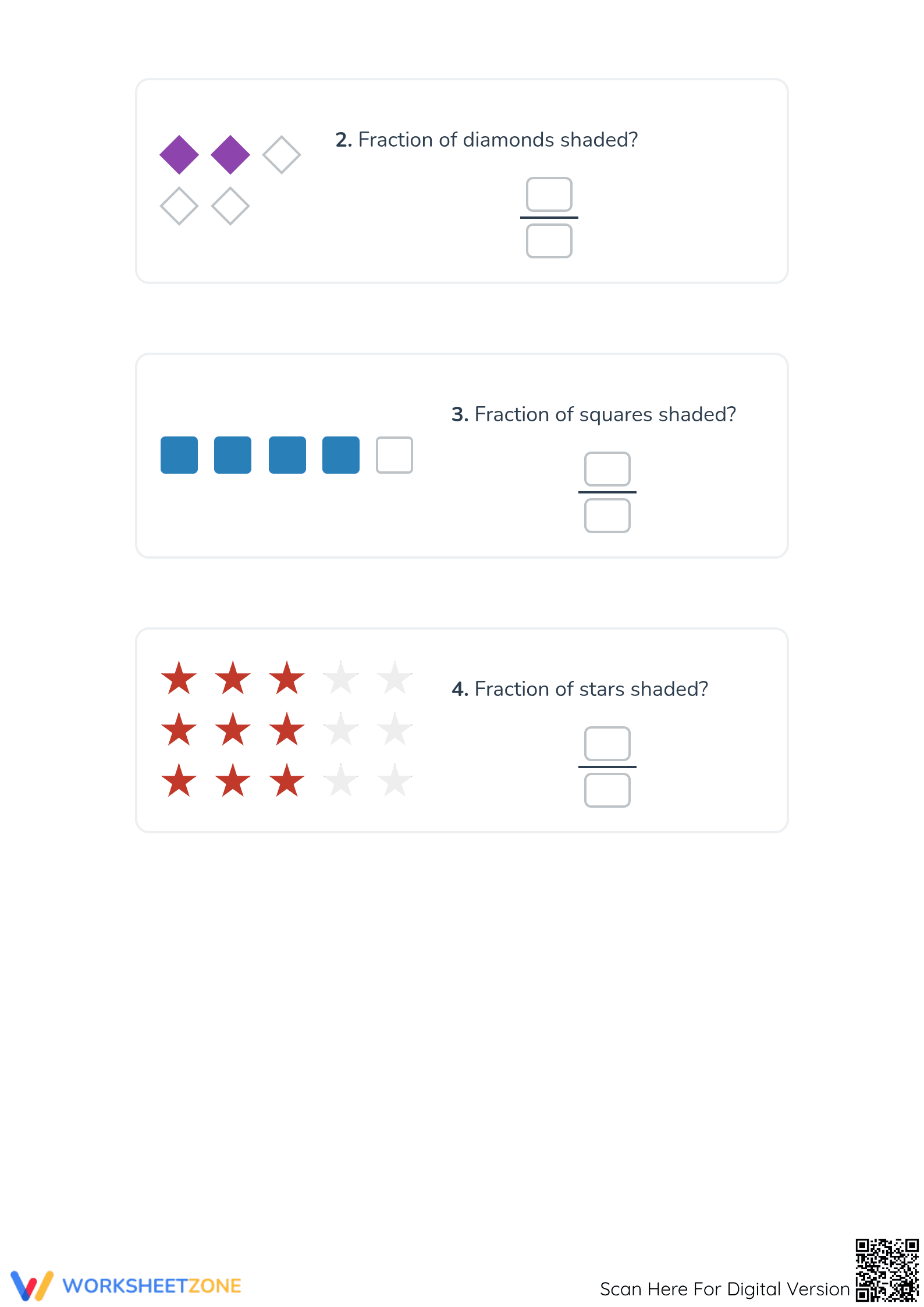
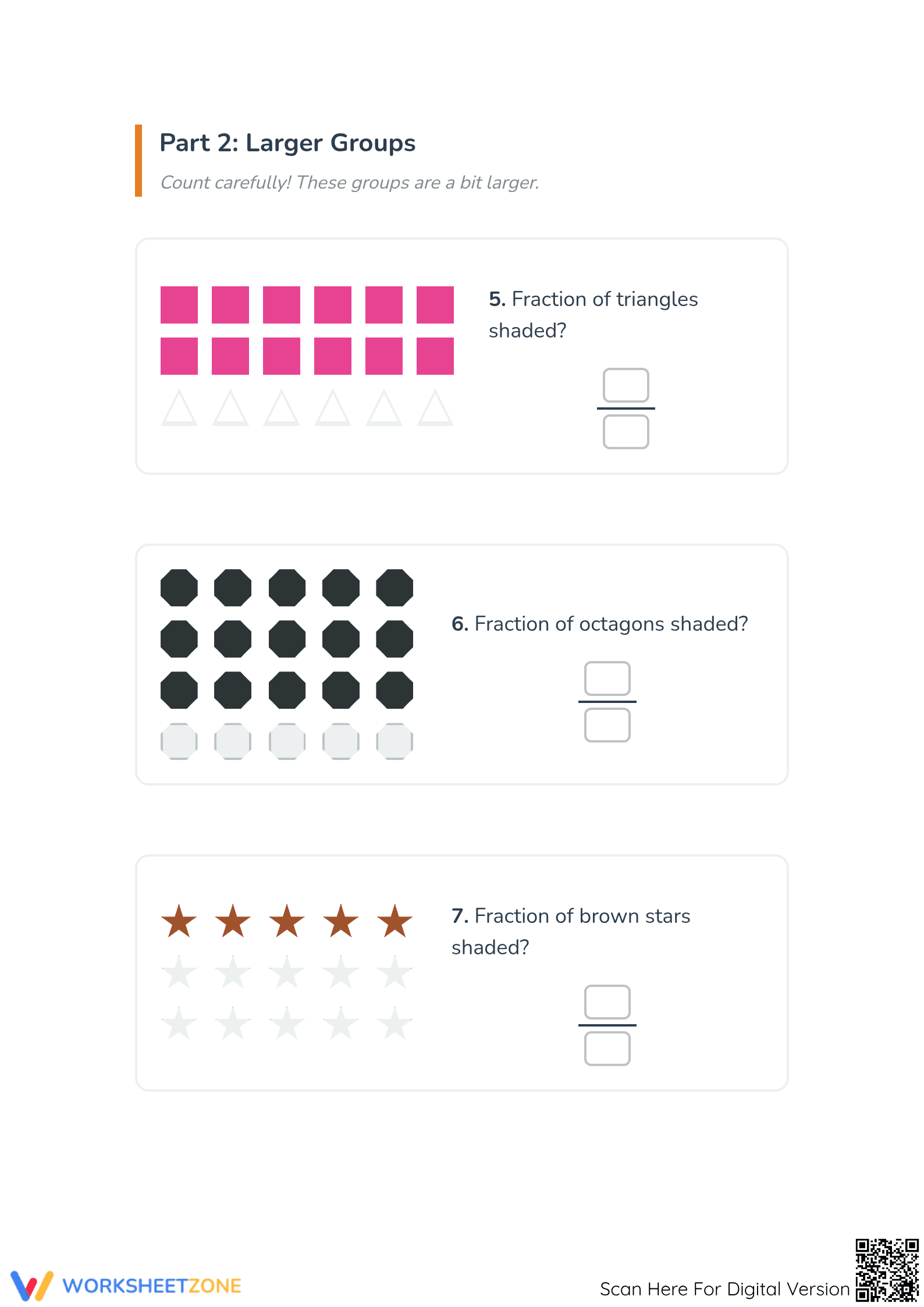
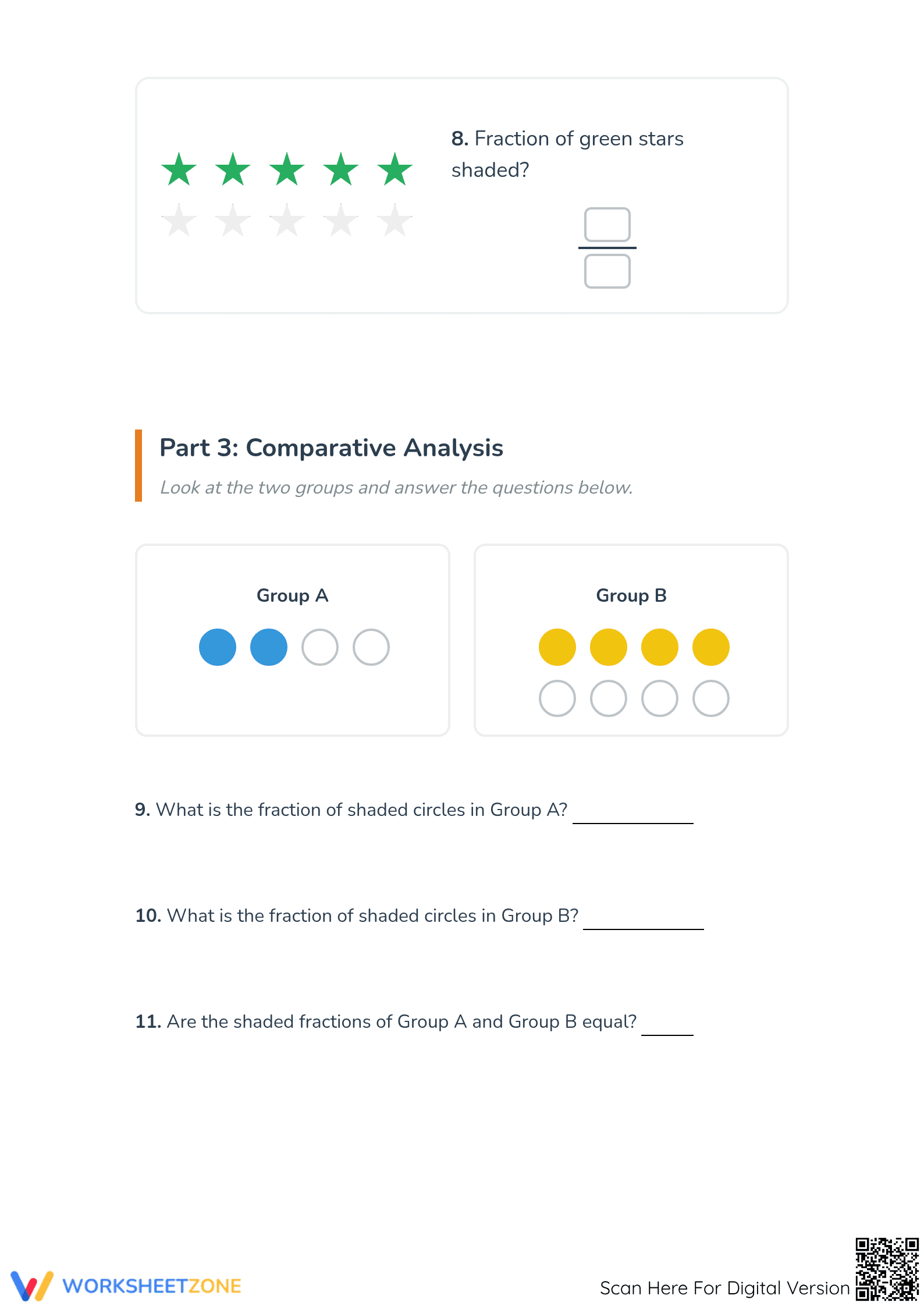
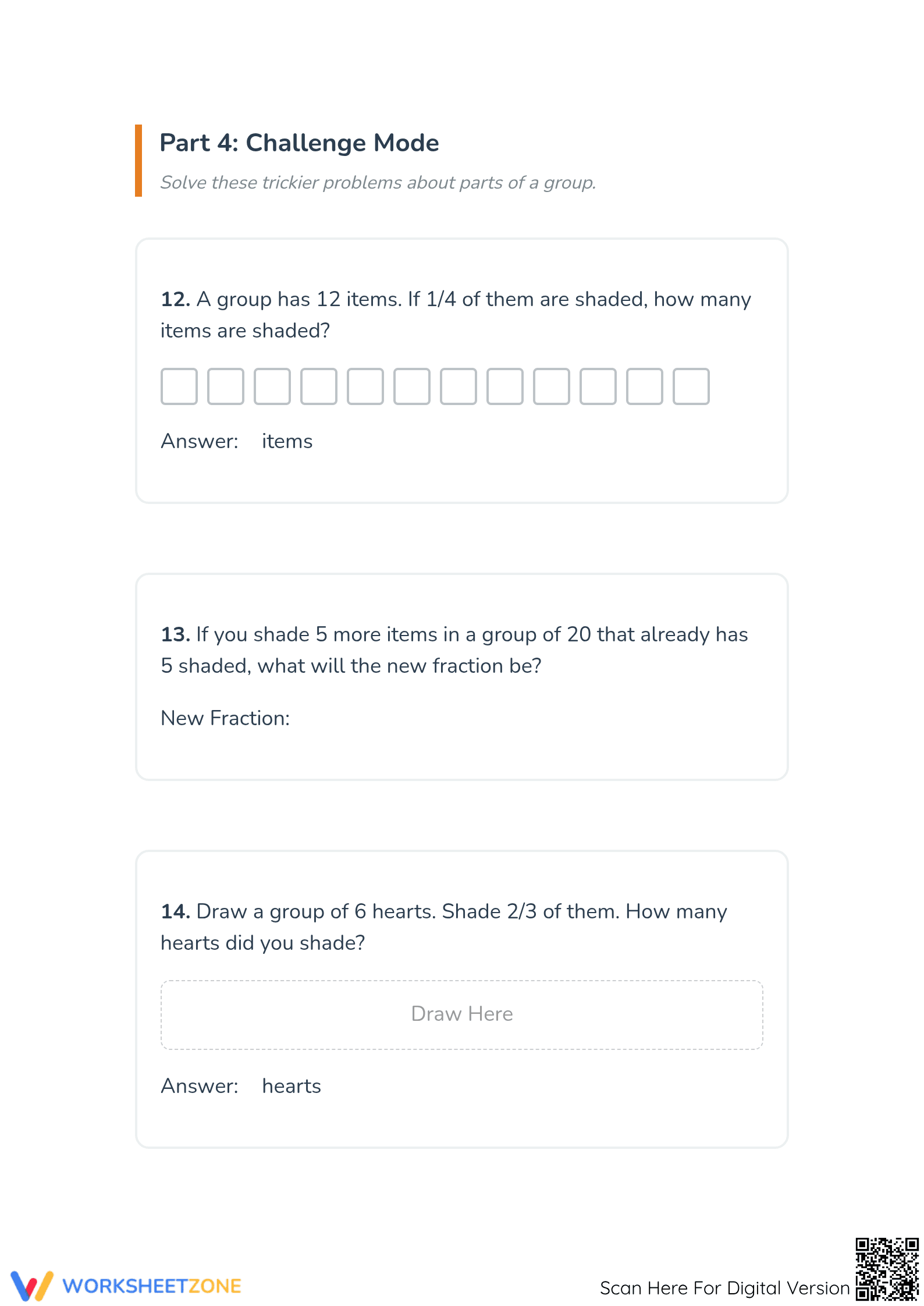
This 5-page packet features 14 targeted tasks designed for conceptual mastery. It starts with a clear example, then guides students through identifying fractions from pentagons, diamonds, stars, and larger groups of octagons. Students also engage in comparative analysis and tackle Challenge Mode word problems and drawing tasks.
Skill Progression
- Guided Practice: A detailed example and initial 4 problems focus on small sets of up to 10 items with simple visual cues and clear partitioning.
- Supported Practice: Expands to larger groups, requiring careful counting and division of more complex visual sets.
- Independent Practice: The final sections apply learning through comparative analysis and abstract challenge problems.
This gradual-release approach ensures every learner builds the confidence needed for mathematical fluency.
Standards Alignment
This resource aligns strictly to 3.NF.A.1, requiring students to understand fractions as quantities formed by partitioning a whole into equal parts. The visual models directly support comprehending numerators and denominators in real-world contexts, suitable for lesson plans or IEP goals.
How to Use It
Assign this worksheet during direct instruction to reinforce the transition to rational numbers. It serves as an excellent formative assessment; observe if students struggle with identifying total vs. shaded parts. Expect completion in about 30 minutes. Use the final drawing task to check conceptual understanding.
Who It's For
This resource is designed for Grade 3 students beginning their fraction journey, though it serves as an effective intervention for Grade 4 and 5 learners. The visual nature supports English Language Learners and students with IEPs by providing concrete anchors for abstract ideas. It pairs naturally with a set of physical counters or a classroom anchor chart on fraction vocabulary.
A strong grasp of visual modeling is a key predictor of success in middle school rational number operations, per NAEP 2024. This worksheet uses research-based strategies to move students from concrete visuals to abstract numerical representations. By identifying fractions within groups, students avoid the common misconception of treating numerators and denominators as separate whole numbers. This 'parts of a group' approach is highlighted by EdReports 2024 as critical for high-quality curriculum. The 14 structured tasks provide necessary repetition for students to internalize the part-to-set relationship. Educators can rely on this tool to show progress toward the 3.NF.A.1 standard, building a solid foundation for future work with fractions.


