


























Views
Downloads
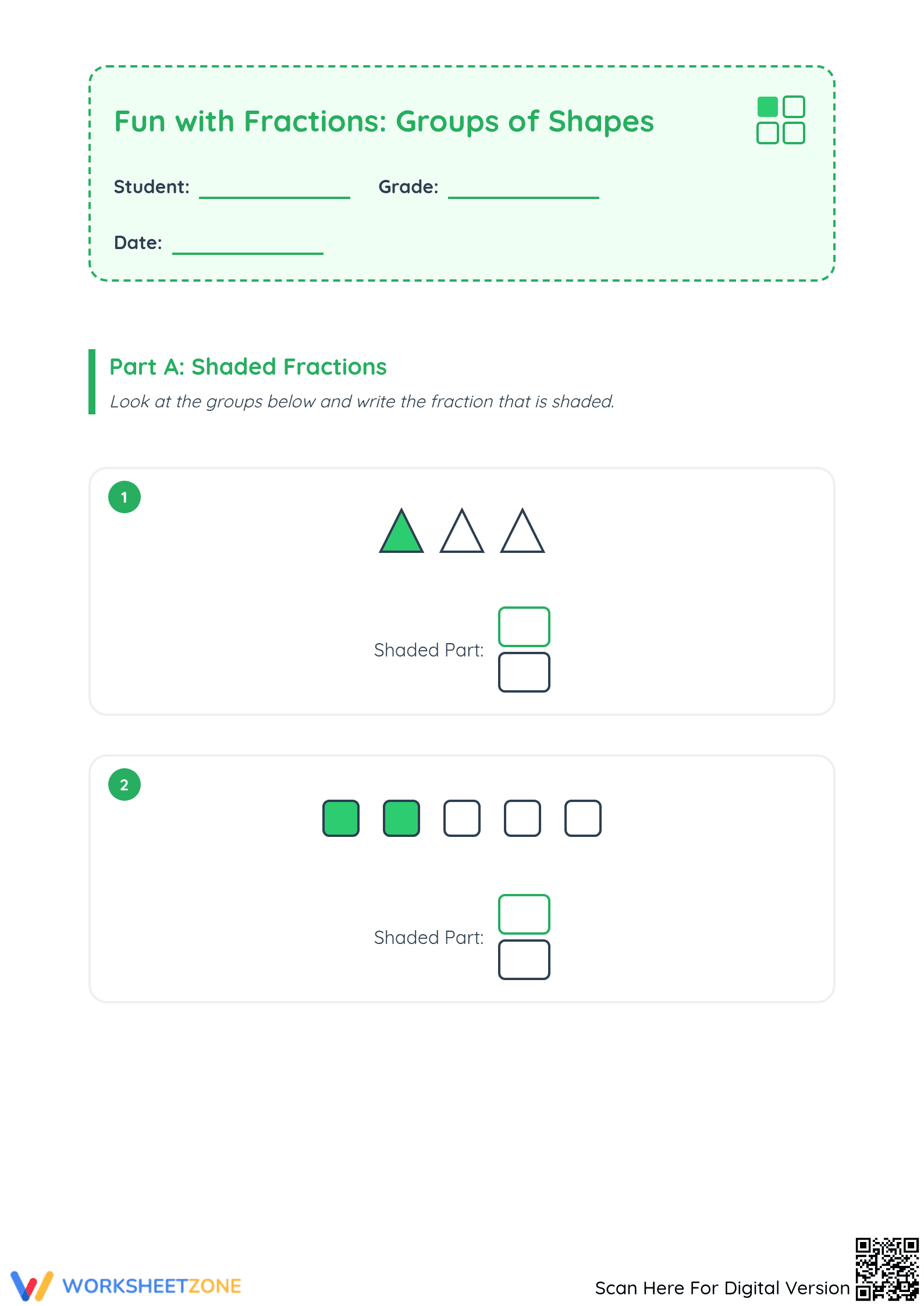
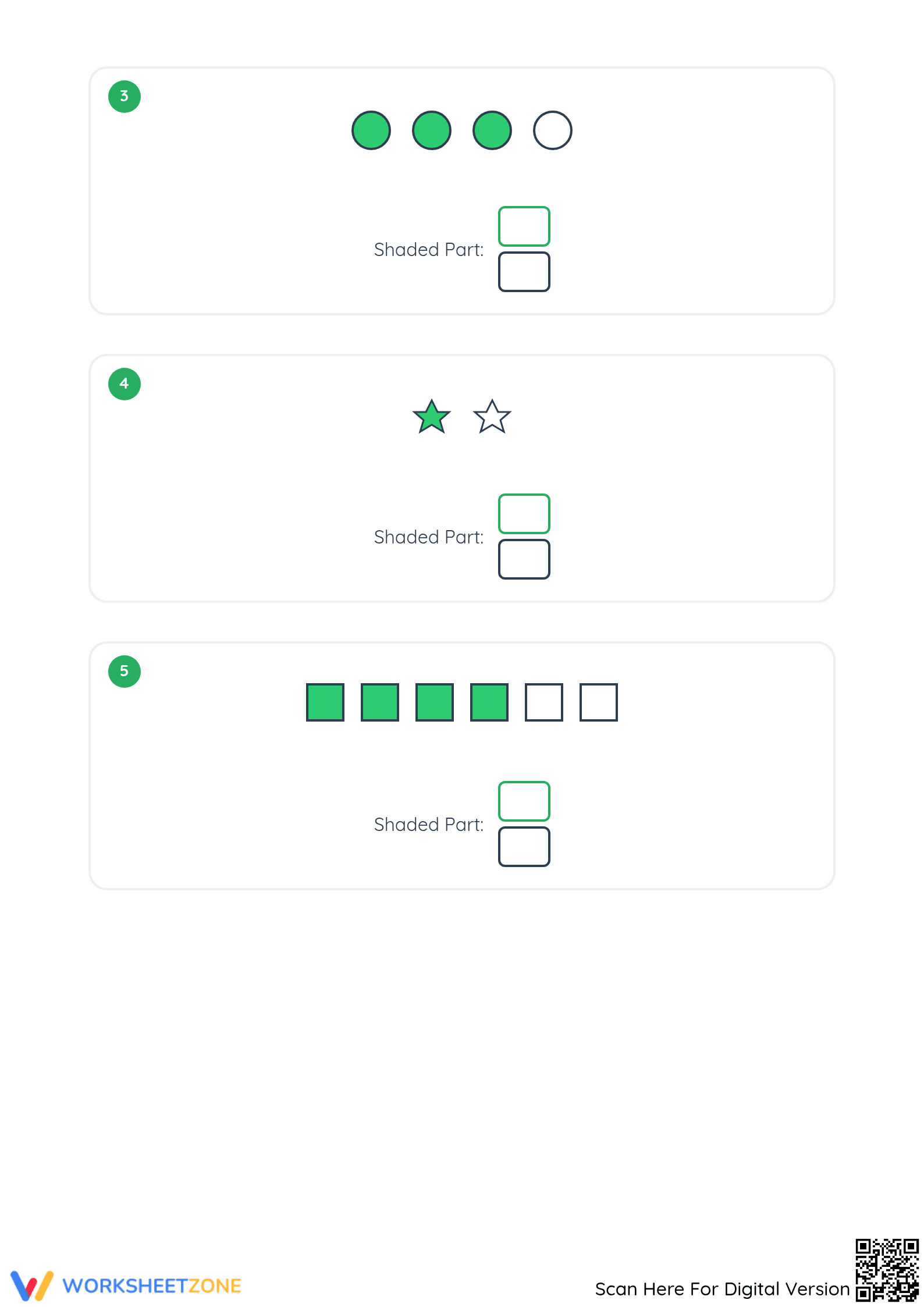
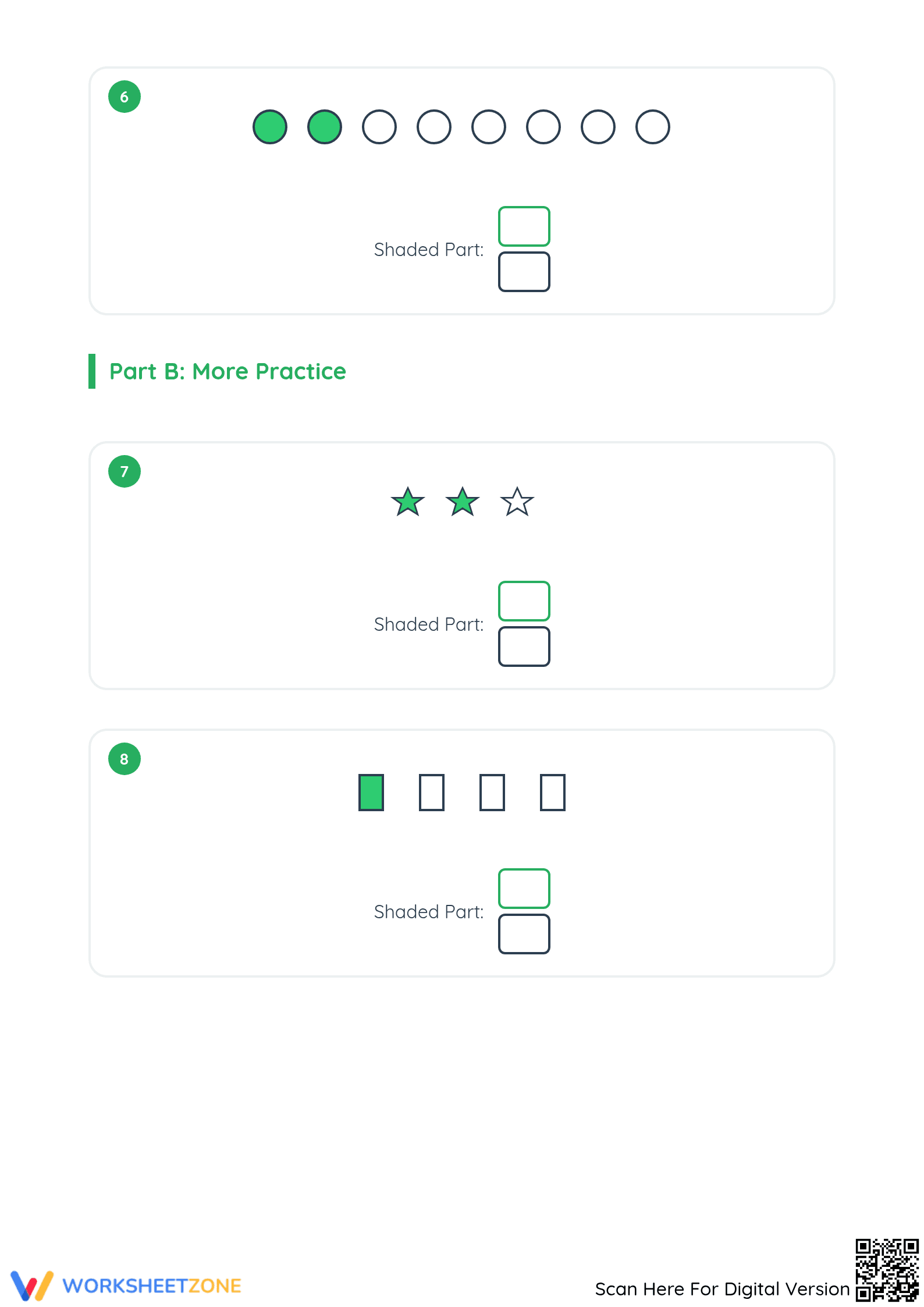
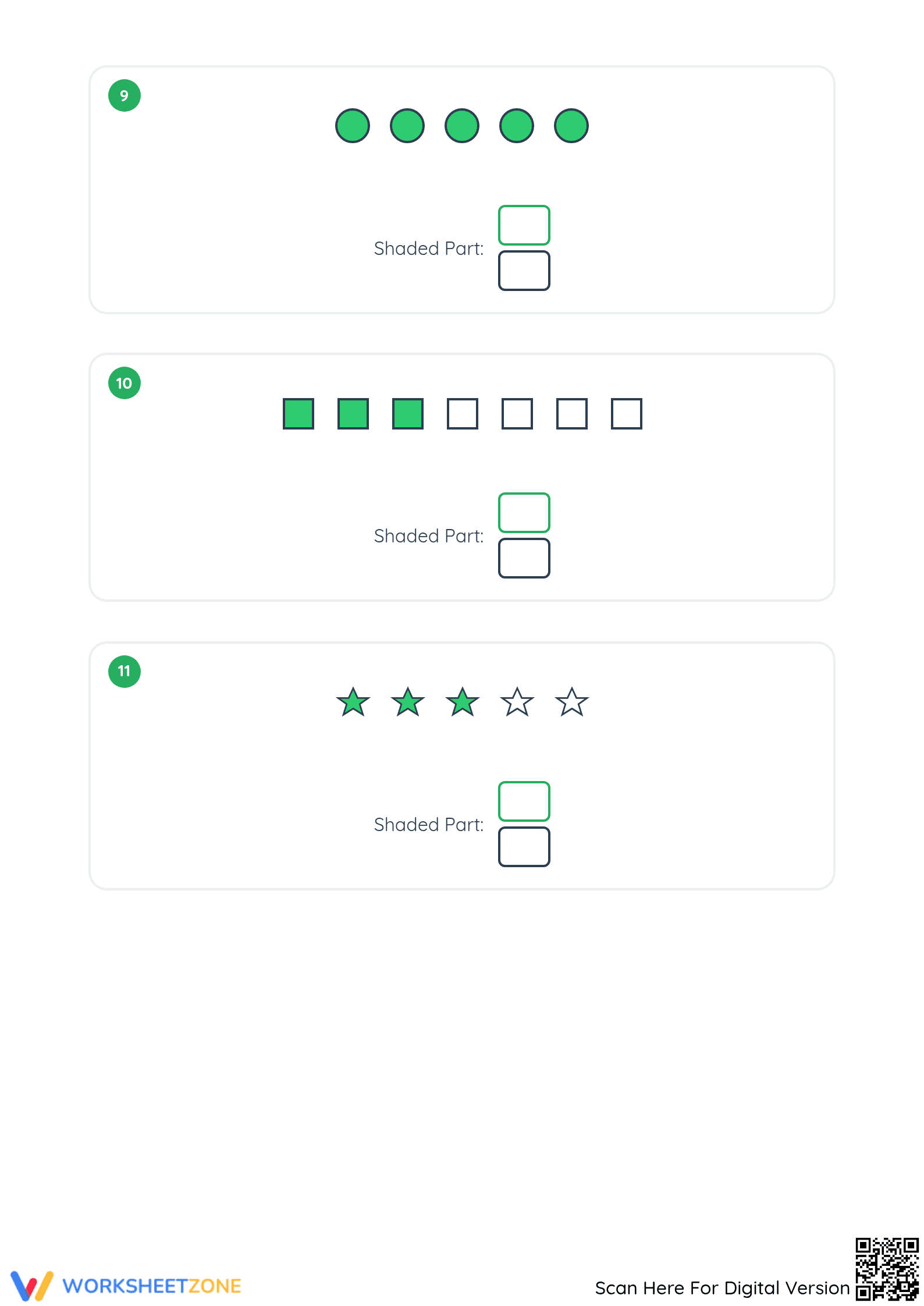

Essential Fractions of a Set: Modeling with Groups of Shapes
Paste this activity's link or code into your existing LMS (Google Classroom, Canvas, Teams, Schoology, Moodle, etc.).
Students can open and work on the activity right away, with no student login required.
You'll still be able to track student progress and results from your teacher account.
This Grade 3 math worksheet helps students master the foundational concept of fractions of a set by using geometric shapes as visual models. By identifying shaded parts within a group, learners develop a concrete understanding of how numerators and denominators represent parts of a collection. It is a critical step toward fraction fluency and conceptual mastery.
At a Glance
- Grade: 3 · Subject: Math
- Standard:
CCSS.MATH.CONTENT.3.NF.A.1— Understand a fraction as a quantity formed by parts of a partitioned whole.- Skill Focus: Fractions of a set using geometric shapes
- Format: 5 pages · 14 problems · Answer key included · PDF
- Best For: Initial fraction instruction and visual reinforcement
- Time: 20–30 minutes
What's Inside
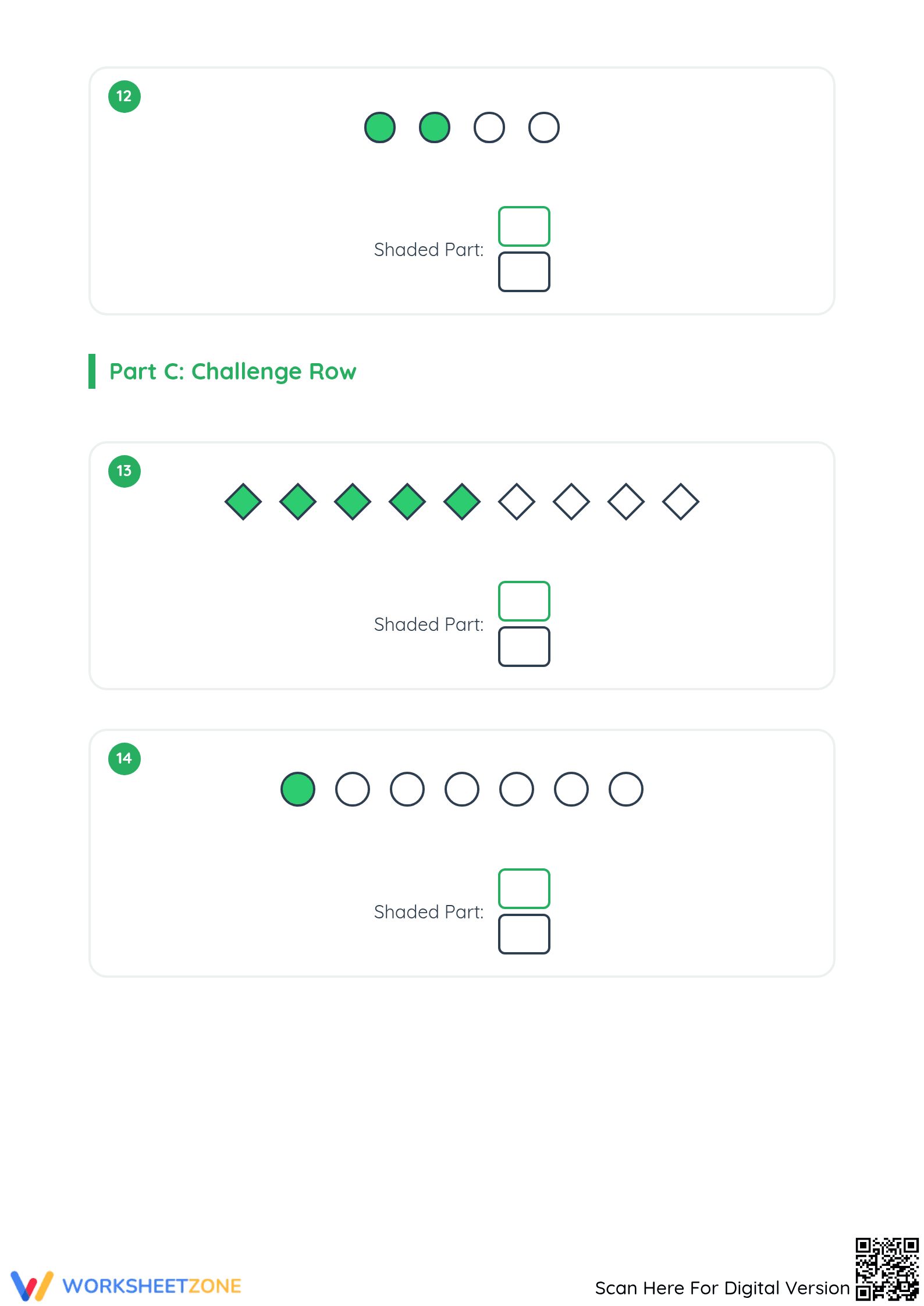
Inside this five-page set, students encounter 14 problems organized into three parts. The worksheet uses triangles, stars, and circles to represent items in a set. Each problem includes a clear fraction box for the numerator and denominator. A full answer key is included for teacher use.
Skill Progression
- Guided Practice: The first six problems in Part A focus on small sets of 3 to 8 shapes, providing a clear visual entry point.
- Supported Practice: Part B expands the challenge with varying set sizes and shape types.
- Independent Practice: The final 'Challenge Row' presents larger sets of up to 10 items, testing accuracy.
This structure follows a gradual-release model, moving from high-support visuals to independent identification.
Standards Alignment
Primary alignment is CCSS.MATH.CONTENT.3.NF.A.1, focusing on understanding fractions as quantities formed by parts of a whole. These shape groups apply this logic to discrete sets. This code can be copied directly into lesson plans or district curriculum mapping tools.
How to Use It
Use this during direct instruction to model counting total items versus shaded items. It is an excellent formative assessment tool; observe if students confuse shaded parts with non-shaded parts. Completion takes approximately 25 minutes.
Who It's For
Designed for Grade 3, this also provides remediation for older learners. It is effective for ELL students due to its reliance on visual models. Pair this with pattern blocks to bridge the gap between concrete and representational learning.
According to the RAND AIRS 2024 report on mathematics instructional materials, the use of multiple visual representations is a key indicator of high-quality fraction curriculum. This worksheet addresses that specific instructional need by utilizing a robust "fractions of a set" model, which researchers like Fisher & Frey (2014) highlight as essential for developing a flexible and lasting understanding of rational numbers. By requiring students to identify shaded parts within a discrete group, the resource reinforces the part-whole relationship that serves as the critical foundation for all future work with decimals, ratios, and percentages. Standardized testing data from the NAEP indicates that students who master visual fraction modeling in the third grade show significantly higher proficiency in middle school algebraic thinking. This 14-problem set provides the repetitive, focused practice required to move this skill from short-term memory to long-term conceptual retrieval, making it a reliable addition to any elementary math toolkit for classroom use.


