


























Views
Downloads

Modeling Fractions Worksheet | Essential Grade 3-5 Math
Paste this activity's link or code into your existing LMS (Google Classroom, Canvas, Teams, Schoology, Moodle, etc.).
Students can open and work on the activity right away, with no student login required.
You'll still be able to track student progress and results from your teacher account.
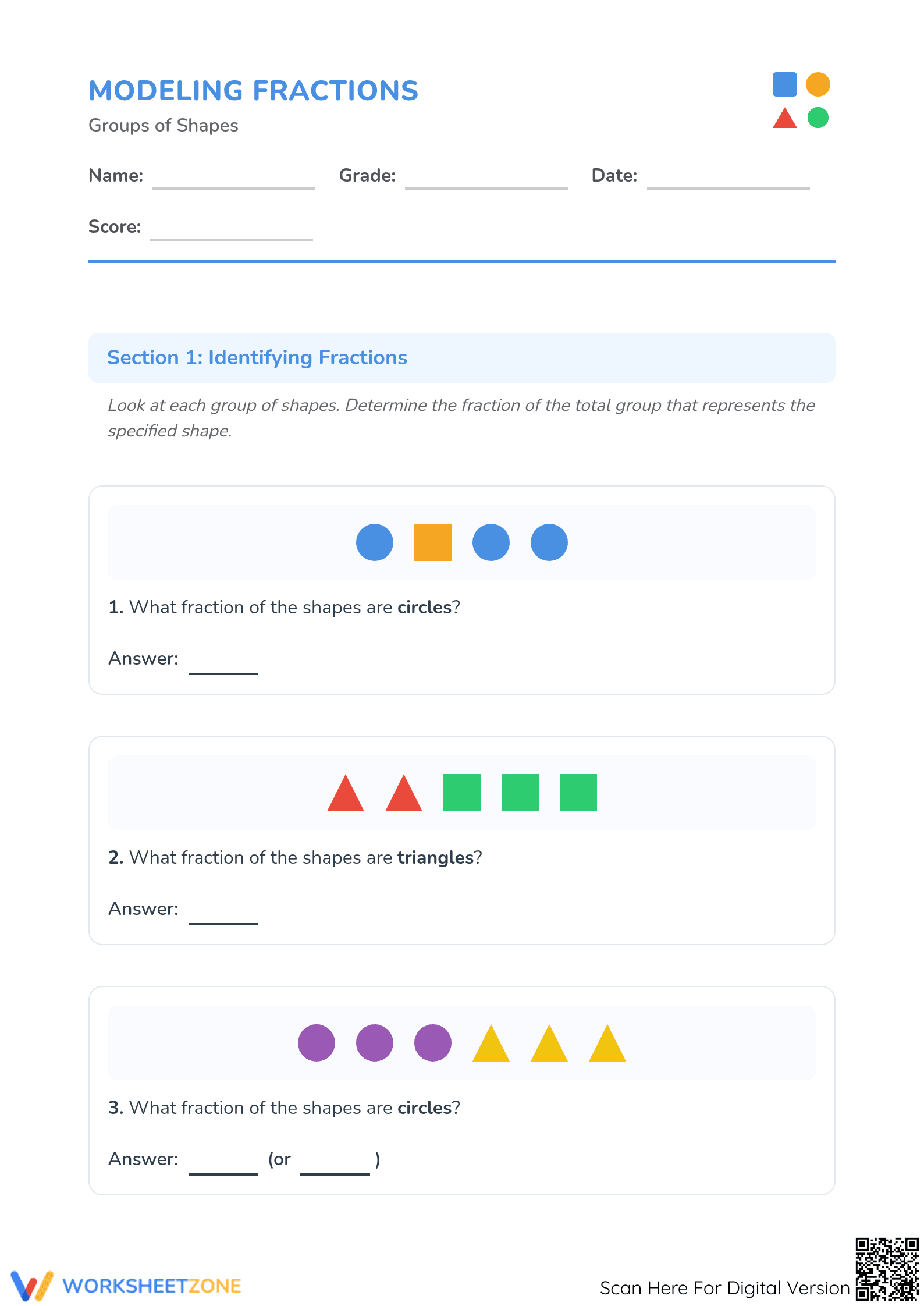
This modeling fractions worksheet provides a comprehensive introduction to identifying and representing fractions as parts of a set. Students move from basic visual identification to drawing their own models and solving complex word problems. By the end of these 20 exercises, learners will demonstrate a firm grasp of numerators and denominators in real-world shape-based contexts.
At a Glance
- Grade: 3–5 · Subject: Math (Fractions)
- Standard:
CCSS.MATH.CONTENT.3.NF.A.1— Identify and draw fractions as parts of a set of geometric shapes- Skill Focus: Modeling fractions of a set using geometric shapes.
- Format: 5 pages · 20 problems · Answer key included · PDF
- Best For: Independent practice and formative assessment.
- Time: 25–40 minutes
What's Inside
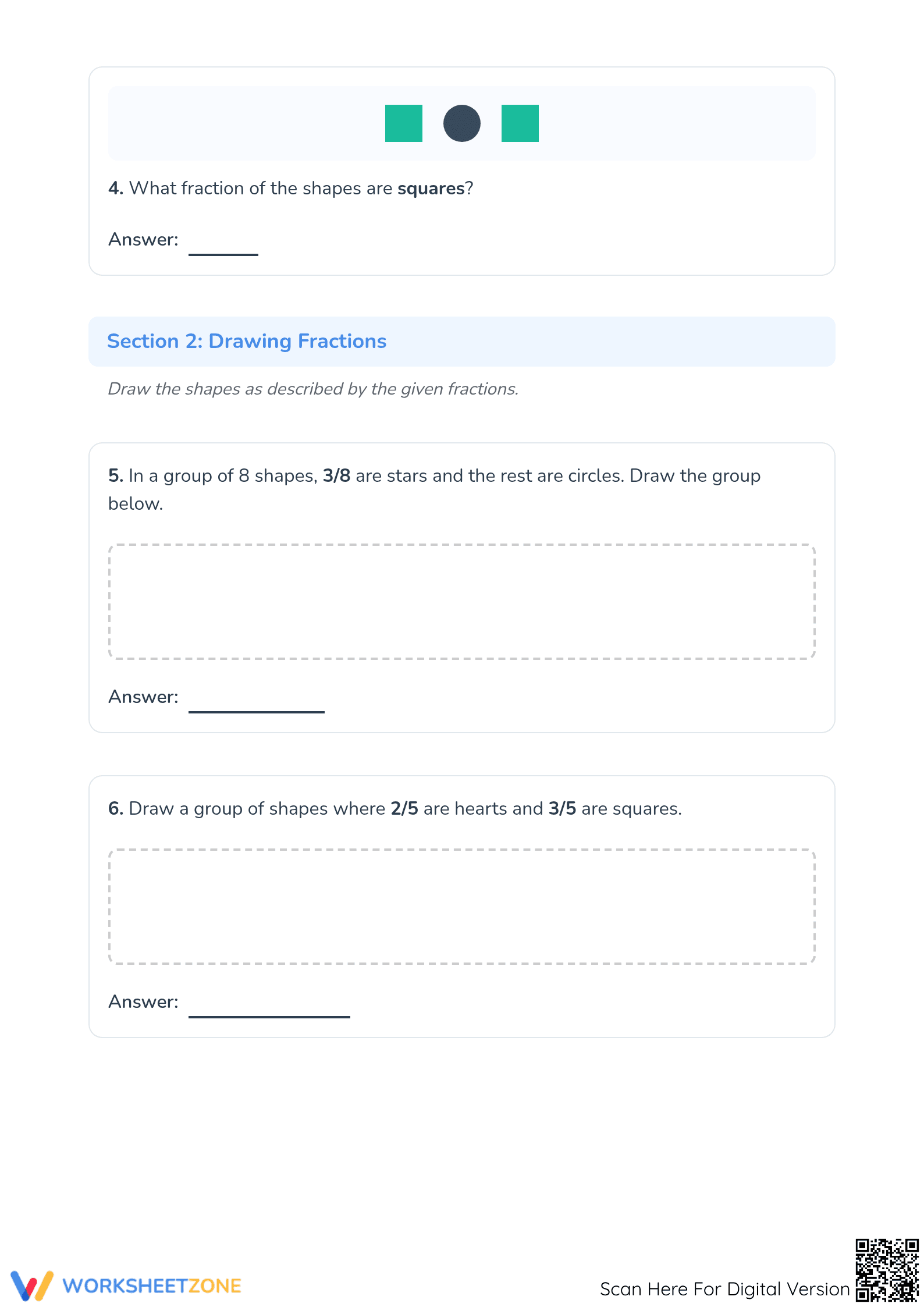
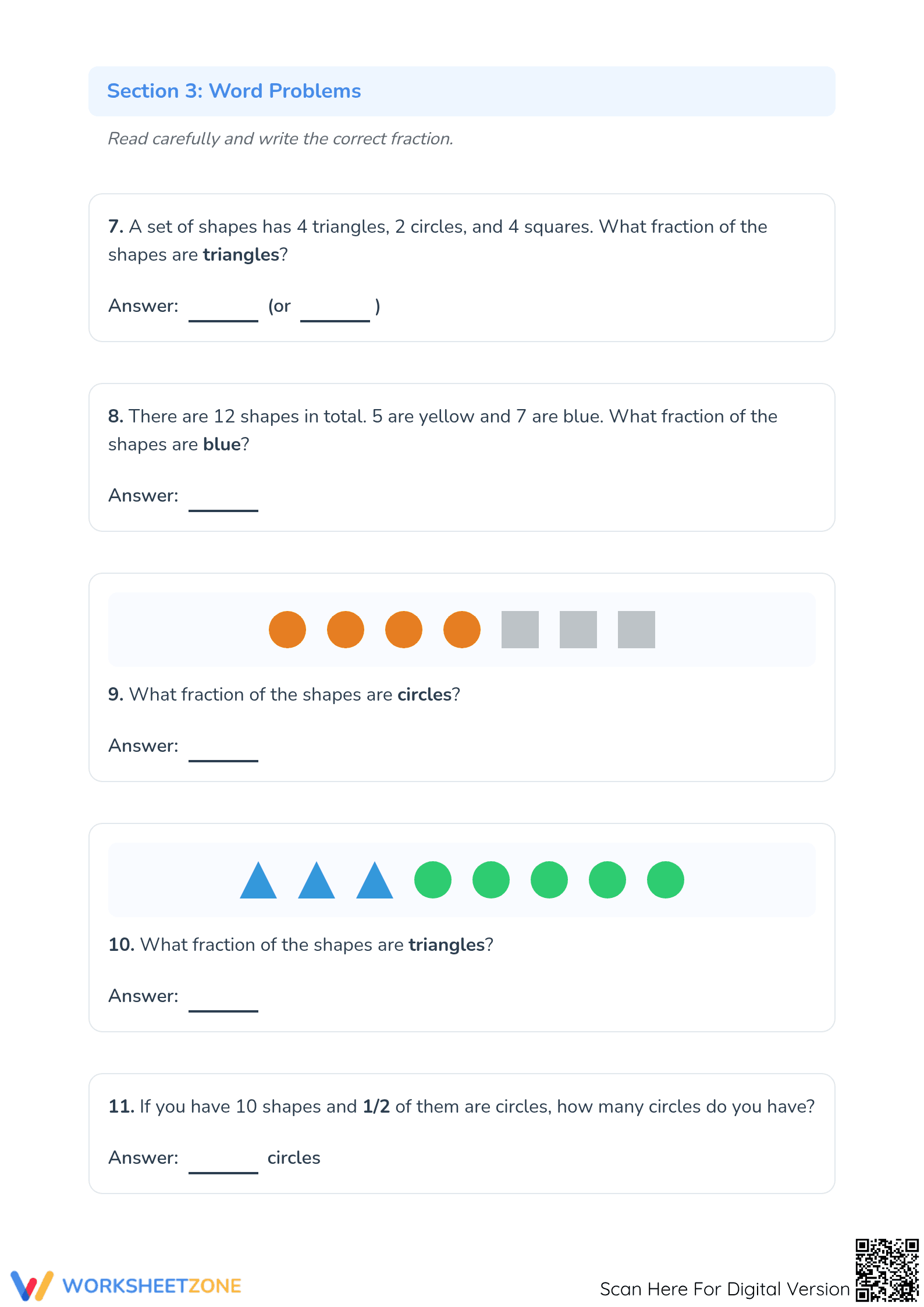
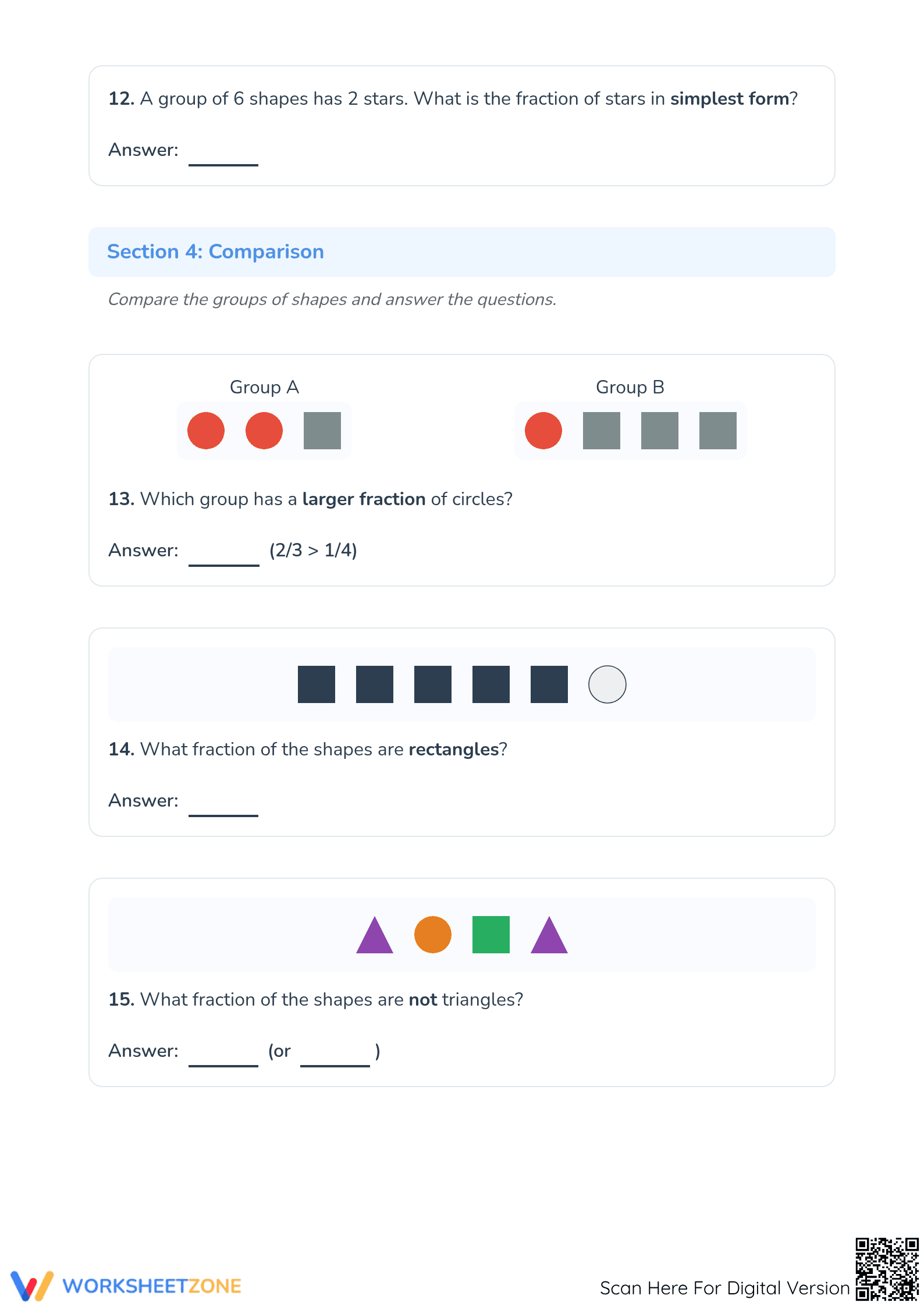
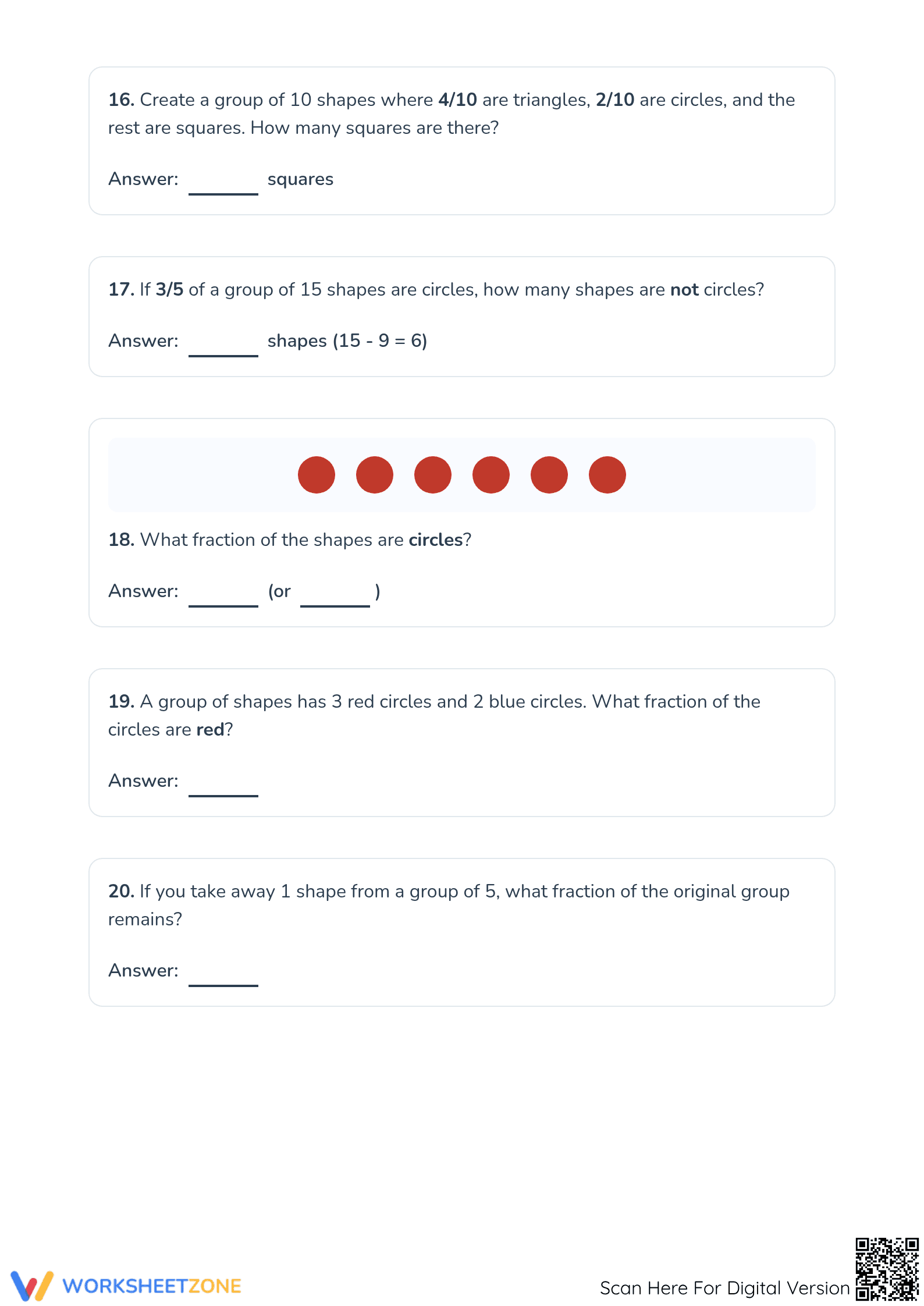
Inside this 5-page PDF, you will find four distinct sections designed to build conceptual depth. The first section asks students to identify fractions from visual clusters of circles, triangles, and squares. The second section requires students to draw their own shape groups based on given fractions. Section three introduces 12 word problems that apply the concept to scenarios with varied totals. Finally, the comparison section challenges students to evaluate larger fractions and identify simplest forms.
Zero-Prep Workflow
The zero-prep workflow is optimized for busy educators. You can print all 5 pages in approximately 30 seconds. Distribution takes less than a minute, as each page contains clear instructions that allow for independent student work. Reviewing the 20 problems is streamlined by the included comprehensive answer key, bringing the total teacher preparation and grading time to under five minutes. This makes the packet suitable for emergency sub plans or last-minute classroom activities.
Standards Alignment
This resource is directly aligned to the primary standard `CCSS.MATH.CONTENT.3.NF.A.1`, which requires students to understand the quantity represented by a fraction. The tasks specifically address the "parts of a set" model, which is a critical bridge between partitioning a single whole and understanding ratios. This standard code can be copied directly into lesson plans, IEP goals, or district curriculum mapping tools to ensure instructional consistency across the grade level.
How to Use It
Use this worksheet as a formative assessment after your initial lesson on fraction notation. As students work through the "Drawing Fractions" section, walk around the room to observe if they correctly translate denominators into the total number of shapes drawn. This instructional moment allows you to catch misconceptions about the relationship between parts and the whole before moving on to more complex fraction arithmetic. The expected completion time for most elementary students is approximately 35 minutes.
Who It's For
This resource is designed for Grade 3 through Grade 5 students who are mastering the fundamental concepts of fractions. It provides necessary scaffolding for struggling learners through visual shape clusters while offering extension challenges in the word problem sections. Pair this worksheet with an anchor chart showing numerator and denominator definitions for a complete instructional package that supports diverse learners in the general education classroom.
This worksheet leverages geometric shapes to provide a concrete representation of the `CCSS.MATH.CONTENT.3.NF.A.1` standard, allowing students to visualize numerators as the count of specific attributes and denominators as the total set size. Engaging with 20 distinct tasks, students transition from simple visual recognition to higher-order application. This structured approach ensures that the fundamental understanding of fractions as numbers is deeply embedded, providing a reliable foundation for future operations with rational numbers.


