


























Views
Downloads

Printable Fractions as Parts of a Group Worksheet | Grade 3
Paste this activity's link or code into your existing LMS (Google Classroom, Canvas, Teams, Schoology, Moodle, etc.).
Students can open and work on the activity right away, with no student login required.
You'll still be able to track student progress and results from your teacher account.
Modeling fractions as parts of a group is a foundational Grade 3 skill that bridges the gap between simple shapes and abstract numeric concepts. This printable worksheet provides a structured approach for students to identify and write fractions based on shaded objects within a set, ensuring they understand the relationship between the numerator and denominator.
At a Glance
- Grade: Grade 3 · Subject: Math
- Standard:
CCSS.MATH.CONTENT.3.NF.A.1— Identify and write fractions representing parts of a group or set- Skill Focus: Fractions as Parts of a Group
- Format: 3 pages · 9 problems · Answer key included · PDF
- Best For: Small group instruction and independent practice
- Time: 15–20 minutes
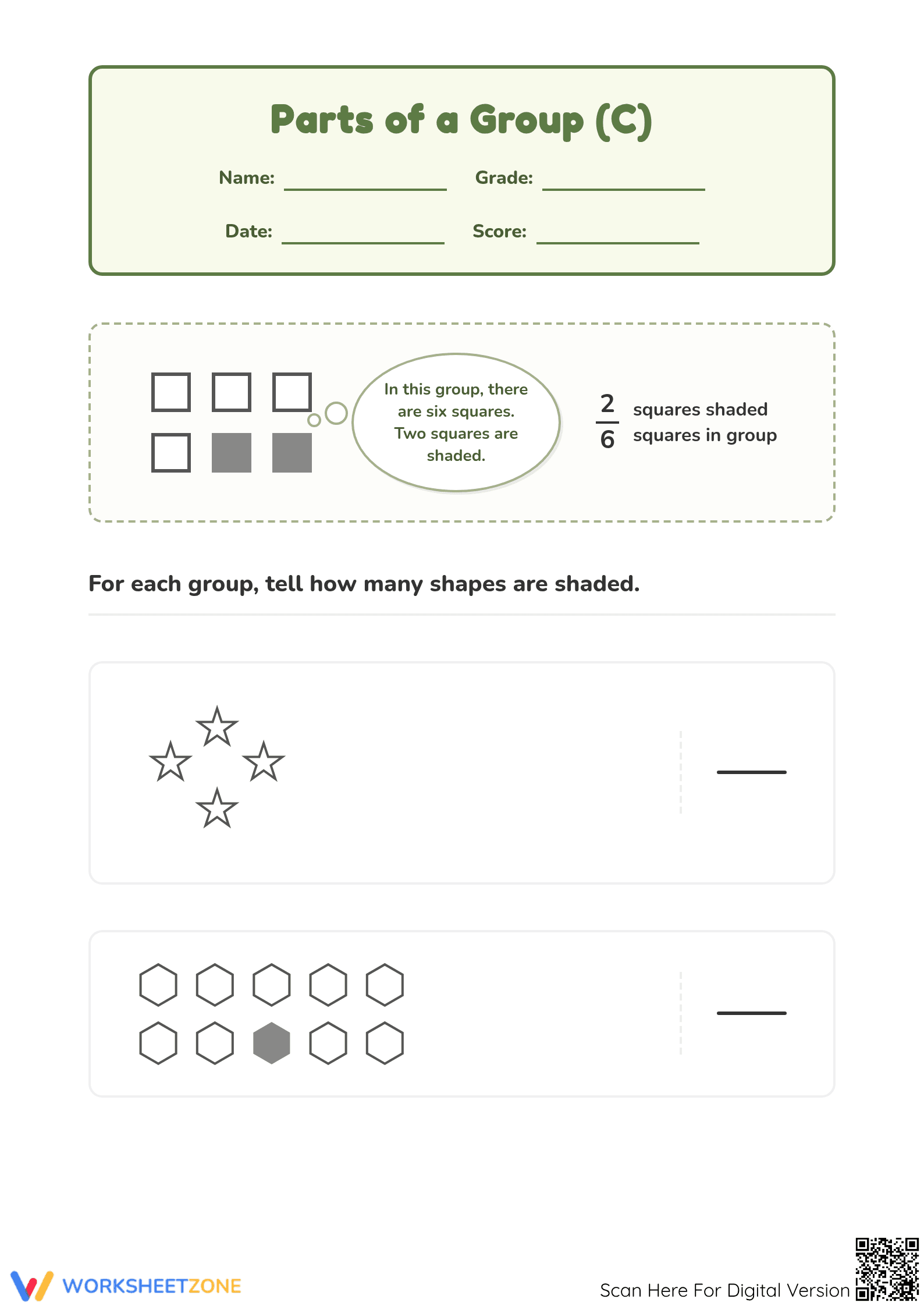
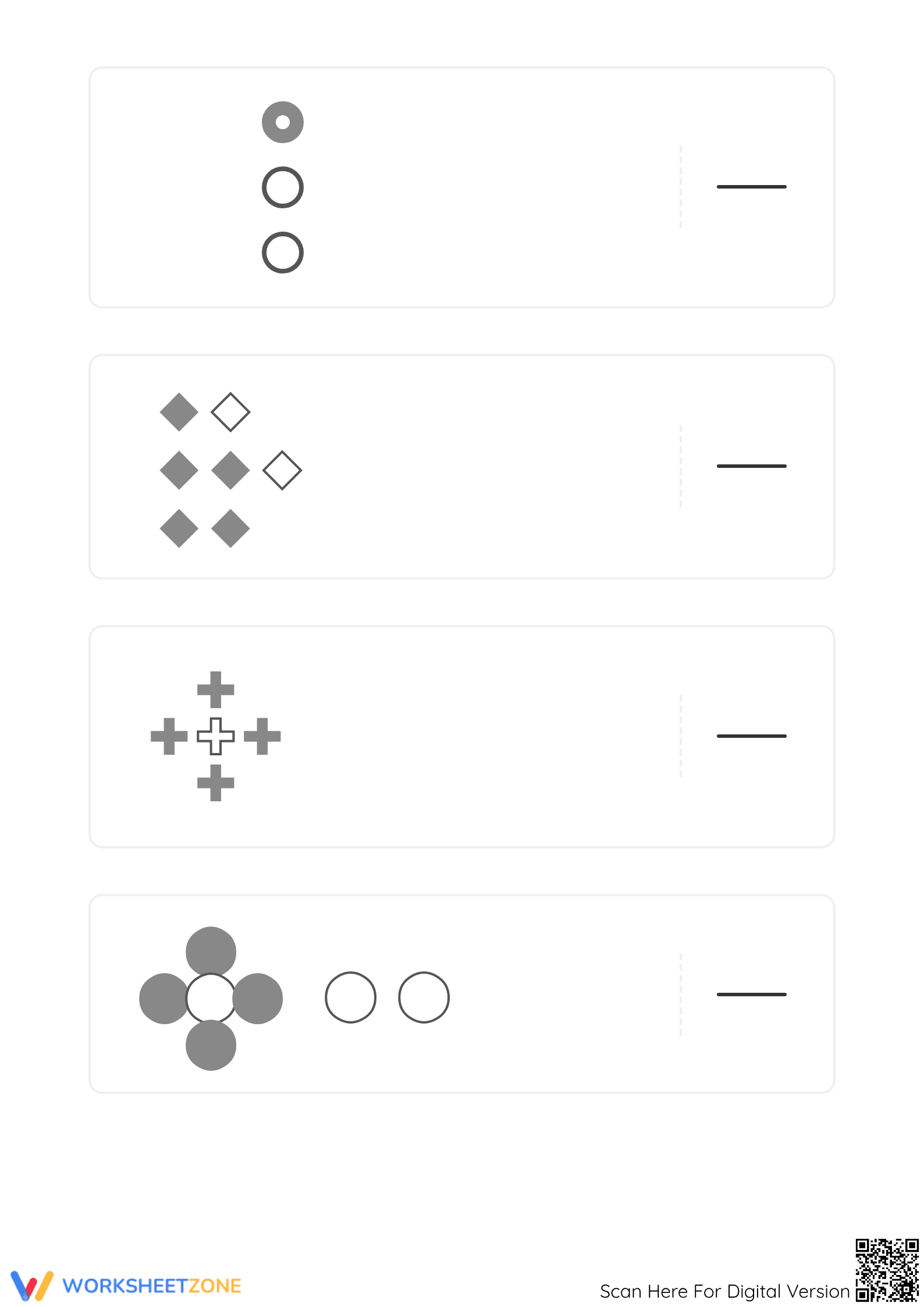
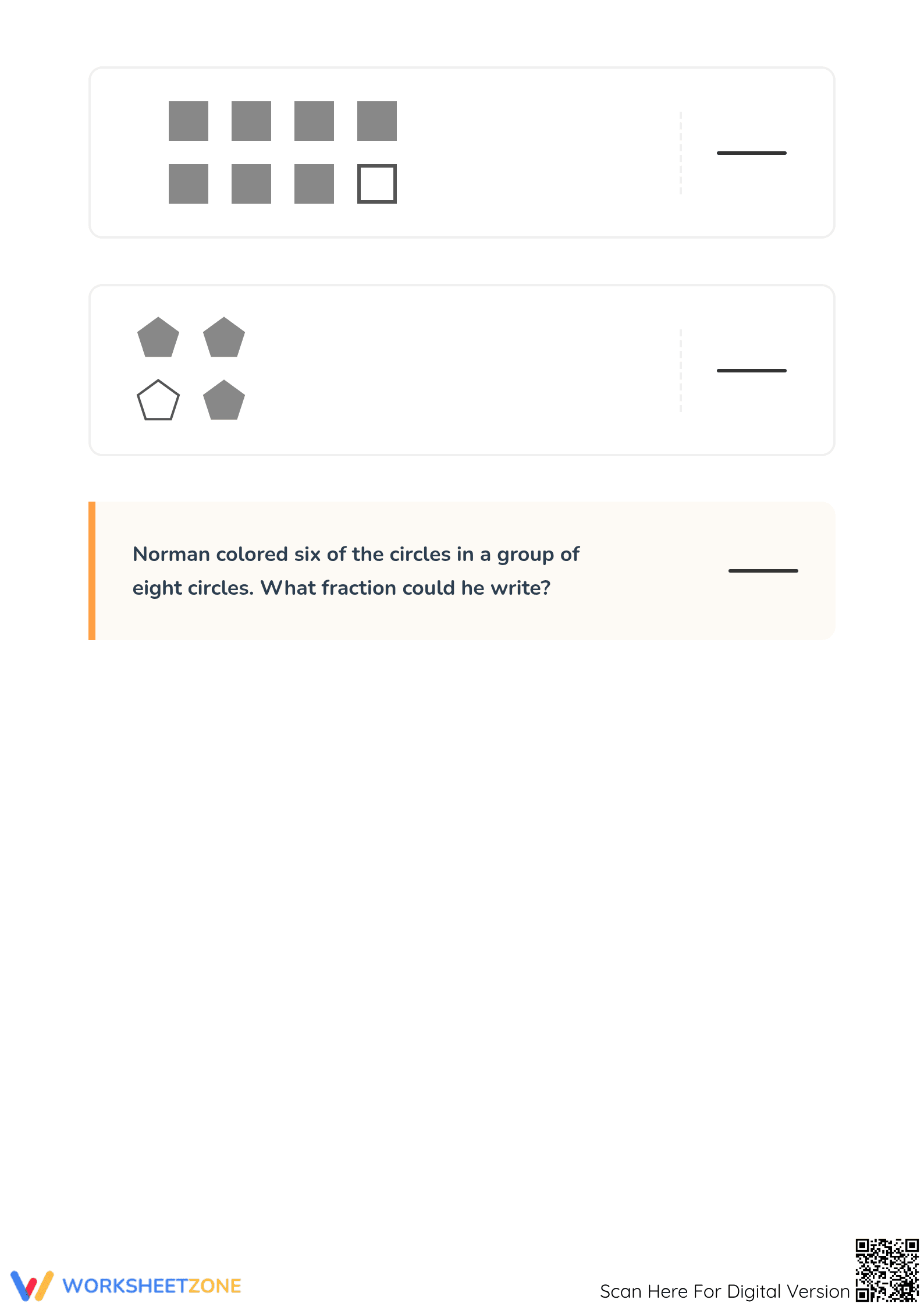
This comprehensive 3-page PDF resource contains nine carefully designed tasks plus a clear illustrative example. Students are presented with various groups of geometric shapes—including stars, hexagons, diamonds, and circles—where they must determine the total number of items and the count of shaded items to form a proper fraction. The set concludes with a word problem to test conceptual application.
Skill Progression
- Guided practice: The first page features an explicit example with squares and initial tasks using high-contrast shapes to establish the pattern of counting parts versus the whole.
- Supported practice: The second page introduces varying set sizes and different shape types, requiring students to maintain accuracy across seven distinct visual sets.
- Independent practice: The final page challenges students with larger sets and a text-based word problem, removing visual scaffolds to ensure true mastery of the "parts of a group" concept.
This structure ensures students move smoothly from guided instruction to independent mastery using the gradual release of responsibility model.
Standards Alignment
This activity is strictly aligned to the primary standard CCSS.MATH.CONTENT.3.NF.A.1. This standard requires students to understand a fraction as the quantity formed by parts of a whole or group. By identifying the numerator as the count of shaded shapes and the denominator as the total set, students demonstrate mastery. This standard code can be copied directly into lesson plans, IEP goals, or district curriculum mapping tools.
How to Use It
Use this worksheet during the instructional phase of your math block to facilitate guided practice after an anchor chart introduction. It is also an excellent tool for formative assessment; watch for students who invert the numerator and denominator as they work through the first few tasks. Expect most students to complete the full 3-page set in under 20 minutes during independent rotations.
Who It's For
This resource is designed for Grade 3 general education students and is highly effective for Grade 4 review or RTI Tier 2 interventions. It pairs naturally with physical manipulatives, such as double-sided counters or pattern blocks, allowing students to physically model the groups before recording their answers on the PDF version.
Research from NAEP indicates that students who master visual modeling of fractions early in Grade 3 show significantly higher proficiency in fraction arithmetic by middle school. This worksheet specifically targets CCSS.MATH.CONTENT.3.NF.A.1 by requiring students to translate visual groups of shapes into numeric fractions. According to the RAND AIRS 2024 report on elementary mathematics, the use of diverse visual representations—such as the stars, hexagons, and circles used here—prevents students from over-relying on a single geometric model, which is a common barrier to mathematical flexibility. By providing 9 structured problems that move from simple identification to a word-problem application, this resource supports the cognitive shift from counting objects to partitioning groups. The inclusion of a clear answer key further supports immediate feedback, a practice cited by Fisher & Frey (2014) as essential for the successful transition from guided to independent practice in the elementary classroom.


