


























Views
Downloads
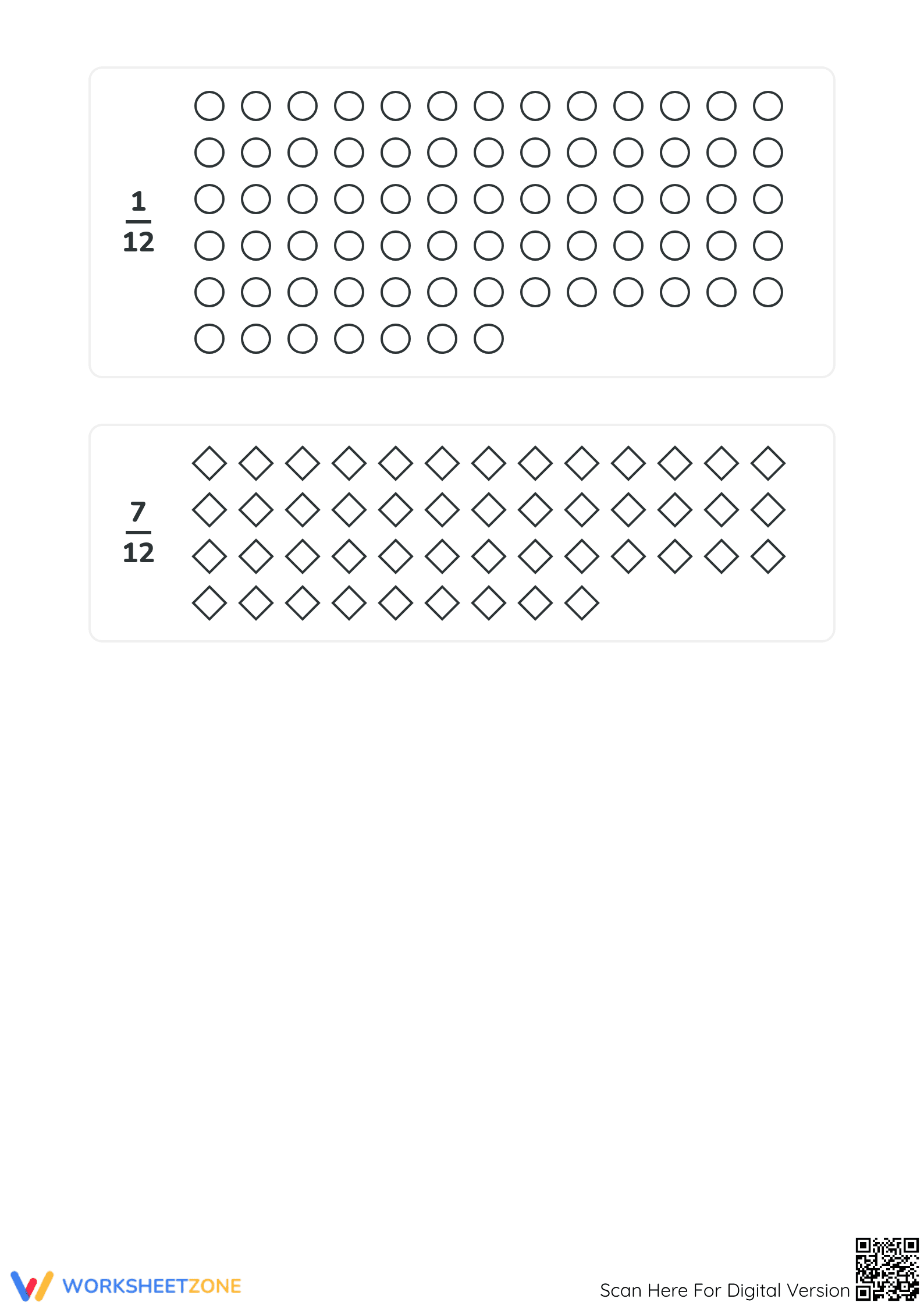

Printable Worksheet: Modeling Fractions with Shapes | Grades 3-5
Paste this activity's link or code into your existing LMS (Google Classroom, Canvas, Teams, Schoology, Moodle, etc.).
Students can open and work on the activity right away, with no student login required.
You'll still be able to track student progress and results from your teacher account.
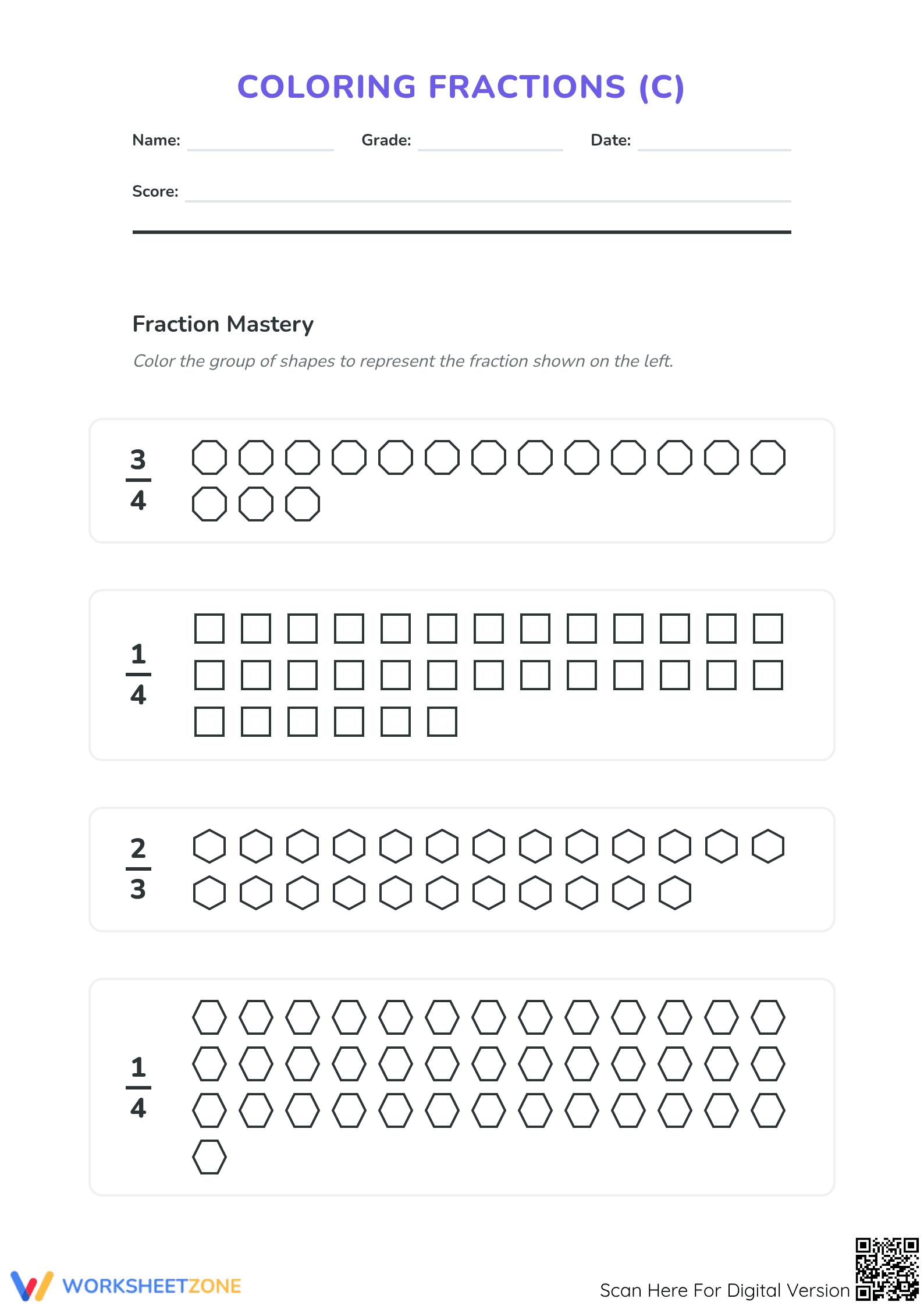
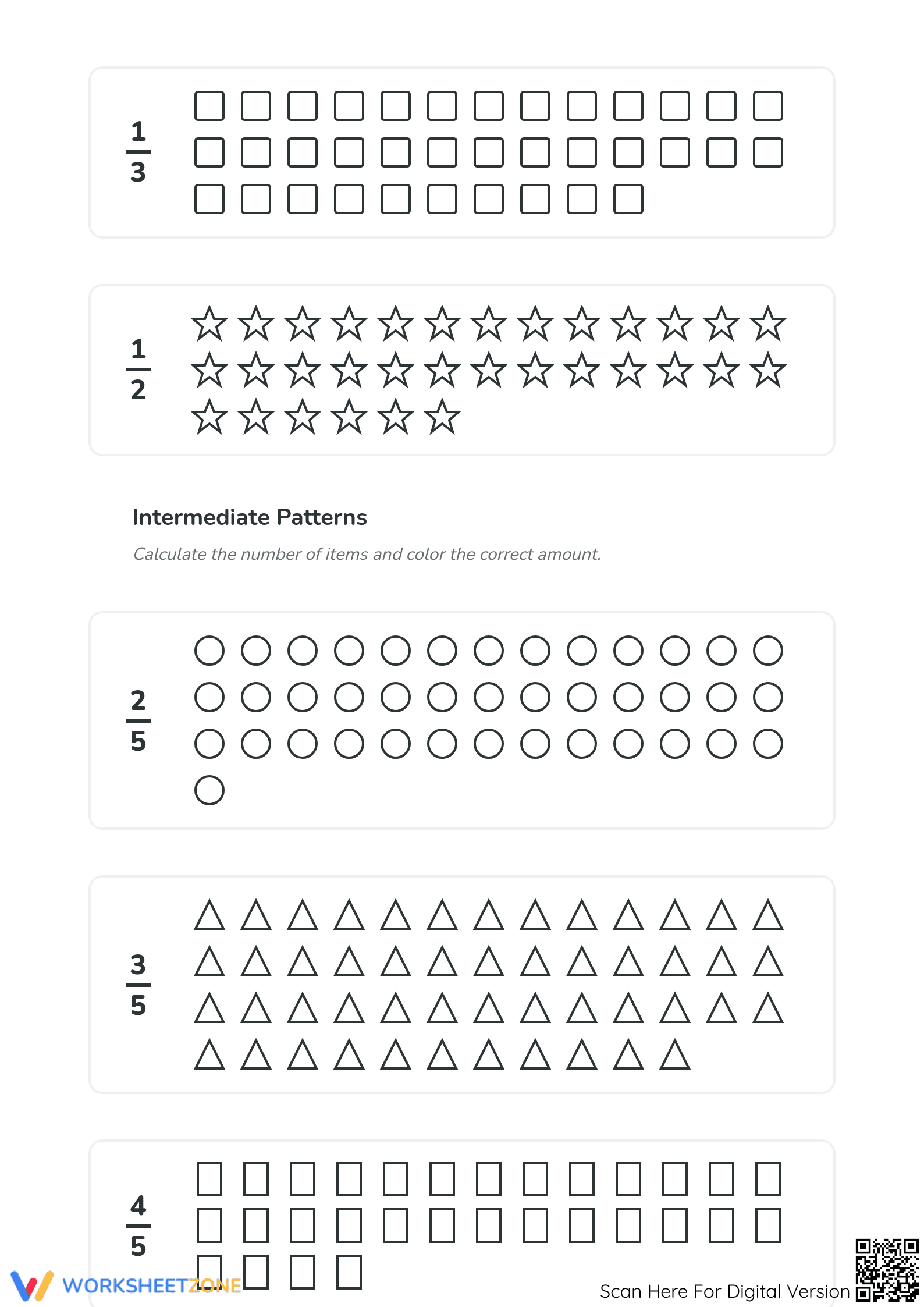
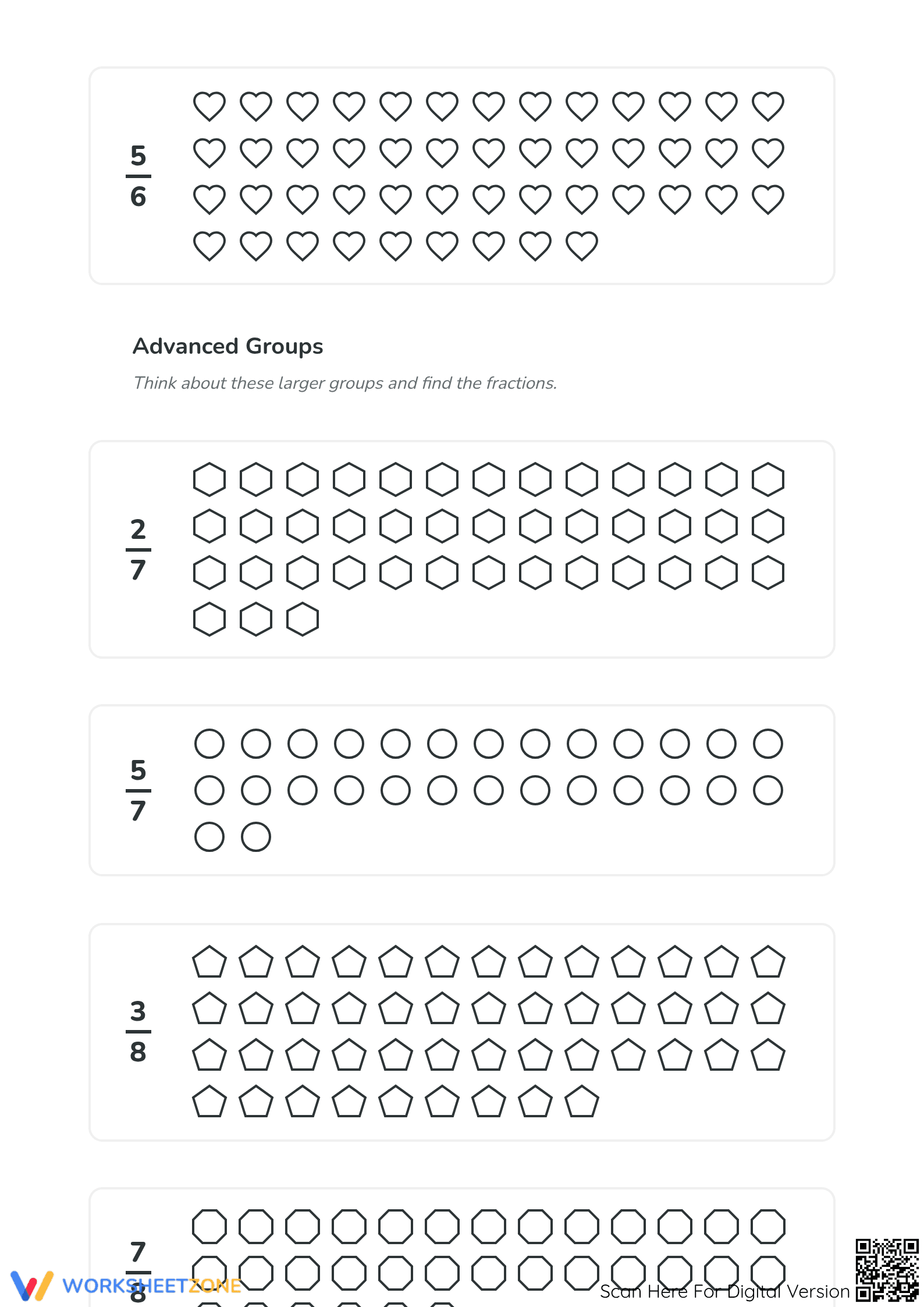
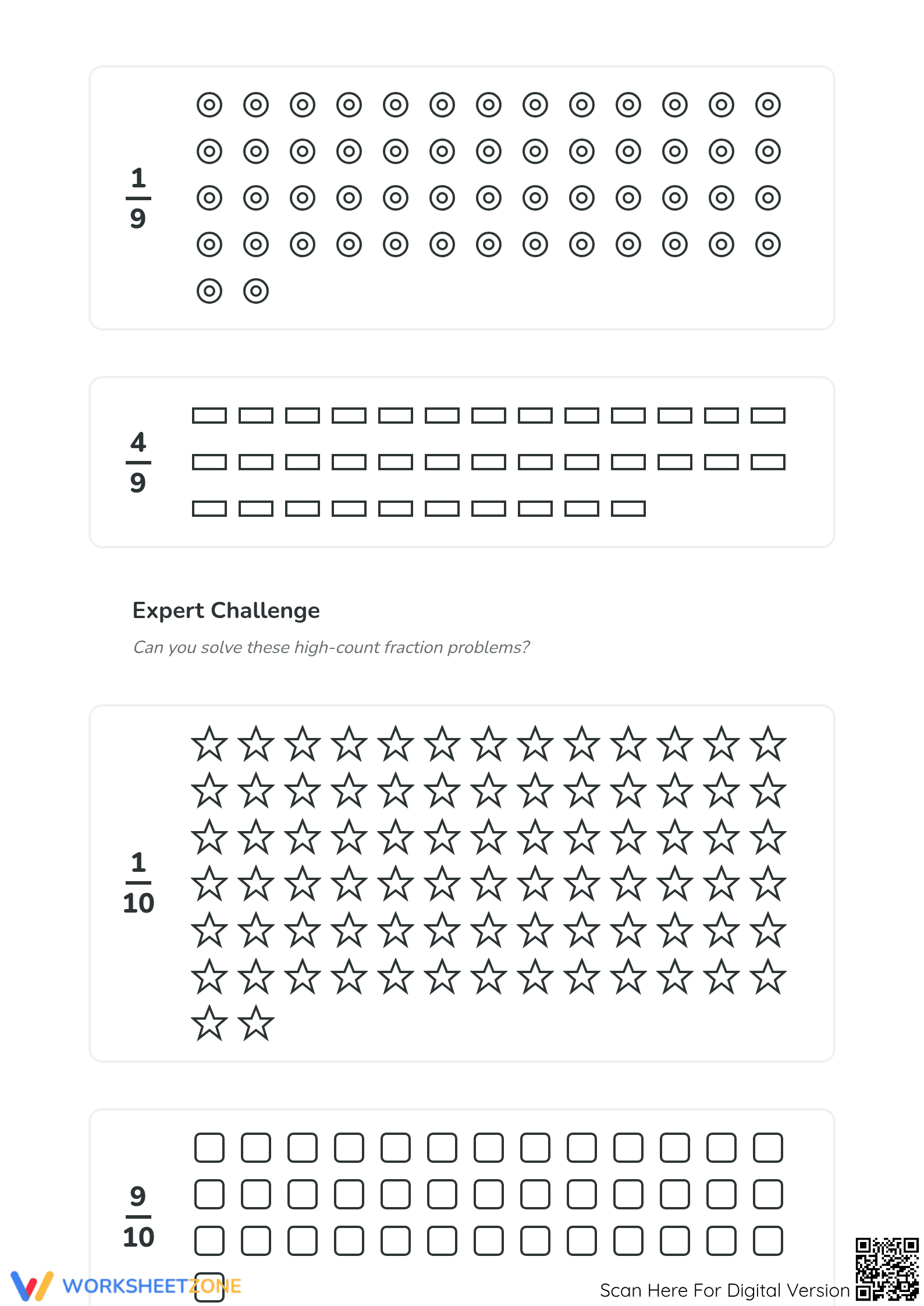
This comprehensive 5-page worksheet helps students master modeling fractions using groups of discrete shapes. By coloring specific portions of sets, learners bridge the gap between abstract numbers and visual representations. Students will develop a strong conceptual foundation in identifying numerators and denominators within various geometric arrangements, ensuring readiness for more complex fraction operations.
At a Glance
- Grade: 3–5 · Subject: Math
- Standard:
CCSS.MATH.CONTENT.3.NF.A.1— Understand a fraction as the quantity formed by parts of a whole- Skill Focus: Modeling fractions with sets
- Format: 5 pages · 20 problems · Answer key included · PDF
- Best For: Small group instruction and independent practice
- Time: 25–40 minutes
The resource contains 20 distinct problems spread across five pages, progressing from basic mastery to expert challenges. Each page features clear geometric icons—including hexagons, stars, hearts, and diamonds—organized into sets that match the denominator of the target fraction. The package includes a multi-page PDF with a corresponding complete answer key for rapid grading and student self-correction.
Skill Progression
- Guided Practice: The initial 6 problems focus on unit fractions and simple denominators (3, 4) with clear, structured layouts to build confidence.
- Supported Practice: 8 intermediate and advanced problems introduce larger sets (denominators 5, 6, 7, 8) and various shapes to prevent pattern-dependent answering.
- Independent Practice: 6 expert-level challenges involve high-count sets (denominators up to 12), requiring careful counting and precise application of the part-to-whole relationship.
This progression follows a gradual-release model, moving from high visual support to increased cognitive demand.
Standards Alignment
The primary focus is CCSS.MATH.CONTENT.3.NF.A.1: "Understand a fraction 1/b as the quantity formed by 1 part when a whole is partitioned into b equal parts; understand a fraction a/b as the quantity formed by a parts of size 1/b." This worksheet directly addresses the visual modeling required by the standard. This standard code can be copied directly into lesson plans, IEP goals, or district curriculum mapping tools.
How to Use It
Use this during direct instruction to demonstrate the "set model" of fractions by projecting the first page onto a whiteboard. It also serves as an excellent formative assessment tool after a lesson on numerators and denominators; observe if students correctly identify the total set size before coloring. Expect completion in 30 minutes.
Who It's For
Designed for elementary students in grades 3 through 5, it is also highly effective for older students needing RTI Tier 2 interventions or specialized instruction. It pairs naturally with a set of plastic pattern blocks or an anchor chart displaying "Part over Whole" definitions.
Aligned with CCSS.MATH.CONTENT.3.NF.A.1, this resource targets the essential skill of modeling fractions using set-based visual representations. Research by Fisher & Frey (2014) emphasizes that visual scaffolding, such as the shape-based sets used here, is critical for students to transition from concrete understanding to representational fluency. This 20-task collection supports the development of conceptual "fraction sense" by requiring students to actively manipulate visual data. By engaging with varying shapes and set sizes, learners are less likely to rely on rote memorization and more likely to understand the functional relationship between the part and the partitioned whole. This evidence-based approach aligns with current instructional best practices for numeracy development in the elementary grades, ensuring that students meet the rigorous demands of state and national mathematics frameworks while building a durable mental model for future operations.


