


























Views
Downloads

Modeling Fractions with Circles Worksheet | Printable Math
Paste this activity's link or code into your existing LMS (Google Classroom, Canvas, Teams, Schoology, Moodle, etc.).
Students can open and work on the activity right away, with no student login required.
You'll still be able to track student progress and results from your teacher account.
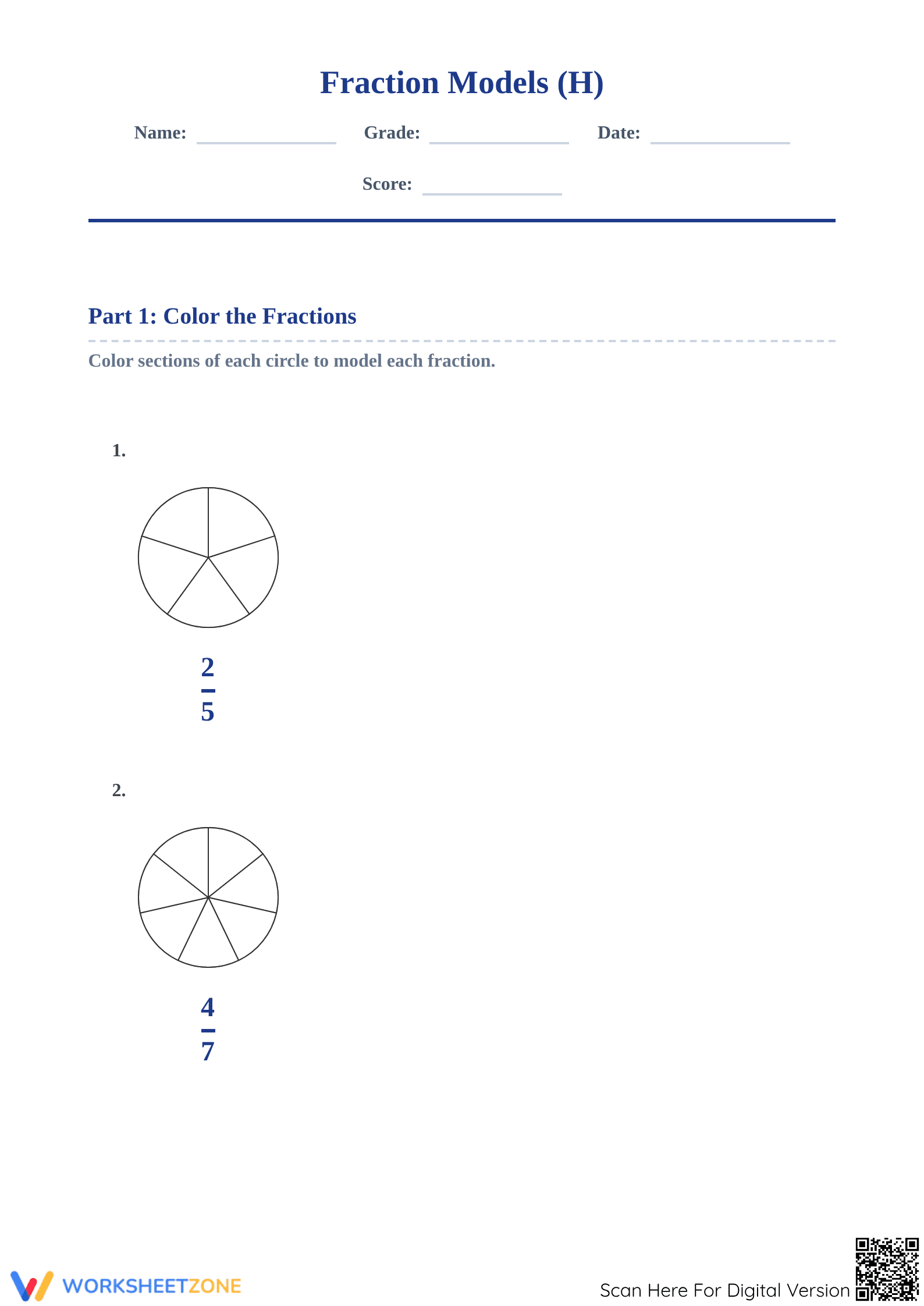
Students will master fraction representation by visually partitioning and identifying parts of a whole circle. This printable resource helps learners develop a concrete understanding of numerators and denominators, building a strong foundation in elementary rational number concepts through visual modeling.
At a Glance
- Grade: 3 · Subject: Math — Fractions
- Standard:
CCSS.MATH.CONTENT.3.NF.A.1— Understand a fraction a/b as the quantity formed by a parts of size 1/b- Skill Focus: Modeling fractions with area models (circles)
- Format: 5 pages · 13 problems · Answer key included · PDF
- Best For: Independent practice and formative assessment
- Time: 20–30 minutes
What's Inside
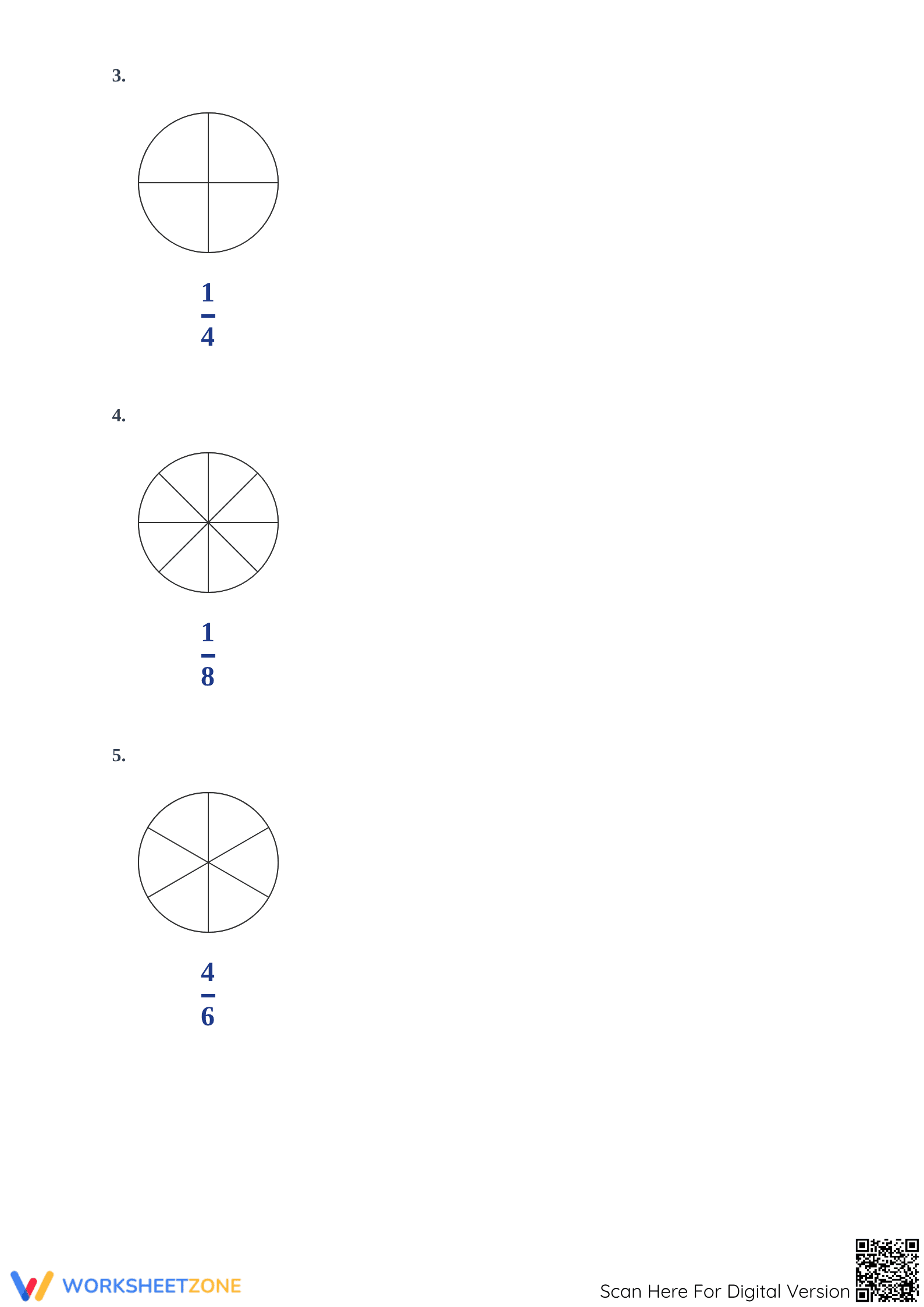
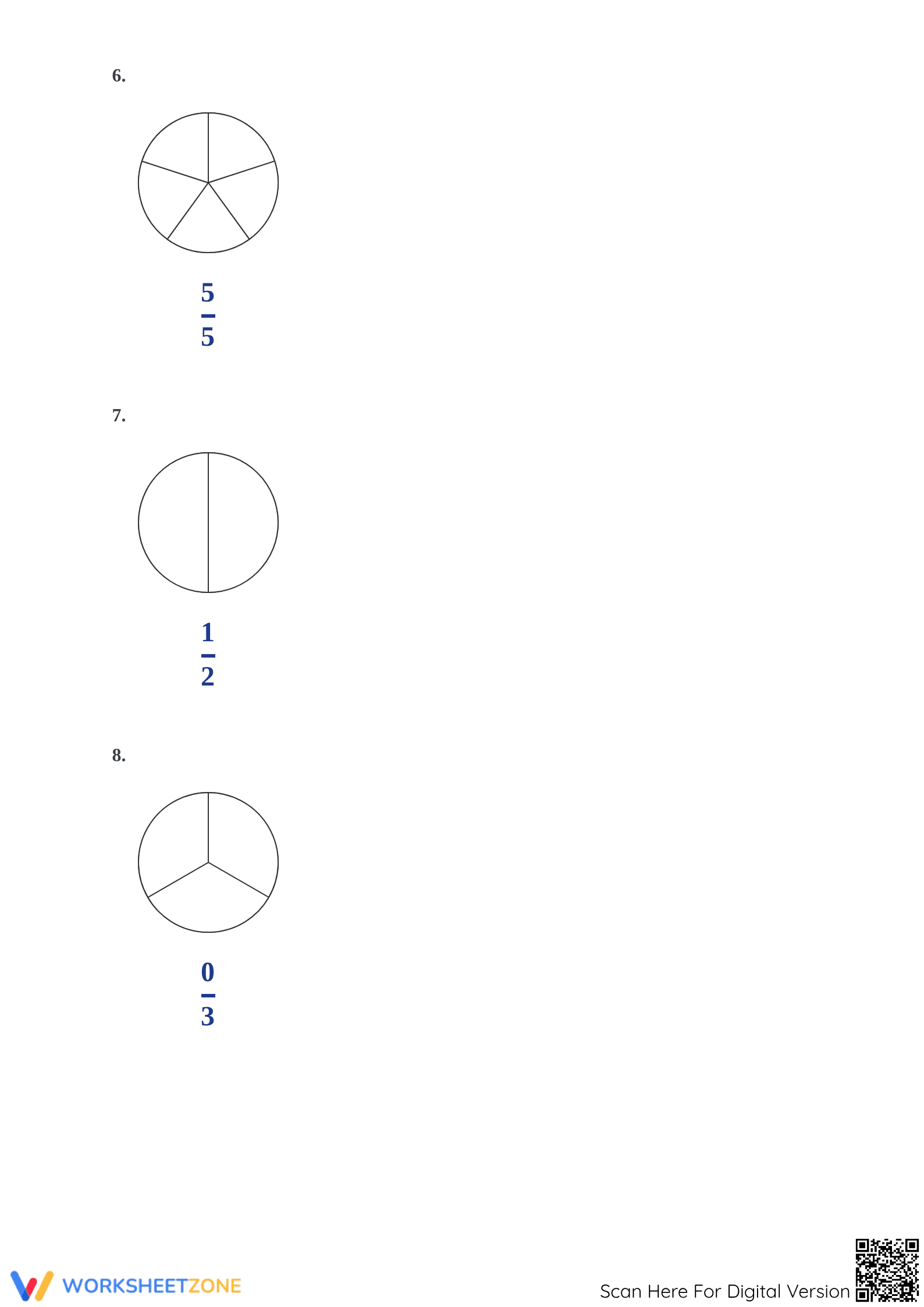
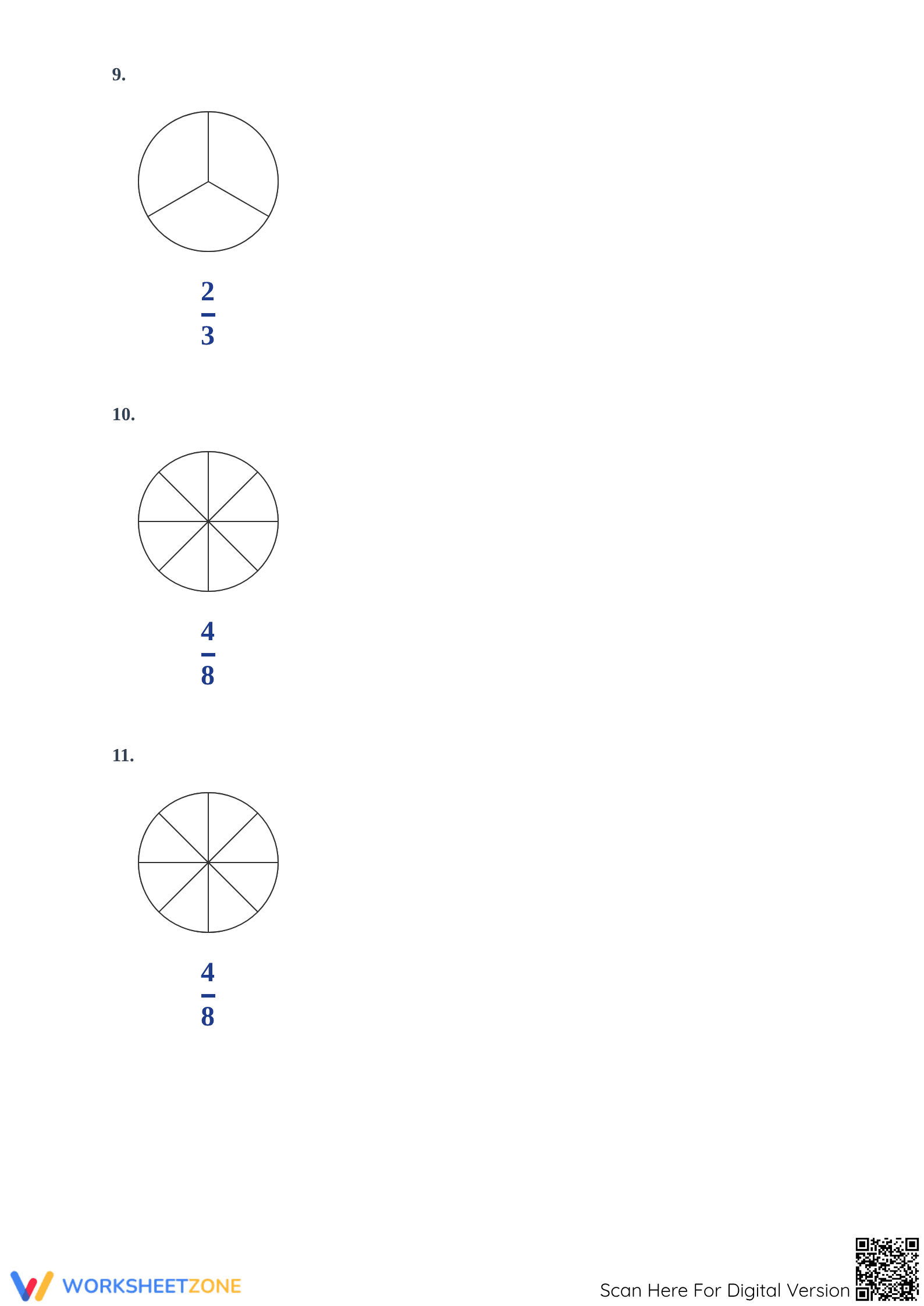
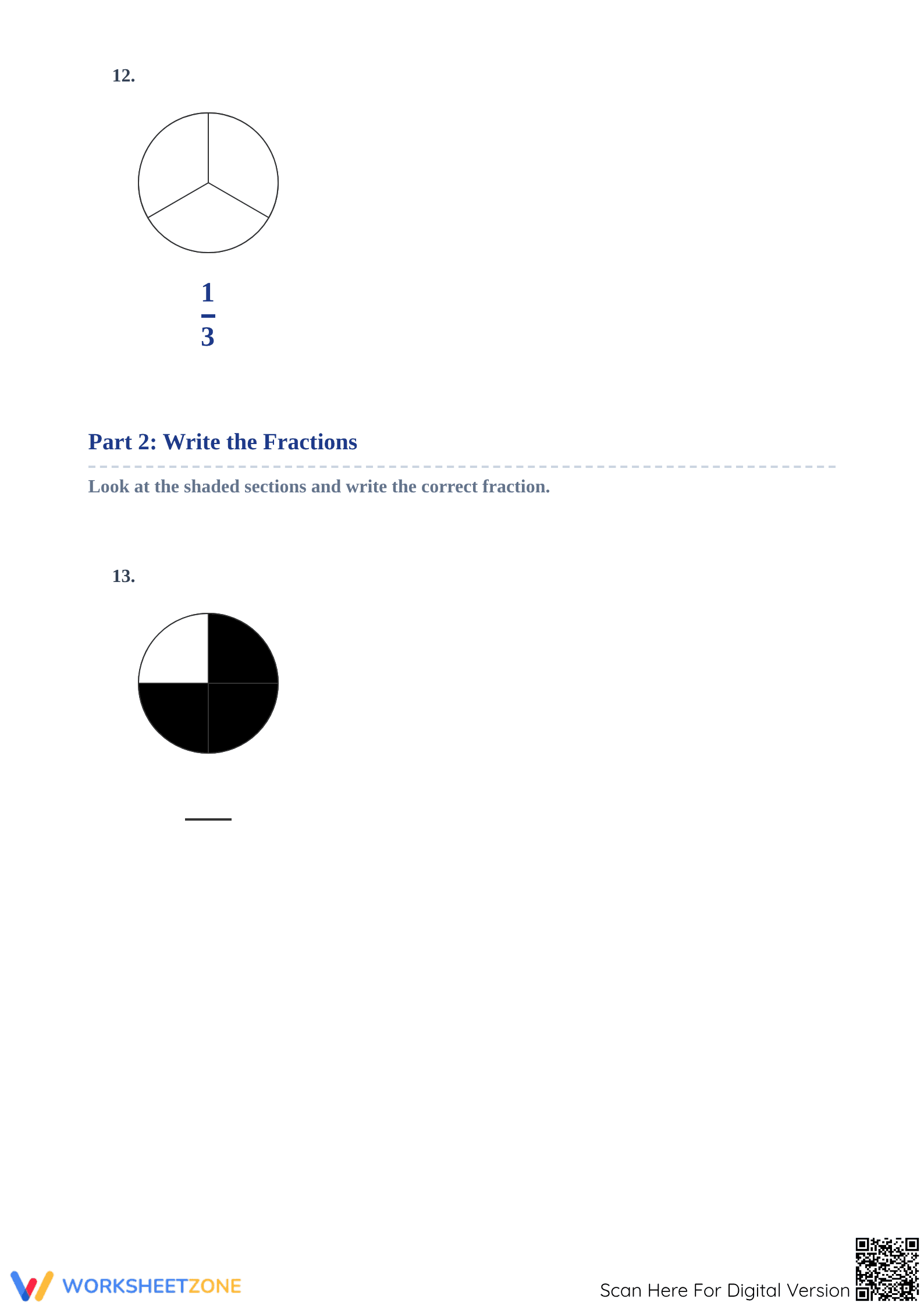
This five-page packet features two distinct sections to verify student mastery of circle-based area models. Part one includes twelve "Color the Fractions" tasks where students interpret a numerical fraction and shade segments of a pre-partitioned circle. Part two, "Write the Fractions," requires students to observe a shaded model and determine the numerator and denominator. The clean layout provides ample space, and a full answer key is included for efficient grading.
Skill Progression
- Guided Practice: Initial tasks use pre-partitioned circles matching the denominator, focusing on coloring to represent the numerator.
- Supported Practice: Middle sections introduce varying partitions (halves, thirds, fifths, eighths), challenging accuracy across geometric configurations.
- Independent Practice: The final page focuses on identifying fractions from shaded models, confirming translation from visual to symbolic notation.
This resource follows a gradual-release model, progressing from visual identification to symbolic representation.
Standards Alignment
The primary focus is CCSS.MATH.CONTENT.3.NF.A.1: "Understand a fraction a/b as the quantity formed by a parts of size 1/b." Using circles as the "whole," students visualize equal partitioning for fractional reasoning. This standard code can be directly copied into lesson plans, IEP goals, or curriculum mapping tools.
How to Use It
Deploy this worksheet as independent practice after direct instruction on area models, or as an Exit Ticket packet for a fractions unit. Teachers should observe students shading to gauge their understanding of fractions as continuous quantities. Expected completion time is approximately 25 minutes.
Who It's For
Designed for third-grade students starting fractions, this resource also supports fourth and fifth graders needing intervention or review. It pairs well with physical fraction circles or an anchor chart displaying common fractional parts.
Mastery of fraction area models is a critical milestone for proportional reasoning and algebra. Research shows students fluidly moving between numerical and visual models have higher long-term retention. Visual scaffolds, like circle models, support gradual release of responsibility by providing concrete referents for abstract symbols (Fisher & Frey, 2014). This worksheet addresses `CCSS.MATH.CONTENT.3.NF.A.1` by requiring students to both produce and interpret models, fostering bi-directional understanding. Focusing on circular partitions avoids pitfalls of linear models, encouraging thought about parts of a bounded whole. This evidence-based approach provides rigorous practice for fluency in fraction identification and modeling.


