


























Views
Downloads

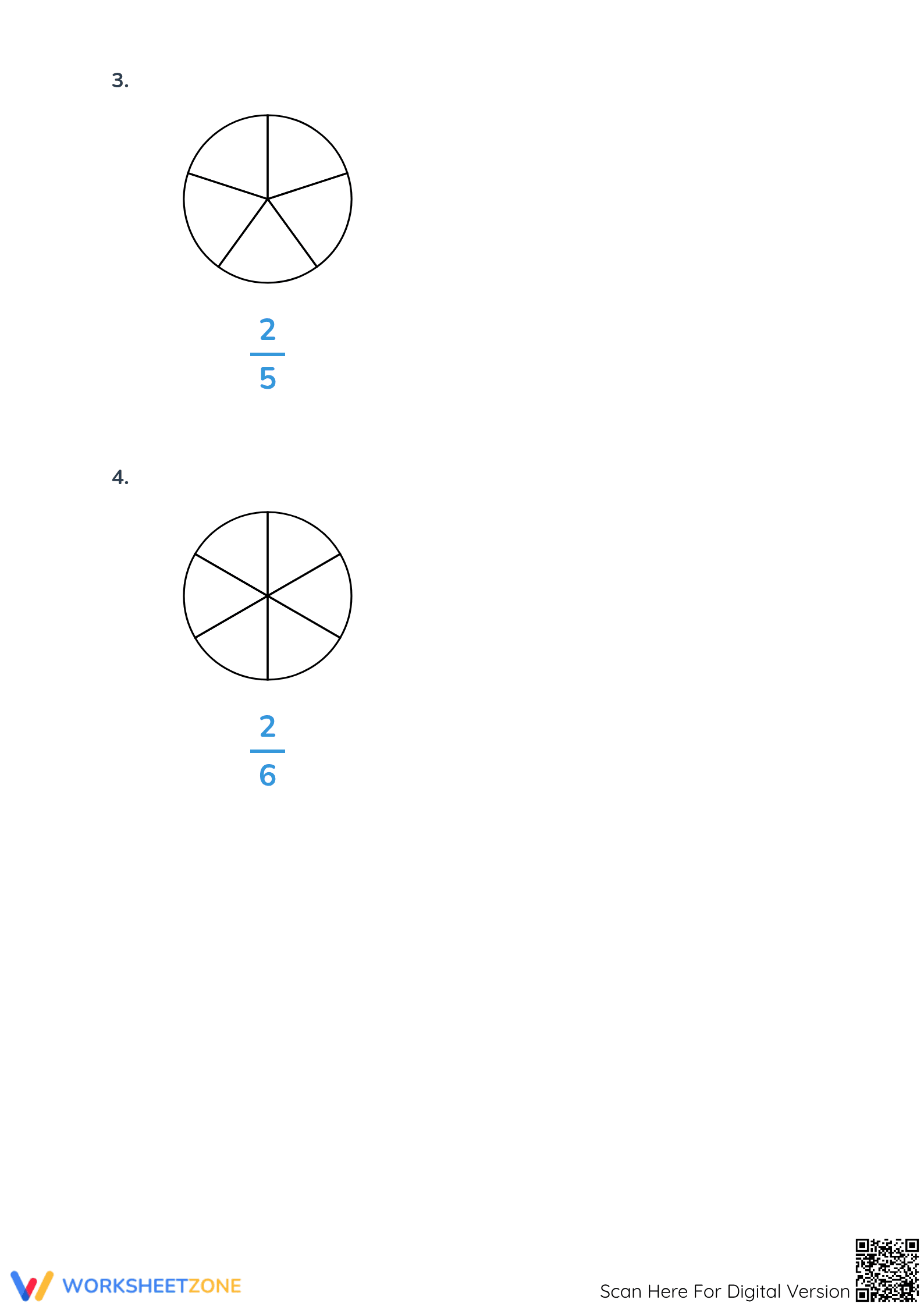
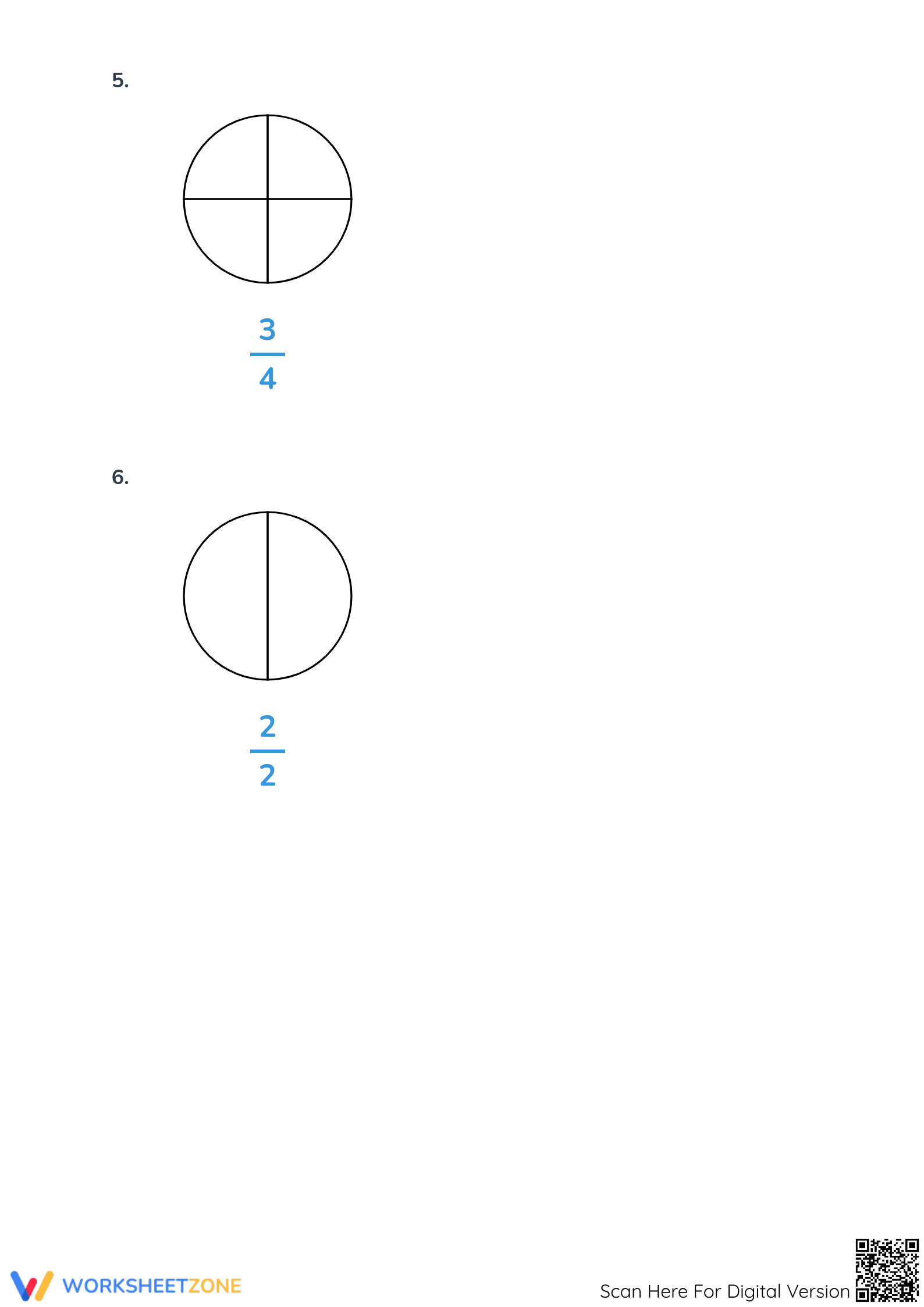
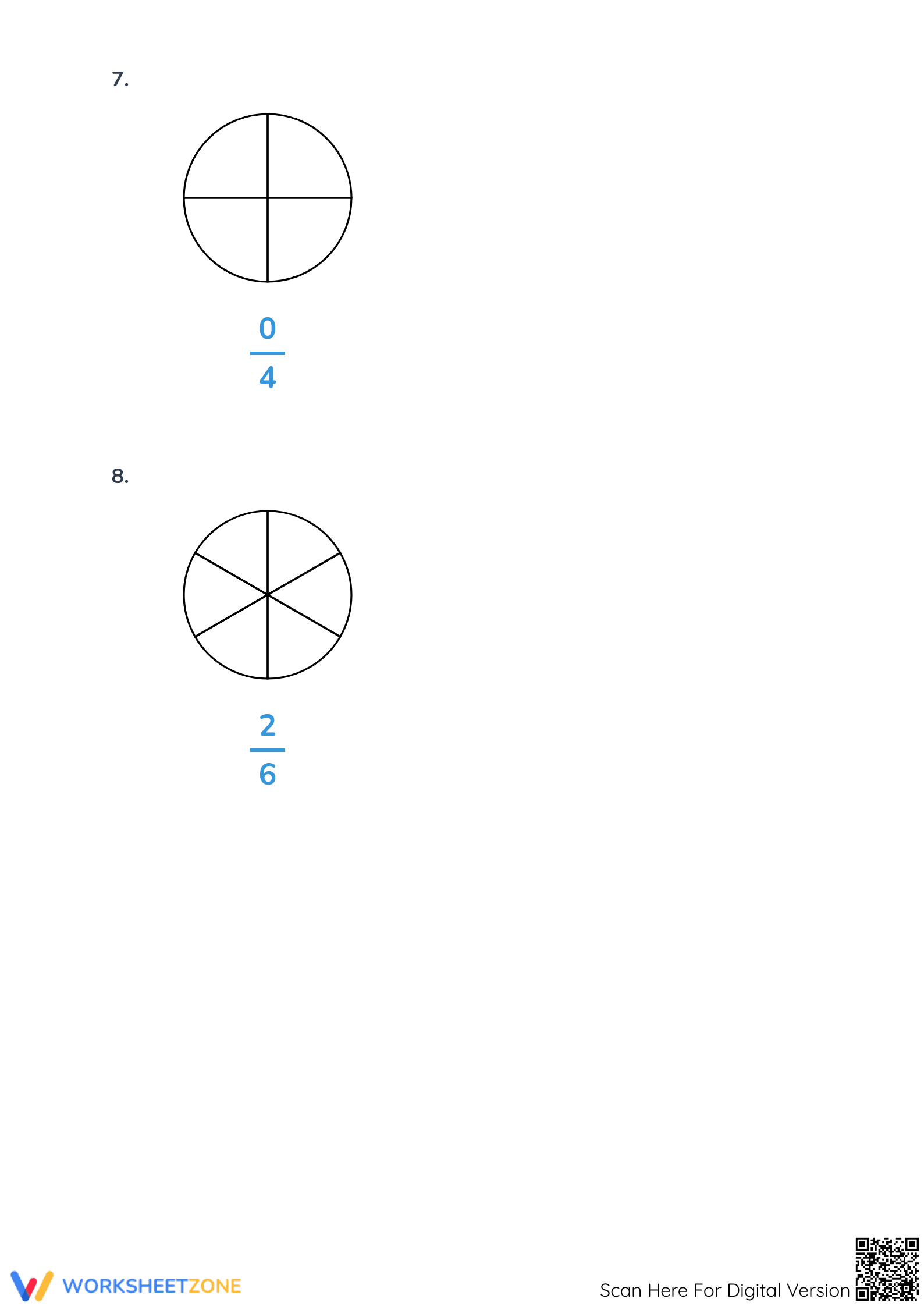
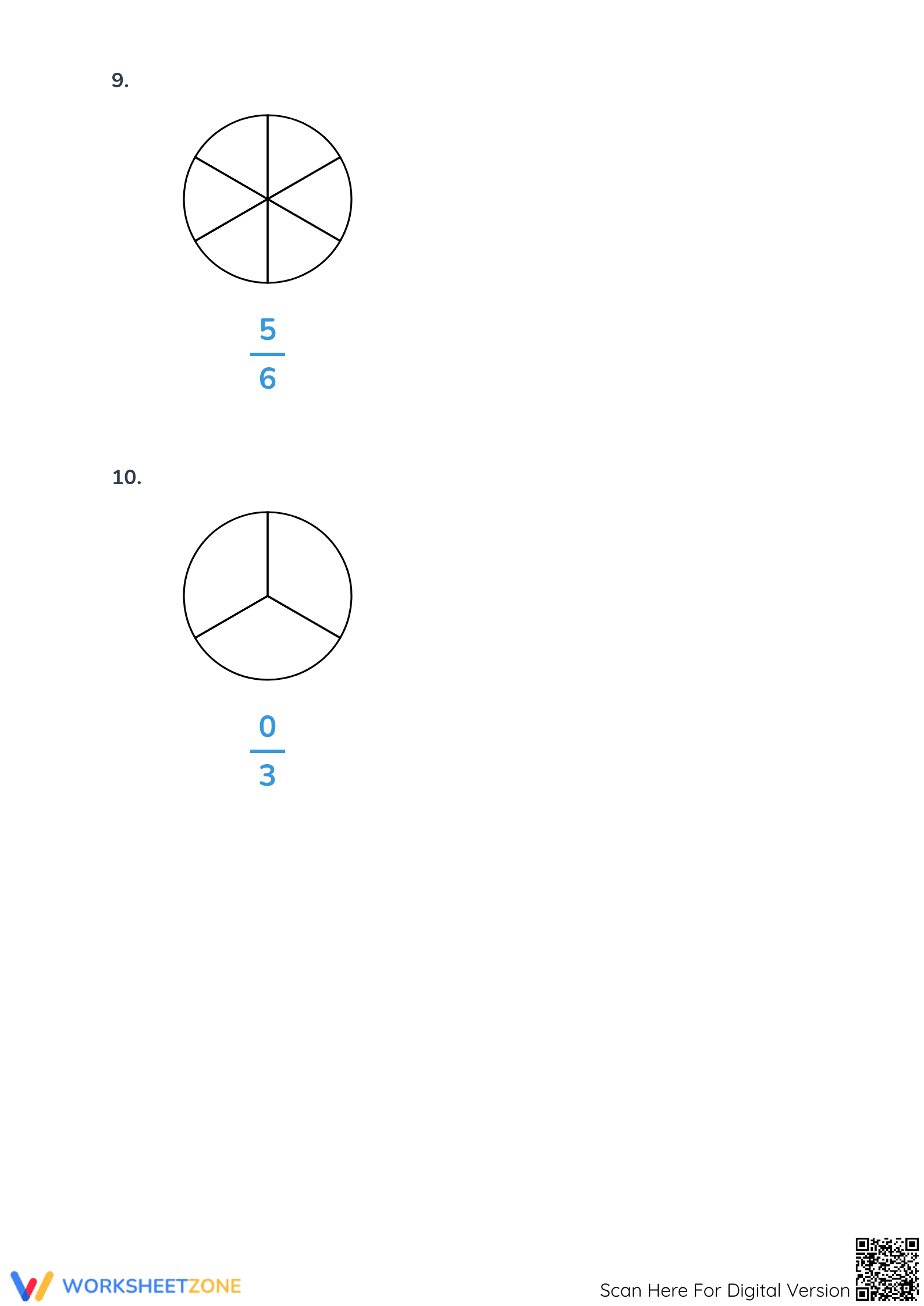

Modeling Fractions with Circles - Printable Grade 3 Math
Paste this activity's link or code into your existing LMS (Google Classroom, Canvas, Teams, Schoology, Moodle, etc.).
Students can open and work on the activity right away, with no student login required.
You'll still be able to track student progress and results from your teacher account.
This printable Grade 3 math worksheet helps students master fraction representation through visual circle models. By coloring specific sections of divided circles to match given fractions, learners develop a concrete understanding of numerators and denominators. This essential practice ensures students can accurately visualize and model fractions of a whole, building a strong foundation for future arithmetic.
At a Glance
- Grade: 3 · Subject: Math
- Standard:
CCSS.MATH.CONTENT.3.NF.A.1— Understand a fraction as parts of a whole partitioned into equal segments- Skill Focus: Modeling fractions with circle diagrams
- Format: 5 pages · 10 problems · Answer key included · PDF
- Best For: Early finishers, sub plans, and homework
- Time: 15–20 minutes
This resource contains five high-quality pages featuring ten distinct modeling tasks. Each problem provides a fraction and a corresponding circle partitioned into the appropriate number of equal segments. The clean layout includes space for student names and grades, making it ready for immediate classroom distribution. A comprehensive answer key is included to facilitate rapid grading and provide immediate feedback to learners.
Zero-Prep Workflow
The zero-prep workflow is designed for maximum efficiency in the classroom. First, print the five pages directly from the PDF (1 minute). Second, distribute the worksheets to students during your fractions unit (1 minute). Finally, review the completed work using the provided answer key (5 minutes). This streamlined process requires less than two minutes of teacher preparation, making it an ideal choice for emergency sub plans or supplemental practice.
Standards Alignment
This worksheet is directly aligned with `CCSS.MATH.CONTENT.3.NF.A.1`, which requires students to "understand a fraction 1/b as the quantity formed by 1 part when a whole is partitioned into b equal parts; understand a fraction a/b as the quantity formed by a parts of size 1/b." This alignment ensures that student practice remains focused on core curriculum requirements. Both standard codes can be copied directly into lesson plans, IEP goals, or district curriculum mapping tools.
How to Use It
Use this worksheet as a formative assessment after introducing the concept of parts of a whole. During the activity, circulate the room to observe if students are coloring the correct number of sections (the numerator) while acknowledging the total partitions (the denominator). It also serves as an excellent independent practice station. Students typically complete the ten modeling problems within 15 to 20 minutes, depending on their familiarity with the concept.
Who It's For
This resource is designed for Grade 3 students beginning their journey with fractions, though it remains a valuable review tool for Grade 4 learners. It is particularly effective for visual learners who need a concrete representation of abstract numbers. Pair this worksheet with a physical fraction circle set or a short direct instruction lesson on the meaning of numerators to maximize instructional impact.
Effective visual modeling is a cornerstone of mathematical proficiency in the elementary grades. According to the RAND AIRS 2024 report, the use of pictorial representations, such as circle fraction models, significantly enhances a student's ability to transition from concrete understanding to abstract reasoning. This worksheet specifically targets CCSS.MATH.CONTENT.3.NF.A.1 by requiring students to interact directly with partitioned wholes. Research from ScienceDirect TpT Analysis suggests that repetitive, structured practice with 10 or more modeling tasks helps solidify the relationship between the numerator and the denominator in the student's working memory. By providing 10 varied problems (e.g., 3/5, 3/8, 2/2, and 0/4), this resource ensures that students encounter both standard and non-standard fraction types. This approach aligns with best practices in scaffolding, allowing teachers to identify misconceptions early in the instructional cycle while providing a reliable tool for classroom data collection and IEP progress monitoring.


