


























Views
Downloads
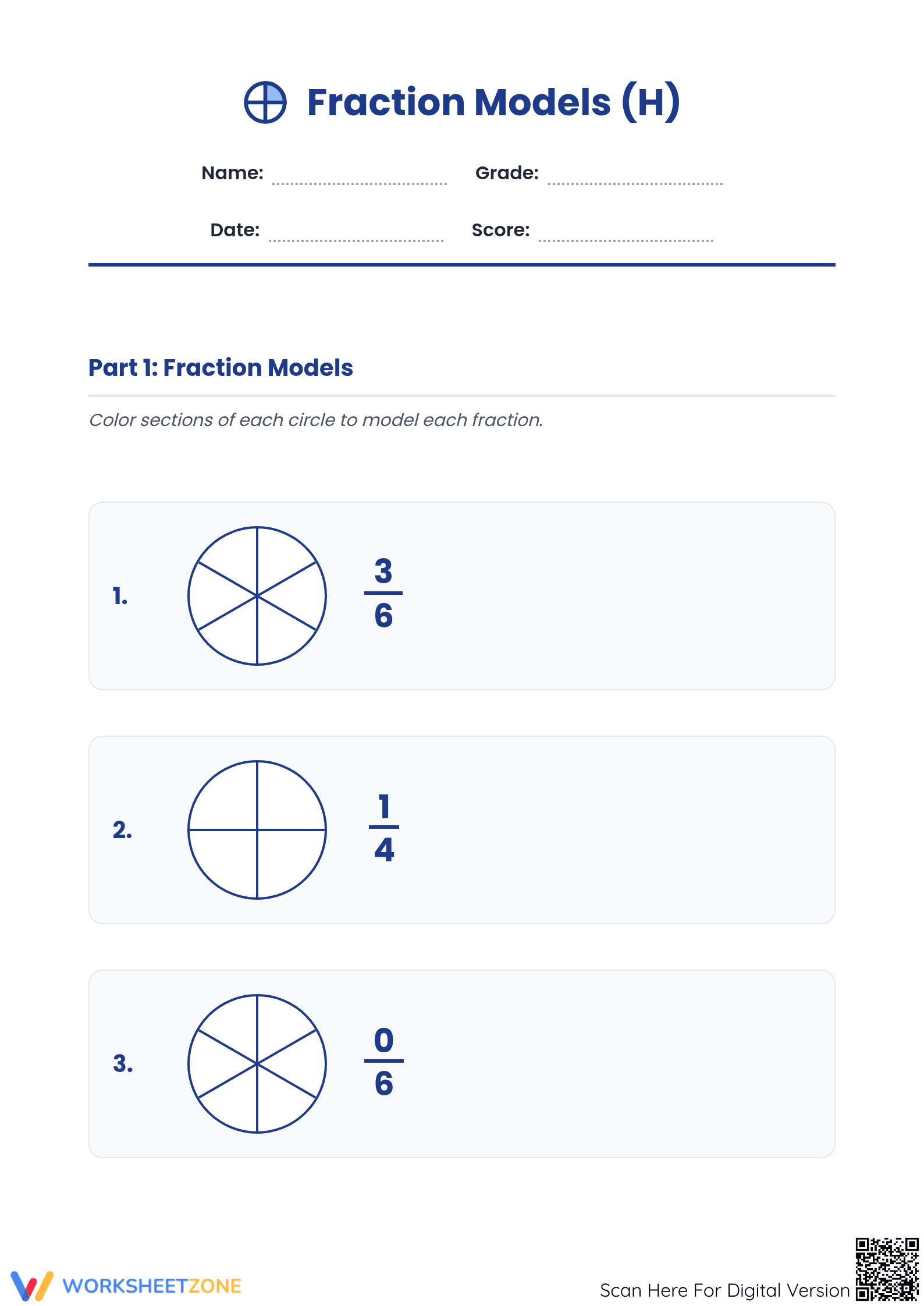
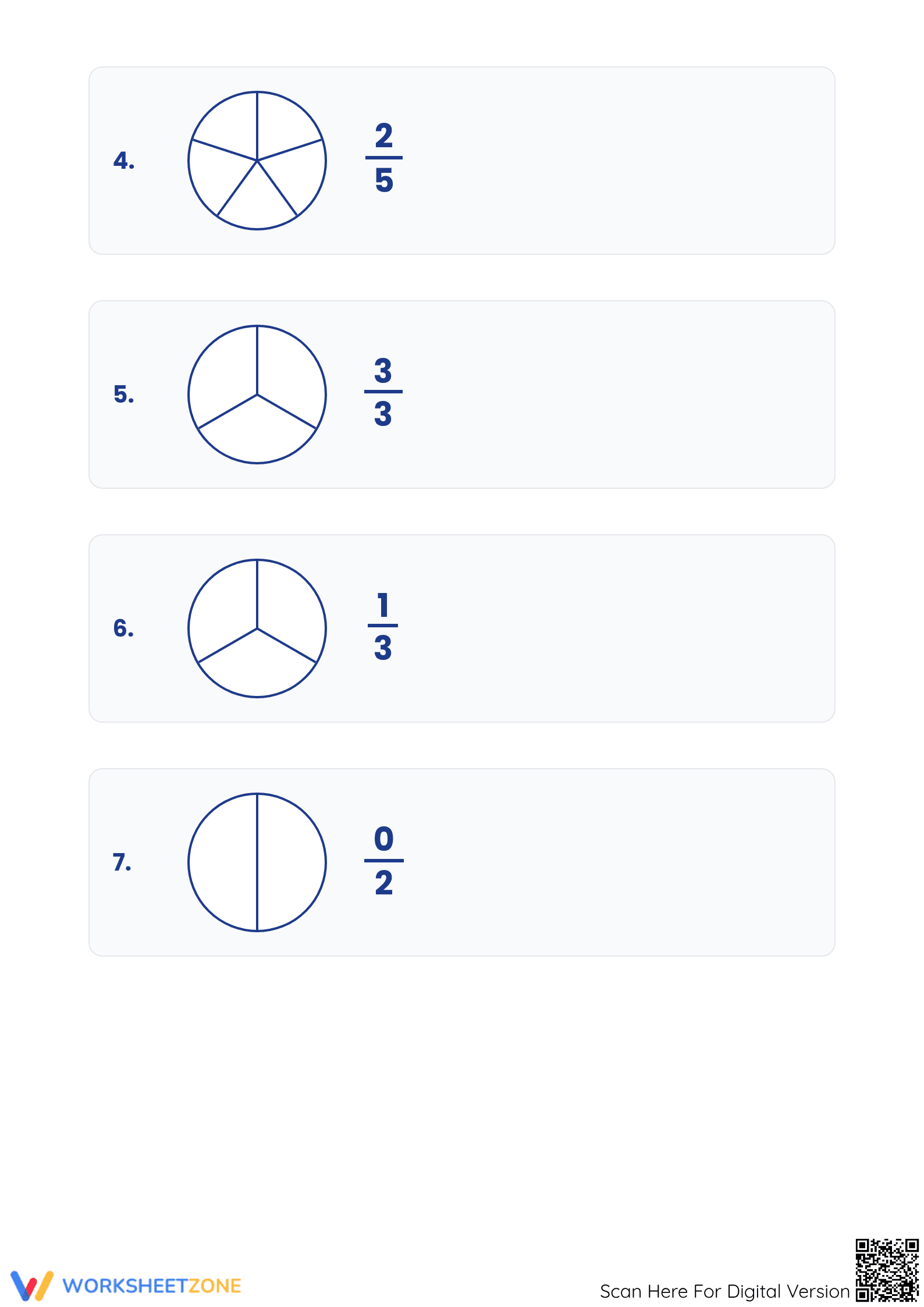
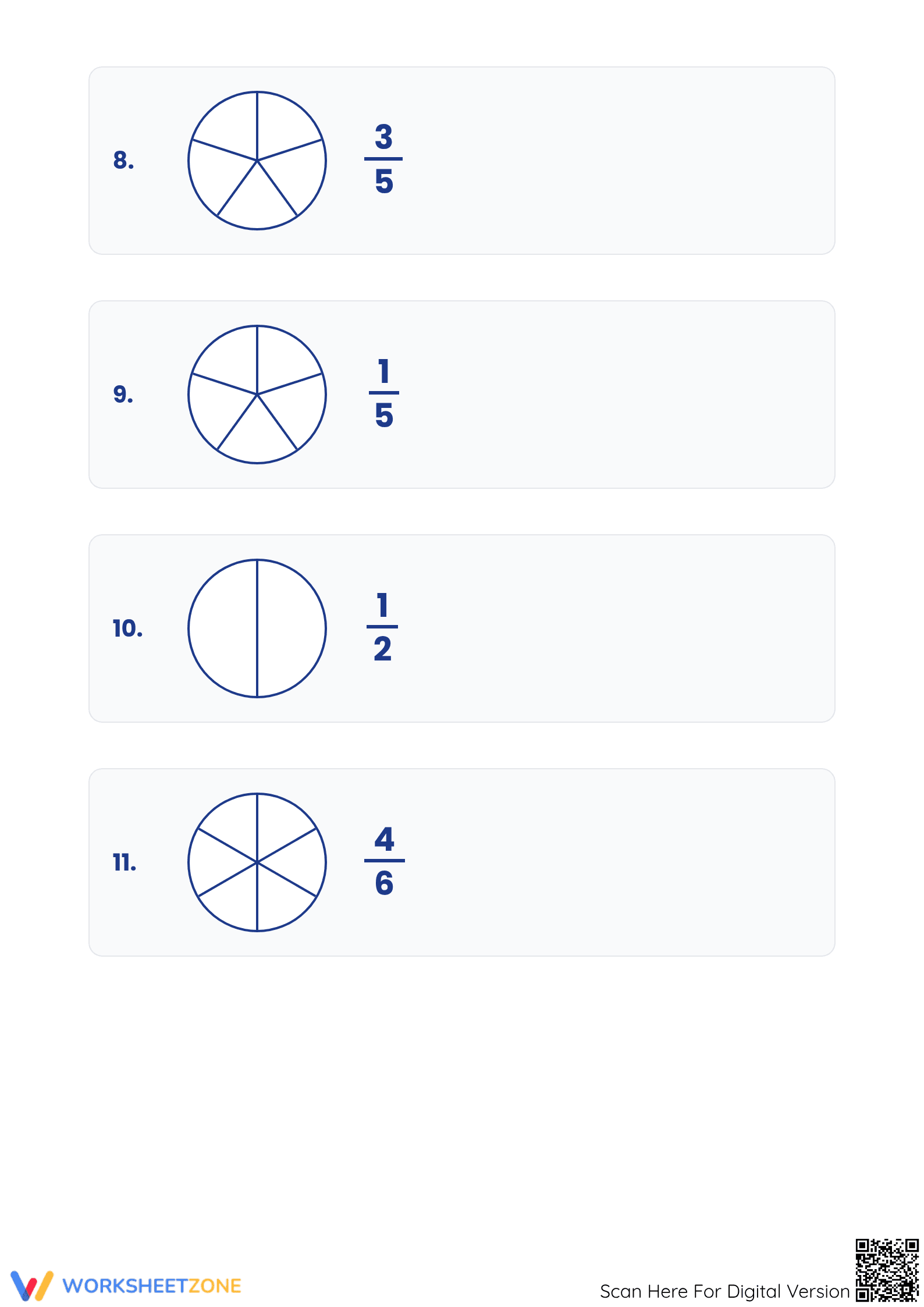
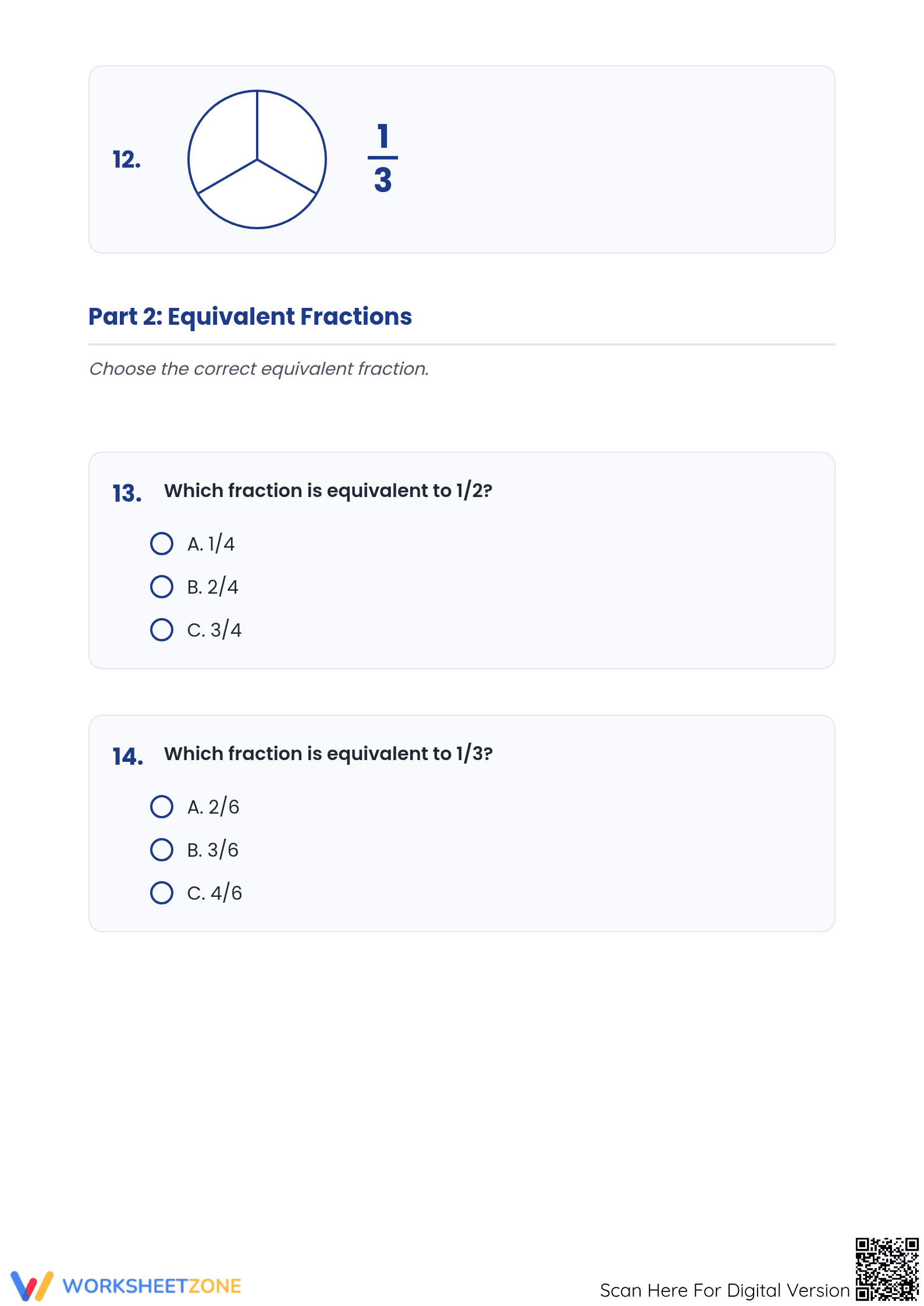

Modeling Fractions with Circles | Printable Grade 3 Math
Paste this activity's link or code into your existing LMS (Google Classroom, Canvas, Teams, Schoology, Moodle, etc.).
Students can open and work on the activity right away, with no student login required.
You'll still be able to track student progress and results from your teacher account.
Students will master fraction representation and equivalence through visual models and structured practice. This 5-page worksheet provides a comprehensive path from basic shading to conceptual word problems, ensuring students build a deep understanding of how fractions represent parts of a whole in various contexts.
At a Glance
- Grade: 3 · Subject: Math
- Standard:
CCSS.MATH.CONTENT.3.NF.A.1— Understand a fraction as parts of a partitioned whole- Skill Focus: Visual modeling and equivalence
- Format: 5 pages · 18 problems · Answer key included · PDF
- Best For: Independent practice or small group instruction
- Time: 25–35 minutes
What's Inside
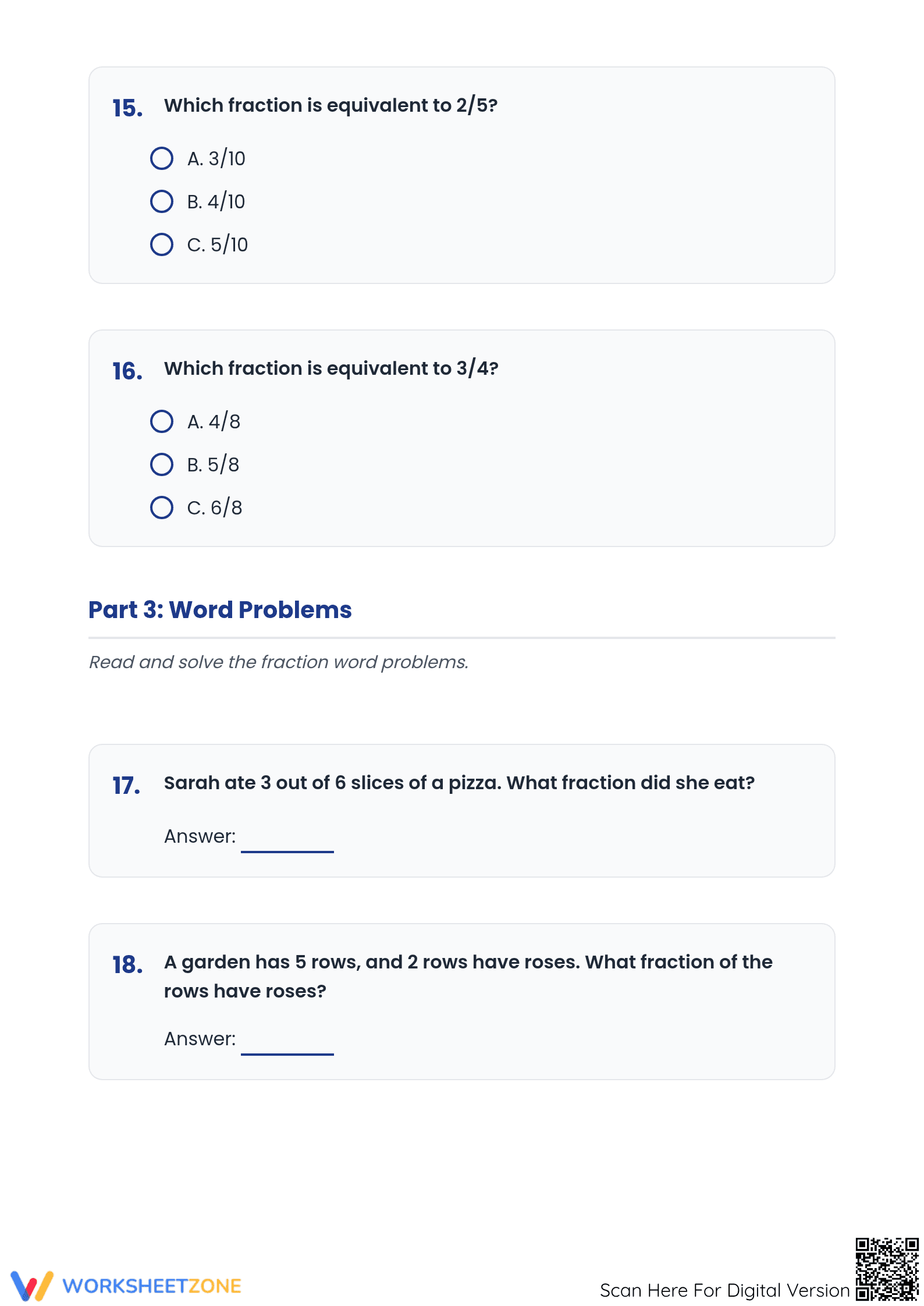
This 5-page PDF includes 12 circle modeling exercises where students shade sections to match numerical values, 4 multiple-choice equivalent fraction questions, and 2 application-based word problems. Each page features clear instructions and structured workspaces to help students stay organized. A full answer key is provided for immediate feedback and grading efficiency.
Zero-Prep Workflow
- Step 1: Print the 5-page PDF directly from your computer (30 seconds).
- Step 2: Distribute the packets to students for a sub-ready activity, independent center, or homework assignment (1 minute).
- Step 3: Review student work using the included answer key for quick grading or student-led self-checks (1 minute).
Total teacher preparation time is under 3 minutes, making this an essential tool for busy classroom environments.
Standards Alignment
This resource is specifically aligned to CCSS.MATH.CONTENT.3.NF.A.1: "Understand a fraction 1/b as the quantity formed by 1 part when a whole is partitioned into b equal parts; understand a fraction a/b as the quantity formed by a parts of size 1/b." It also supports CCSS.MATH.CONTENT.3.NF.A.3 through its focus on equivalent fraction identification. Both standard codes can be copied directly into lesson plans, IEP goals, or district curriculum mapping tools.
How to Use It
Use this packet as a formative assessment after introducing fraction area models. Students can work through the modeling section before moving to the more abstract equivalence questions. During instruction, monitor Step 17 to see if students can translate visual concepts into real-world scenarios. It works well for exit tickets, morning work, or as a component of a guided math rotation.
Who It's For
This resource is designed for Grade 3 students but is excellent for Grade 4 review or RTI Tier 2 intervention. It pairs perfectly with physical fraction circles or other circular manipulatives to support the shift from concrete to representational understanding. It is also suitable for home-schooling parents looking for structured math practice.
Fisher & Frey (2014) highlight the importance of gradual release and visual scaffolding in mathematical literacy. This worksheet implements these principles by moving from concrete circle models (CCSS.MATH.CONTENT.3.NF.A.1) to conceptual equivalent fraction identification. Research from ScienceDirect TpT Analysis (2024) suggests that multi-part worksheets with visual anchors significantly increase student engagement and retention of abstract numerical concepts. By providing 18 distinct tasks ranging from shading parts of a whole to solving complex word problems, this resource ensures that learners build a robust mental model of fractions as quantities rather than just digits. The inclusion of an answer key supports immediate error correction, a critical component of effective formative assessment. Teachers can confidently integrate this standards-aligned tool into their daily instruction, knowing it meets the rigorous demands of modern elementary mathematics curricula while minimizing preparation time for busy educators across all learning environments.


