


























Views
Downloads

Printable Worksheet: Modeling Fractions with Circles (Grade 3)
Paste this activity's link or code into your existing LMS (Google Classroom, Canvas, Teams, Schoology, Moodle, etc.).
Students can open and work on the activity right away, with no student login required.
You'll still be able to track student progress and results from your teacher account.
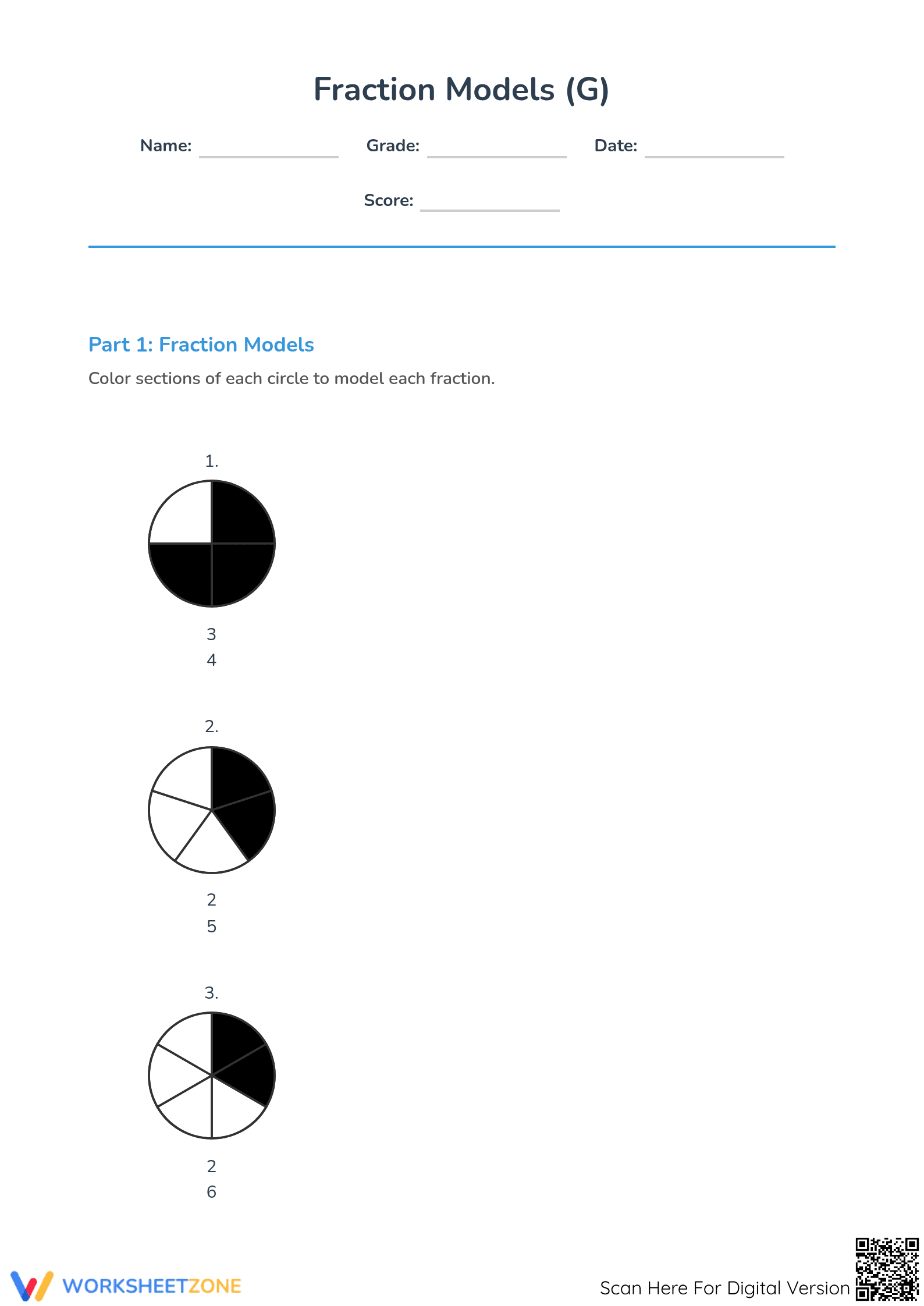
Modeling fractions with circles is an essential step in developing a student's conceptual understanding of part-whole relationships. This Grade 3 math worksheet provides a structured environment where learners color circular models to represent specific fractions, bridging the gap between abstract numbers and visual reality. By completing these exercises, students solidify their grasp of numerators and denominators effectively.
At a Glance
- Grade: 3 · Subject: Math
- Standard:
CCSS.MATH.CONTENT.3.NF.A.1— Understand a fraction as a quantity formed by parts of a whole- Skill Focus: Modeling fractions with circle diagrams
- Format: 5 pages · 18 problems · Answer key included · PDF
- Best For: Small group instruction and independent practice
- Time: 20–30 minutes
What's Inside
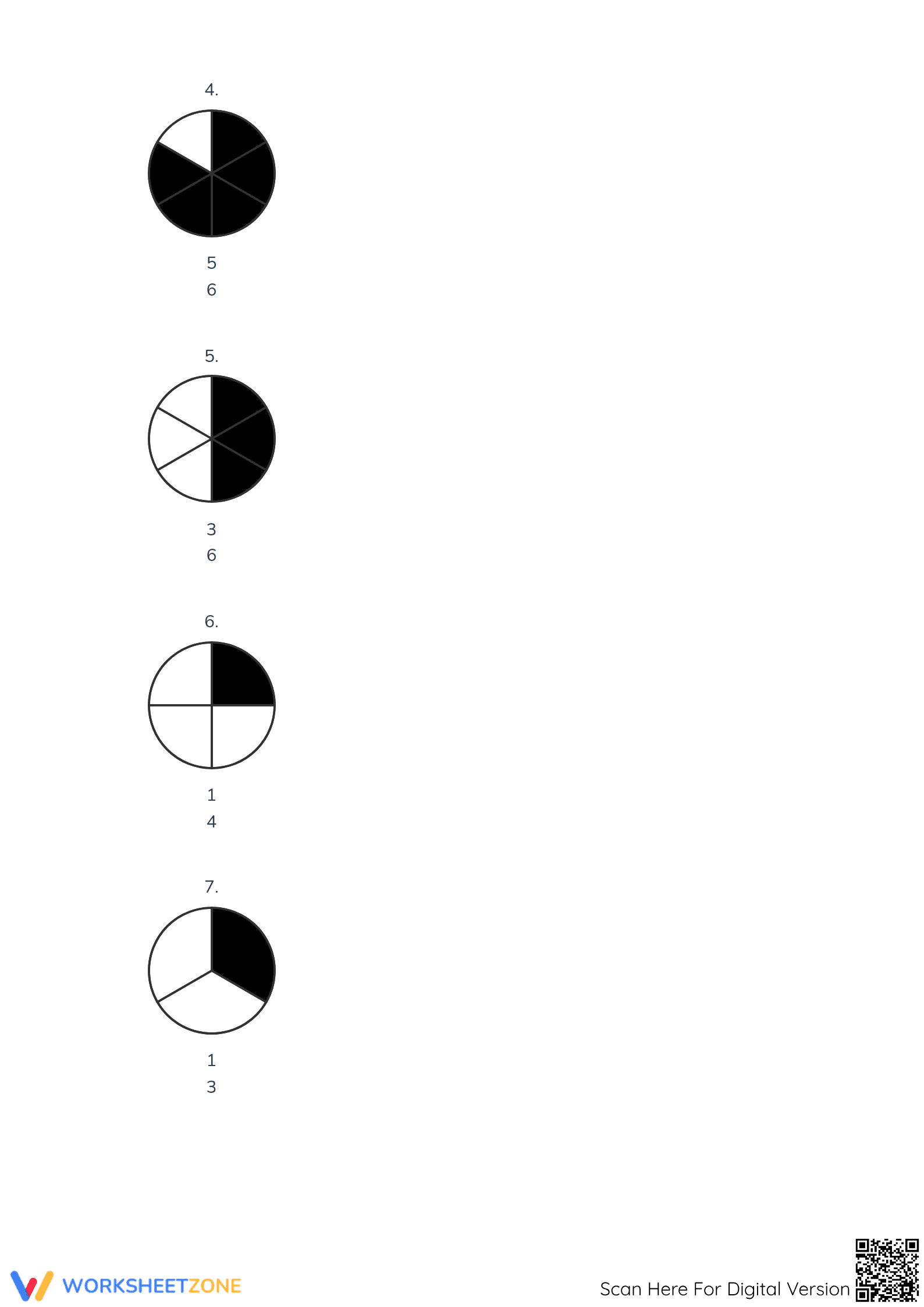
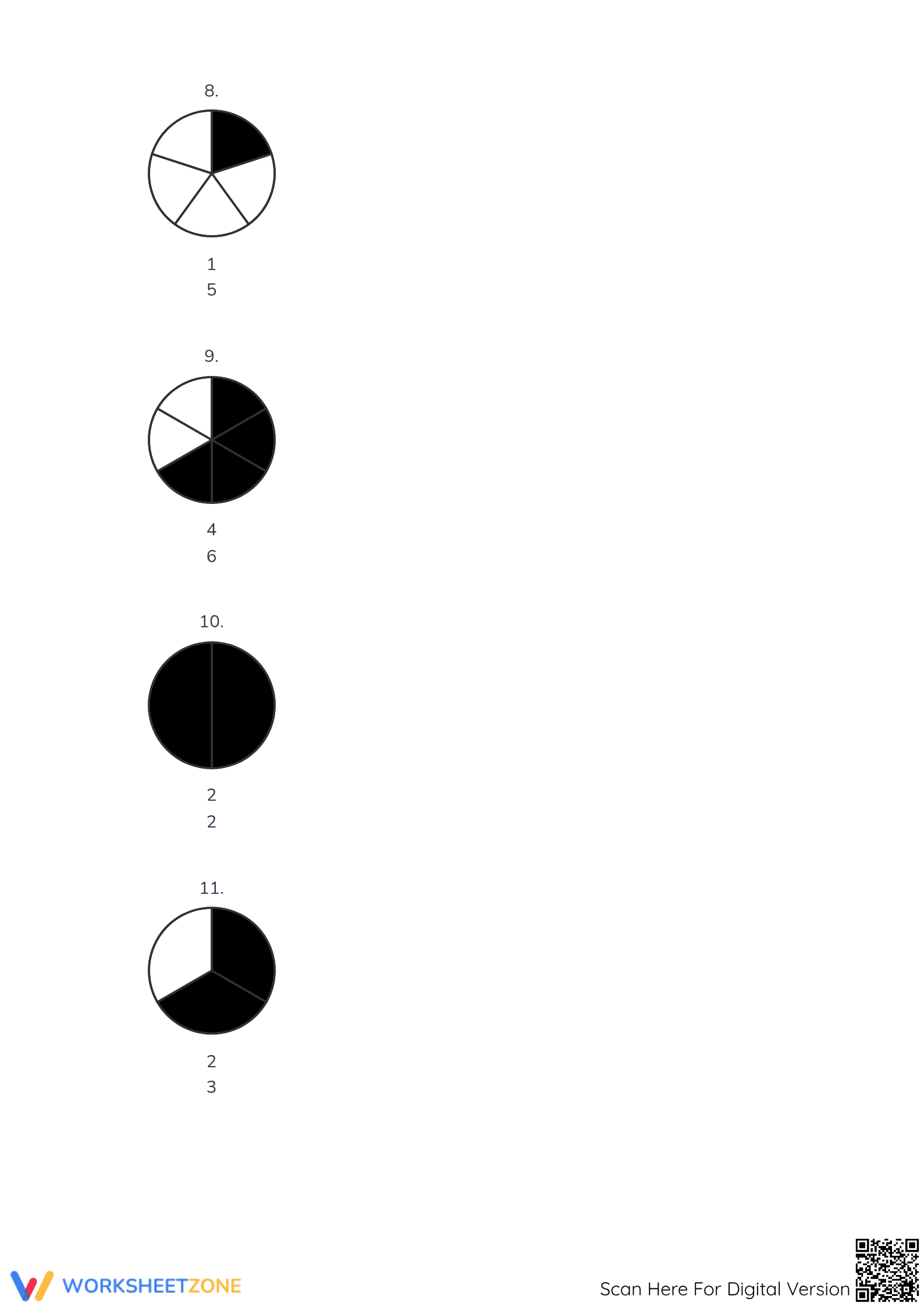
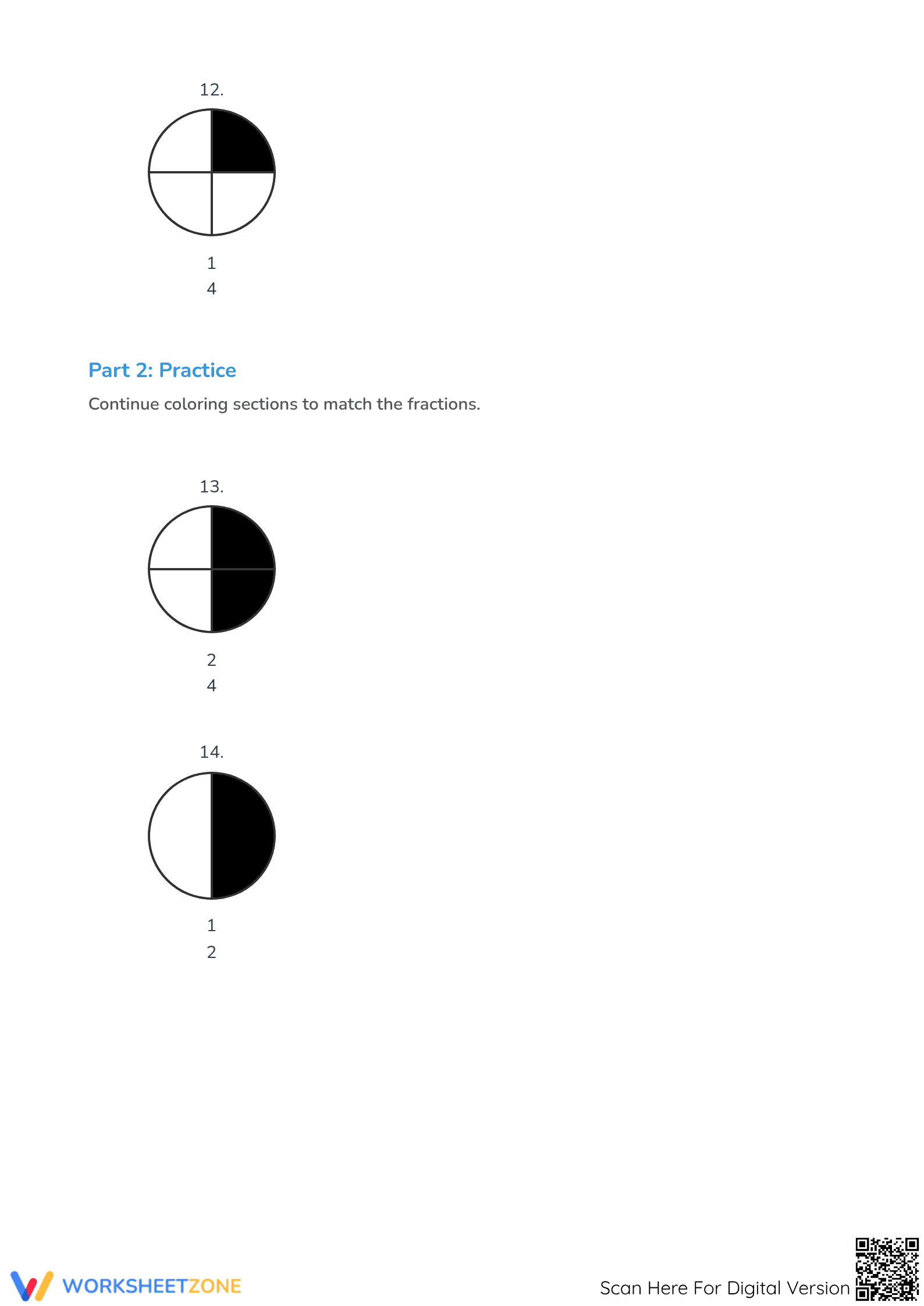
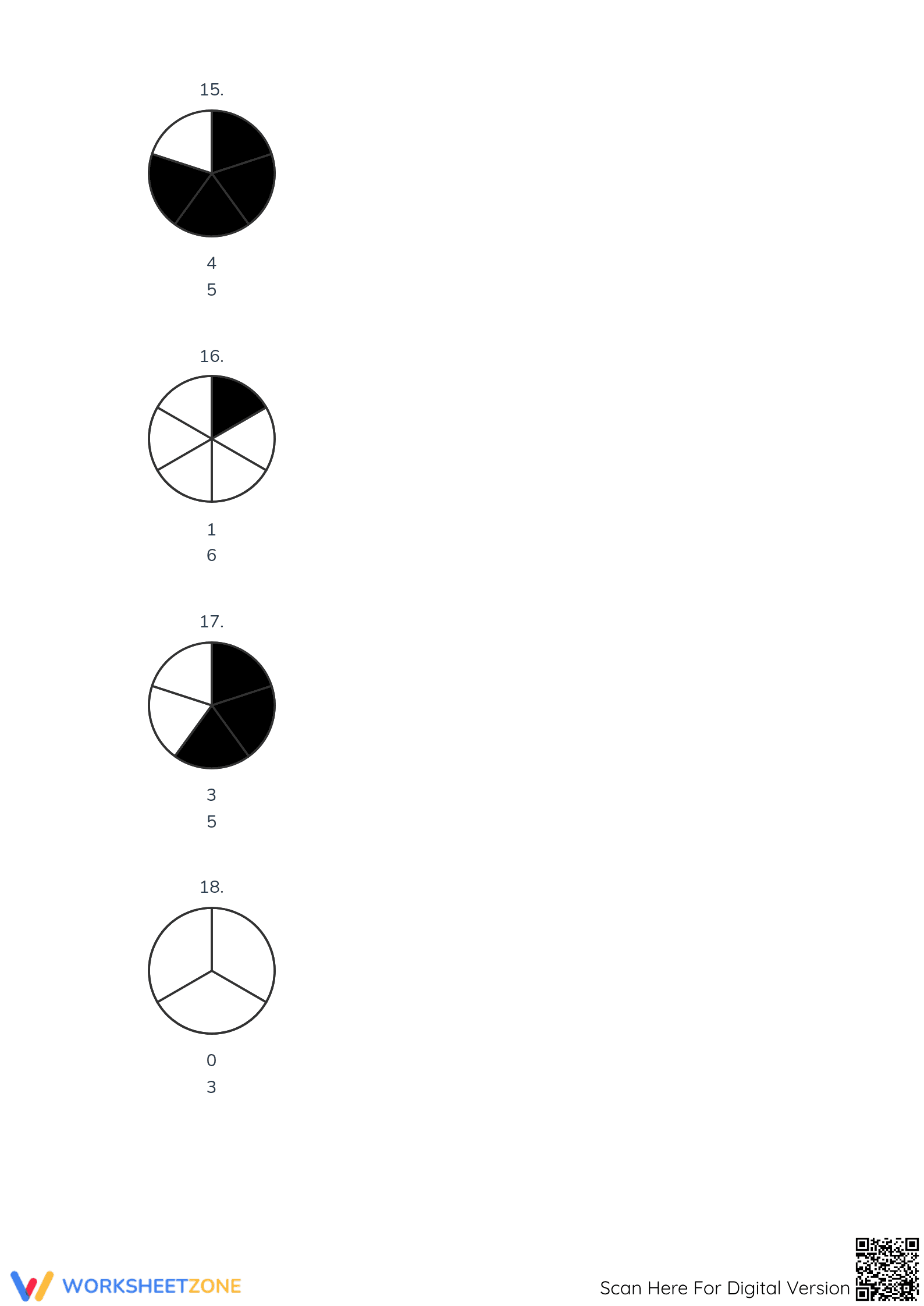
This comprehensive 5-page PDF contains 18 distinct circle models paired with fraction notations. The first 12 tasks focus on "Fraction Models," where students are prompted to color sections of a circle from scratch. The final section, "Part 2: Practice," challenges students to continue coloring pre-shaded models to match given values. A complete answer key is provided for immediate feedback and grading.
Skill Progression
- Guided practice (Items 1-6): These initial tasks feature common denominators like 4, 5, and 6, allowing teachers to model the coloring process alongside the class.
- Supported practice (Items 7-12): Students transition to independent work with varying partitions, including halves and thirds, reinforcing the relationship between denominators and slices.
- Independent practice (Items 13-18): The "Practice" section removes initial scaffolding, requiring students to evaluate existing shading and add the correct number of parts.
This sequence follows the I Do, We Do, You Do instructional framework to ensure mastery through gradual release.
Standards Alignment
This resource is directly aligned to CCSS.MATH.CONTENT.3.NF.A.1, which requires students to "Understand a fraction 1/b as the quantity formed by 1 part when a whole is partitioned into b equal parts." It also supports Grade 3 geometry standards regarding partitioning shapes into equal areas. This standard code can be copied directly into lesson plans, IEP goals, or district curriculum mapping tools.
How to Use It
- Formative Assessment: Use the first page during a direct instruction lesson. As students color their circles, walk around to observe if they are counting sections correctly or if they are confused by partition orientation.
- Math Centers: Place the 18-problem set in a rotation station for independent practice. Since it includes an answer key, students can self-correct their work. Expected completion time ranges from 20 to 30 minutes.
Who It's For
This worksheet is designed for third-grade students first encountering fractions. It serves as an excellent resource for general education classrooms, RTI interventions for older students struggling with visual models, or as a homework supplement. It pairs naturally with physical fraction circle manipulatives or an anchor chart displaying common fractional parts of a whole.
The transition from whole number arithmetic to rational number reasoning represents one of the most significant hurdles in elementary mathematics. Research highlighted in the RAND AIRS 2024 report emphasizes that visual scaffolding, specifically through the use of area models like circles, is critical for internalizing the part-whole concept. This worksheet addresses CCSS.MATH.CONTENT.3.NF.A.1 by providing 18 opportunities for students to engage in the physical act of partitioning and representing fractions, which Fisher & Frey (2014) identify as a core component of the gradual release of responsibility. By requiring students to color sections of each circle to model each fraction, the task ensures that learners are not merely identifying symbols but are actively constructing a visual representation of the numerical value. This dual-coding approach—combining numerical symbols with spatial-visual tasks—has been shown to improve long-term retention of fraction concepts according to recent NAEP instructional analyses.


