


























Views
Downloads

Printable Modeling Fractions with Circles | Grade 3 Aligned
Paste this activity's link or code into your existing LMS (Google Classroom, Canvas, Teams, Schoology, Moodle, etc.).
Students can open and work on the activity right away, with no student login required.
You'll still be able to track student progress and results from your teacher account.
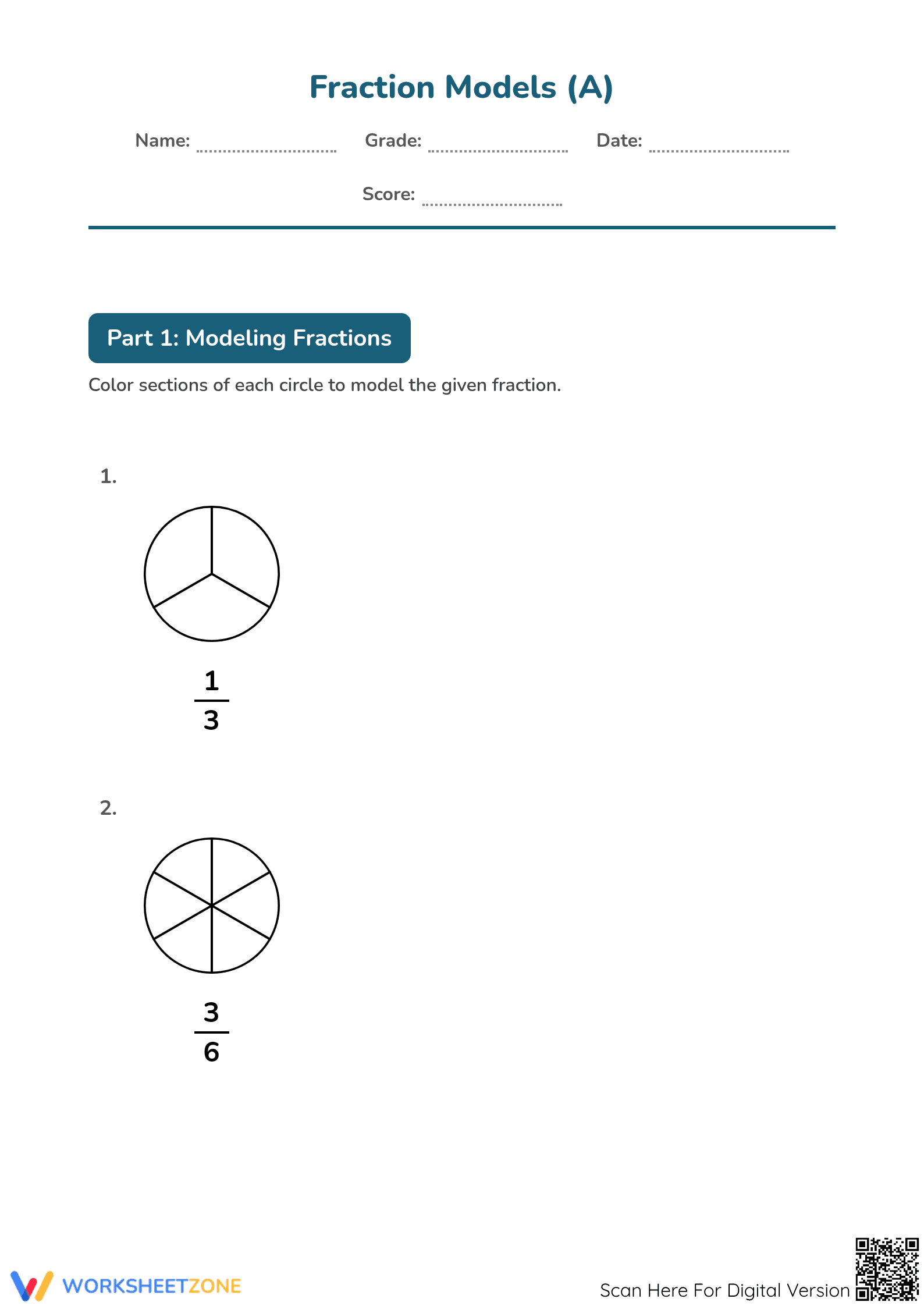
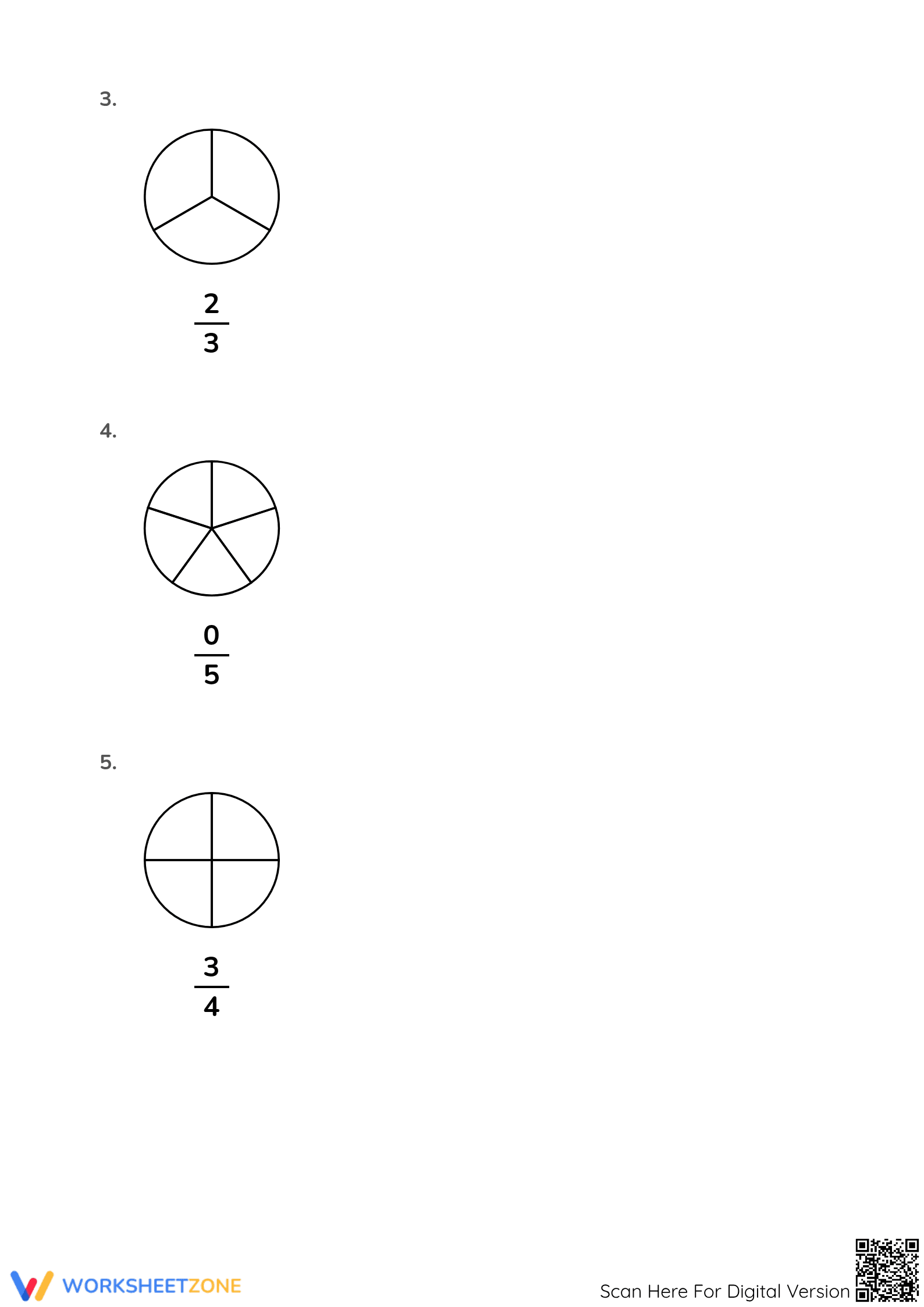
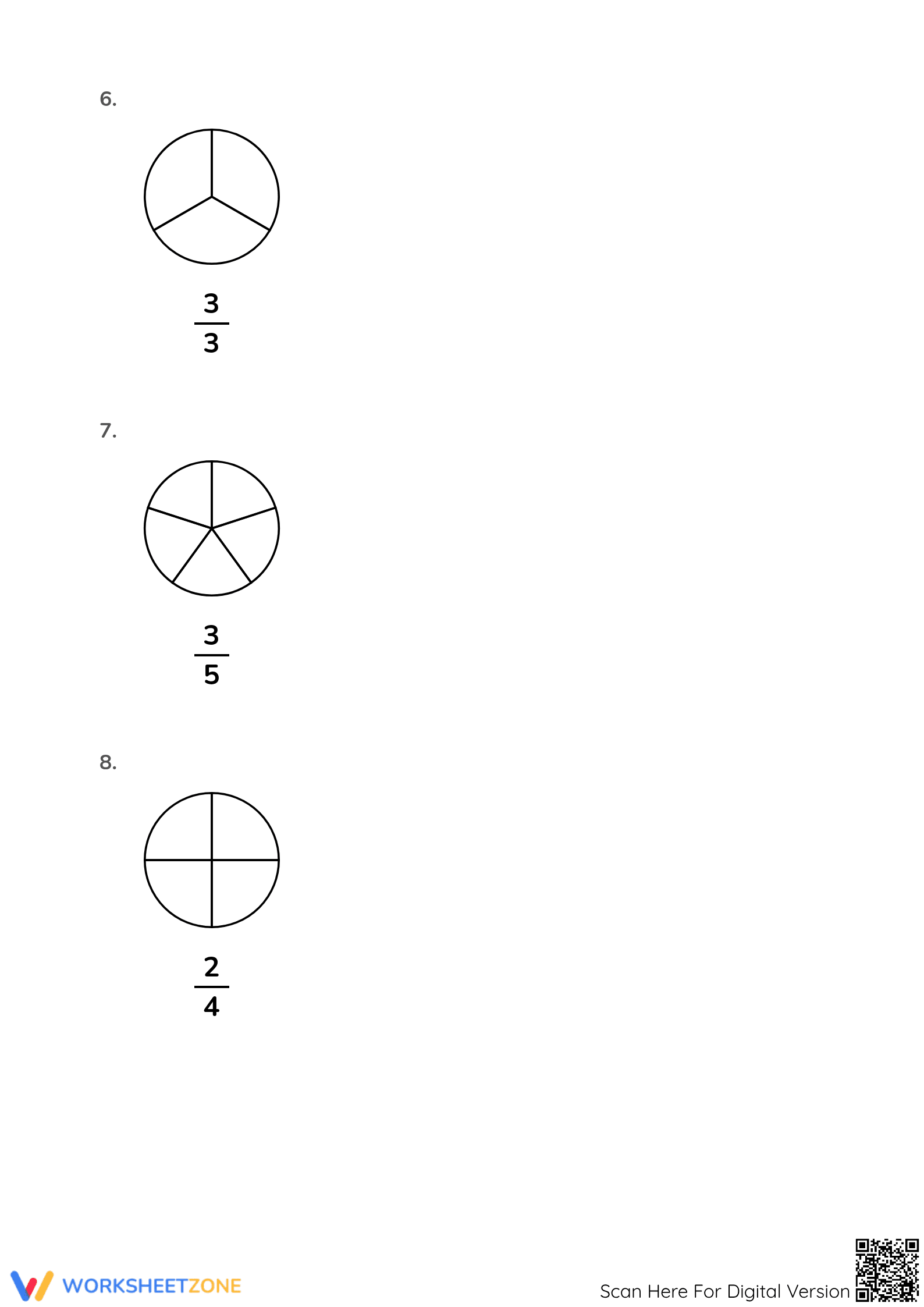
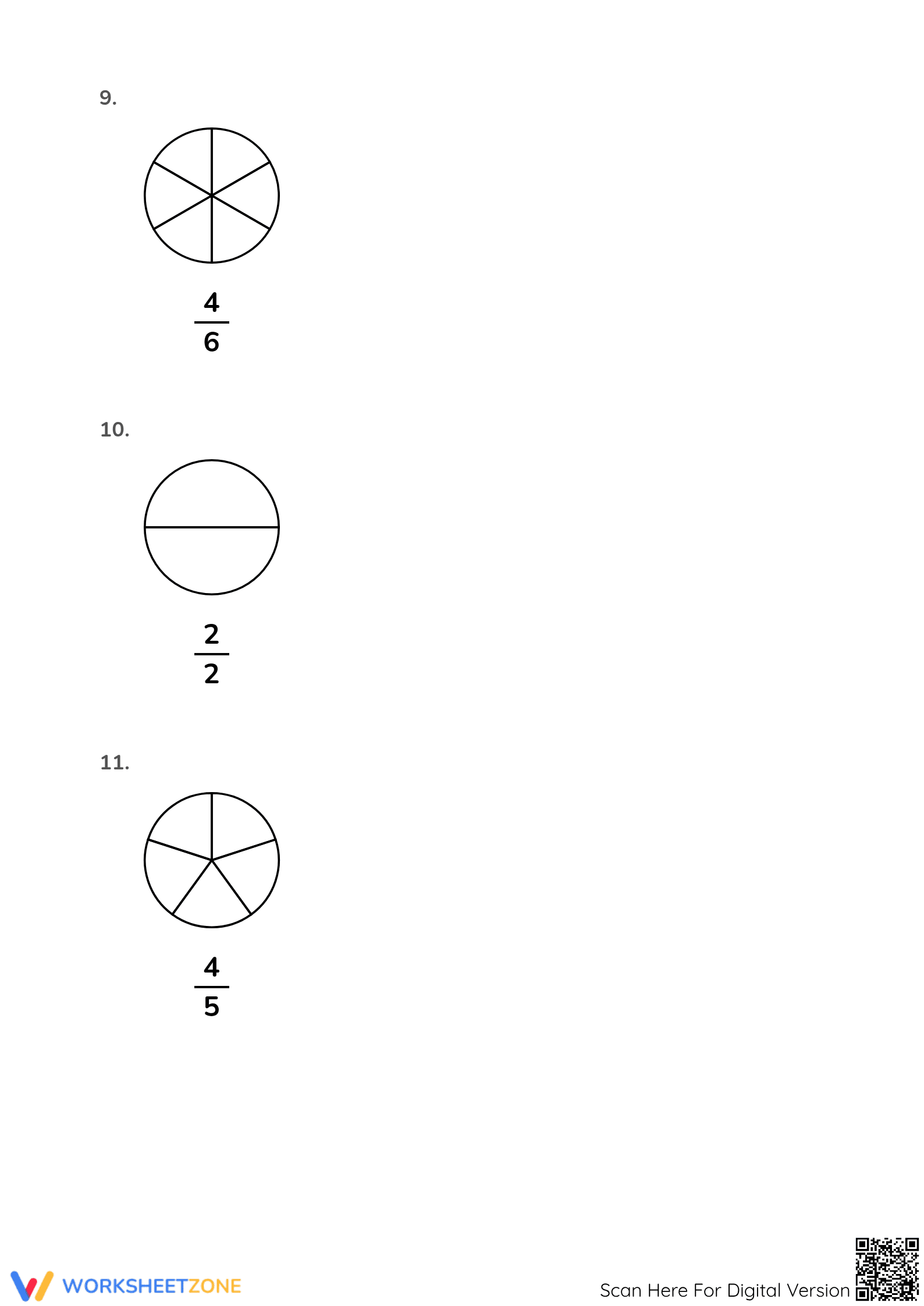
This essential Grade 3 Math worksheet provides students with targeted practice in representing fractions using visual circle models. By coloring specific sections and identifying shaded parts, learners build a concrete understanding of numerators and denominators. This resource ensures students can visualize fractions as parts of a whole, establishing a firm foundation for more complex mathematical operations and fraction comparisons.
At a Glance
- Grade: 3 · Subject: Math
- Standard:
CCSS.MATH.CONTENT.3.NF.A.1— Understand fractions as the quantity formed by parts when a whole is partitioned- Skill Focus: Modeling and identifying fractions with circular areas
- Format: 5 pages · 13+ problems · Answer key included · PDF
- Best For: Independent practice and formative assessment
- Time: 20–30 minutes
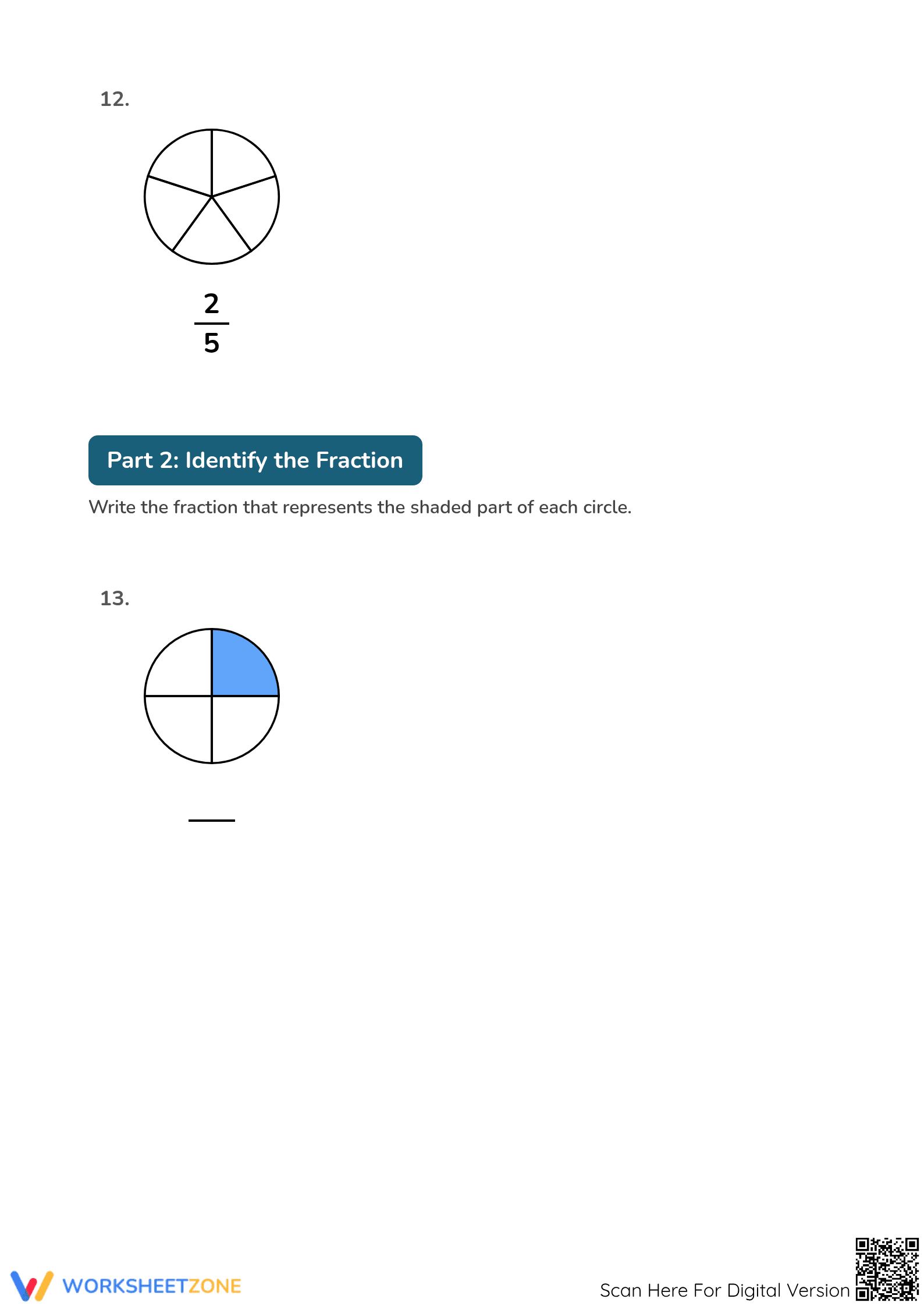
Inside this comprehensive PDF, you will find five pages dedicated to visual fraction mastery. The first four pages feature twelve modeling tasks where students color segments of circles to represent given numerical fractions. The final page transitions to identification, requiring students to write the fraction represented by a pre-shaded model. The clear layout and included answer key make it an ideal tool for immediate student feedback and efficient grading.
The zero-prep design allows teachers to implement this activity in under two minutes. Simply print the desired number of copies, distribute them to your class, and begin instruction. Because the tasks are self-explanatory, this worksheet functions perfectly as a last-minute substitute plan or an emergency filler activity. The structured format reduces teacher intervention, allowing you to focus on supporting students who may need individual assistance during the session.
This resource is directly aligned with CCSS.MATH.CONTENT.3.NF.A.1, which requires students to understand a fraction a/b as the quantity formed by 'a' parts of size 1/b. It also supports basic partitioning skills necessary for higher-level geometry and measurement standards. Both standard codes can be copied directly into lesson plans, IEP goals, or district curriculum mapping tools to ensure instructional compliance.
Use this worksheet as a post-lesson check to gauge student understanding after a direct instruction session on denominators. During the activity, circulate the room to observe if students are correctly counting the total number of partitions versus the number they are coloring. This provides a quick formative assessment opportunity to identify common misconceptions, such as confusing the numerator with the remaining unshaded parts. Total completion time typically ranges between 20 and 30 minutes.
This printable is designed for Grade 3 students but serves as an excellent remedial resource for upper elementary learners struggling with visual models. It pairs naturally with physical fraction circles or digital manipulatives to provide a multi-sensory learning experience. The high-contrast, clean design is particularly beneficial for students who require reduced visual clutter to maintain focus on the mathematical task at hand.
According to the RAND AIRS 2024 report, the use of consistent visual models like area-based circles is critical for bridging the gap between concrete and abstract mathematical reasoning in early elementary grades. Research highlights that students who master visual partitioning are significantly more likely to succeed in fractional arithmetic later in their academic careers. This worksheet addresses the common pedagogical challenge of internalizing the part-to-whole relationship by requiring active student participation in the modeling process. By forcing the learner to physically shade segments, the resource reinforces the conceptual definition of a fraction defined by CCSS.MATH.CONTENT.3.NF.A.1. Fisher & Frey (2014) emphasize that such guided practice scaffolds the cognitive load, allowing students to focus on the properties of numbers rather than the complexity of the task itself. This systematic approach ensures that the foundational skill of fraction identification is thoroughly practiced before students move on to more abstract number line representations.


