


























Views
Downloads

Essential Modeling Fractions with Circles | Grade 3-5 Math
Paste this activity's link or code into your existing LMS (Google Classroom, Canvas, Teams, Schoology, Moodle, etc.).
Students can open and work on the activity right away, with no student login required.
You'll still be able to track student progress and results from your teacher account.
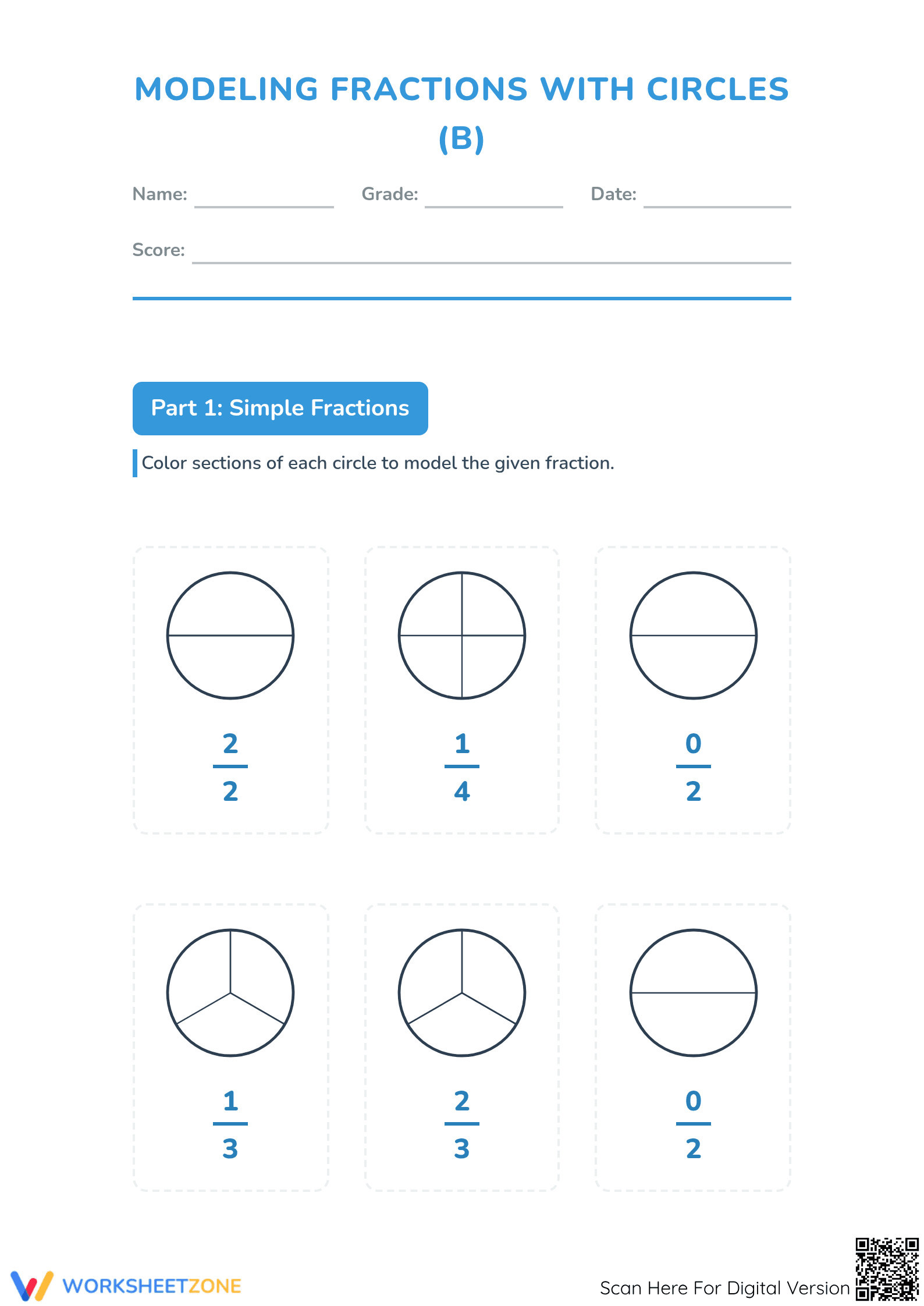
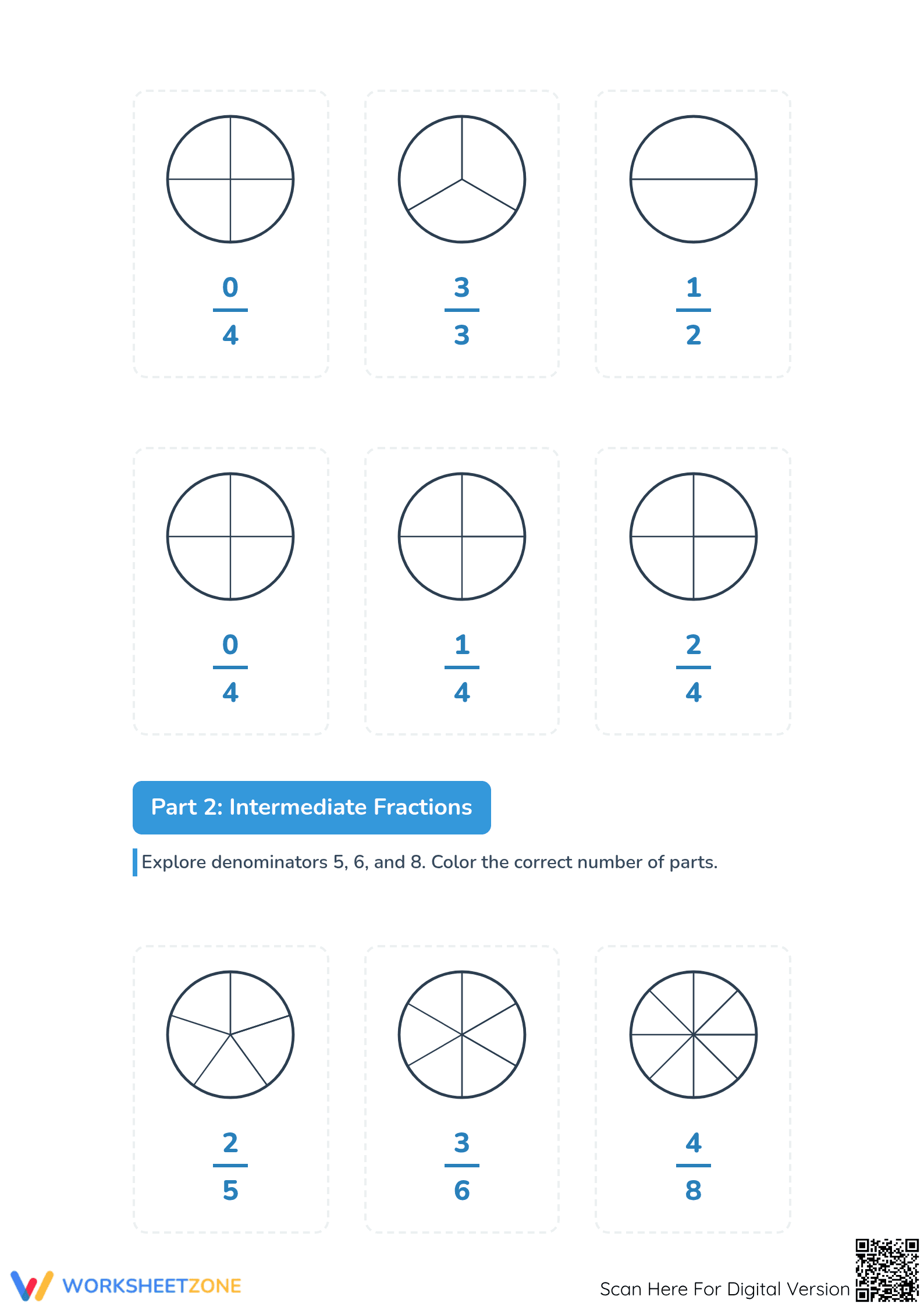
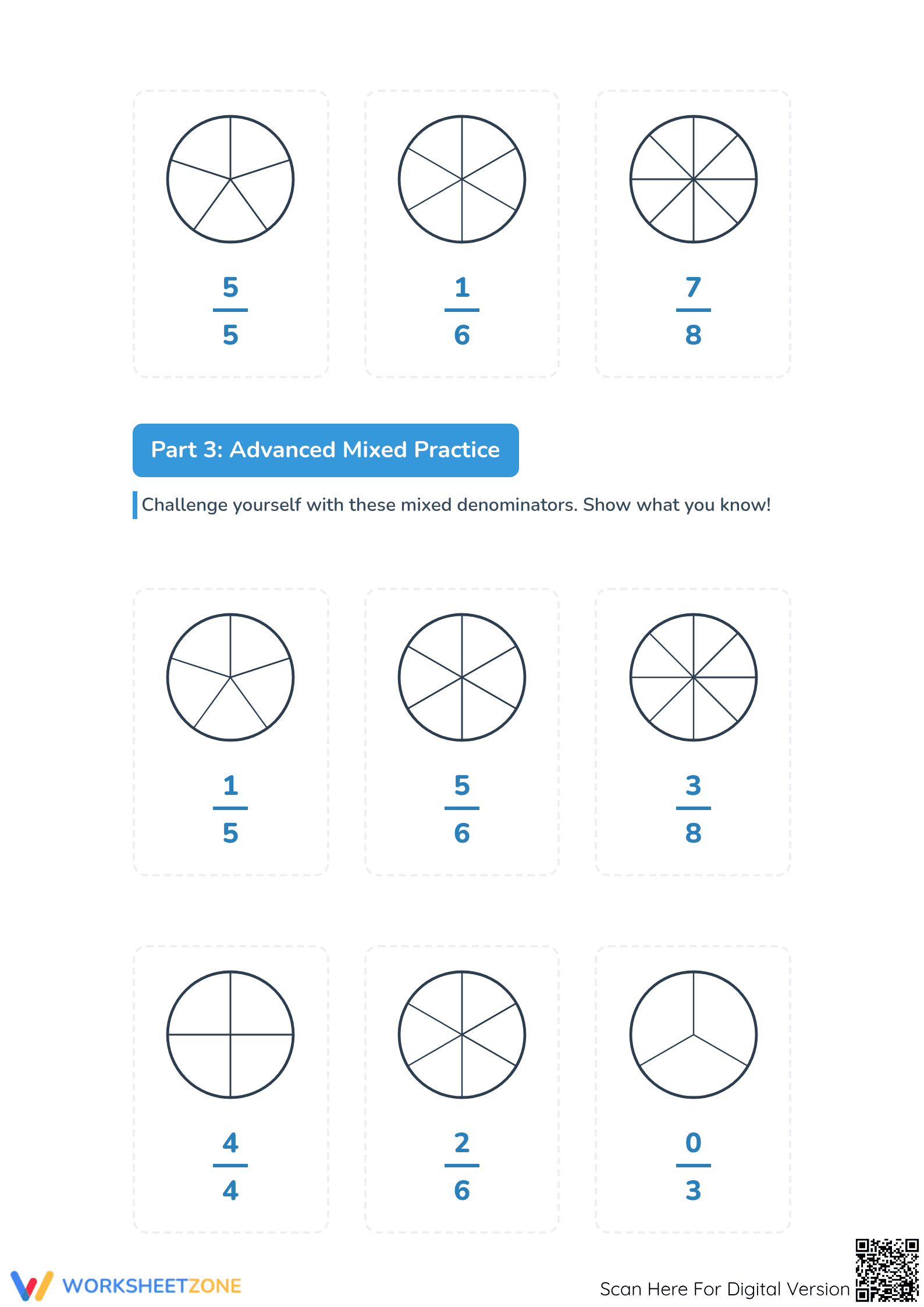
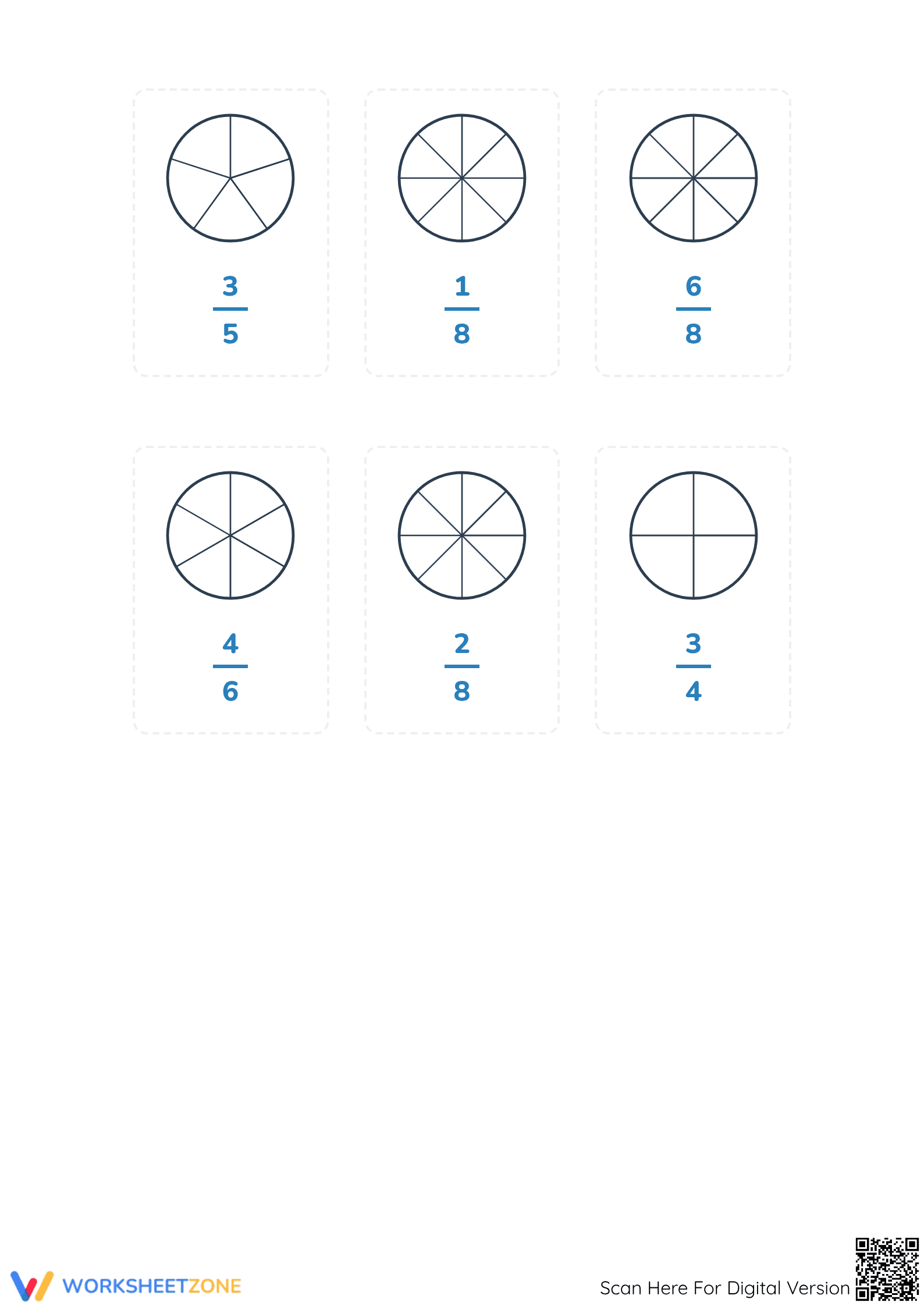
Modeling fractions with circles allows students to visualize the relationship between parts and a whole. This comprehensive 30-problem worksheet guides learners through the process of shading fractional parts in circular models, ensuring they develop a concrete understanding of numerators and denominators. Students will achieve mastery in identifying and representing fractions through structured, visual practice.
Overview
At a Glance
- Grade: 3–5 · Subject: Math · Fractions
- Standard:
CCSS.MATH.CONTENT.3.NF.A.1— Understand a fraction 1/b as one part of a partitioned whole- Skill Focus: Circular area model representation
- Format: 4 pages · 30 problems · Answer key included · PDF
- Best For: Visual fraction introductory practice and reinforcement
- Time: 25–40 minutes
What's Inside
This extensive 4-page PDF contains 30 distinct fraction circles ready for student interaction. The resource is divided into three logical phases, moving from basic unit fractions to more complex mixed denominators. Each page features clear circle diagrams with pre-partitioned segments, a dedicated space for student work, and a full answer key for efficient grading and immediate feedback.
Skill Progression
This worksheet utilizes a proven gradual-release model across its three parts. Part 1 features Guided Practice with 12 simple fractions (denominators 2, 3, 4) to establish foundational concepts. Part 2 transitions to Supported Practice, introducing denominators 5, 6, and 8 across 9 problems. Finally, Part 3 offers Independent Practice with 9 advanced problems featuring mixed denominators to solidify conceptual fluency through the I Do, We Do, You Do instructional framework.
Standards Alignment
This resource is aligned with CCSS.MATH.CONTENT.3.NF.A.1, focusing on understanding a fraction a/b as the quantity formed by a parts of size 1/b. It also supports CCSS.MATH.CONTENT.3.NF.A.3 by providing a visual basis for understanding fraction size and equivalence. Both standard codes can be copied directly into lesson plans, IEP goals, or district curriculum mapping tools.
How to Use It
Use this as a core activity during your direct instruction phase; have students color the segments on their individual copies as you model the first three problems on a document camera. For a formative assessment, observe students during Part 2 to identify those struggling with non-traditional denominators like 5 or 8. Completion typically takes 30 minutes, making it an ideal mid-lesson independent practice set.
Who It's For
This worksheet is designed for Grade 3-5 students who are developing their initial understanding of fractional parts. The visual nature makes it excellent for English Language Learners and students with IEPs who benefit from concrete representations. It pairs naturally with fraction tiles or a digital interactive whiteboard activity to bridge the gap between physical and abstract math.
According to research in visual mathematics, area models are critical for developing a robust sense of fraction magnitude. Fisher & Frey (2014) emphasize that structured practice with visual representations like circles allows students to build the "mental number line" necessary for later success with operations. This worksheet provides the exact scaffolded repetition required by CCSS.MATH.CONTENT.3.NF.A.1, moving from simple halves and thirds to more complex eighths. By requiring students to physically shade parts of a partitioned whole, the activity engages kinesthetic and visual learning pathways simultaneously. This method reduces cognitive load while highlighting the inverse relationship between denominator size and part size. Educators can utilize the 30-task sequence to track student progress from initial identification to advanced modeling, making it a reliable tool for both primary instruction and targeted intervention sessions in upper elementary classrooms.


