


























Views
Downloads
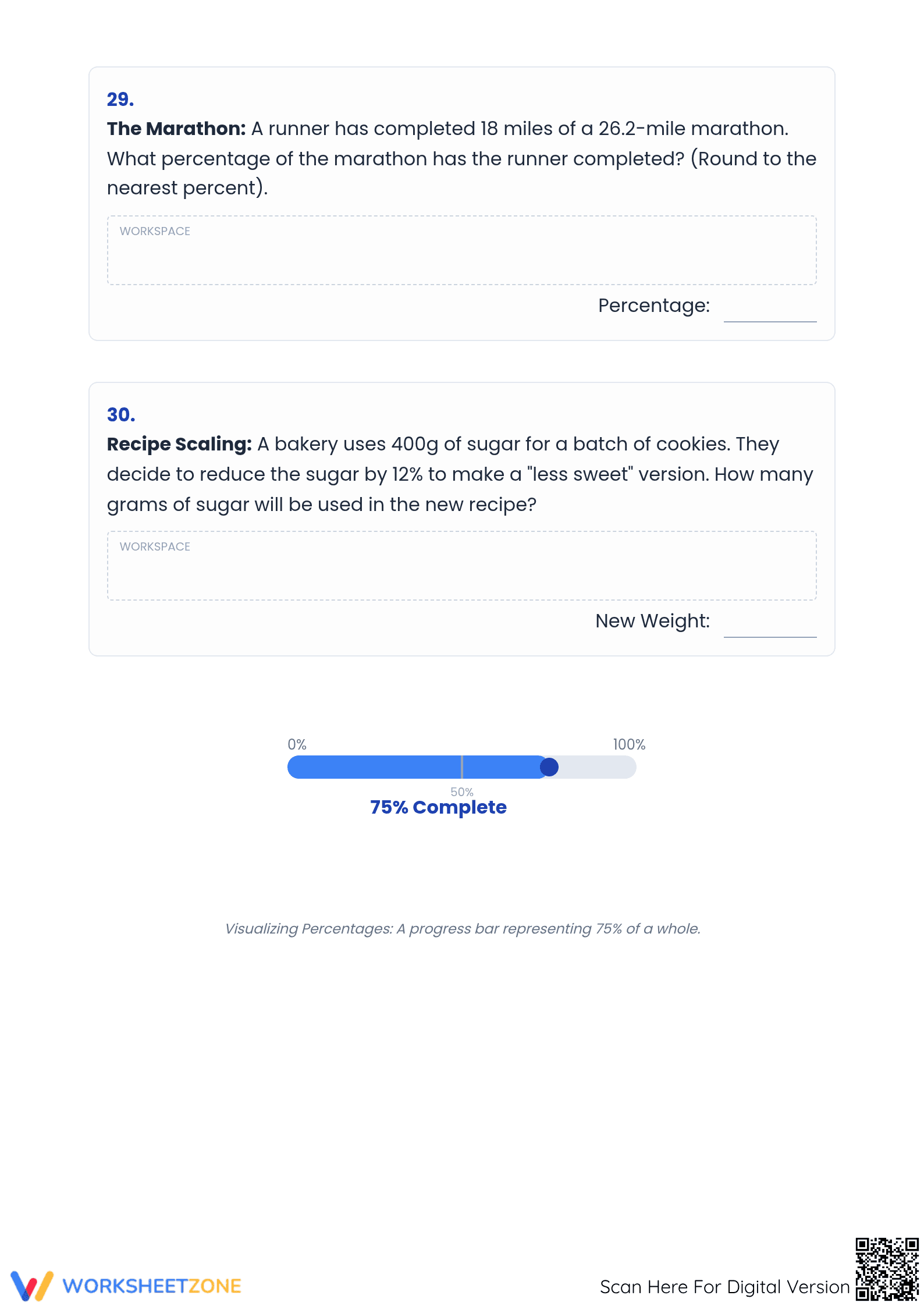

Mixed Percent Calculations: Essential Grade 7 Math Worksheet
Paste this activity's link or code into your existing LMS (Google Classroom, Canvas, Teams, Schoology, Moodle, etc.).
Students can open and work on the activity right away, with no student login required.
You'll still be able to track student progress and results from your teacher account.
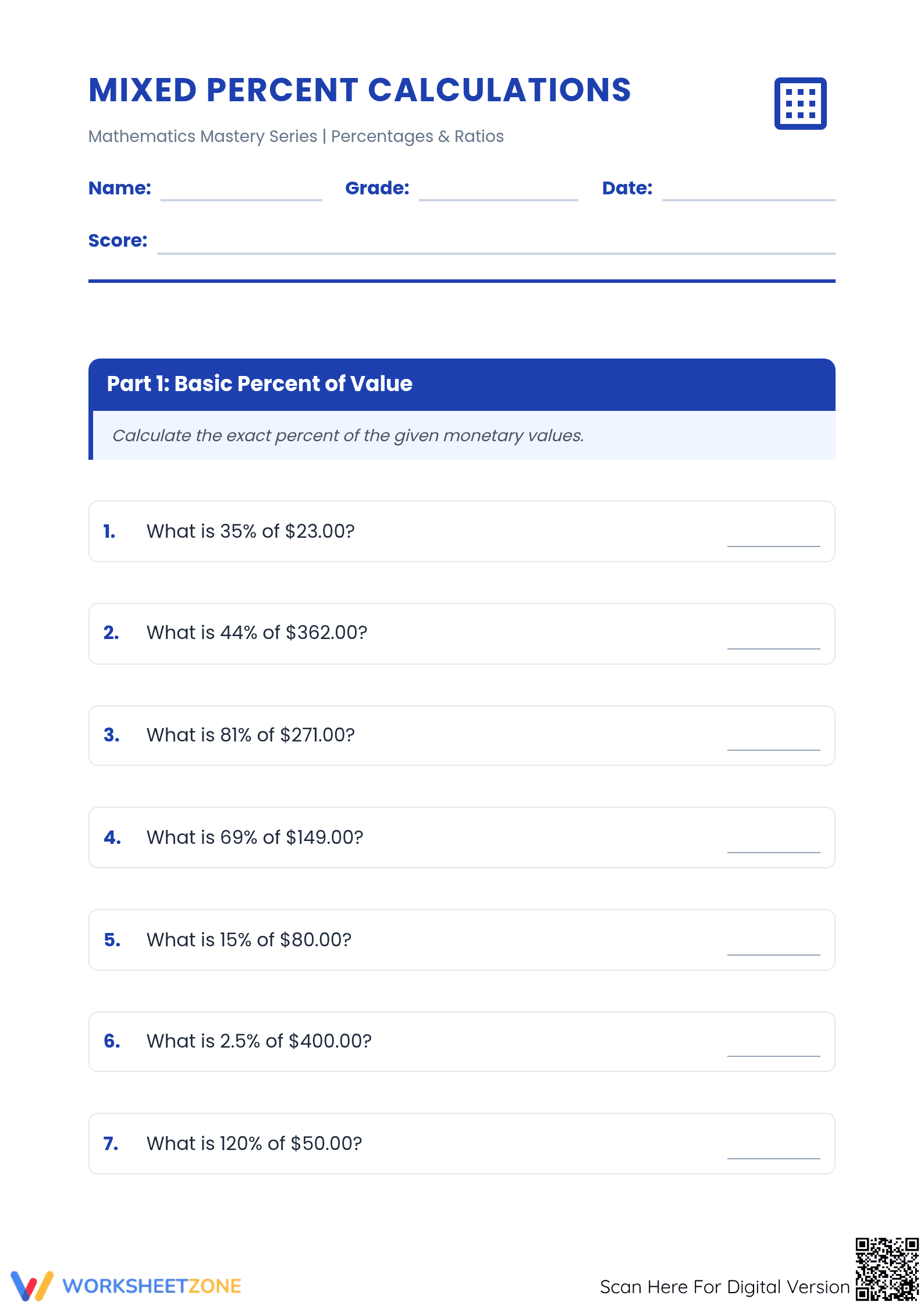
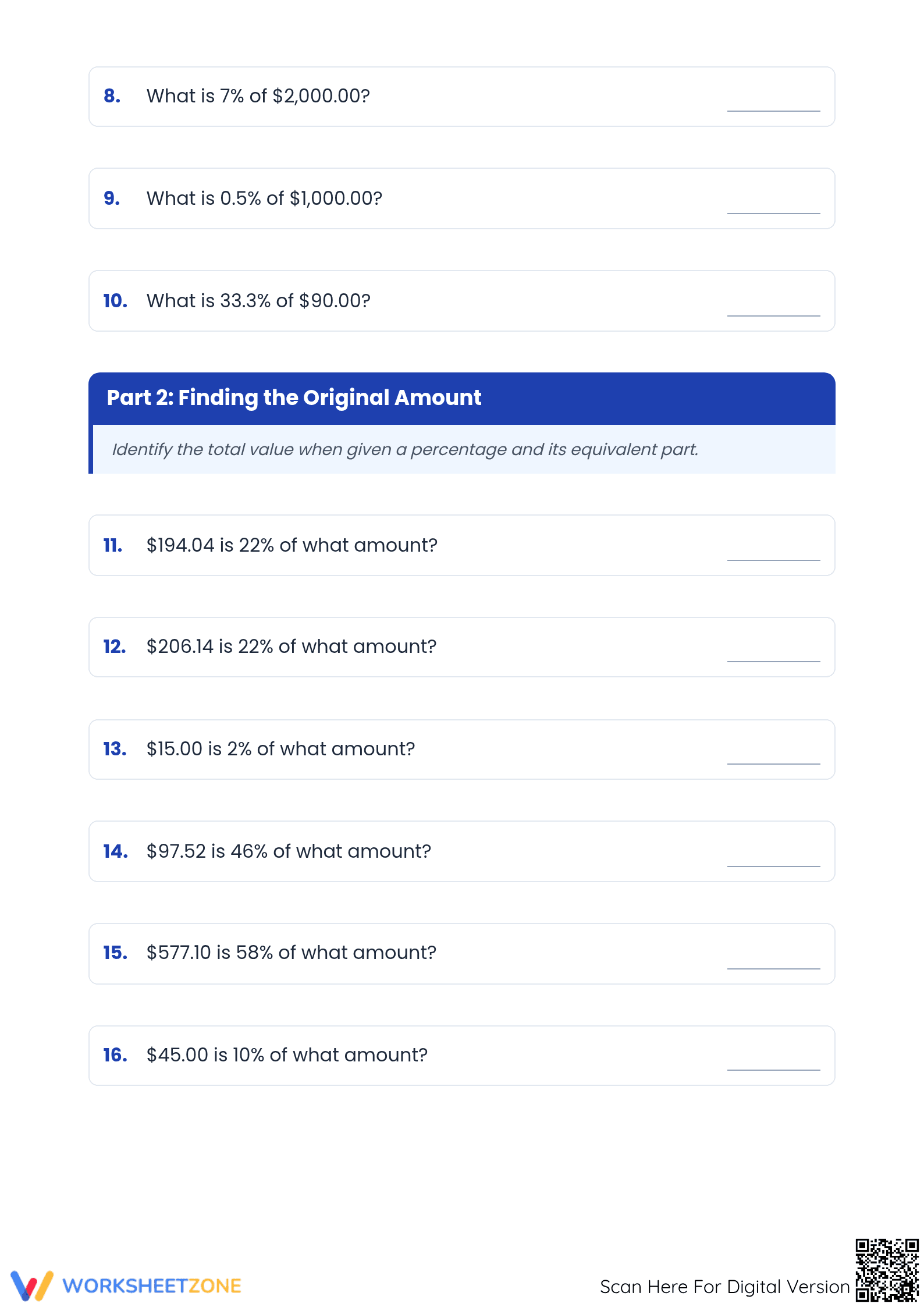
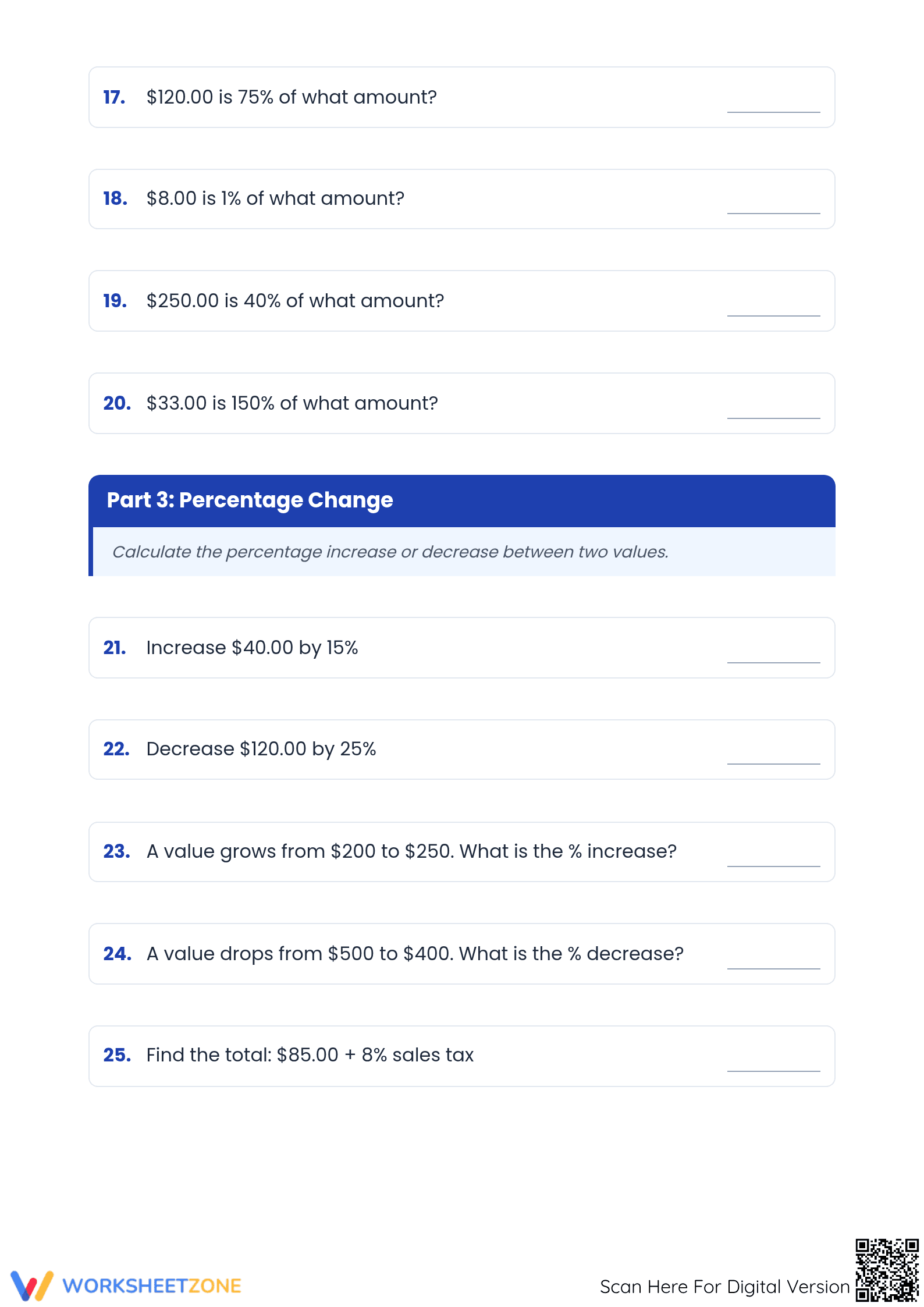
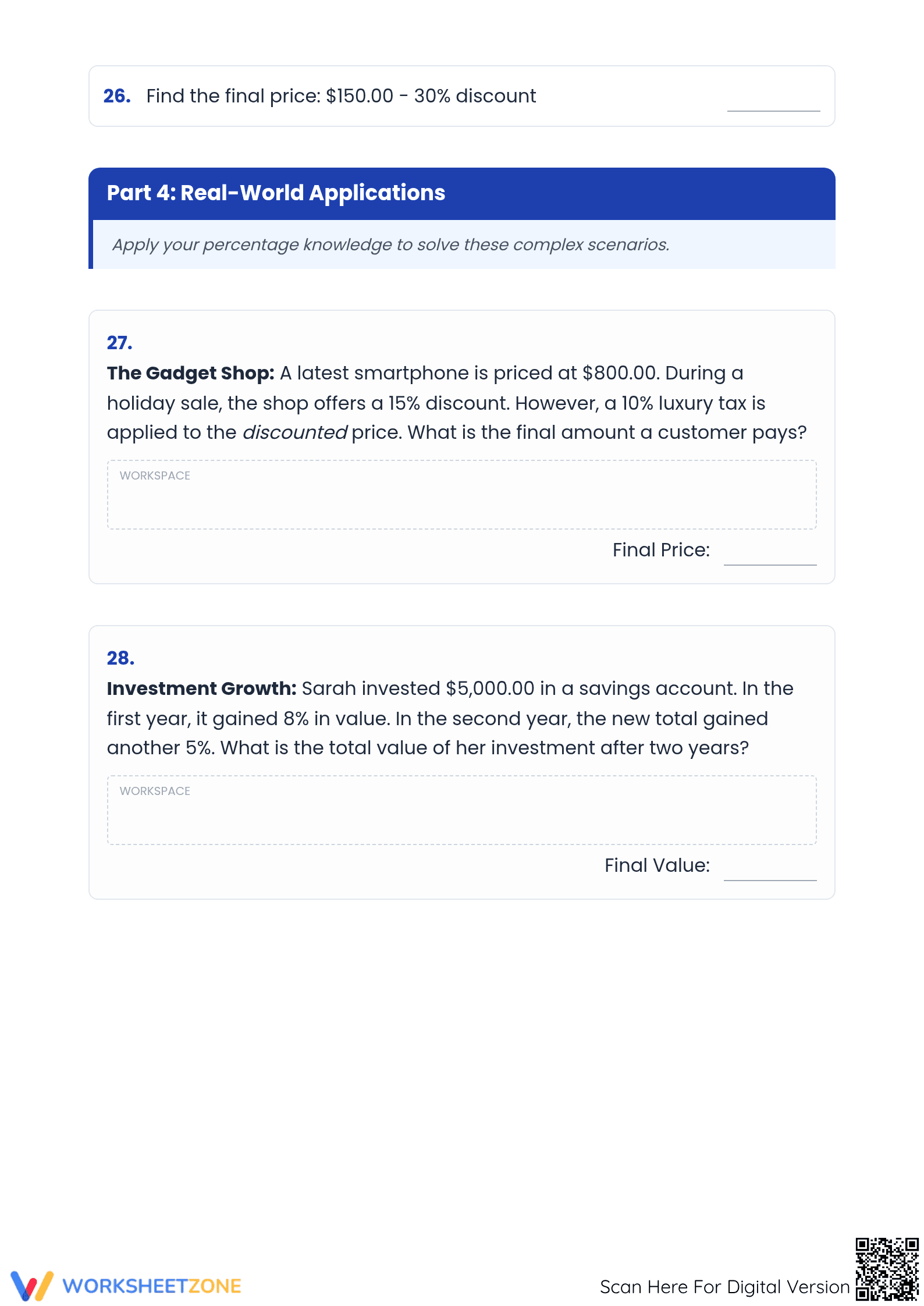
Mastering percentages is a critical milestone for middle school students, bridging the gap between basic arithmetic and real-world financial literacy. This comprehensive worksheet provides rigorous practice in mixed percent calculations, ensuring students can fluidly navigate between parts, wholes, and percentage changes. By the end of these thirty problems, learners will demonstrate complete mastery over various percentage scenarios.
At a Glance
- Grade: 7 · Subject: Math
- Standard:
CCSS.MATH.CONTENT.7.RP.A.3— Use proportional relationships to solve multistep ratio and percent problems- Skill Focus: Multi-type percentage calculations and applications
- Format: 5 pages · 30 problems · Answer key included · PDF
- Best For: Comprehensive review or independent practice sessions
- Time: 45–60 minutes
This five-page resource is divided into four logical parts that increase in complexity. Part one focuses on basic percentages of monetary values, while part two challenges students to work backward to find the original amount. Part three introduces percentage increase and decrease, and the final section presents complex real-world scenarios involving smartphones, investments, and racing. A full answer key is included for immediate feedback.
Implementing this resource is incredibly efficient. Simply download the PDF and print the five-page packet, which takes thirty seconds. Distribute worksheets and provide a brief five-minute introduction to the various sections. Finally, review completed work using the provided answer key in under ten minutes to identify any lingering misconceptions students may have about ratios and proportional relationships.
Standards Alignment
This worksheet is strictly aligned to CCSS.MATH.CONTENT.7.RP.A.3, which requires students to "use proportional relationships to solve multistep ratio and percent problems." The problems specifically address finding tax, markups, markdowns, and percent increase or decrease. Both standard codes can be copied directly into lesson plans, IEP goals, or district curriculum mapping tools to ensure instructional continuity and rigorous assessment.
How to Use It
This worksheet is ideal for use after direct instruction on the three main types of percentage problems. Assign it as a cumulative review packet to assess student readiness for a chapter test. During the session, circulate through the classroom and observe students as they tackle the real-world applications in part four; this offers a valuable formative-assessment window into their ability to translate word problems into mathematical equations.
Who It's For
Designed primarily for seventh-grade math students, this packet also serves as excellent enrichment for sixth graders or essential remediation for eighth graders. It pairs naturally with a lesson on proportional reasoning or a financial literacy unit. Students who struggle with reading comprehension may benefit from a guided reading of the final word problems to ensure they identify the correct operations needed for calculation.
The ability to perform mixed percent calculations is a cornerstone of middle school mathematics, directly supporting the development of proportional reasoning skills. According to the NAEP 2024 framework, proficiency in solving multistep percent problems is a significant predictor of success in high school algebra and beyond. This worksheet targets CCSS.MATH.CONTENT.7.RP.A.3 by providing a structured progression from simple calculation to complex application. Research from the RAND AIRS 2024 study suggests that repetitive, varied practice with percentages helps solidify the conceptual link between fractions, decimals, and ratios. By providing 30 high-quality tasks across five pages, this resource ensures that students encounter percentages in diverse contexts, from simple monetary values to complex investment growth scenarios. The inclusion of a clear answer key allows for the immediate feedback loops that Fisher & Frey (2014) identify as essential for mastery-based learning in the mathematics classroom.


