


























Views
Downloads

Mixed Percent Calculations Worksheet | Printable Math
Paste this activity's link or code into your existing LMS (Google Classroom, Canvas, Teams, Schoology, Moodle, etc.).
Students can open and work on the activity right away, with no student login required.
You'll still be able to track student progress and results from your teacher account.
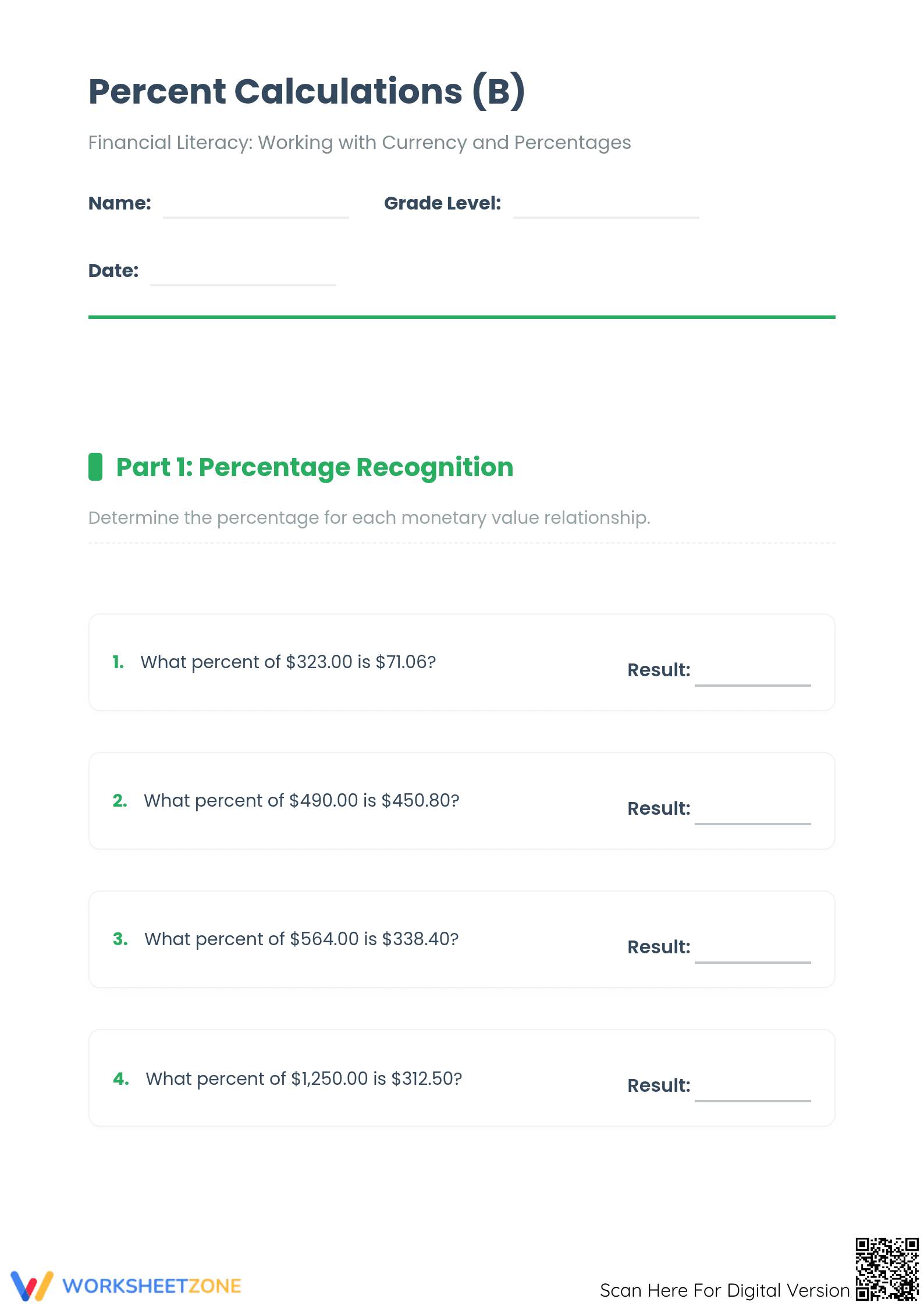
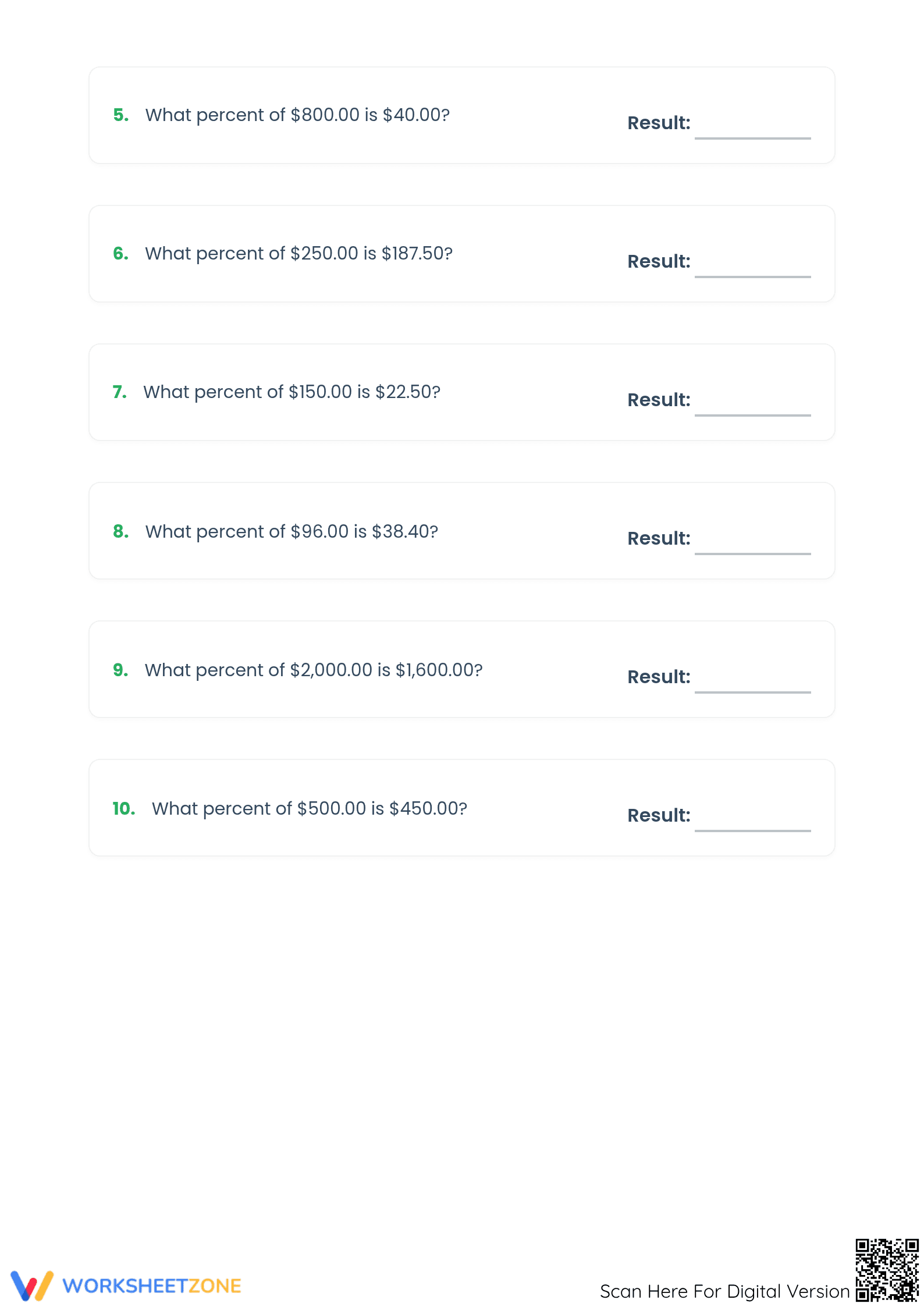
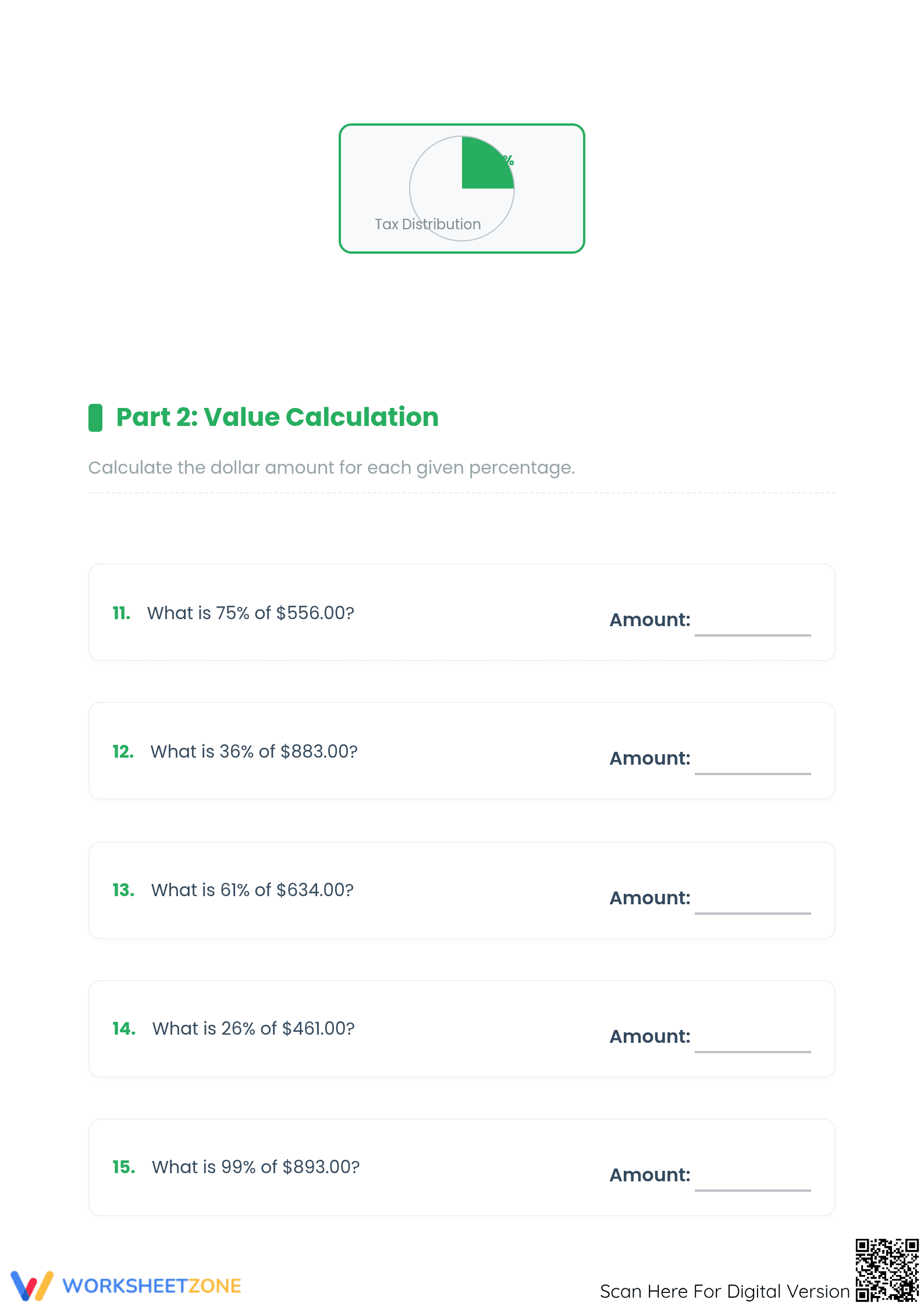
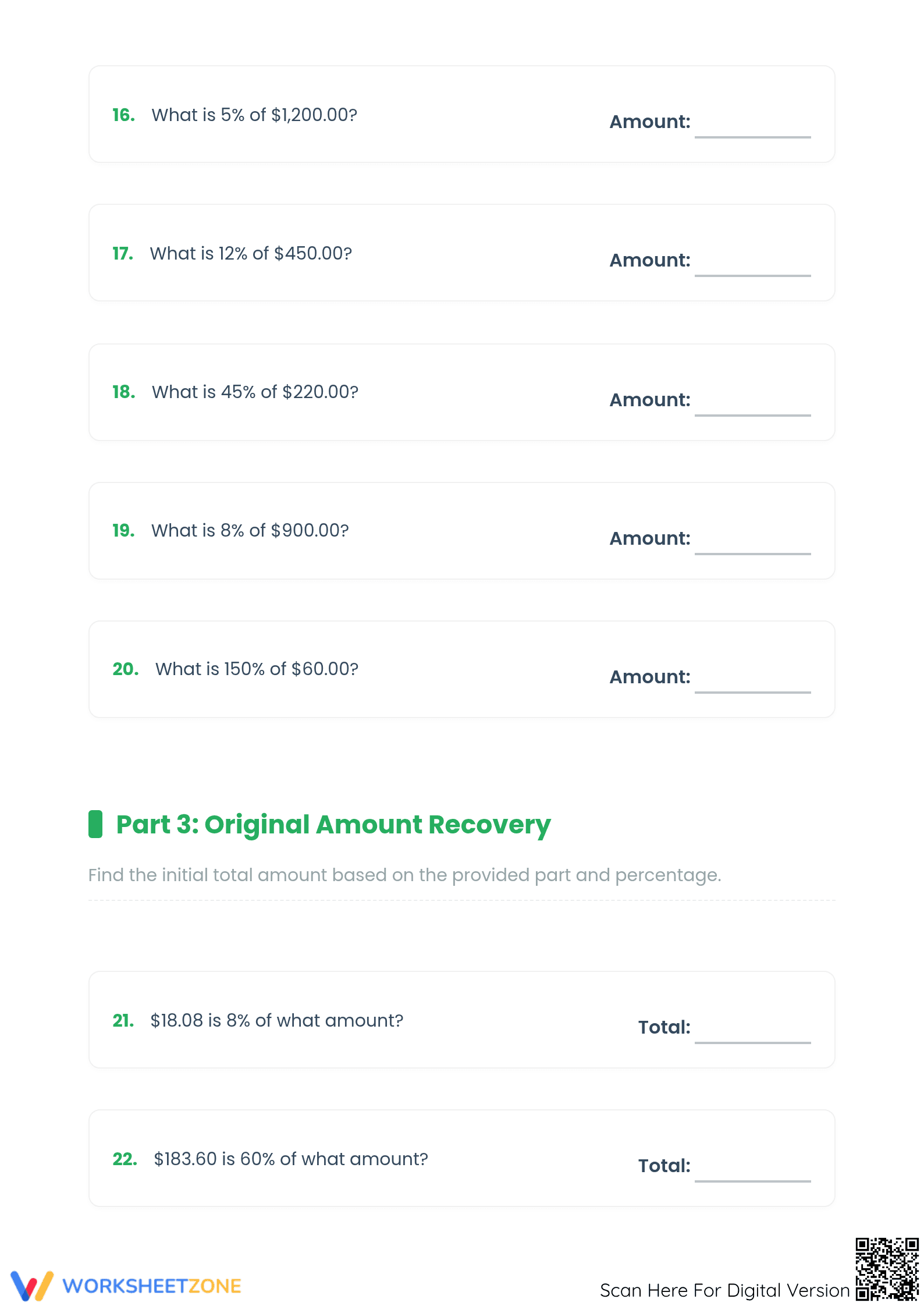
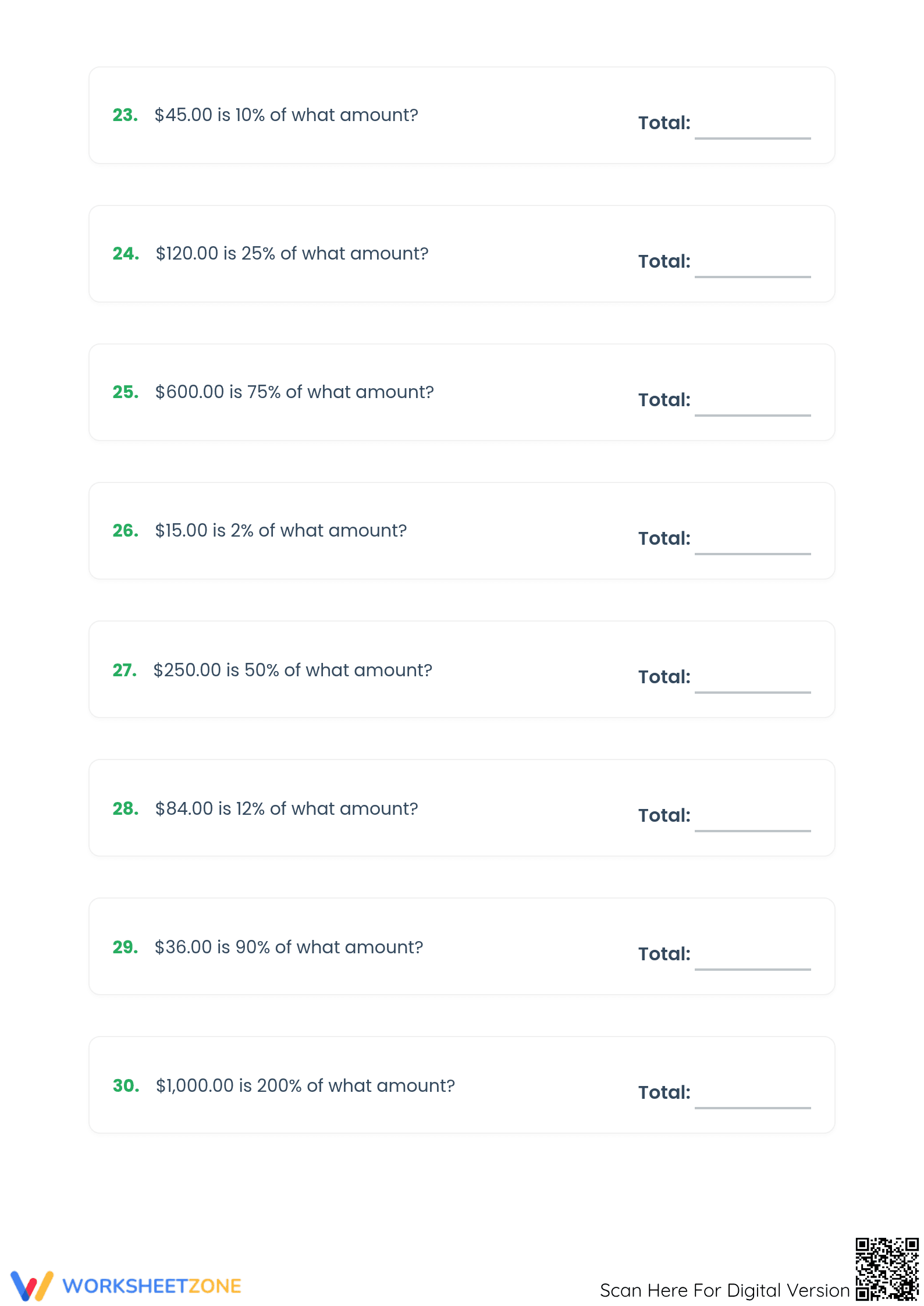
This comprehensive mixed percent calculations worksheet provides middle school students with rigorous practice across three distinct computational domains. By engaging with these thirty diverse problems, learners master the mechanics of percentage recognition, finding values, and base amount recovery. This resource ensures students develop a deep, fluid understanding of proportional relationships in real-world monetary contexts.
At a Glance
- Grade: 6 · Subject: Math
- Standard:
CCSS.MATH.CONTENT.6.RP.A.3.C— Find a percent of a quantity and solve problems involving finding the whole- Skill Focus: Percentage recognition and base amount recovery
- Format: 5 pages · 30 problems · Answer key included · PDF
- Best For: Intensive independent practice and skill reinforcement
- Time: 45–60 minutes
Inside this 5-page PDF bundle, teachers will find thirty structured mathematical tasks divided into three logical progression segments. The worksheet features clear monetary formatting to ground abstract concepts in financial literacy. Each page provides ample white space for calculations, and a full, teacher-verified answer key is provided to facilitate rapid grading and student self-correction during independent work time.
Skill Progression
- Guided Recognition: The first ten tasks focus on determining the percentage relationship between two specific monetary values, establishing a baseline for ratio logic.
- Supported Calculation: The middle ten problems challenge students to find a specific dollar amount given a percentage, requiring multiplication of decimals.
- Independent Recovery: The final ten items require finding the original total amount, necessitating division and algebraic thinking to solve for the base.
This sequence follows a gradual-release model, moving from identifying relationships to manipulating variables independently.
Standards Alignment
The primary alignment for this resource is `CCSS.MATH.CONTENT.6.RP.A.3.C`, which requires students to find a percent of a quantity as a rate per 100 and solve problems involving finding the whole, given a part and the percent. This standard code can be copied directly into lesson plans, IEP goals, or district curriculum mapping tools.
How to Use It
This worksheet is ideal for use during the independent practice phase of a direct instruction lesson on ratios and proportions. Teachers can assign the first page as a quick check for understanding before moving to more complex recovery problems. Alternatively, use this five-page set as a comprehensive summative assessment after a unit on decimals. Observe how students handle the transition from multiplication to division in the final section.
Who It's For
Designed primarily for Grade 6 students, this resource also serves as an excellent remedial tool for Grade 7 or 8 learners who need to strengthen their foundational percentage fluency. It pairs naturally with a financial literacy passage or an anchor chart demonstrating the ratio-table method for determining percent of change.
Mathematical proficiency in percentage calculations is a critical gateway to high school algebra and financial independence. According to the EdReports 2024 analysis of middle school curriculum efficacy, consistent practice with multi-step ratio problems significantly improves student performance on standardized assessments like the NAEP. This worksheet targets the CCSS.MATH.CONTENT.6.RP.A.3.C standard, requiring students to find a percent of a quantity and determine the original whole value from a given part. Mastery of these skills allows students to transition from simple rote calculation to complex proportional reasoning. By providing thirty distinct opportunities for practice, this resource aligns with best practices for cognitive load management and procedural fluency. Educators can utilize these tasks to identify specific student misconceptions regarding decimal placement or inverse operations. Such targeted intervention is supported by research into the gradual release of responsibility, ensuring students move from guided recognition to independent recovery.


