


























Views
Downloads

Essential Mixed Percent Calculations Worksheet | Grade 7
Paste this activity's link or code into your existing LMS (Google Classroom, Canvas, Teams, Schoology, Moodle, etc.).
Students can open and work on the activity right away, with no student login required.
You'll still be able to track student progress and results from your teacher account.
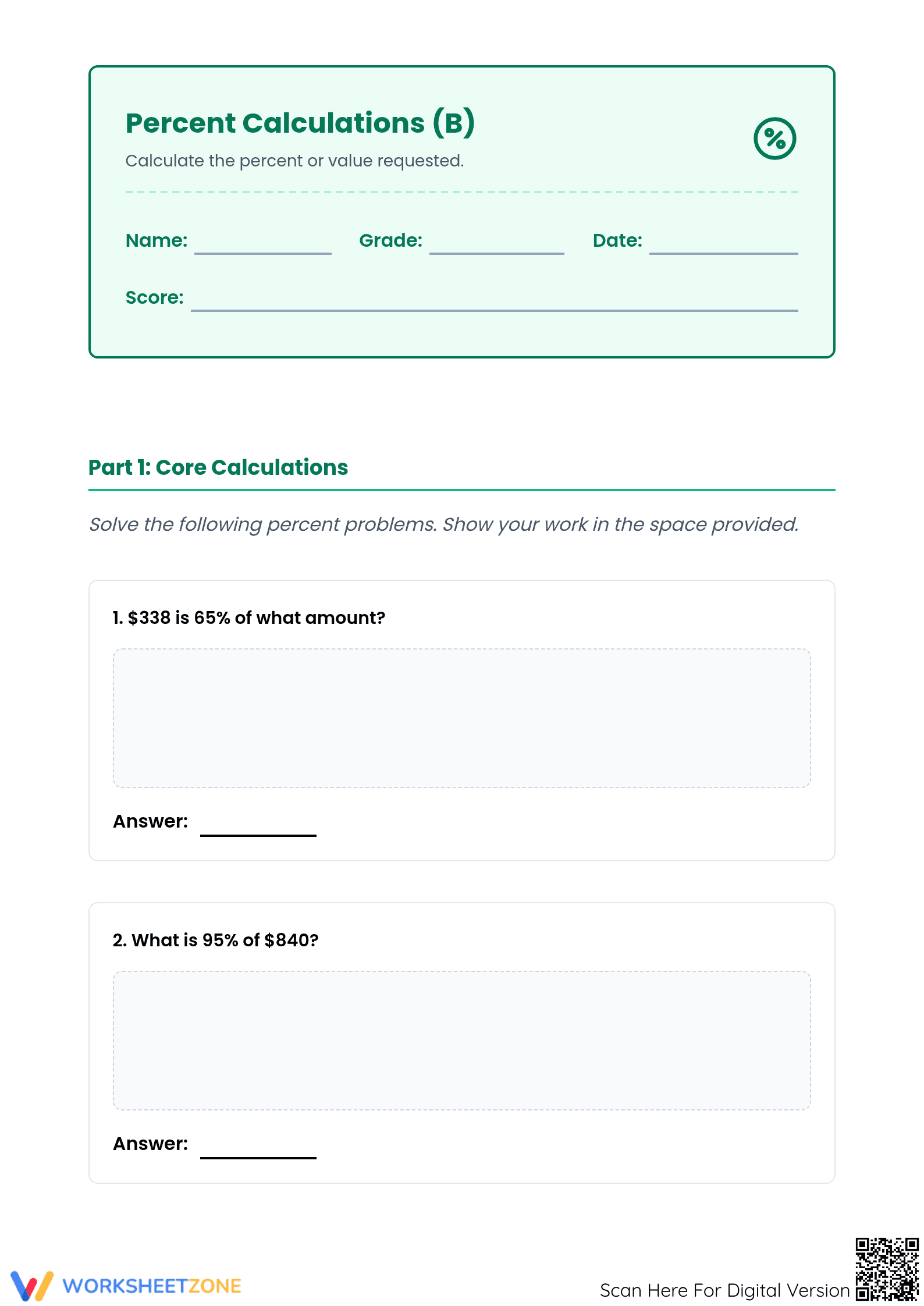
Master percentage fundamentals with this mixed percent calculations worksheet. Designed for middle school, this resource focuses on finding percentages, whole amounts, and percentage change. Students build procedural fluency before applying skills to real-world scenarios like sales tax and proportions. This printable packet ensures students develop essential proportional reasoning skills.
At a Glance
- Grade: 7 · Subject: Math
- Standard:
CCSS.MATH.CONTENT.7.RP.A.3— Calculate unknown percentages and apply them to real-world scenarios like sales tax- Skill Focus: Mixed percent calculations
- Format: 5 comprehensive pages · 14 unique problems · Answer key included · PDF
- Best For: Targeted independent practice and reliable formative assessment
- Time: 30–45 minutes of instructional work
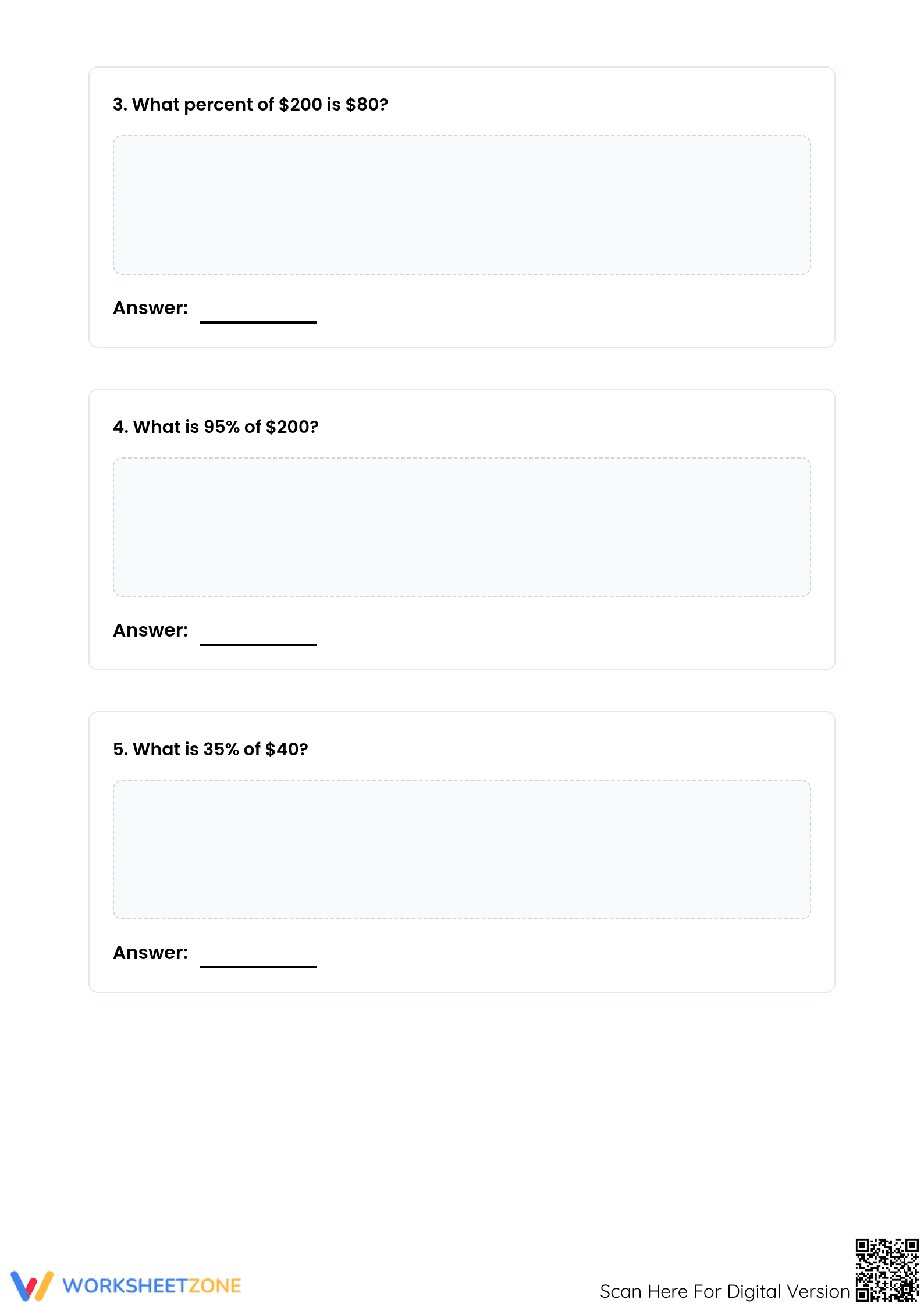
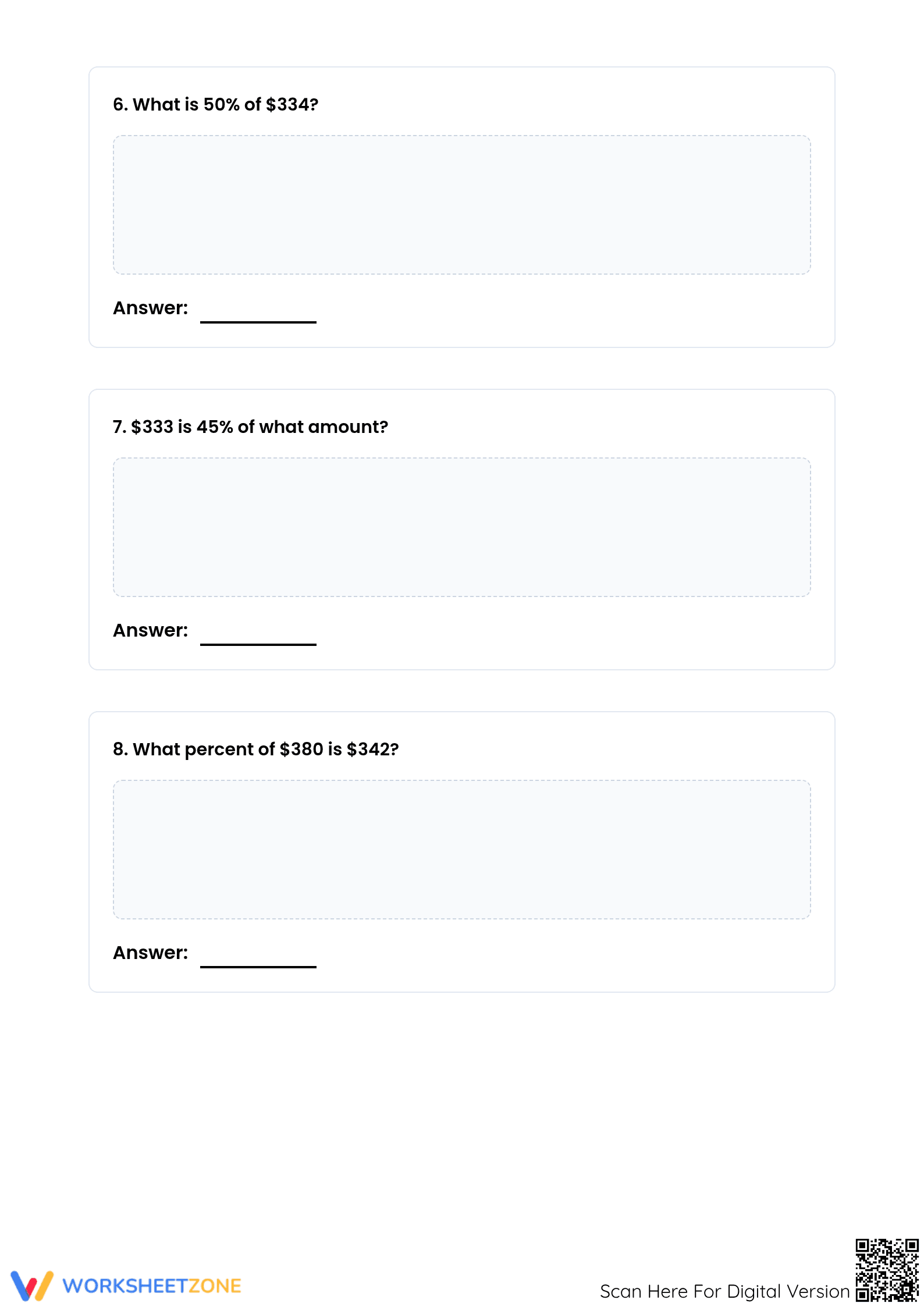
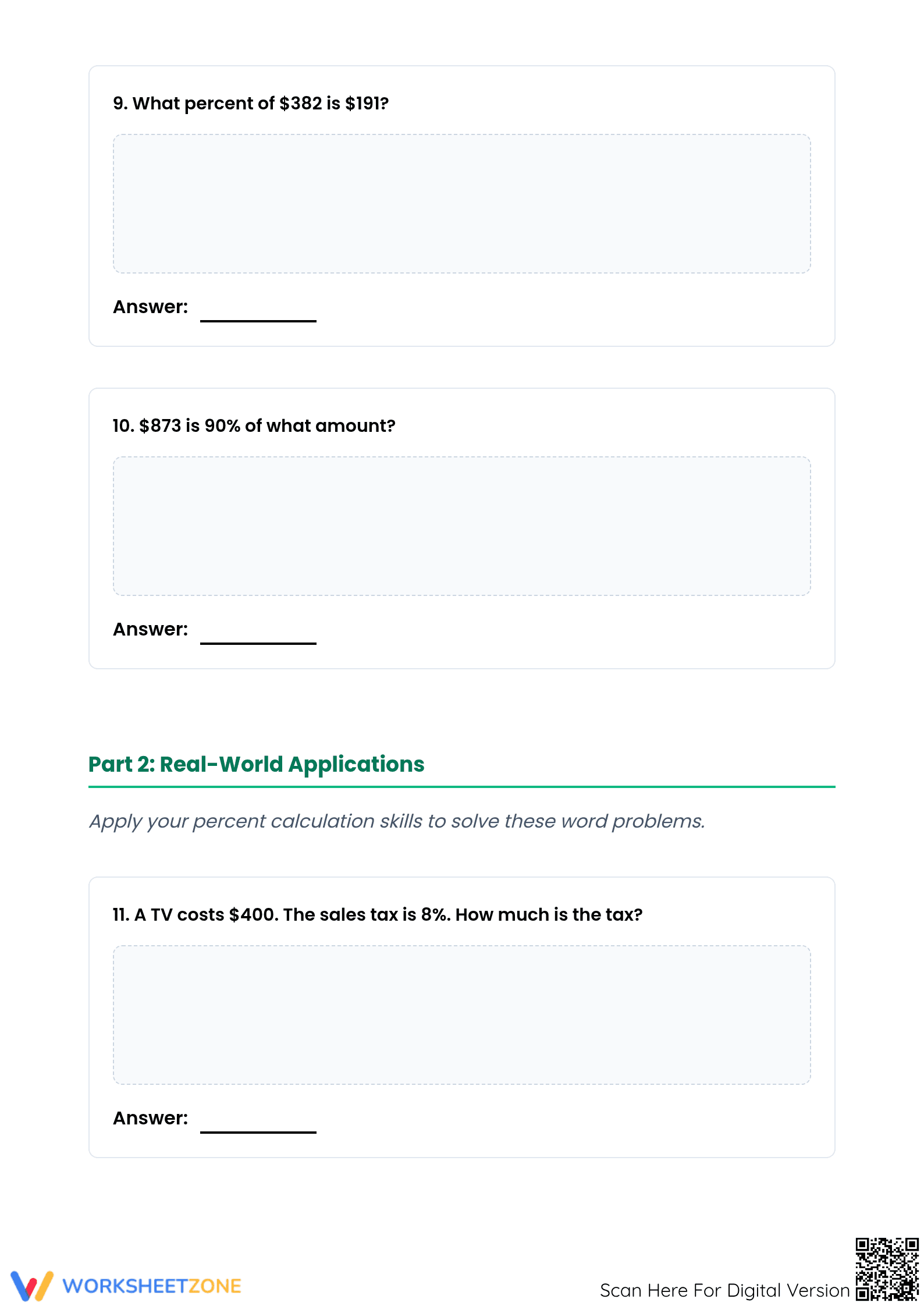
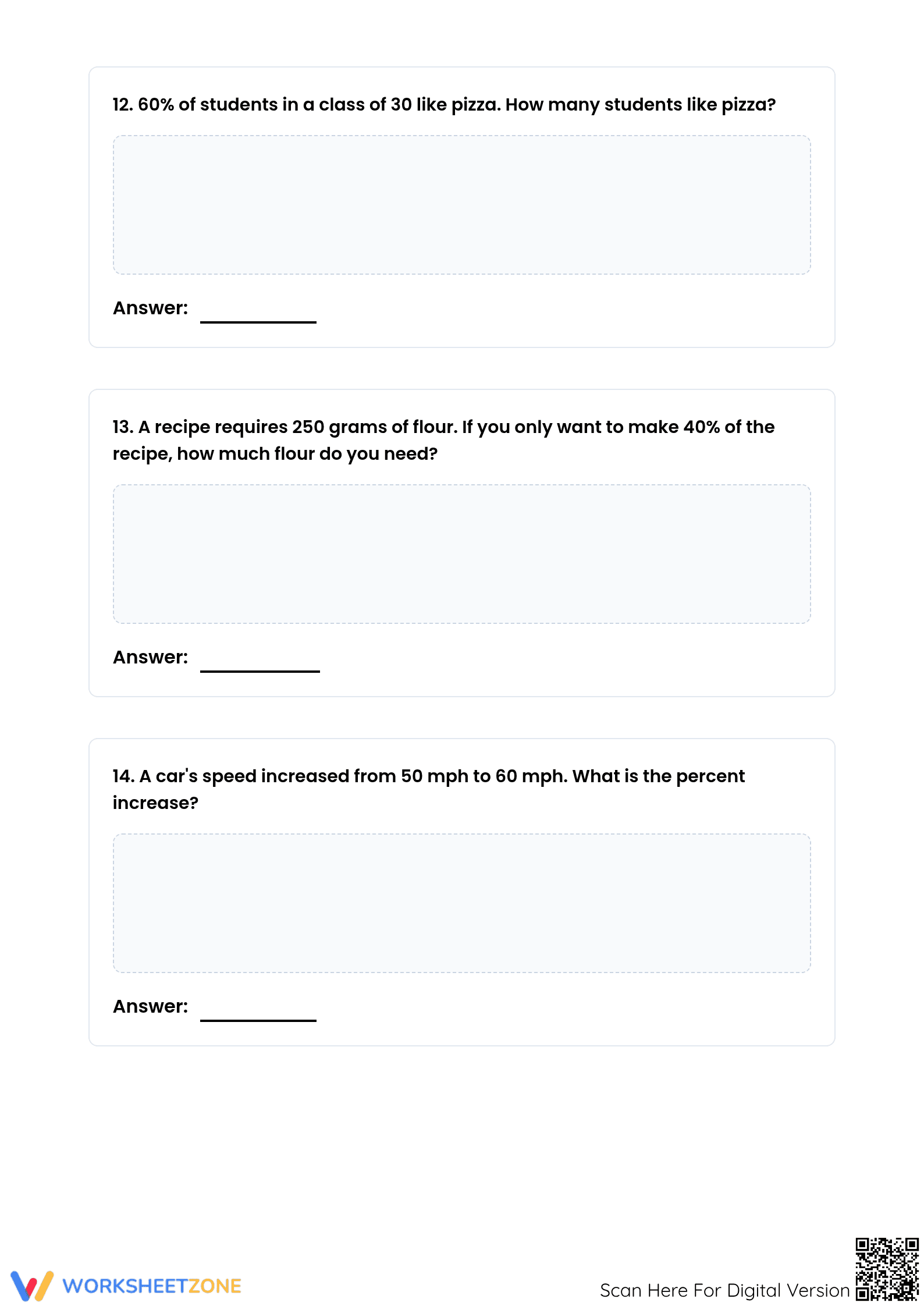
This five-page packet contains 14 structured problems divided into two sections. The first ten problems focus on core calculations, including identifying unknown bases and calculating percentages of given values. The final four problems present real-world applications, such as calculating sales tax on a TV or determining student counts. A full answer key is provided for immediate grading and student feedback.
This classroom-ready resource follows a zero-prep workflow. First, print the document in less than one minute. Next, distribute the worksheets for a 30-minute independent work session. Finally, use the provided answer key to review student work in under two minutes. This predictable cycle makes the worksheet an ideal choice for emergency sub plans or quick bell-ringer activities.
This resource aligns with `CCSS.MATH.CONTENT.7.RP.A.3`, requiring students to use proportional relationships for ratio and percent problems. It also supports `CCSS.MATH.CONTENT.6.RP.A.3.C` regarding rates per 100. Both standard codes can be copied directly into lesson plans, IEP goals, or district curriculum mapping tools to ensure all state and local requirements are met.
Use this worksheet as a post-instruction check after a direct lesson on percent proportions. During the session, observe how students set up their equations; identify if they prefer the "is/of" method or decimal multiplication. Expect students to complete core calculations in 20 minutes, with application problems requiring 15 minutes. This provides a clear window into student thinking and procedural accuracy.
This worksheet is intended for Grade 7 math students but works for Grade 5-8 remediation or enrichment. The clear layout and workspace support students with executive function needs, while real-world problems provide context for learners. Pair this with a percentage anchor chart for a supported experience that builds confidence and ensures every student can access the material.
According to the RAND AIRS 2024 analysis, procedural fluency in rational number calculations, specifically percentages, serves as a critical gatekeeper for success in secondary algebra. This worksheet addresses that need by providing 14 high-quality opportunities for students to bridge the gap between abstract calculation and functional application. The inclusion of multi-step real-world problems aligns with EdReports 2024 recommendations for high-quality instructional materials that balance rigor with accessibility. By mastering the core `CCSS.MATH.CONTENT.7.RP.A.3` standard through these structured tasks, students develop the proportional reasoning required for complex financial literacy and scientific data analysis. Research from ScienceDirect TpT Analysis suggests that zero-prep, high-utility resources increase instructional time by reducing administrative overhead. This worksheet provides a reliable pathway to mastery for diverse learners, ensuring that students can calculate sales tax, percentage increase, and part-whole relationships with precision and confidence across multiple academic domains and real-life situations.


