


























Views
Downloads
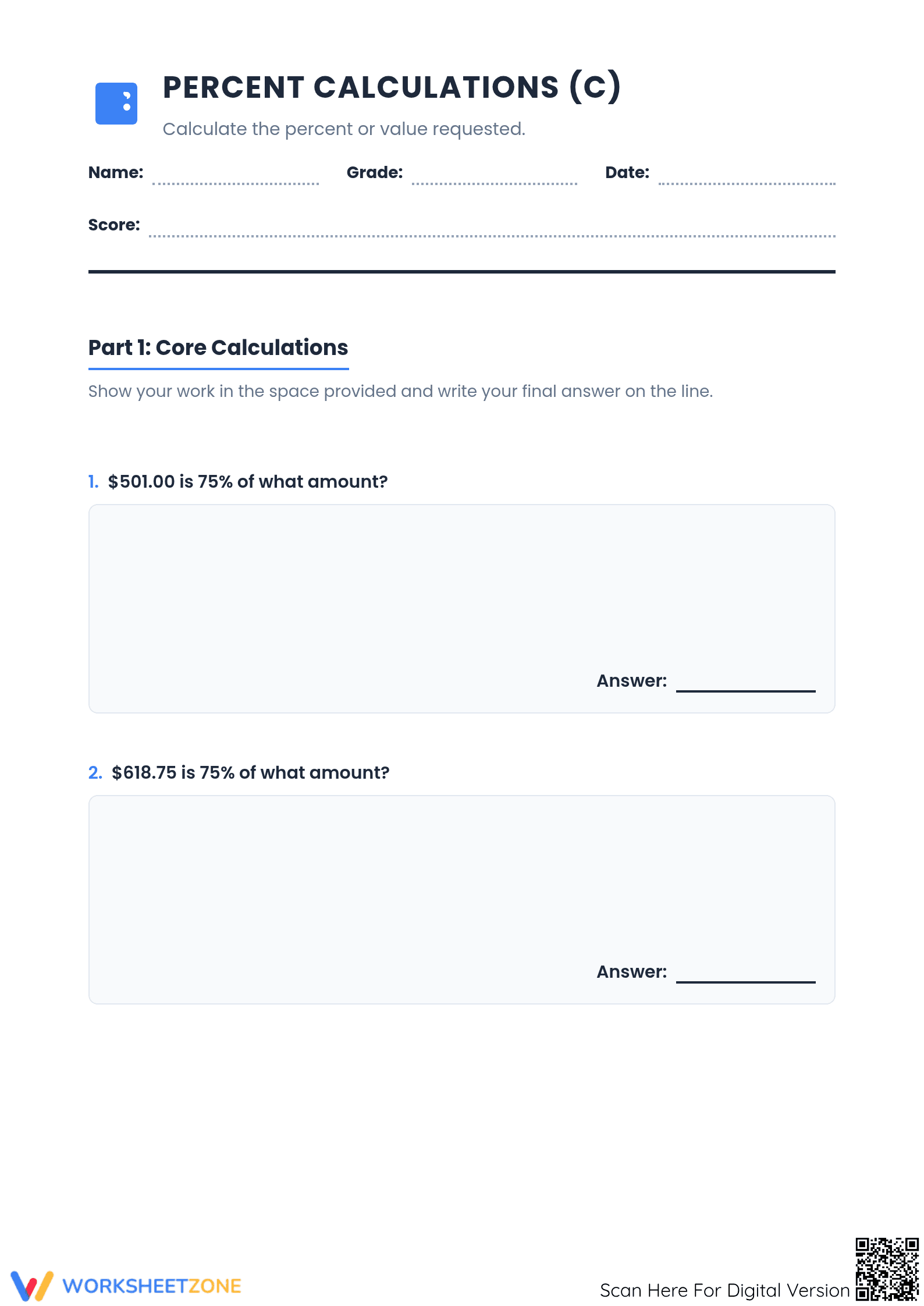
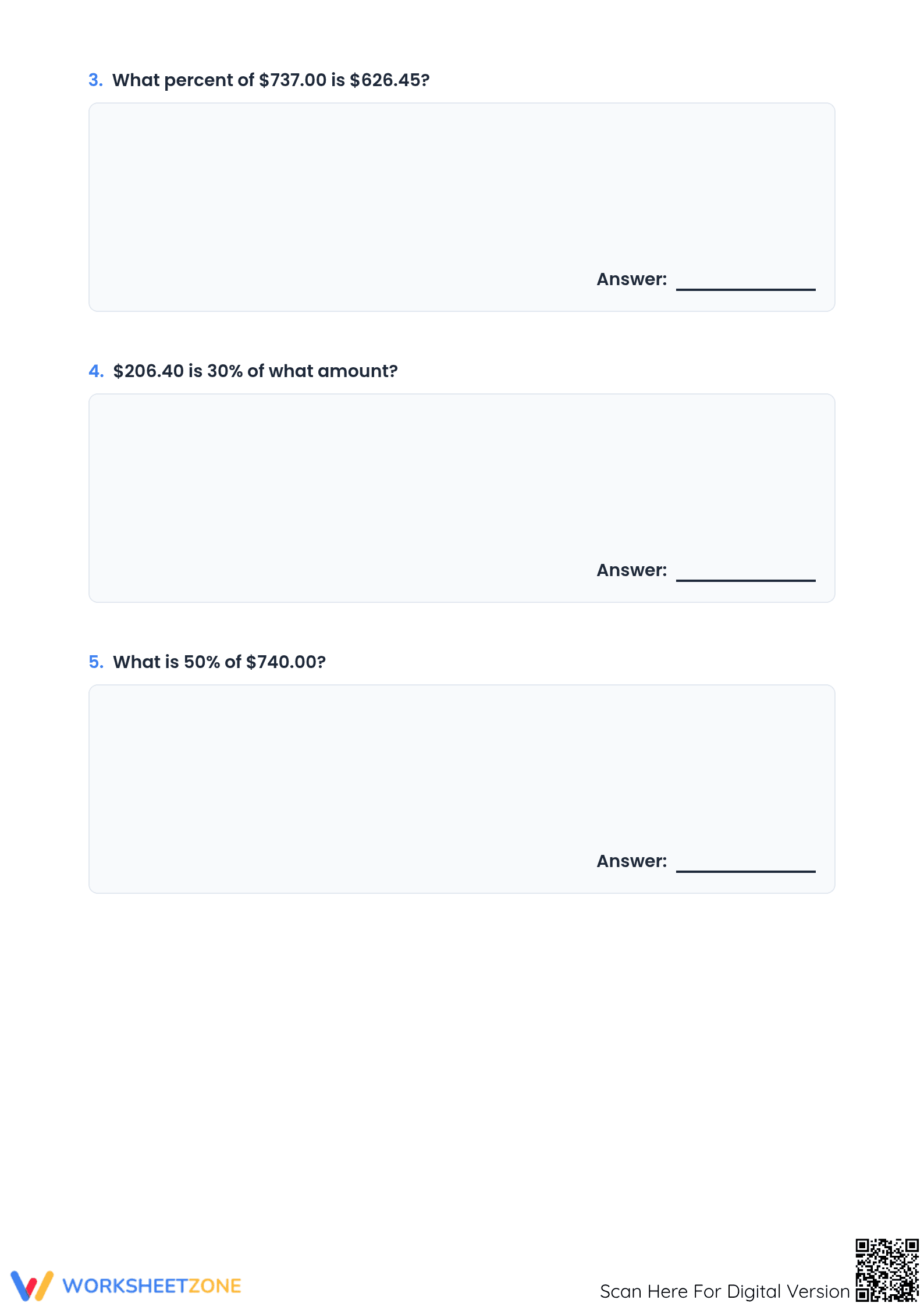
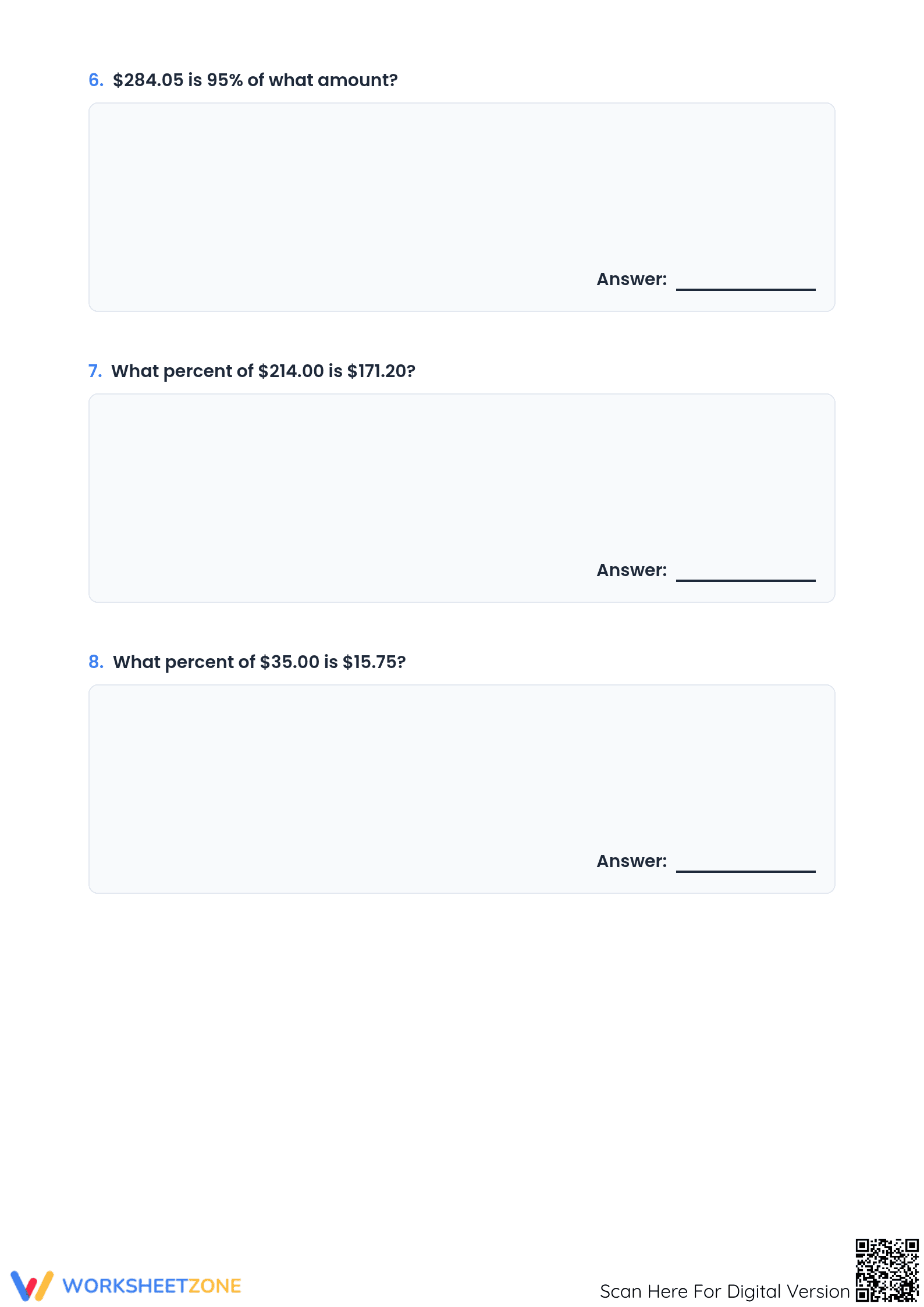
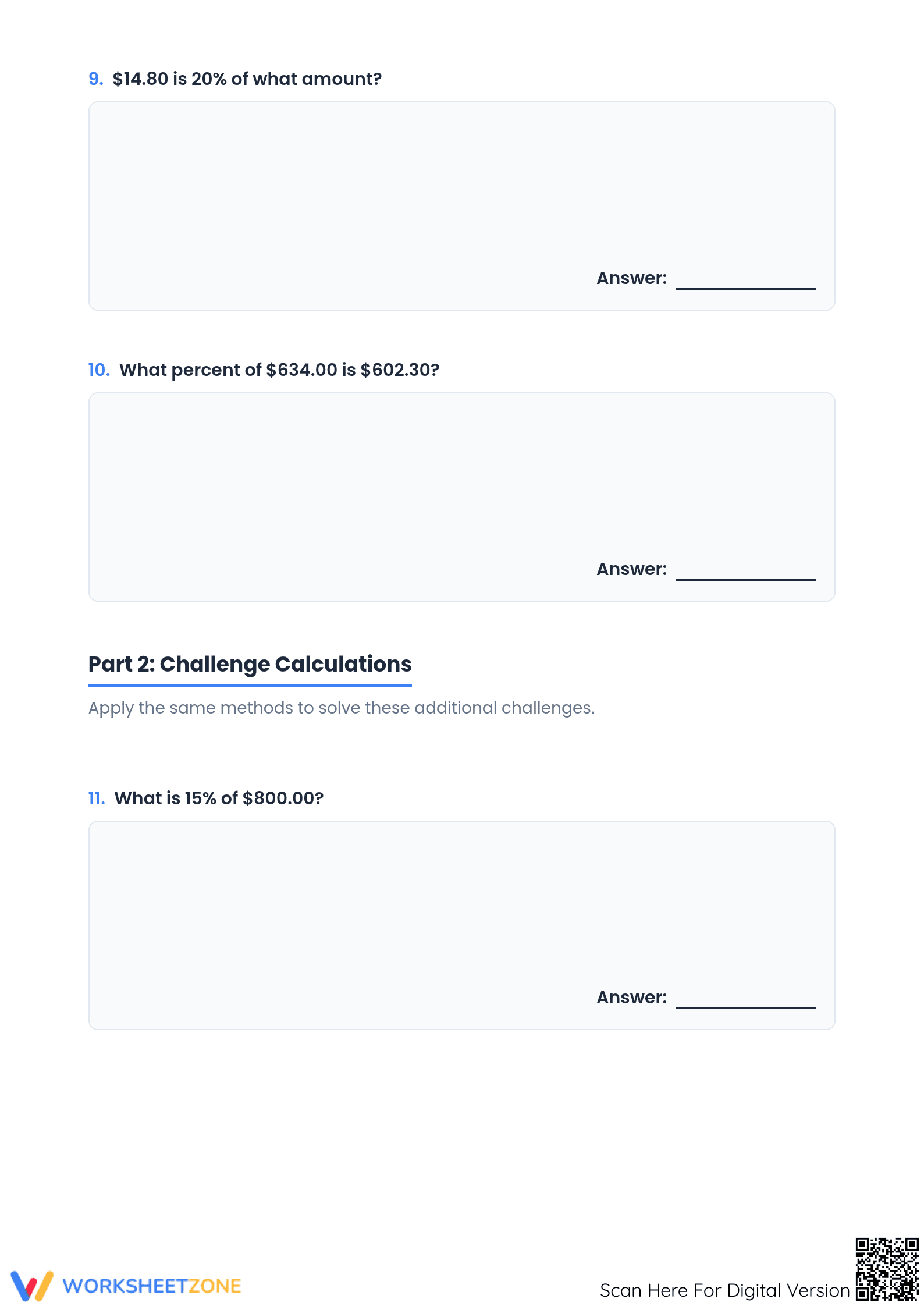

Mixed Percent Calculations | Essential Grade 6 Math
Paste this activity's link or code into your existing LMS (Google Classroom, Canvas, Teams, Schoology, Moodle, etc.).
Students can open and work on the activity right away, with no student login required.
You'll still be able to track student progress and results from your teacher account.
This worksheet provides comprehensive practice for students to master mixed percent calculations, including finding the part, the whole, and the percentage. By navigating through 13 structured problems, learners enhance their ability to identify calculation types and execute precise solutions. The outcome is a strengthened foundation in proportional reasoning and real-world mathematical application.
At a Glance
- Grade: 6 · Subject: Math
- Standard:
CCSS.MATH.CONTENT.6.RP.A.3.C— Find a percent of a quantity as a rate per 100 and solve problems finding the whole- Skill Focus: Mixed Percent Calculations
- Format: 5 pages · 13 problems · Answer key included · PDF
- Best For: Independent seatwork, homework assignments, or a comprehensive substitute teacher lesson plan
- Time: 30–45 minutes
What's Inside
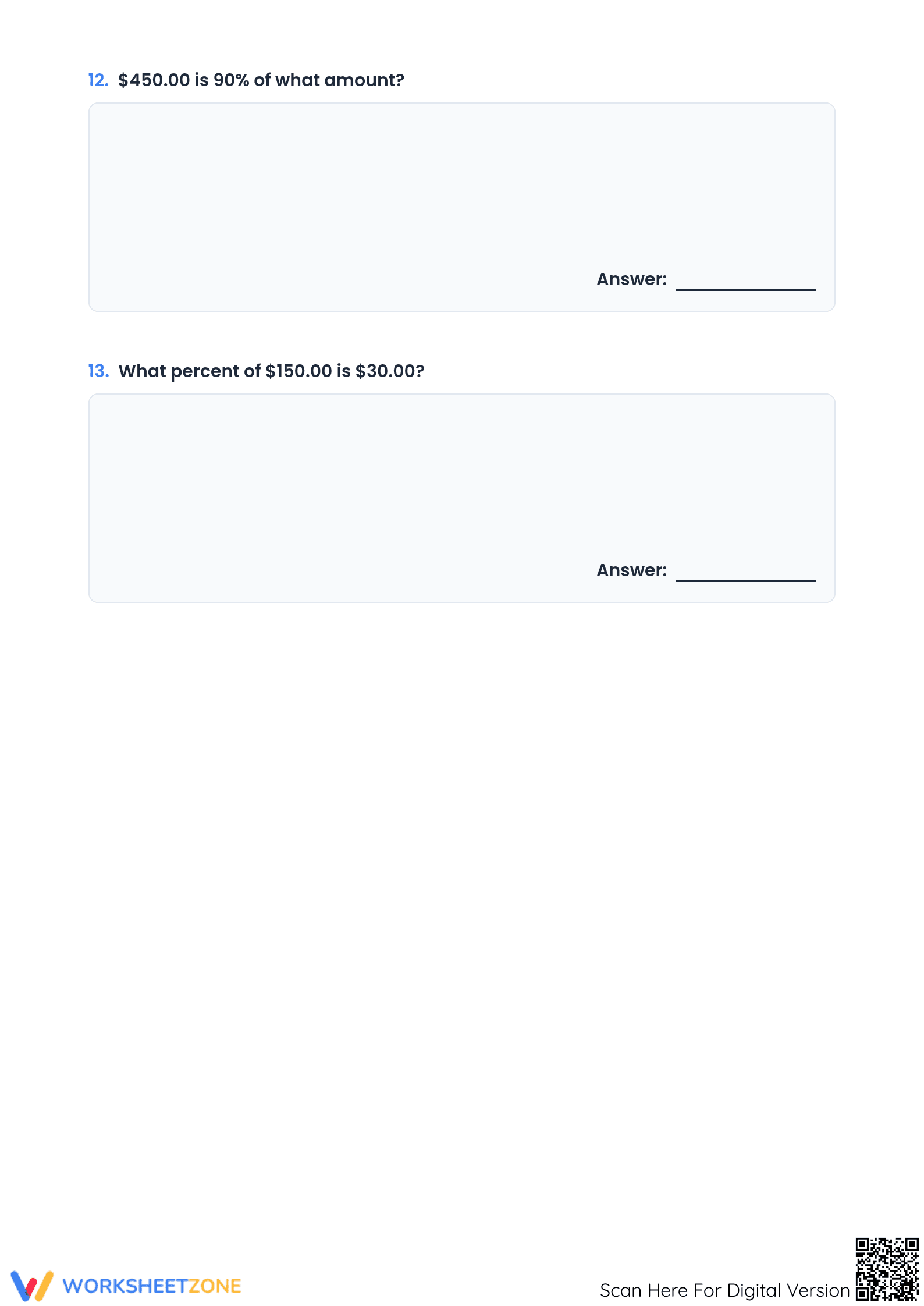
This 5-page PDF contains two sections designed to build confidence. Part 1 features ten "Core Calculations" requiring students to find missing values using given percentages. Part 2 introduces three "Challenge Calculations" that push students to apply their methods to slightly more complex scenarios. Every problem provides a dedicated workspace for showing calculations and a clear answer line. A full answer key is provided for immediate grading.
Skill Progression
- Guided Practice: The first two problems focus on finding the whole given 75%, providing a scaffolded start for initial teacher modeling.
- Supported Practice: Problems 3 through 10 vary the calculation type across eight scenarios, switching between finding the percent and finding the part.
- Independent Practice: The final three challenge problems require students to determine the correct formula independently for 15% and 90% calculations.
This resource follows a gradual-release model, moving students from guided "I Do" modeling to independent "You Do" mastery of proportional relationships.
Standards Alignment
This resource is primary aligned to CCSS.MATH.CONTENT.6.RP.A.3.C, which expects students to find a percent of a quantity and solve problems involving finding the whole, given a part and the percent. The worksheet covers all aspects of this standard, including part-whole-percent triples. This standard code can be copied directly into lesson plans, IEP goals, or district curriculum mapping tools.
How to Use It
Use this during the "Independent Practice" phase of a lesson on percents to allow students to apply different strategies. As a formative assessment, observe students during Part 1 to see if they can distinguish between "what percent" and "what amount" questions. The expected completion time for the full 5-page set is approximately 35 minutes.
Who It's For
This resource is ideal for Grade 6 students learning ratios and proportions, though it serves as an excellent review for Grade 5, 7, and 8 learners. It is particularly helpful for students requiring extra space to organize their work. Pair this worksheet with a visual anchor chart displaying the "Percent Triangle" or part-to-whole ratio models for maximum student support.
Aligning with the rigorous demands of `CCSS.MATH.CONTENT.6.RP.A.3.C`, this worksheet facilitates the transition from concrete ratio reasoning to abstract percent application. Students engage in the essential cognitive task of identifying which variable is missing—the part, the percent, or the whole—before selecting a computational strategy. Research from `Fisher & Frey (2014)` emphasizes the importance of this "checking for understanding" phase within the gradual release of responsibility. By providing 13 varied problems, the resource ensures that students do not simply memorize a single procedure but instead develop the flexibility required for real-world financial literacy and data analysis. The inclusion of a dedicated workspace supports metacognitive awareness, allowing both teachers and learners to trace errors in proportional logic. This structured approach is proven to bridge the gap between initial instruction and the fluent application of rate concepts required in higher-level mathematics.


