


























Views
Downloads

Essential Metaphors Worksheet | Grade 4 ELA Printable
Paste this activity's link or code into your existing LMS (Google Classroom, Canvas, Teams, Schoology, Moodle, etc.).
Students can open and work on the activity right away, with no student login required.
You'll still be able to track student progress and results from your teacher account.
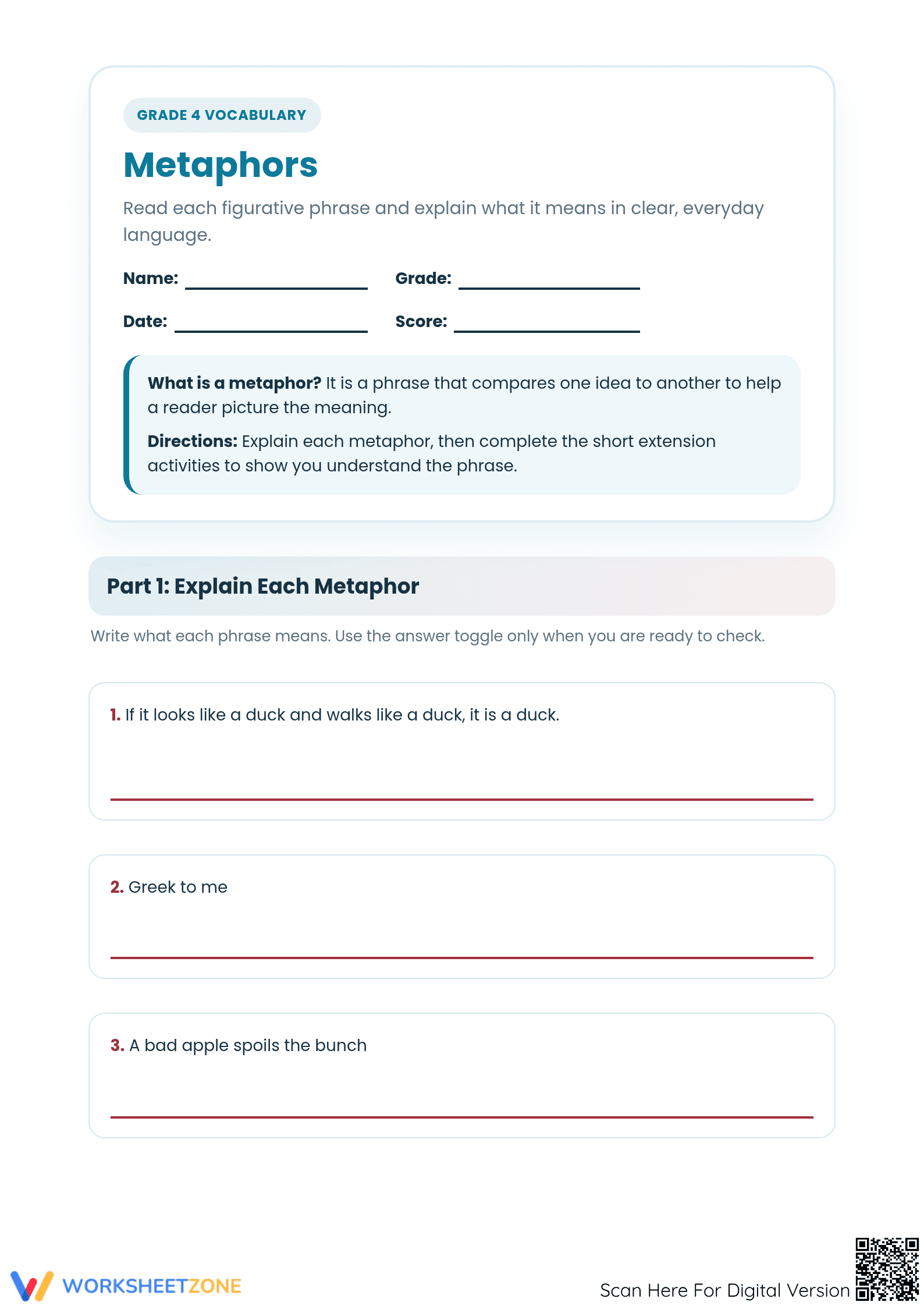
This Grade 4 metaphors worksheet helps students identify and interpret figurative language. By explaining metaphors and matching them to literal meanings, learners develop the critical thinking skills needed to decode complex texts. This essential resource ensures students transition from literal understanding to deeper literary analysis and vocabulary comprehension.
At a Glance
- Grade: 4 · Subject: English Language Arts
- Standard:
CCSS.ELA-LITERACY.L.4.5.A— Explain the meaning of simple similes and metaphors in context to improve reading comprehension- Skill Focus: Interpreting Figurative Language
- Format: 3 pages · 13 problems · Answer key included · PDF
- Best For: Literacy rotations, vocabulary centers, and independent classroom practice
- Time: 20–30 minutes
What's Inside
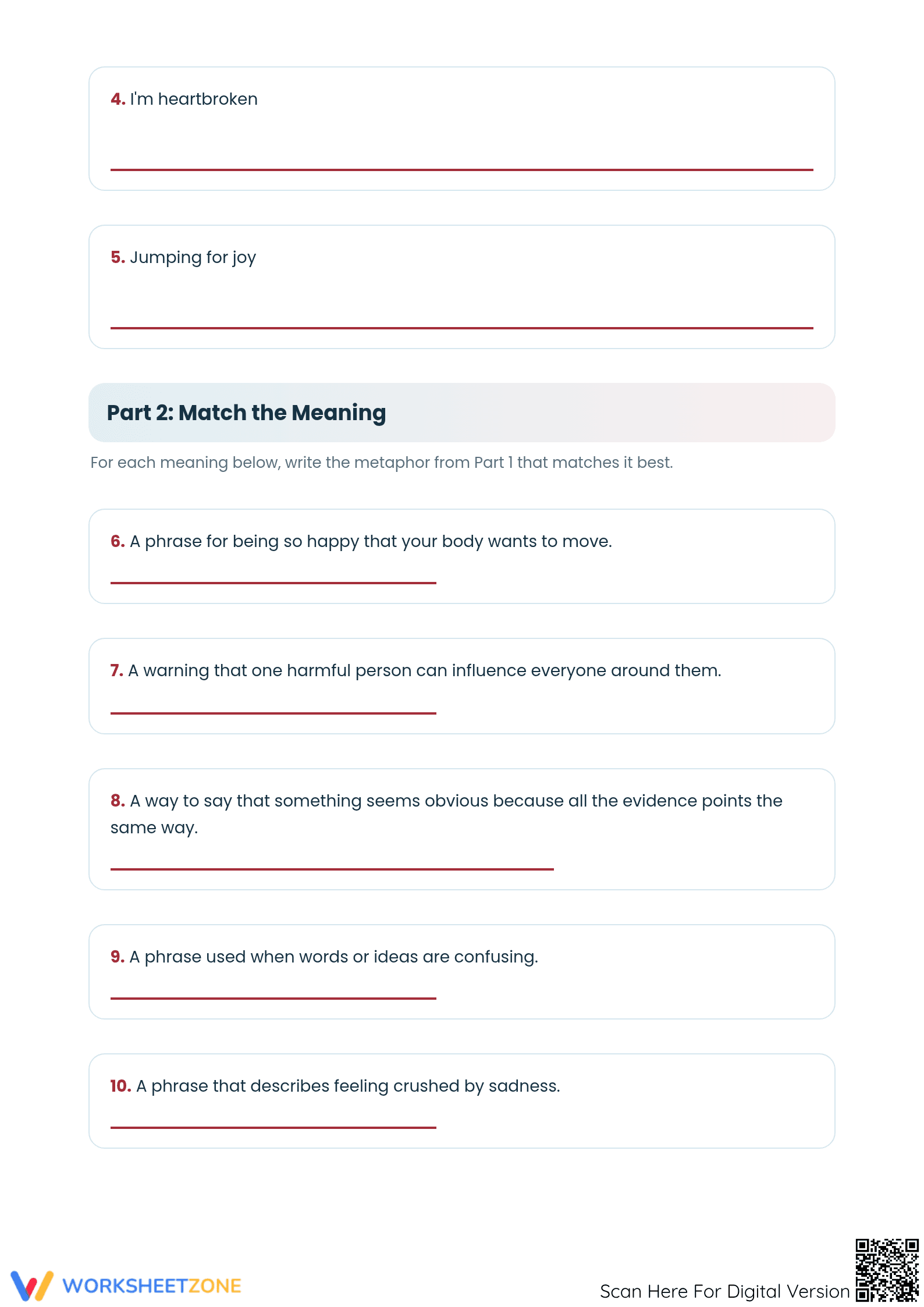
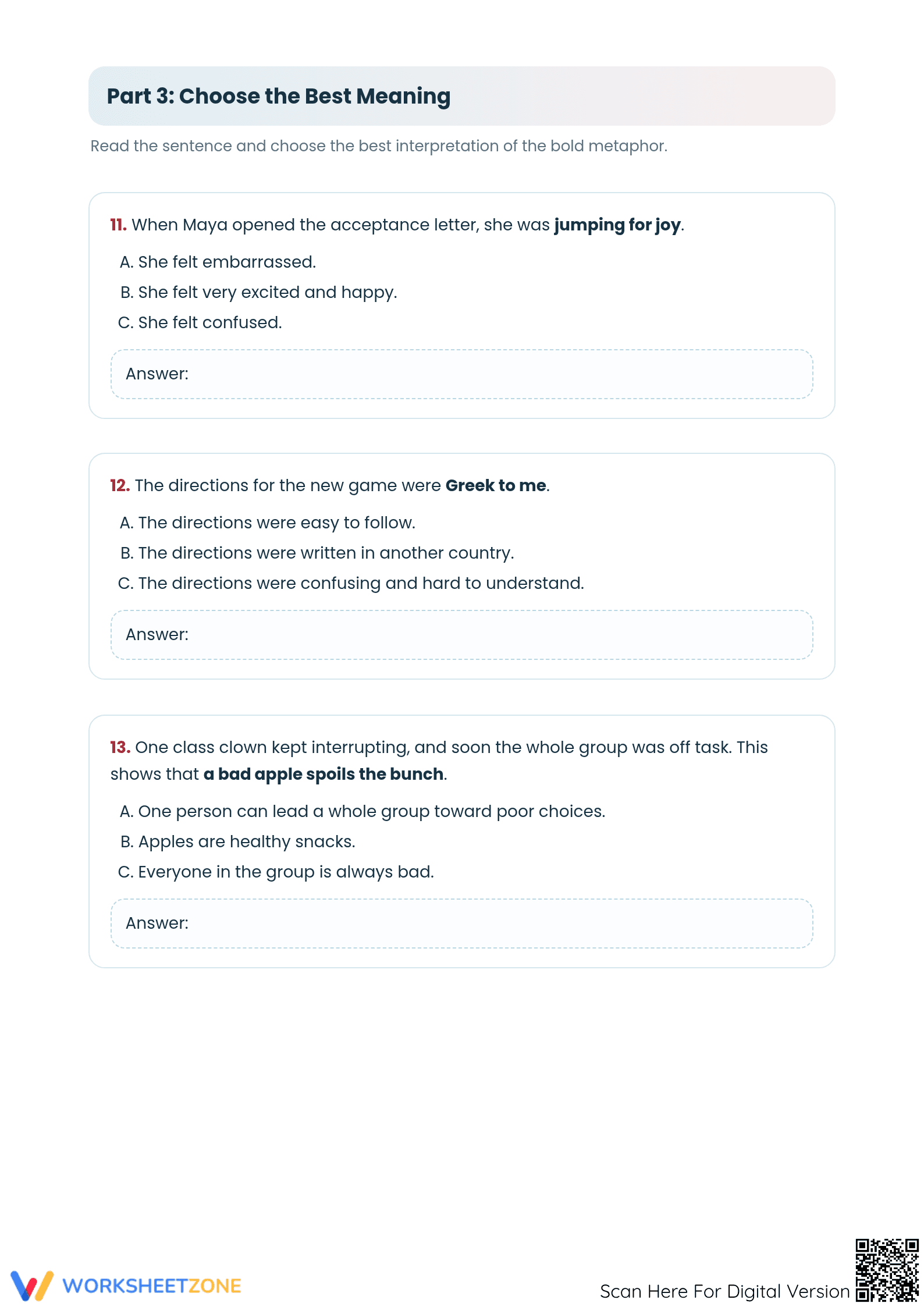
The worksheet is structured across three pages containing 13 distinct tasks. It features a clear definition of metaphors to support recall. Students encounter three interaction styles: open-ended explanation of common phrases, matching metaphors to literal definitions, and multiple-choice questions that require interpreting metaphors within specific sentence contexts. A full answer key is provided for immediate feedback.
Skill Progression
The learning path follows a proven gradual release model to ensure student mastery:
- Guided Practice: Part 1 requires students to explain five common metaphors in everyday language, promoting initial conceptual connections.
- Supported Practice: Part 2 features five matching tasks where students link literal meanings back to the correct figurative phrases.
- Independent Practice: Part 3 provides three multiple-choice items that assess the ability to interpret metaphors within the context of complete sentences.
This structure follows an effective I Do, We Do, You Do instructional sequence to build confidence before independent application.
Standards Alignment
This resource is specifically aligned to `CCSS.ELA-LITERACY.L.4.5.A`: "Explain the meaning of simple similes and metaphors (e.g., as pretty as a picture) in context." It also supports the broader L.4.5 standard regarding word relationships and nuances. Both standard codes can be copied directly into lesson plans, IEP goals, or district curriculum mapping tools to ensure instructional compliance and progress tracking.
How to Use It
Use this worksheet during the "You Do" phase of a figurative language unit. It serves as an excellent formative assessment tool; teachers should observe if students struggle with the literal translation in Part 1 to identify who needs additional small-group scaffolding. Expected completion time is 25 minutes, making it an ideal choice for a literacy rotation or a rigorous homework assignment following direct instruction.
Who It's For
This practice is designed for fourth-grade students mastering the transition to complex literary devices. It is especially beneficial for English Language Learners who need explicit practice with non-literal English idioms. Pair this resource with a short mentor text or a figurative language anchor chart to provide students with a visual reference while they work through the problems.
Figurative language instruction is a cornerstone of middle-elementary literacy development. Research from Fisher & Frey (2014) on the gradual release of responsibility suggests that structured practice moving from explanation to context-based selection significantly improves retention of non-literal meanings. This worksheet addresses the `CCSS.ELA-LITERACY.L.4.5.A` requirement, helping students bridge the gap between simple decoding and high-level comprehension. By engaging with 13 targeted tasks, students build the metalinguistic awareness necessary to identify nuances in word meanings, a skill that NAEP and RAND AIRS 2024 identify as a key predictor of long-term reading success. The three-page format allows for a comprehensive deep-dive into the skill without overwhelming the learner. This resource provides the repetition and variety of task types required for students to move metaphors into their active expressive vocabulary, ensuring they are prepared for the increasing complexity of upper-elementary informational and literary texts.


