


























Views
Downloads

Printable Metaphors Worksheet | Grade 4 ELA Ready Practice
Paste this activity's link or code into your existing LMS (Google Classroom, Canvas, Teams, Schoology, Moodle, etc.).
Students can open and work on the activity right away, with no student login required.
You'll still be able to track student progress and results from your teacher account.
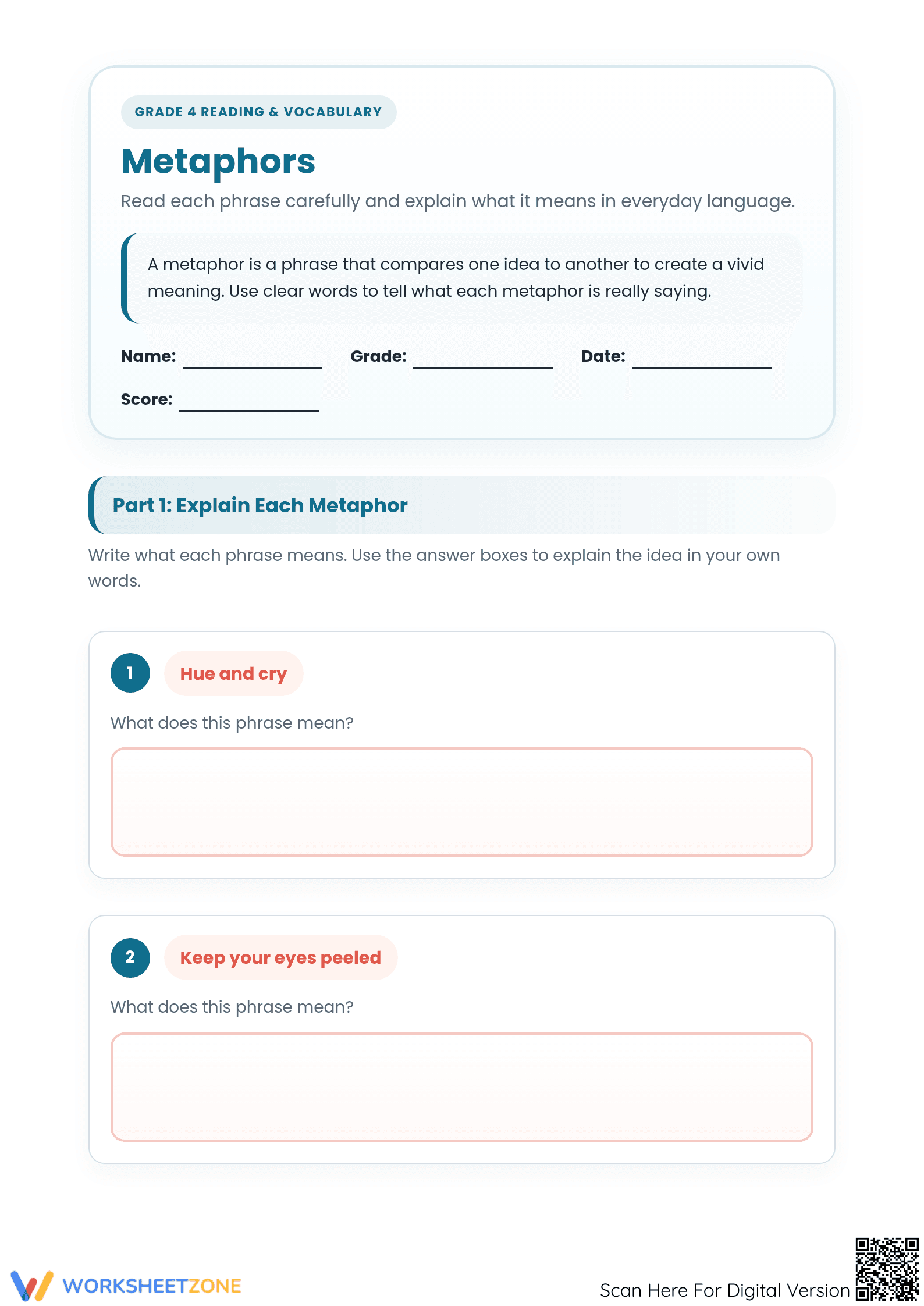
This Grade 4 metaphors worksheet provides essential practice for students learning to interpret and apply figurative language. By breaking down common expressions into literal meanings, learners build the flexibility needed for complex literature. Students will master the art of comparison through structured exercises that bridge abstract concepts with concrete understanding and vocabulary development.
At a Glance
- Grade: 4 · Subject: ELA
- Standard:
CCSS.ELA-LITERACY.L.4.5.A— Identify and explain the meaning of simple metaphors in context to strengthen reading comprehension and analysis skills- Skill Focus: Figurative Language & Metaphors
- Format: 3 pages · 8 tasks · Answer key included · PDF
- Best For: Classroom literacy centers, small group intervention, and independent vocabulary practice
- Time: 15–20 minutes
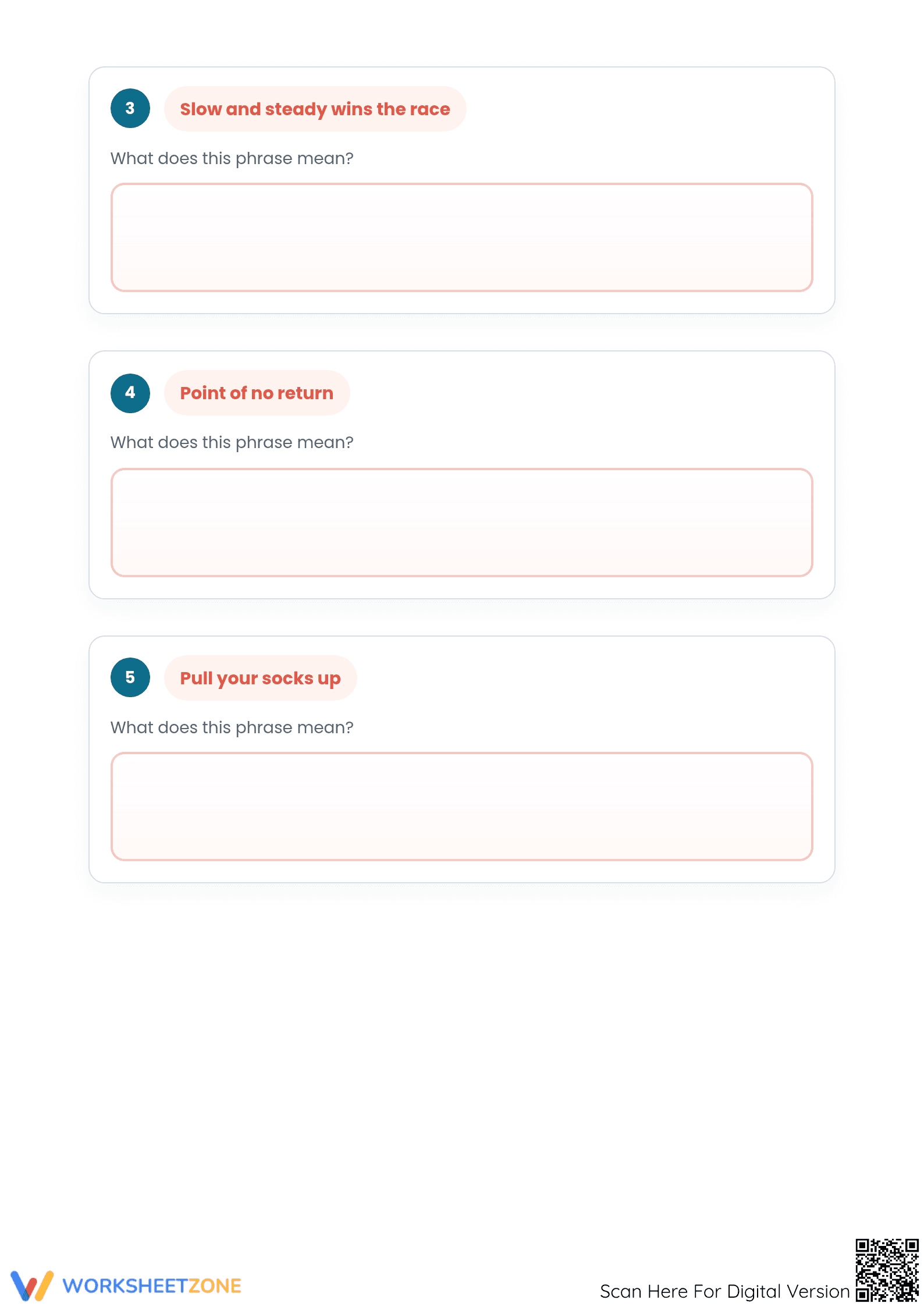
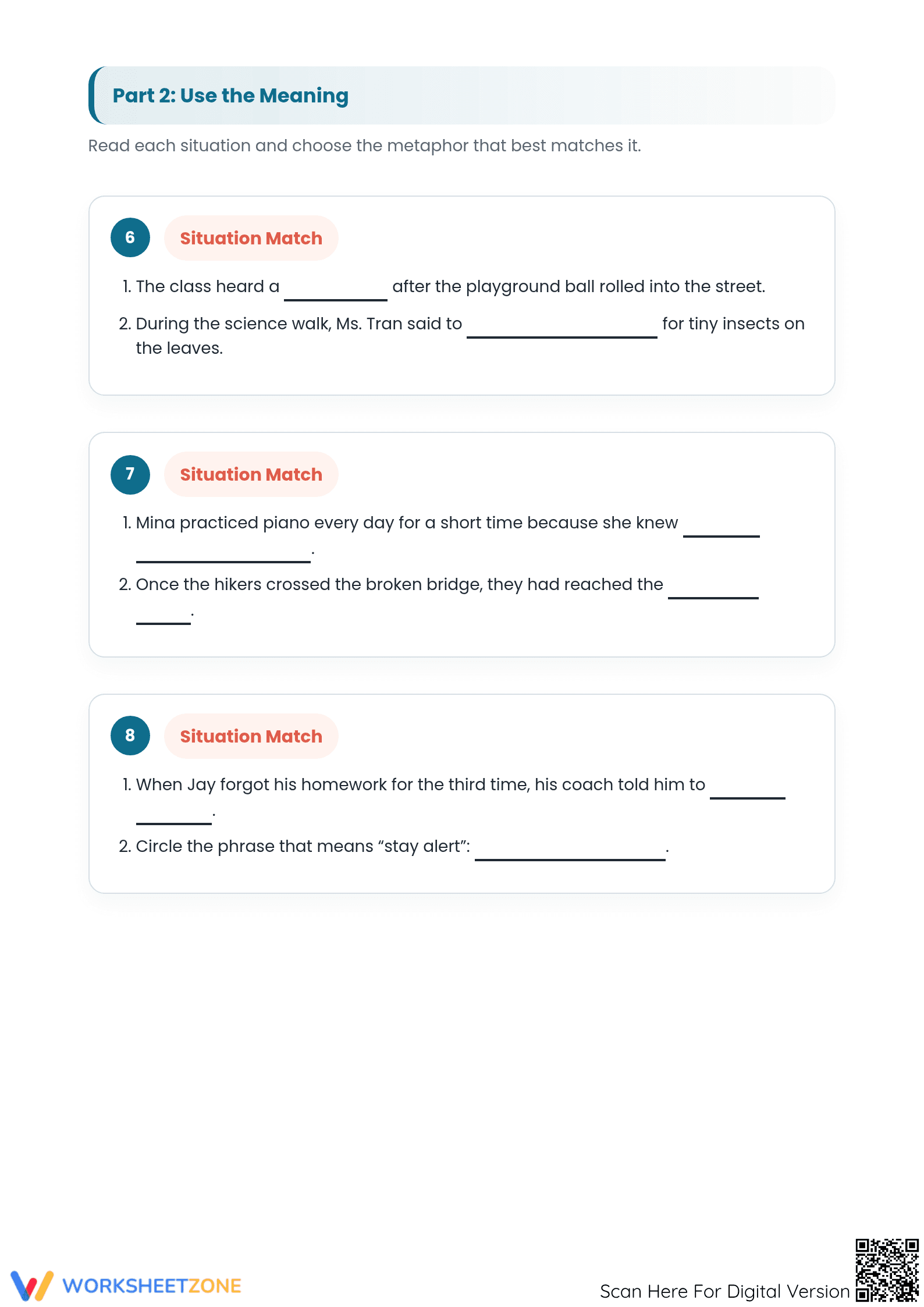
This comprehensive 3-page PDF focuses on common English metaphors such as "hue and cry" and "point of no return." The worksheet is divided into two distinct parts. Part 1 requires students to write literal explanations for five specific phrases in their own words, while Part 2 challenges them to match metaphors to real-world situations. A full answer key is included to facilitate quick grading or student self-correction.
The instructional design follows a gradual release of responsibility:
- Guided practice: The first section provides a clear definition and sets the stage with familiar phrases for initial interpretation.
- Supported practice: Students interpret 5 metaphors with dedicated writing space to explain abstract ideas in literal language.
- Independent practice: The final 3 multi-part tasks require students to select the correct metaphor for various situational contexts, demonstrating true application of the skill.
This approach ensures students move from recognition to functional use in their daily communication.
This resource is directly aligned to CCSS.ELA-LITERACY.L.4.5.A, which requires Grade 4 students to explain the meaning of simple similes and metaphors in context. By engaging with phrases like "pull your socks up," students develop a deeper understanding of how authors use non-literal language to create vivid imagery and emphasis. This standard code can be copied directly into lesson plans, IEP goals, or district curriculum mapping tools.
Use this worksheet during the "You Do" phase of a lesson on figurative language. It serves as an excellent formative assessment to check if students can distinguish between literal and non-literal meanings. For an extension, have students circle the "stay alert" metaphor in the final task and then write an original sentence using a different metaphor from the first page to demonstrate mastery.
This resource is designed for Grade 4 general education students, but it is also highly effective for English Language Learners (ELL) who often struggle with idiomatic and metaphorical expressions. It pairs naturally with a mentor text that features descriptive language or an anchor chart listing common animal metaphors to provide additional visual scaffolding during independent work time.
Effective instruction in figurative language, particularly metaphors, is a cornerstone of literacy development as noted in the RAND AIRS 2024 report. Research from Fisher & Frey (2014) emphasizes that "gradual release of responsibility" is the most effective way for students to acquire complex linguistic skills like interpreting non-literal text. This worksheet utilizes that methodology by providing 8 structured tasks that move from explanation to situational matching. By mastering CCSS.ELA-LITERACY.L.4.5.A, Grade 4 students develop the cognitive flexibility required for middle school literature. The inclusion of an answer key ensures that student responses can be validated immediately, which is critical for correcting misconceptions about metaphors in real-time. This evidence-based approach to Grade 4 ELA ensures that learners don't just memorize phrases but understand the underlying mechanics of English comparison.


