


























Views
Downloads

Printable Metaphors Worksheet | Grade 4 English Practice
Paste this activity's link or code into your existing LMS (Google Classroom, Canvas, Teams, Schoology, Moodle, etc.).
Students can open and work on the activity right away, with no student login required.
You'll still be able to track student progress and results from your teacher account.
Help students master figurative language with this comprehensive Grade 4 metaphors worksheet. By identifying and explaining common metaphorical expressions, learners develop deeper reading comprehension and vocabulary skills. This resource provides structured practice in interpreting non-literal language, enabling students to grasp complex meanings in both literature and everyday communication.
At a Glance
- Grade: 4 · Subject: ELA Literature
- Standard:
CCSS.ELA-LITERACY.L.4.5.A— Explain the meaning of simple similes and metaphors in context- Skill Focus: Figurative Language Interpretation
- Format: 3 pages · 10 problems · Answer key included · PDF
- Best For: Vocabulary centers and independent practice
- Time: 20–30 minutes
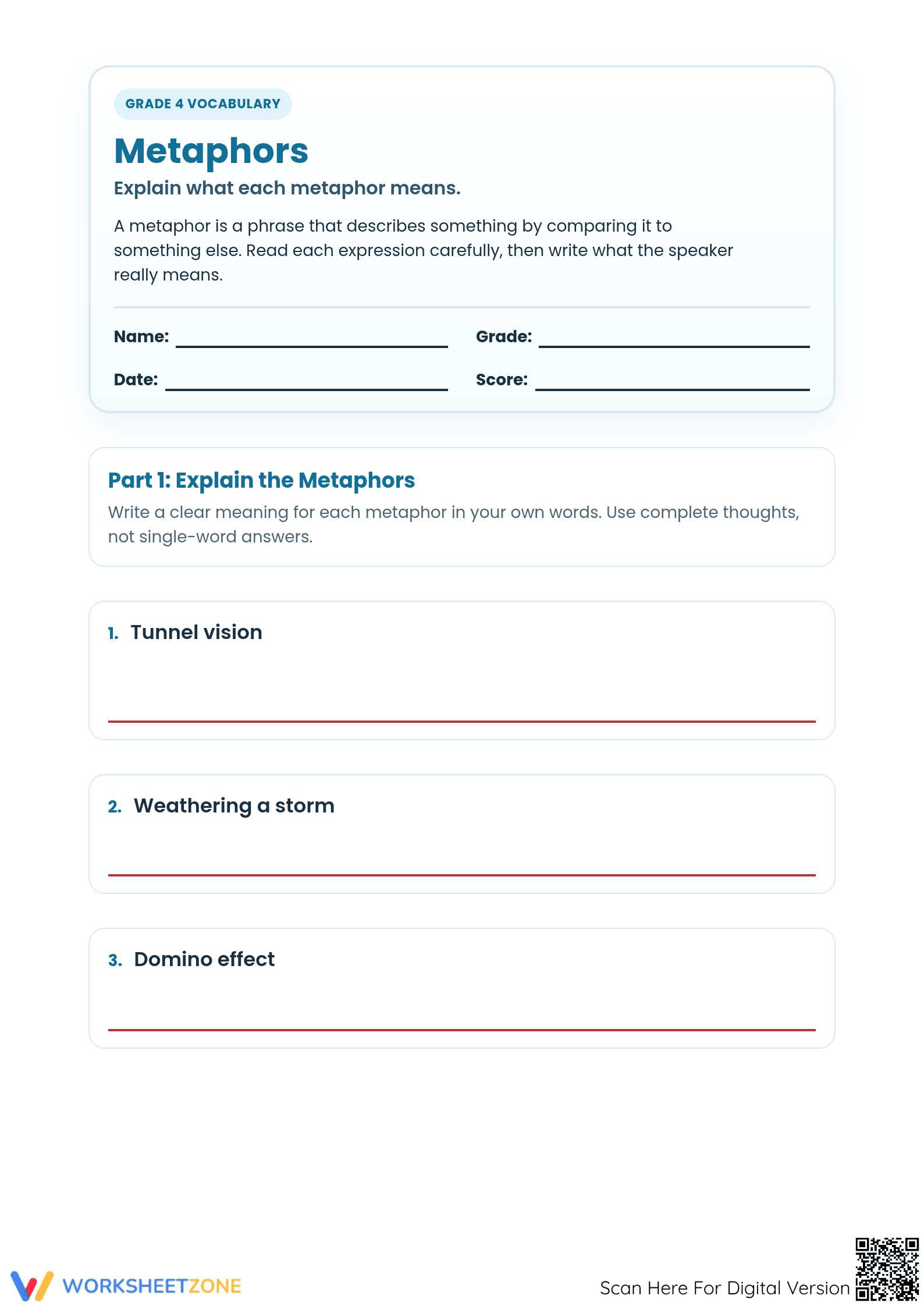
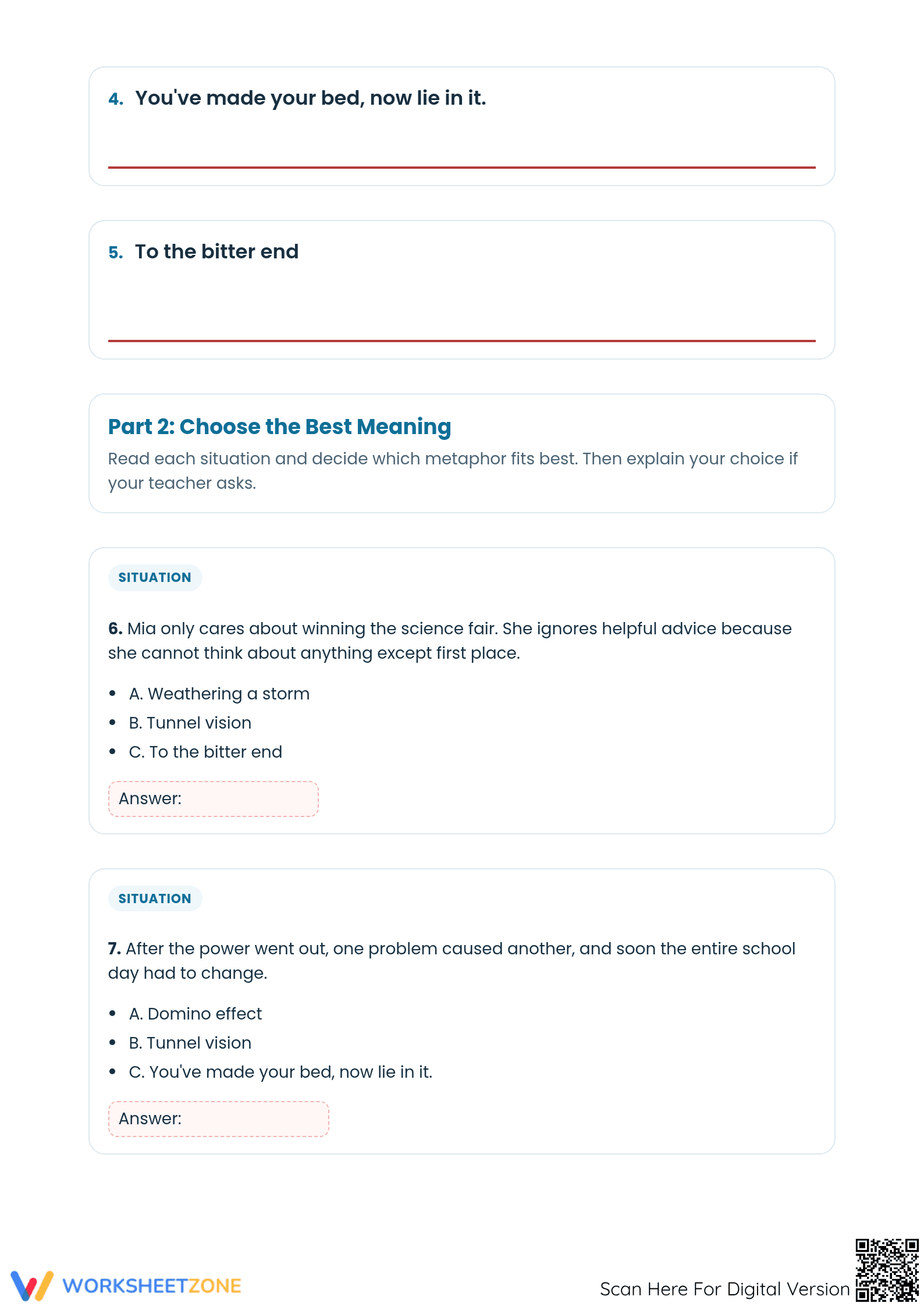
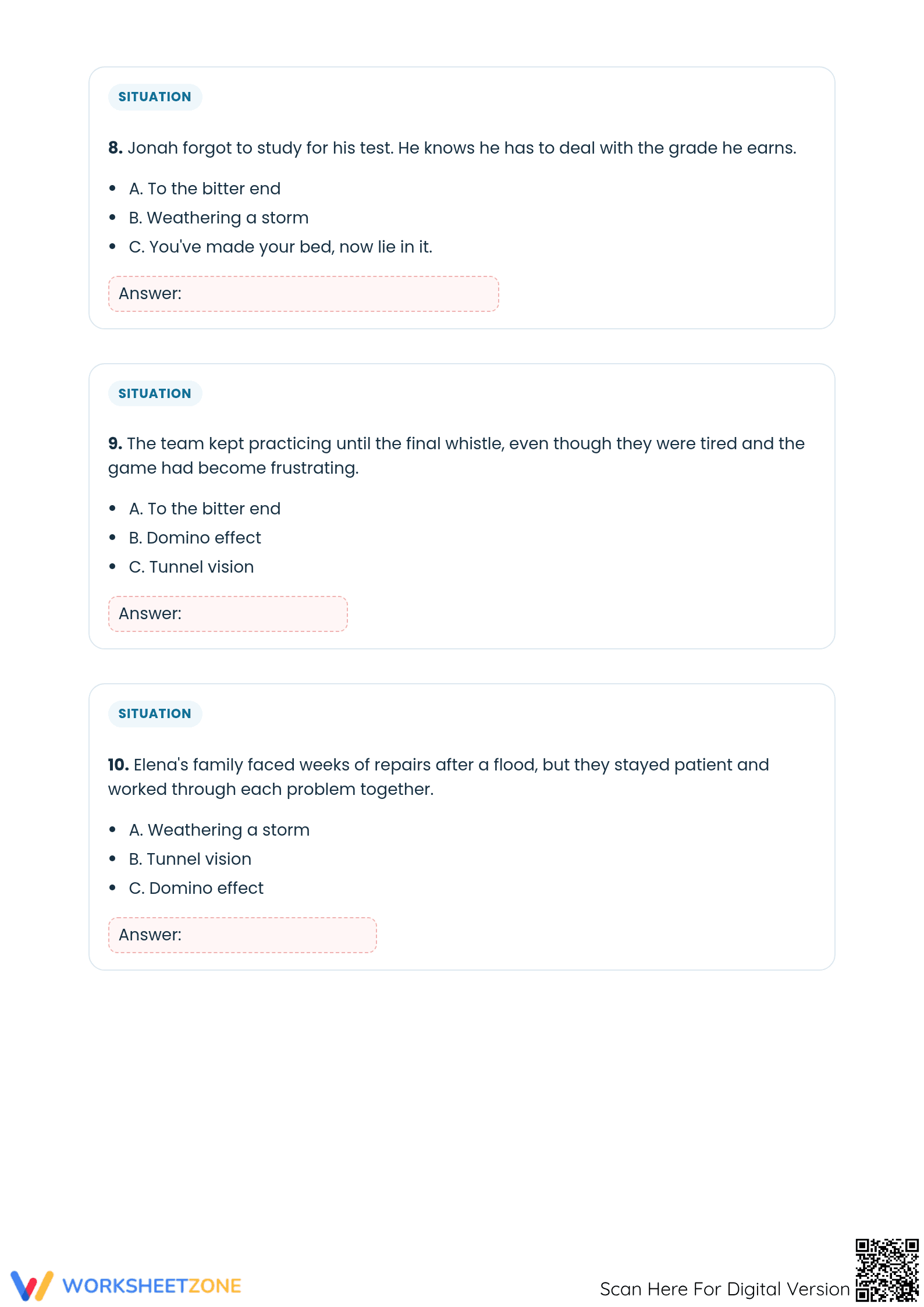
This three-page PDF resource features 10 targeted exercises divided into two logical parts. The first section requires students to provide written explanations for five common metaphors, such as "tunnel vision" and "weathering a storm," encouraging expressive language use. The second section presents five situational scenarios where students must select the most appropriate metaphor from a multiple-choice list, reinforcing contextual application. A complete answer key is provided for quick grading.
Skill Progression
- Guided Practice: The first section requires translating five common metaphors into literal meanings with complete sentences, focusing on basic interpretation.
- Supported Practice: Students then analyze five situational scenarios where context clues guide them to the correct metaphorical interpretation from multiple-choice options.
- Independent Practice: This sequence moves from recall to complex application, ensuring mastery through cognitive scaffolding and gradual release of responsibility.
Standards Alignment
This worksheet is strictly aligned with CCSS.ELA-LITERACY.L.4.5.A, which focuses on helping students explain the meaning of simple similes and metaphors in context. Additionally, it supports L.4.5, the broader anchor for demonstrating understanding of figurative language and nuances in word meanings. Both standard codes can be copied directly into lesson plans, IEP goals, or district curriculum mapping tools.
How to Use It
Use this worksheet during the independent practice phase of a lesson on figurative language to assess individual student progress. It is also an excellent tool for formative assessment; while students work, observe if they struggle more with the open-ended explanations or the multiple-choice situational matching to identify specific gaps in abstract reasoning. Expect students to complete the full three-page set in approximately 25 minutes during a literacy block.
Who It's For
This resource is designed for Grade 4 students but is highly effective for Grade 5 review or Grade 3 enrichment. It serves as a vital tool for English Language Learners (ELLs) who often struggle with the non-literal nature of metaphors. Pair this worksheet with a mentor text or an anchor chart displaying common idioms to provide visual support during direct instruction or small group interventions.
Effective instruction in figurative language requires moving beyond simple identification toward meaningful interpretation in diverse contexts. According to the RAND AIRS 2024 report, students who receive explicit practice in decoding non-literal language, such as metaphors and similes, show significantly higher gains in overall reading comprehension scores compared to those receiving traditional vocabulary instruction. This worksheet addresses this need by providing ten distinct tasks that bridge the gap between recognizing a metaphor and explaining its specific function within a sentence or scenario. By aligning with CCSS.ELA-LITERACY.L.4.5.A, the resource ensures that Grade 4 learners build the necessary schema to navigate complex literary texts. The inclusion of both written explanations and situational multiple-choice questions facilitates the cognitive flexibility required for language mastery, making it a robust addition to any ELA curriculum focused on evidenced-based literacy outcomes.


