


























Views
Downloads
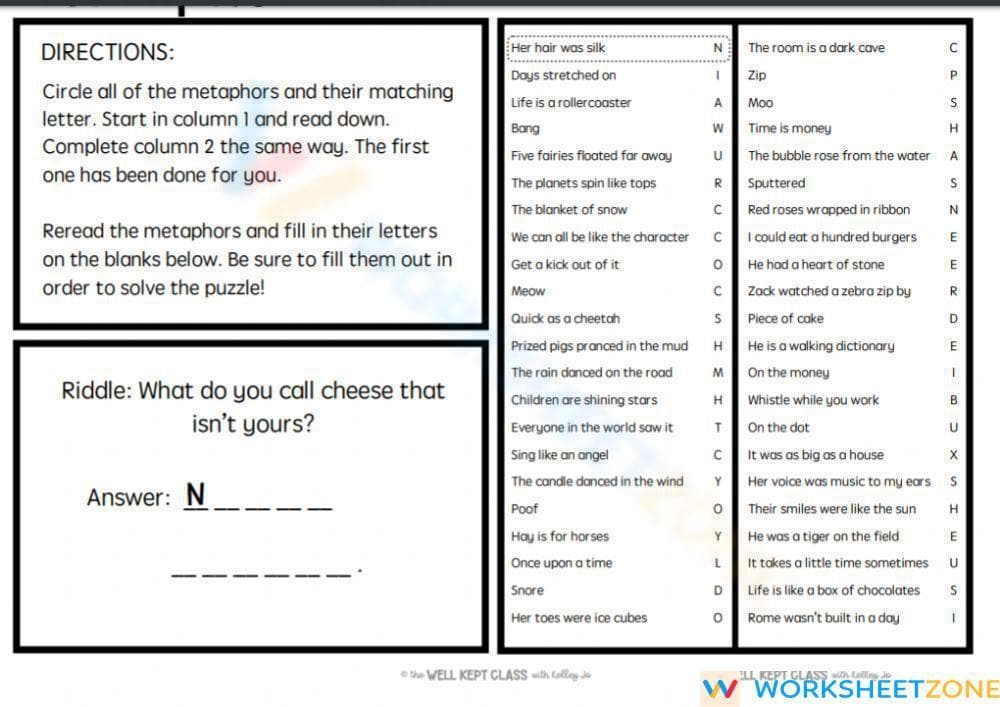

Grade 5 Metaphor Worksheet | Essential Printable Practice
Paste this activity's link or code into your existing LMS (Google Classroom, Canvas, Teams, Schoology, Moodle, etc.).
Students can open and work on the activity right away, with no student login required.
You'll still be able to track student progress and results from your teacher account.
Identify metaphors with ease using this engaging "solve-the-puzzle" worksheet. Students distinguish metaphors from other figurative language types to reveal the answer to a funny riddle. This activity reinforces deep comprehension of non-literal language, helping learners master figurative language identification while having fun in the process.
At a Glance
- Grade: 5 · Subject: ELA
- Standard:
L.5.5.A— Interpret figurative language, including similes and metaphors, in context to deepen reading comprehension skills- Skill Focus: Metaphor Identification
- Format: 1 page · 44 problems · Answer key included · PDF
- Best For: Independent practice, quick formative assessment, or emergency substitute teacher lesson plans
- Time: 15–20 minutes
What's Inside
This single-page PDF features 44 distinct phrases for students to analyze. Mixed with similes, idioms, and personification, the metaphors serve as the key to a hidden riddle. A clear directions section guides students through two columns of text. The worksheet includes a dedicated space for the final answer and is accompanied by a full answer key for easy grading.
Zero-Prep Workflow
- Print (30 seconds): Simply download the PDF and print a class set in seconds.
- Distribute (1 minute): Hand out the worksheets; the built-in directions and "solve-the-puzzle" mechanic minimize the need for teacher explanation.
- Review (5 minutes): Use the included answer key to quickly check for accuracy or have students self-correct as a class.
Standards Alignment
Primary standard CCSS.ELA-LITERACY.L.5.5.A: "Interpret figurative language, including similes and metaphors, in context." This resource specifically targets the identification of metaphors within a list of varied figurative language examples, requiring students to understand the structural differences between metaphors and similes. Both standard codes can be copied directly into lesson plans, IEP goals, or district curriculum mapping tools.
How to Use It
Use this worksheet as a summative activity after an introductory lesson on figurative language. It provides a perfect transition from teacher-led instruction to independent mastery. For a formative assessment, observe students as they sort through the phrases—identifying those who confuse similes with metaphors allows for immediate, targeted intervention. Total completion time is typically 20 minutes.
Who It's For
This resource is designed for Grade 4 and Grade 5 students working on language standards. It is particularly effective for learners who enjoy gamified tasks and riddles. Pair this worksheet with a short reading passage to have students find metaphors in a narrative context after completing this identification drill.
This metaphor identification worksheet aligns with standard L.5.5.A, requiring students to interpret figurative language in a structured format. According to Fisher & Frey (2014), the gradual release of responsibility model is most effective when students move from guided recognition to independent application, a transition supported by the 44-problem density of this practice set. By isolating metaphors within a field of distractors like similes and onomatopoeia, the task forces high-level cognitive discrimination. This resource provides frequent, low-stakes opportunities for students to engage with complex language structures. It fulfills the need for standards-aligned practice by providing a self-checking riddle mechanism that motivates completion while ensuring students spend significant time analyzing non-literal expressions to achieve mastery of Grade 5 ELA standards. The density of tasks ensures students encounter a variety of metaphor structures, leading to more robust conceptual understanding and long-term retention of figurative language rules.


