


























Views
Downloads
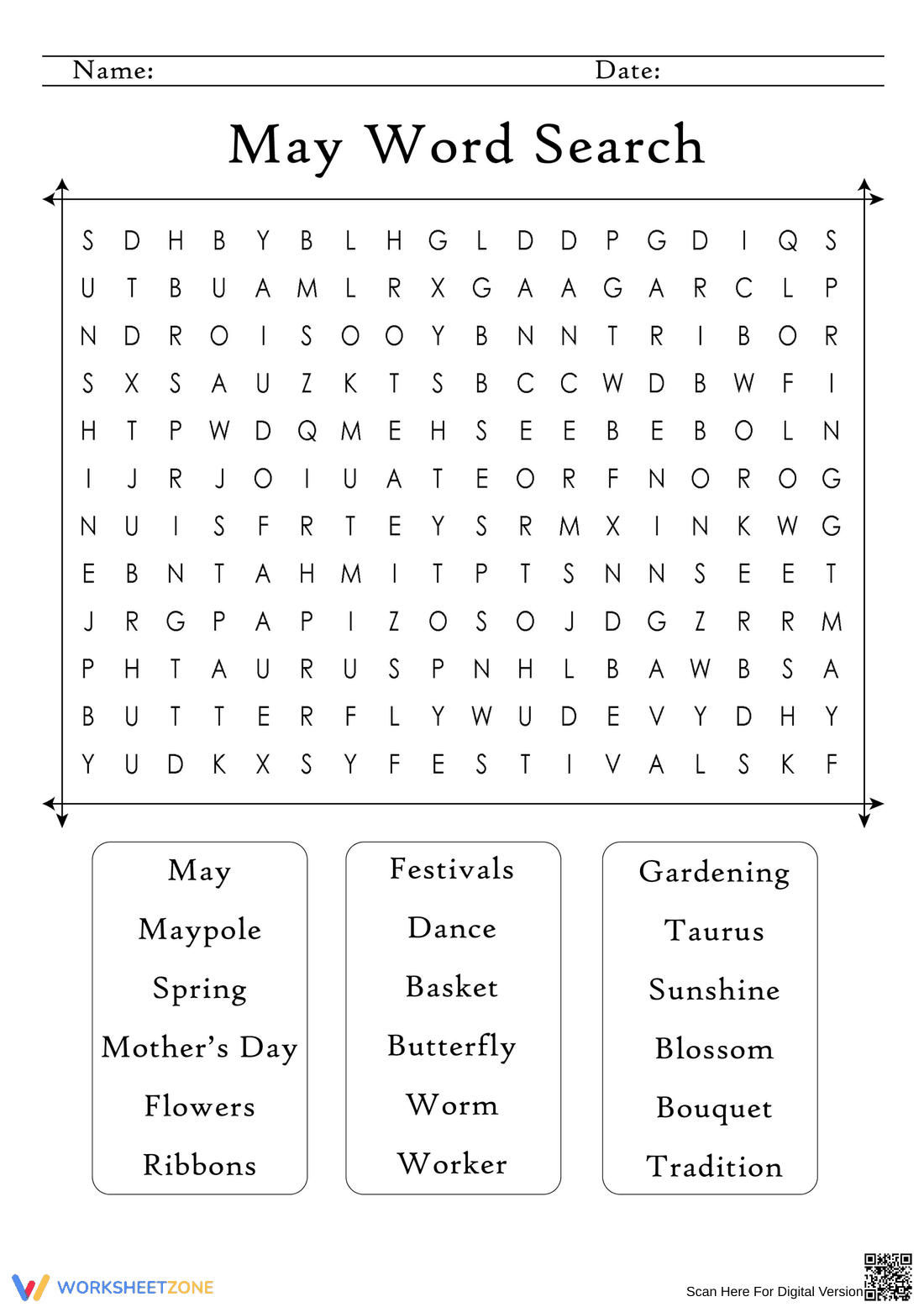

May Word Search Printable: Essential Spring Vocabulary
Paste this activity's link or code into your existing LMS (Google Classroom, Canvas, Teams, Schoology, Moodle, etc.).
Students can open and work on the activity right away, with no student login required.
You'll still be able to track student progress and results from your teacher account.
This Grade 3 vocabulary worksheet reinforces seasonal spelling and word recognition through an engaging puzzle format. Students locate eighteen spring-themed terms hidden within the grid to strengthen visual scanning and cognitive processing. Use this activity to support language acquisition and thematic literacy units.
At a Glance
- Grade: 3 · Subject: ELA & Vocabulary
- Standard:
CCSS.ELA-LITERACY.L.3.6— Acquire and use grade-appropriate conversational and domain-specific words- Skill Focus: Visual scanning and spelling recognition
- Format: 1 page · 18 problems · Answer key not included · PDF
- Best For: Morning work or early finisher activity
- Time: 15–20 minutes
The PDF contains a single-page activity featuring a grid of letters and a word bank at the bottom. The word bank lists eighteen vocabulary terms associated with the month of May, including seasonal events, nature concepts, and cultural traditions. Students search horizontally, vertically, and diagonally to find all hidden words.
Zero-Prep Classroom Workflow
Implement this activity in three simple steps. First, print the single-page PDF for your class, requiring less than one minute of preparation. Second, distribute the sheets to students as they enter the classroom or finish their primary tasks. Third, review the completed puzzles by having students read the found words aloud to practice pronunciation and define the terms. This workflow requires under two minutes of total teacher setup, making it an ideal choice for emergency substitute plans or transition periods.
Standards Alignment
This activity aligns with the Common Core State Standard `CCSS.ELA-LITERACY.L.3.6`, which requires students to acquire and use accurately grade-appropriate conversational, general academic, and domain-specific words and phrases. By identifying terms like "blossom," "tradition," and "festivals," students expand their seasonal vocabulary. Both standard codes can be copied directly into lesson plans, IEP goals, or district curriculum mapping tools.
How to Use It
Use this worksheet during morning arrival to settle students and focus their attention. Alternatively, assign it as a quiet activity after direct instruction in spelling or vocabulary. To perform a quick formative assessment, observe how students scan the grid; note if they search systematically by starting letters or wander randomly. Expected completion time ranges from 15 to 20 minutes depending on student reading levels.
Who It's For
This resource serves third-grade students developing word recognition skills, but also supports second-grade enrichment or fourth-grade English language learners. Pair this worksheet with a short reading passage about spring traditions or a classroom anchor chart displaying May holidays to deepen vocabulary comprehension.
This vocabulary worksheet supports word recognition and orthographic mapping, which are critical components of early literacy development. According to research from Fisher & Frey (2014) on vocabulary acquisition, structured word play and search tasks reinforce spelling patterns by forcing students to focus on letter sequences. By searching for eighteen specific terms, students build familiarity with letter combinations common in English orthography. This activity aligns with standard CCSS.ELA-LITERACY.L.3.6, helping learners connect visual representations of words to their meanings in a seasonal context. The structured format allows independent practice, freeing teachers to conduct small-group interventions. Educators can confidently integrate this tool into daily ELA routines to support spelling retention and visual tracking skills. The worksheet provides a low-stakes, high-engagement method to reinforce vocabulary without causing academic anxiety, making it a valuable addition to any elementary classroom curriculum.


