


























Views
Downloads

Essential Grade 3 Math Final Exam | Printable Review
Paste this activity's link or code into your existing LMS (Google Classroom, Canvas, Teams, Schoology, Moodle, etc.).
Students can open and work on the activity right away, with no student login required.
You'll still be able to track student progress and results from your teacher account.
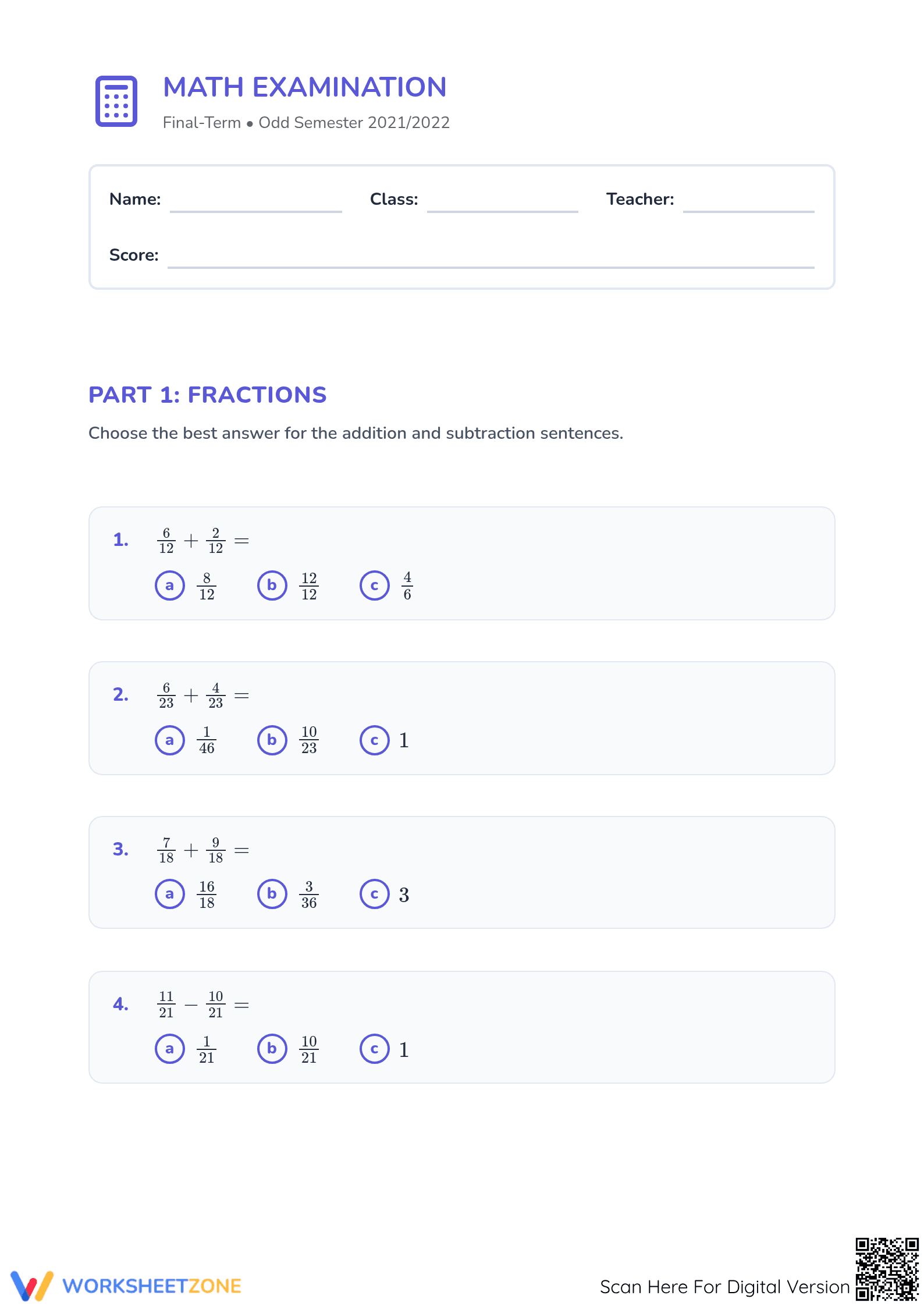
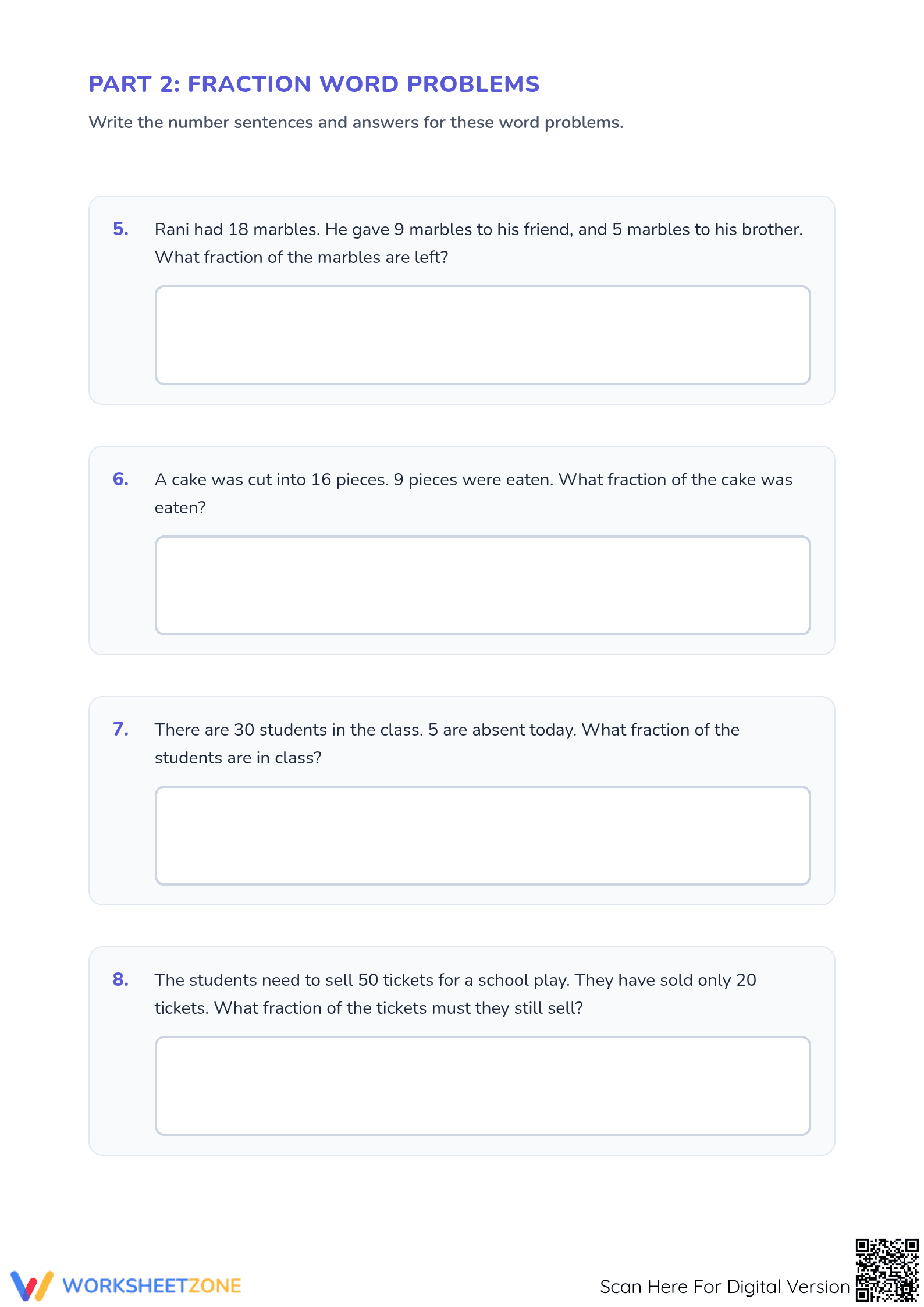
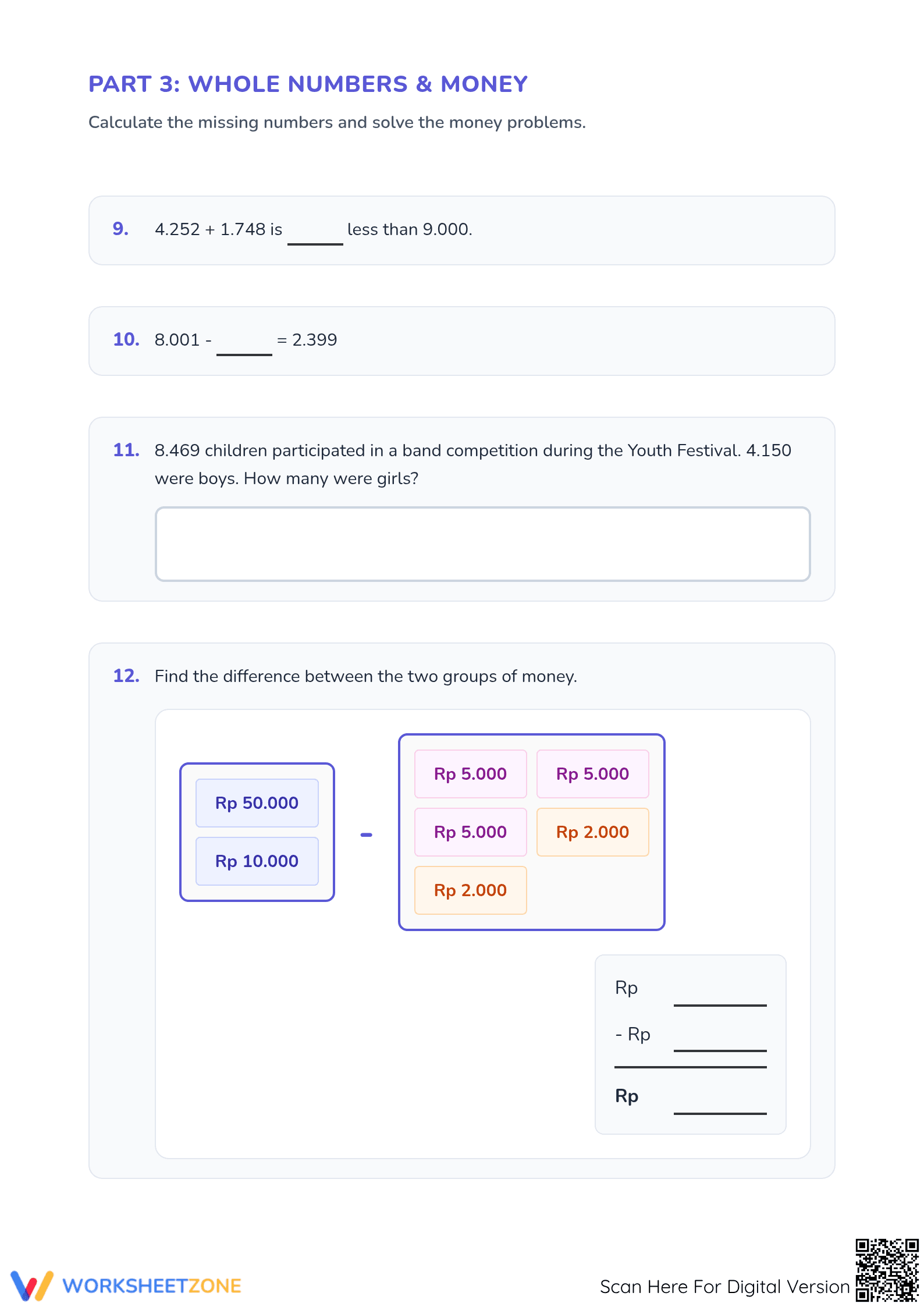
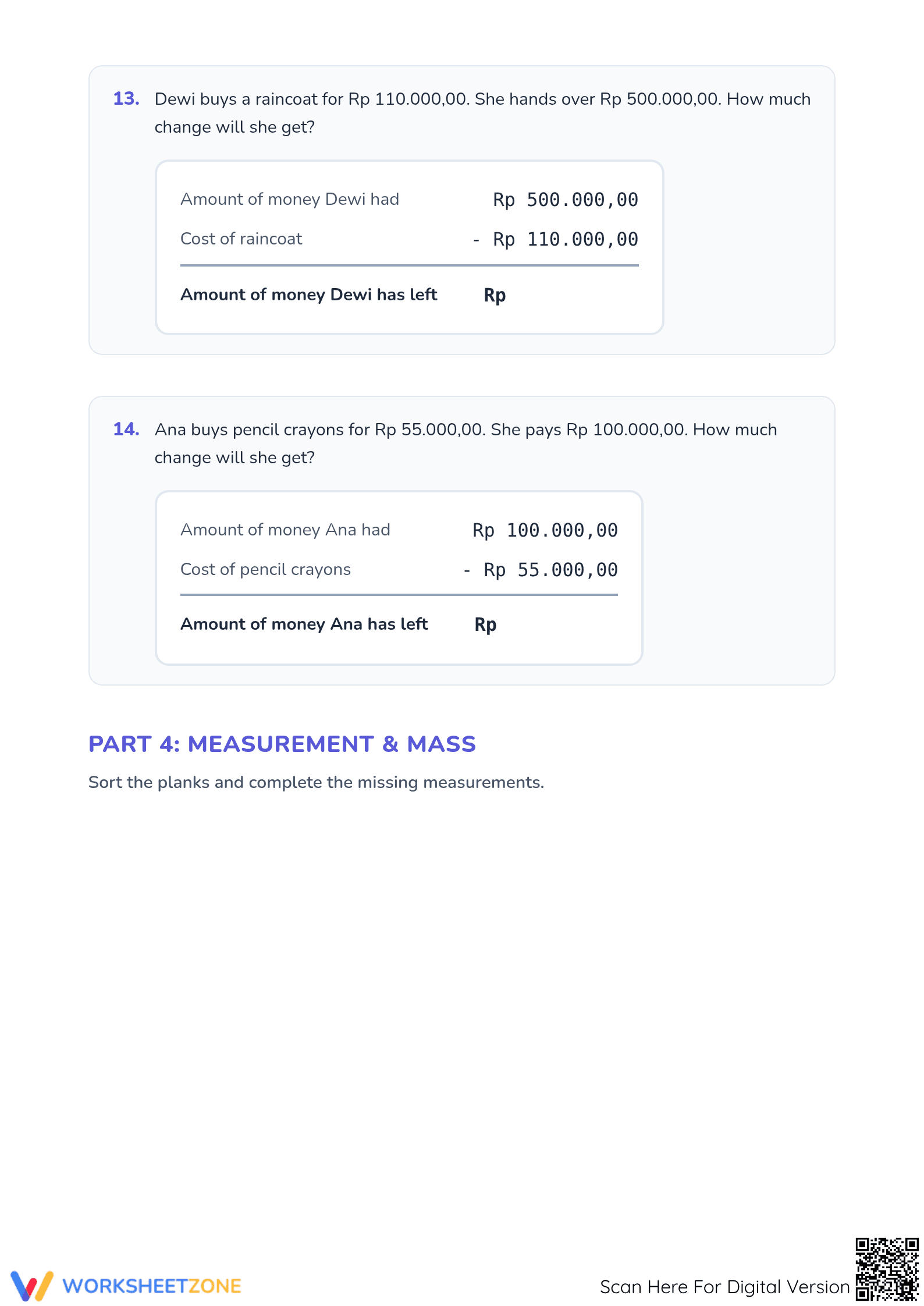
This comprehensive Grade 3 math examination provides a rigorous assessment of core elementary competencies, including fraction operations, multi-digit subtraction, currency calculations, and metric conversions. Students demonstrate mastery by solving 23 diverse problems that transition from simple computation to complex multi-step word problems. This resource ensures students can apply mathematical reasoning to real-world scenarios effectively.
At a Glance
- Grade: 3 · Subject: Math
- Standard:
CCSS.MATH.CONTENT.3.NBT.A.2— Fluently add and subtract within 1000 using strategies and algorithms- Skill Focus: Mixed Operations & Measurement
- Format: 5 pages · 23 problems · Answer key included · PDF
- Best For: End-of-term summative assessment or review
- Time: 45–60 minutes
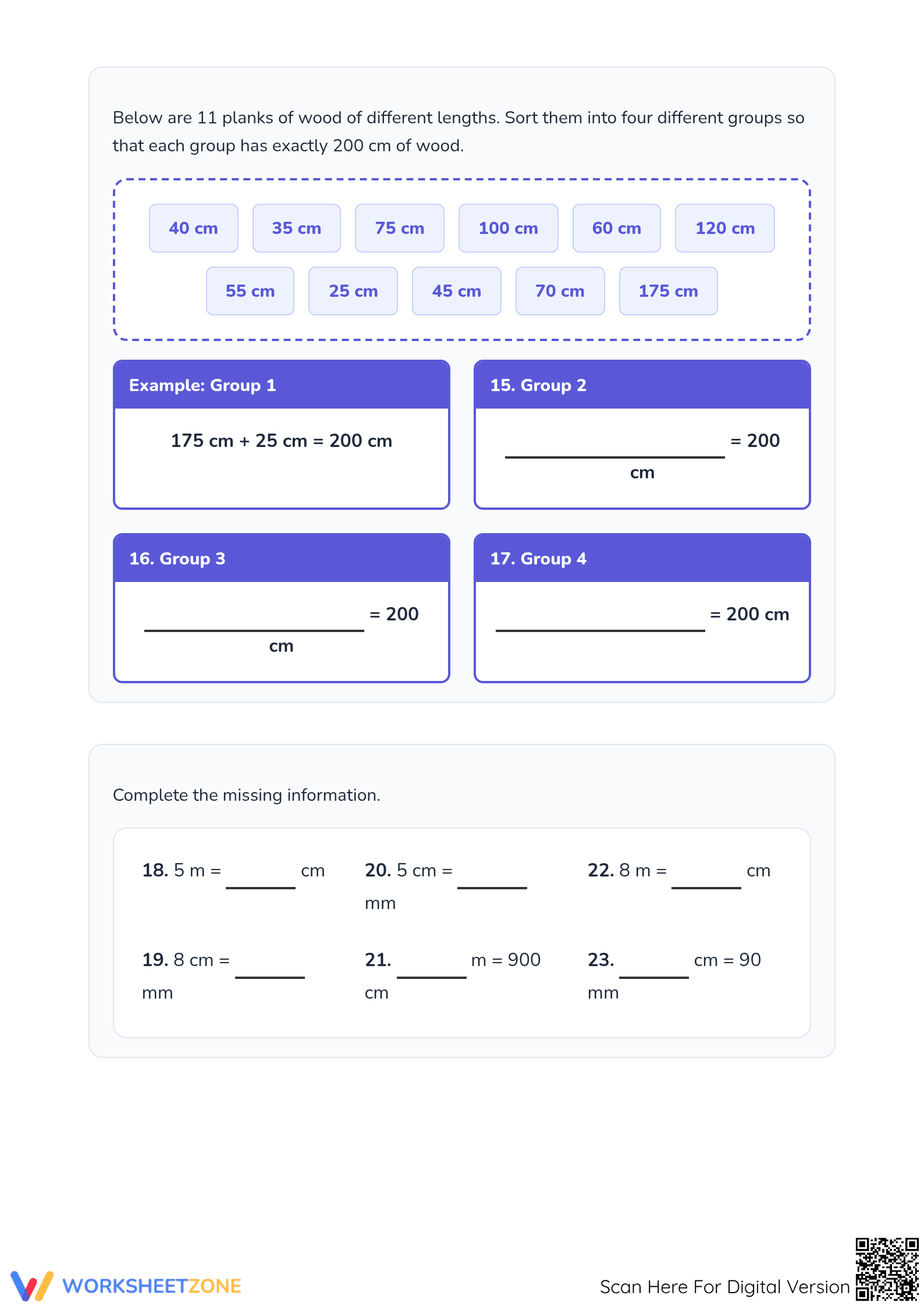
What's Inside: This 5-page assessment is organized into four distinct modules. Part 1 features multiple-choice fraction addition and subtraction. Part 2 transitions to open-ended fraction word problems. Part 3 focuses on whole number operations and decimal-based money subtraction. Finally, Part 4 challenges students with measurement sorting and metric unit conversions. A full answer key is provided for rapid grading.
Zero-Prep Workflow: This resource is designed for immediate classroom implementation with a total teacher preparation time of under 2 minutes. First, print the 5-page PDF document (30 seconds). Second, distribute the packets to students for independent work (1 minute). Third, use the included answer key to review student responses or facilitate a peer-grading session (15 minutes). It is an ideal solution for emergency sub plans or scheduled testing days.
Standards Alignment: The primary focus is `CCSS.MATH.CONTENT.3.NBT.A.2`, requiring students to fluently add and subtract within 1000. It also supports `CCSS.MATH.CONTENT.3.NF.A.1` through fraction identification and `CCSS.MATH.CONTENT.3.MD.A.2` via mass and volume measurement tasks. Both standard codes can be copied directly into lesson plans, IEP goals, or district curriculum mapping tools.
How to Use It: Administer this worksheet as a summative final exam at the end of a semester to gauge overall retention. Alternatively, use individual pages as formative exit tickets following specific units on fractions or measurement. During the session, observe how students handle the money subtraction in Part 3 to identify common regrouping errors. Expect completion within 45 to 60 minutes depending on student proficiency.
Who It's For: This assessment is tailored for general education third-grade students, though it serves as an excellent challenge for advanced second graders or a remedial review for fourth graders. It pairs naturally with visual fraction models or physical manipulatives for students requiring additional support during the word problem sections.
The efficacy of mixed-topic assessments like this Grade 3 math exam is supported by the RAND AIRS 2024 report, which emphasizes that cumulative review is essential for long-term retention of mathematical concepts. By requiring students to switch between fraction logic, decimal operations in money, and metric measurement conversions, the worksheet prevents the "blocked practice" effect where students apply a single operation without critical thought. Research indicates that interleaved practice—mixing different types of problems—leads to significantly higher scores on delayed tests compared to traditional repetitive practice. This 23-task instrument specifically targets CCSS.MATH.CONTENT.3.NBT.A.2, ensuring that students maintain fluency in addition and subtraction while simultaneously applying those skills to measurement and data contexts. Educators can utilize the structured layout to identify specific domains where a student may require targeted intervention before advancing to higher-level Grade 4 curriculum standards.


