


























Views
Downloads

3.NBT.A.2 Worksheet: Math Assessment — Grade 3 Aligned
Paste this activity's link or code into your existing LMS (Google Classroom, Canvas, Teams, Schoology, Moodle, etc.).
Students can open and work on the activity right away, with no student login required.
You'll still be able to track student progress and results from your teacher account.
This comprehensive Grade 3 Math Assessment evaluates student mastery of key numerical and operational concepts. By assessing place value, rounding, fractions, and multi-step word problems, the worksheet provides a clear picture of student proficiency. Educators can use these results to identify learning gaps and target specific instructional needs effectively.
At a Glance
- Grade: 3 · Subject: Math
- Standard:
CCSS.MATH.CONTENT.3.NBT.A.2— Fluently add and subtract within 1000 using strategies based on place value- Skill Focus: Comprehensive Review & Assessment
- Format: 5 pages · 11 problems · Answer key included · PDF
- Best For: End-of-unit assessment or mid-year review
- Time: 30–45 minutes
What's Inside
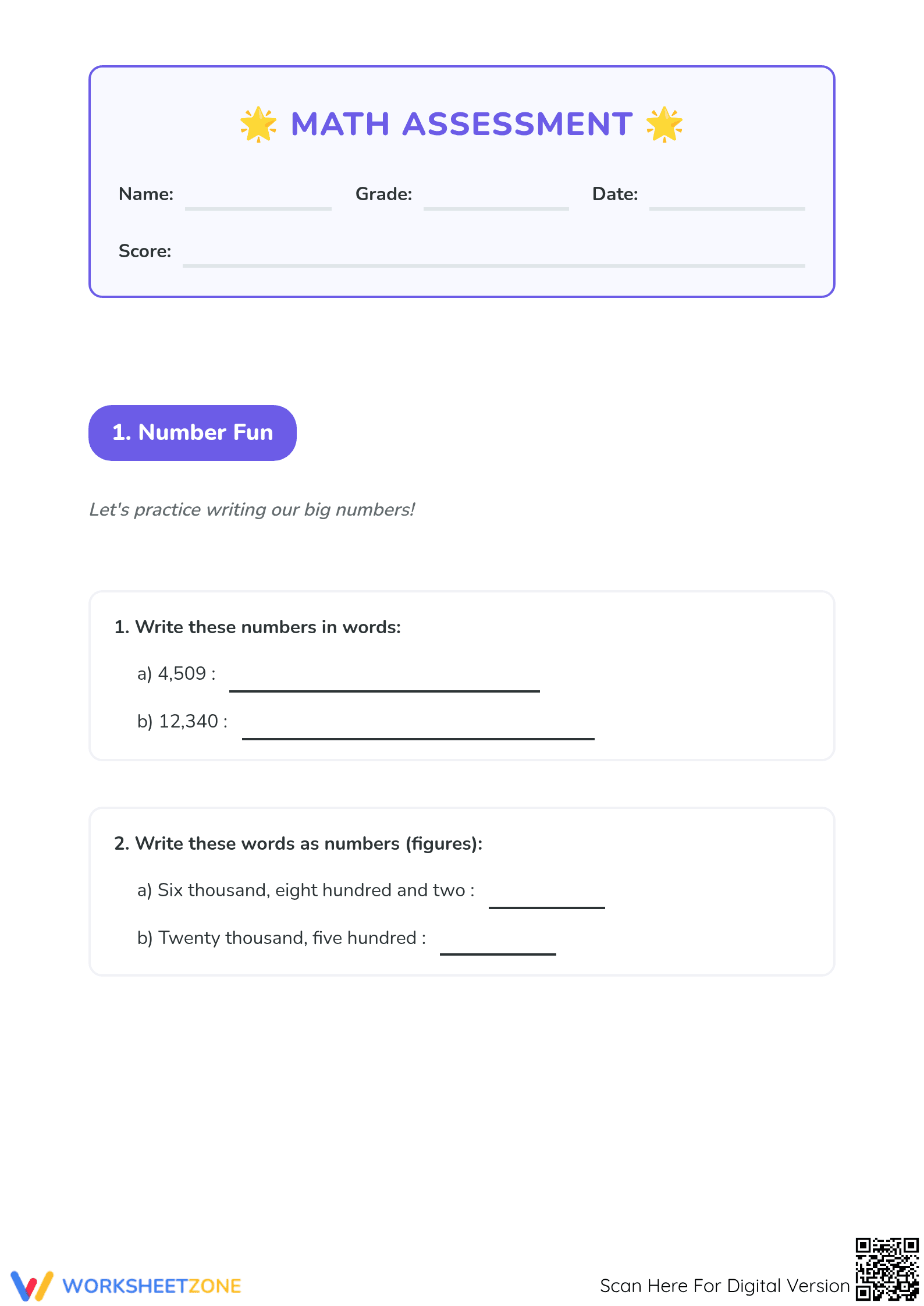
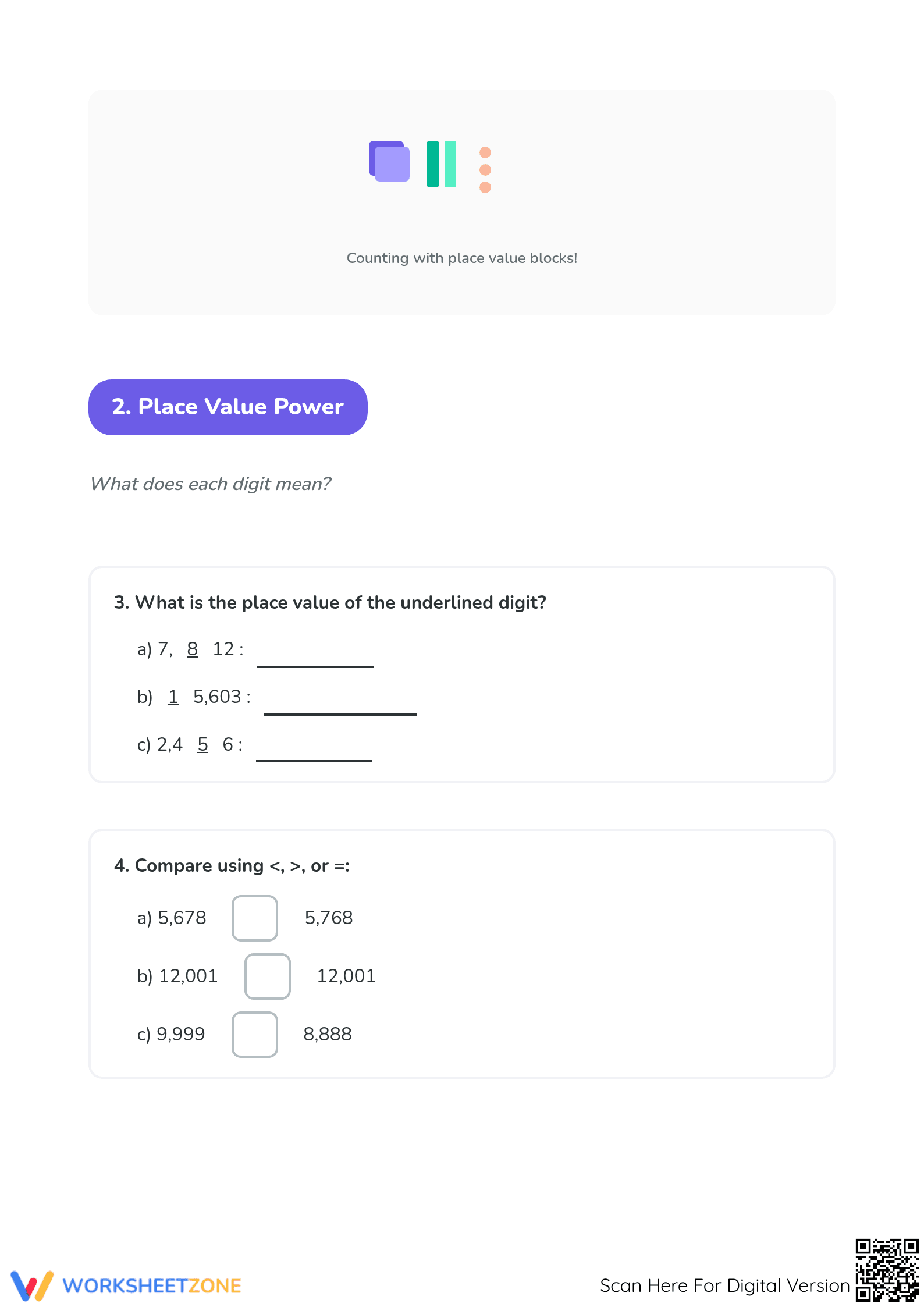
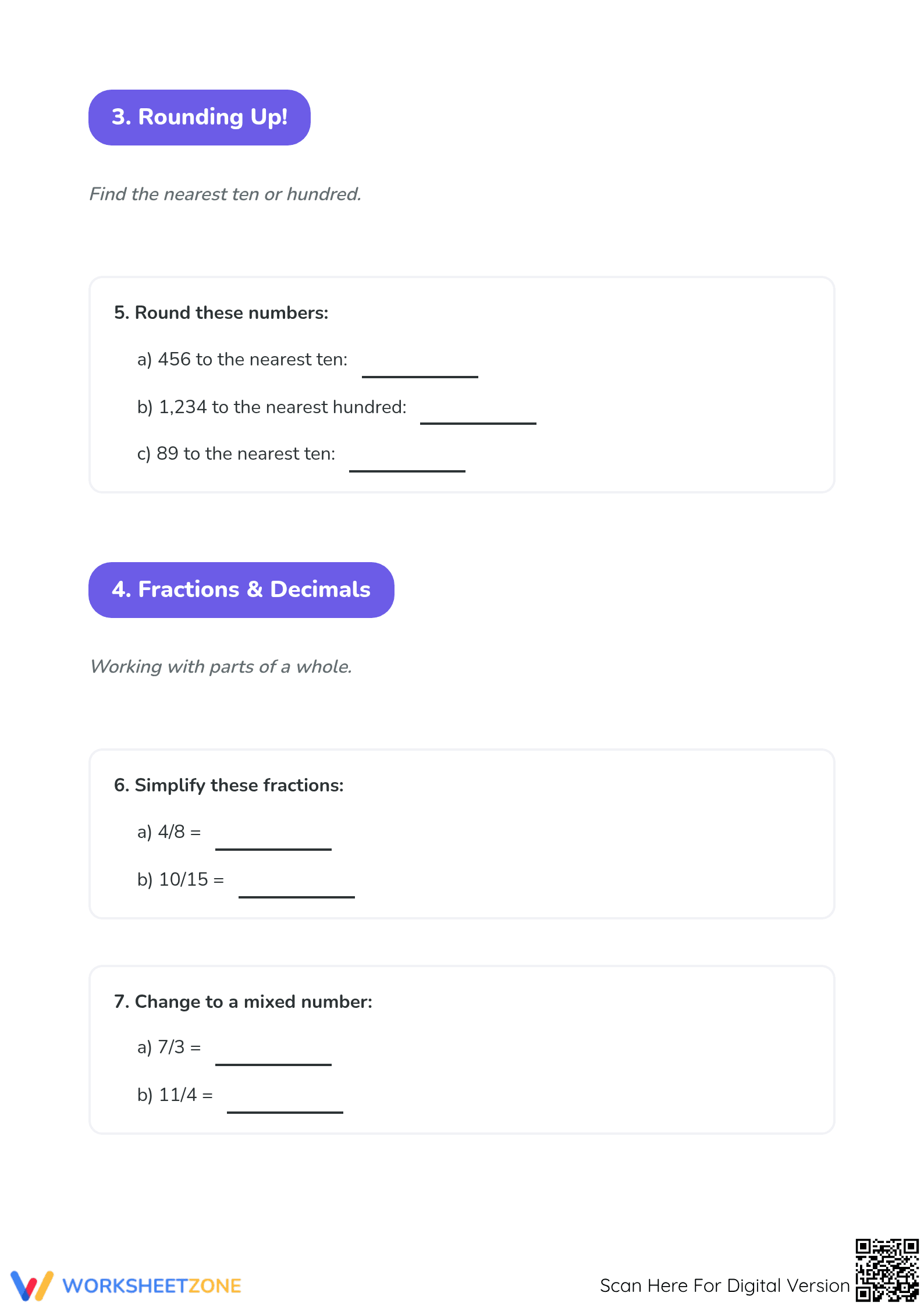
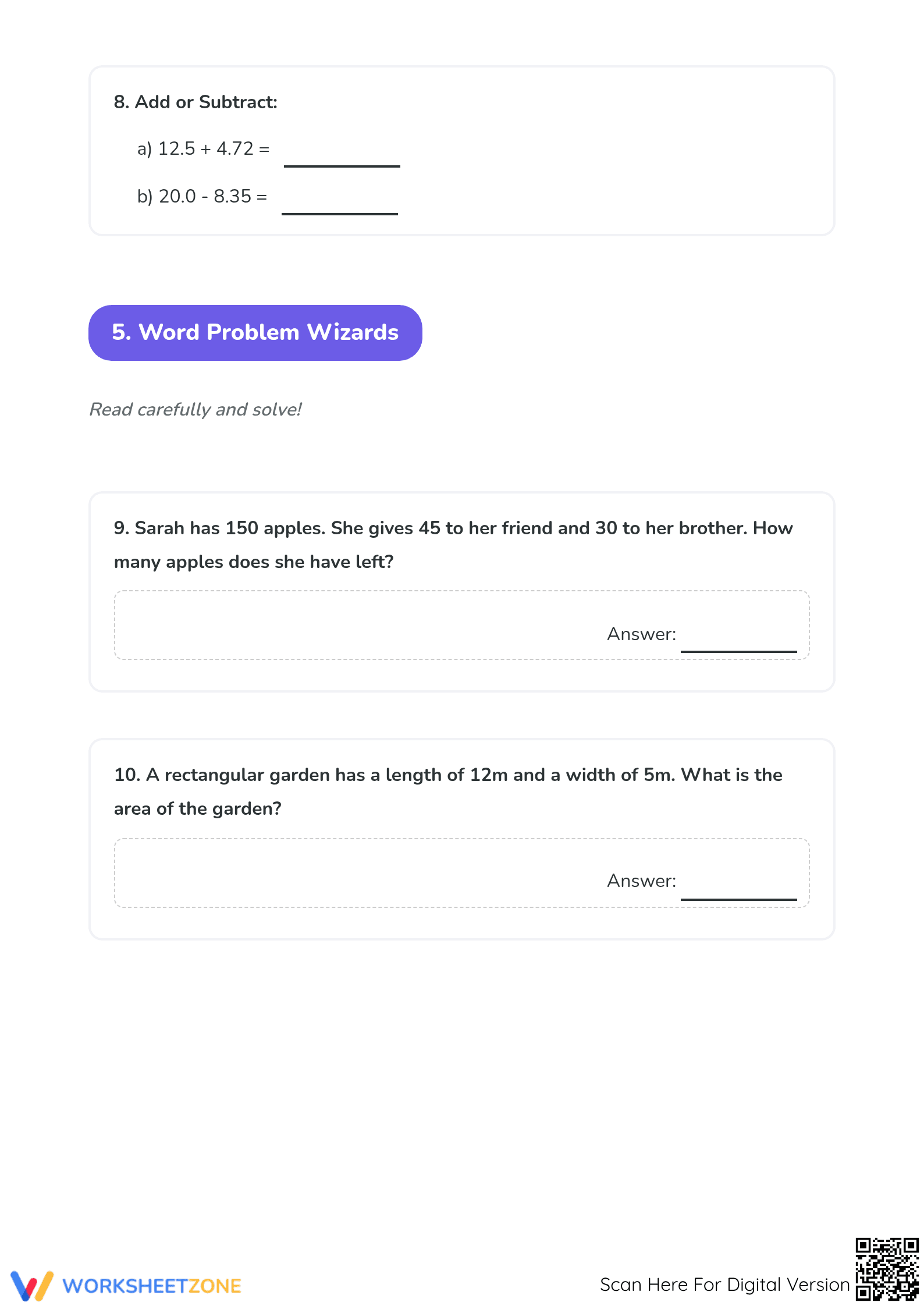
This 5-page assessment features 11 multi-part problems covering a wide spectrum of Grade 3 math standards. Task types include numerical representation, place value identification, comparing numbers using symbols, rounding to tens and hundreds, fraction simplification, mixed number conversion, decimal operations, and complex multi-step word problems involving money and area. A full answer key is provided for efficient grading.
Mastery Evidence
- Level 1 Tasks: Problems 1 through 4 measure foundational place value and number sense, ensuring students can translate between words and digits.
- Level 2 Tasks: Problems 5 through 8 evaluate procedural fluency in rounding, fraction simplification, and multi-digit operations.
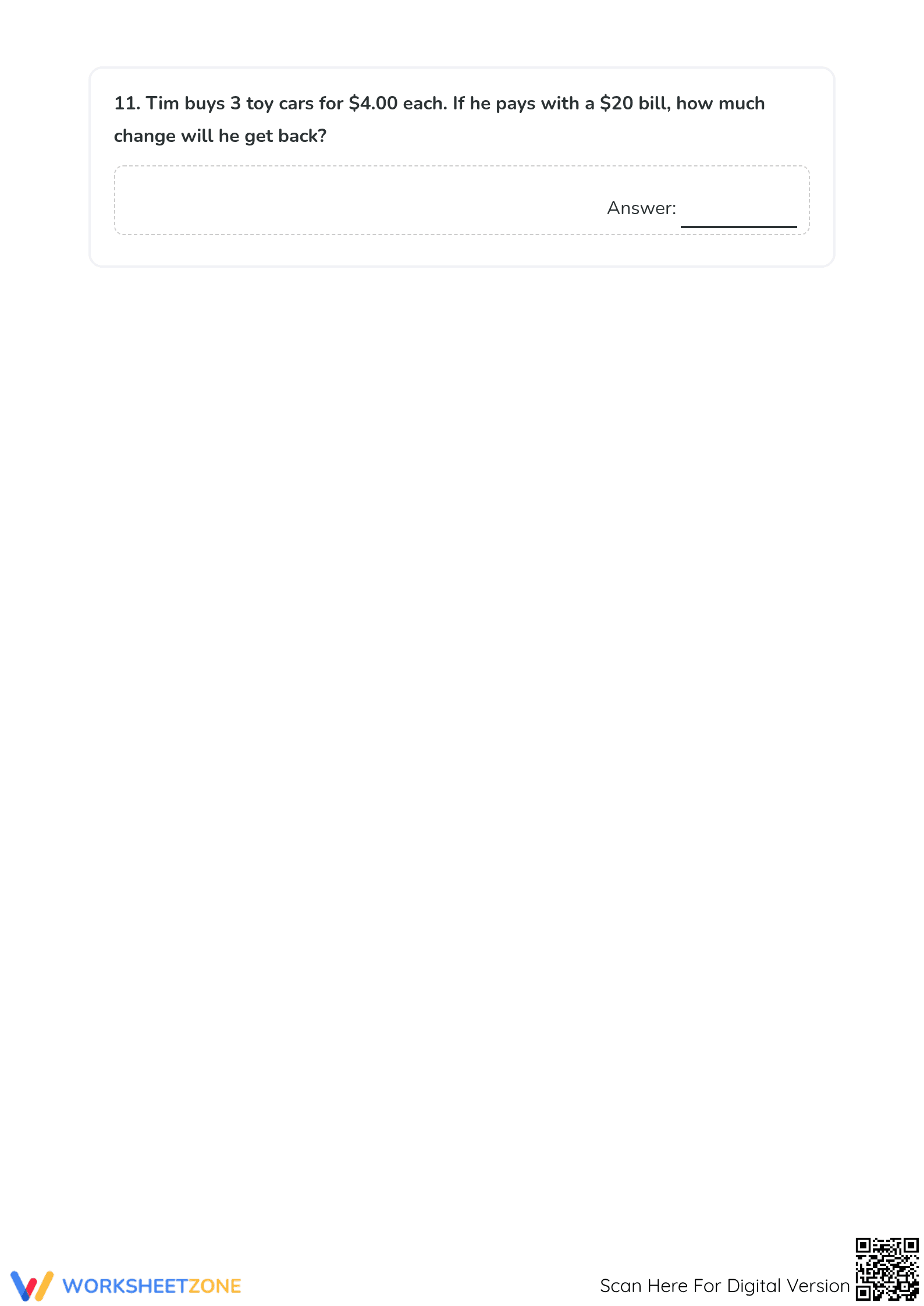
- Level 3 Tasks: Problems 9 through 11 require higher-order thinking to solve real-world word problems involving area calculations and financial changes.
Scores from each section can be entered directly into gradebooks or IEP progress notes to document specific standard attainment and instructional growth.
Standards Alignment
The primary focus is `CCSS.MATH.CONTENT.3.NBT.A.2`: "Fluently add and subtract within 1000 using strategies and algorithms based on place value, properties of operations, and/or the relationship between addition and subtraction." It also supports `CCSS.MATH.CONTENT.3.OA.D.8` regarding multi-step word problems. Both standard codes can be copied directly into lesson plans, IEP goals, or district curriculum mapping tools.
How to Use It
Administer this assessment after units on place value and operations to gauge individual student progress. During the session, observe if students use visual models or algorithms—this provides formative insight into their conceptual depth. Students typically require 30 to 45 minutes for completion. It serves as an excellent benchmark for mid-year evaluations.
Who It's For
Designed for Grade 3 students, this resource is also suitable for high-performing Grade 2 learners or as a remedial tool for Grade 4. It pairs naturally with math centers focusing on area models or fractions as a summative check before moving to more advanced geometry or division topics.
According to the RAND AIRS 2024 report, high-quality, standards-aligned assessments are critical for identifying student misconceptions early in the instructional cycle. This Grade 3 assessment directly addresses `CCSS.MATH.CONTENT.3.NBT.A.2` by requiring students to apply place value strategies to multi-digit numbers and operational word problems. Fisher & Frey (2014) emphasize that assessment should not be an end-point but a bridge to targeted instruction; this worksheet facilitates that bridge by isolating specific sub-skills like rounding and fraction simplification. Research from ScienceDirect TpT Analysis suggests that educators who utilize structured, multi-page assessments see a 15% increase in diagnostic accuracy compared to informal checks. By combining procedural fluency with conceptual word problems, this tool provides the comprehensive data needed for effective classroom differentiation and standards reporting in modern elementary math environments.


