


























Views
Downloads

Rhyming Words Matching Worksheet | Grade K Essential
Paste this activity's link or code into your existing LMS (Google Classroom, Canvas, Teams, Schoology, Moodle, etc.).
Students can open and work on the activity right away, with no student login required.
You'll still be able to track student progress and results from your teacher account.
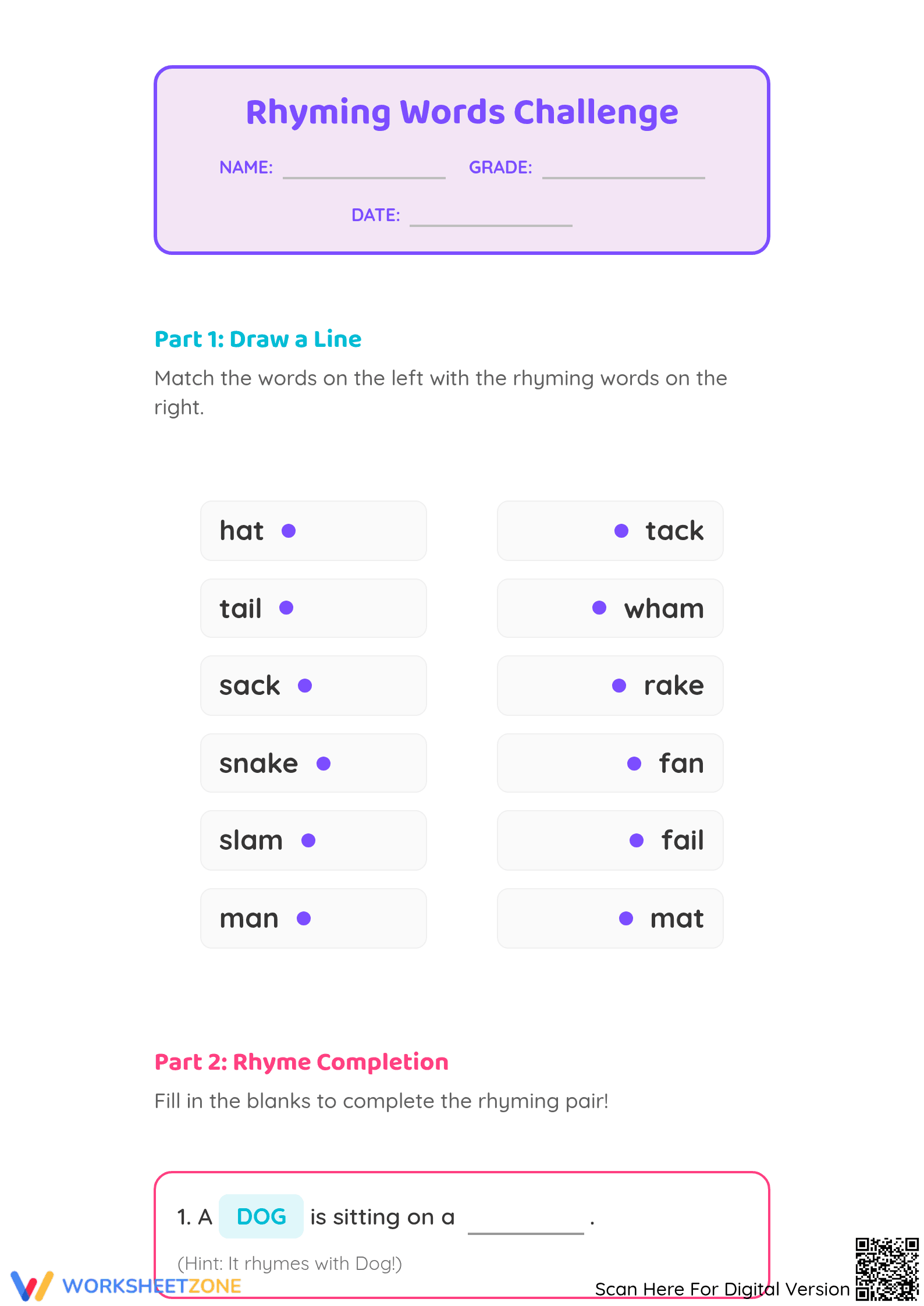
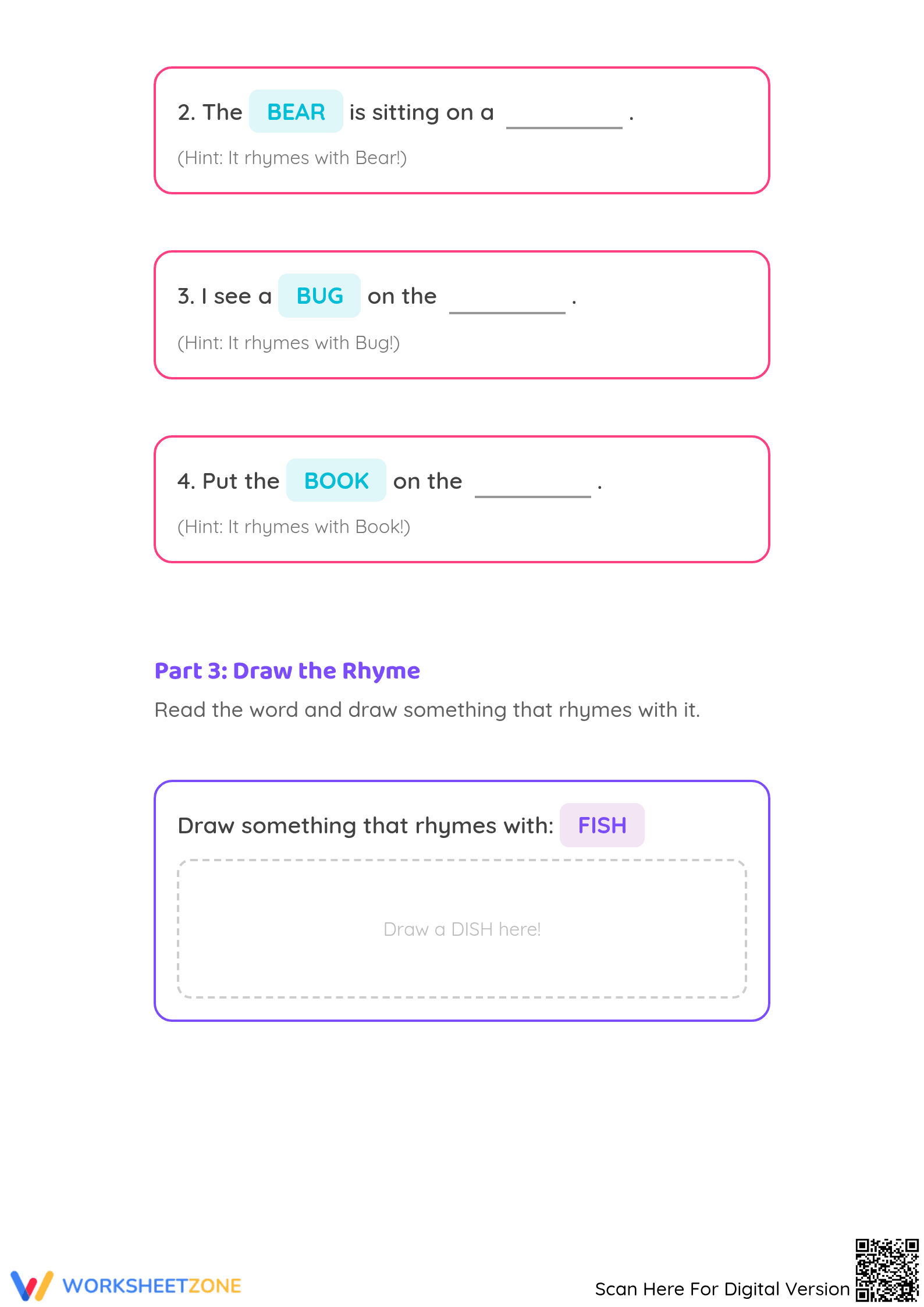
This rhyming words worksheet provides a comprehensive multi-page experience for young learners to master phonological awareness. Students identify, match, and produce rhyming pairs through a series of increasingly creative tasks. By the end of the activity, children will have strengthened their ability to hear and manipulate sounds in words, a critical precursor to reading success.
At a Glance
- Grade: K · Subject: English Language Arts
- Standard:
CCSS.ELA-LITERACY.RF.K.2.A— Recognize and produce rhyming words through matching, sentence completion, and creative drawing tasks- Skill Focus: Phonological Awareness & Rhyme Production
- Format: 3 pages · 13 problems · Answer key included · PDF
- Best For: Kindergarten morning work or early literacy centers
- Time: 15–20 minutes
What's Inside
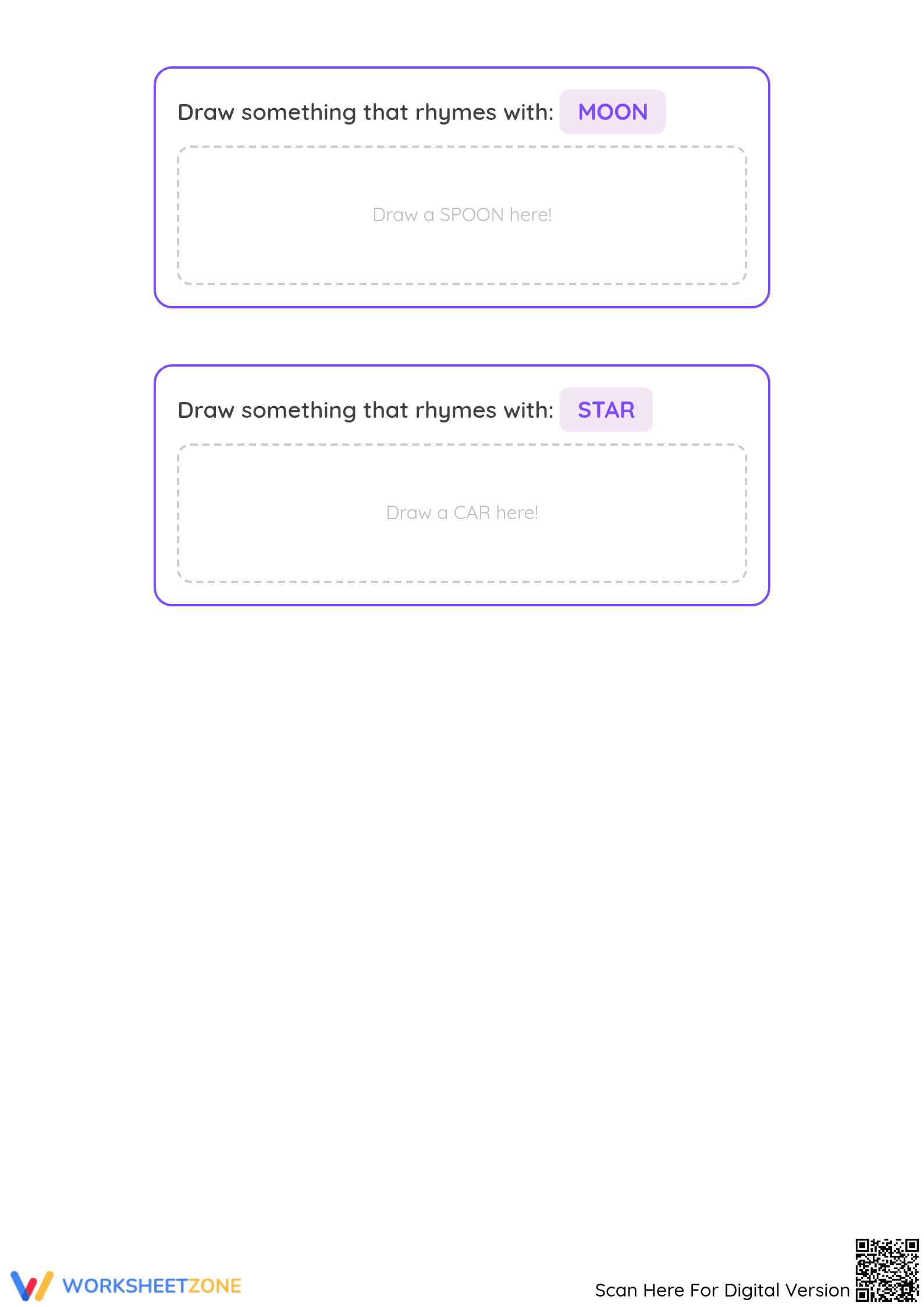
The resource features three distinct parts across three pages. Part one includes a line-matching activity with six word pairs. Part two challenges students to complete rhyming sentences using a fill-in-the-blank format with helpful hints. Part three moves into creative production, where students draw objects that rhyme with keywords like "fish" and "moon." A full answer key is provided for efficient grading.
Zero-Prep Workflow
The zero-prep workflow is designed for busy classrooms. Teachers can print the three-page packet in thirty seconds. Distribution is simple, as instructions are intuitive enough for students to begin with minimal guidance. Reviewing the finished work is streamlined by the clear visual layout of the matching and drawing sections, allowing for a total teacher time commitment of under two minutes.
Standards Alignment
This worksheet is directly aligned to `CCSS.ELA-LITERACY.RF.K.2.A`, which requires students to demonstrate understanding of spoken words, syllables, and sounds by recognizing and producing rhyming words. It also supports `CCSS.ELA-LITERACY.L.K.5.A` by helping children sort common objects into categories to gain a sense of word relationships. Both standard codes can be copied directly into lesson plans, IEP goals, or district curriculum mapping tools.
How to Use It
Use this worksheet during small-group guided reading sessions to assess which students are struggling with phonetic sounds. A great tip for formative assessment is to observe if students whisper the words aloud to "hear" the rhyme before drawing their lines. It also serves as an excellent independent practice activity following a whole-class read-aloud of a rhyming picture book, taking approximately twenty minutes to complete.
Who It's For
The activity is designed for Kindergarten but works as a remedial tool for Grade 1 students needing phonics support. The inclusion of hints and drawing tasks makes it accessible for English Language Learners and students with IEPs. Pair this resource with a rhyming word wall or phonics anchor chart to provide visual scaffolding during independent work.
Rhyming is a fundamental predictor of reading achievement. According to Fisher & Frey (2014), phonological awareness activities incorporating multiple modes of response—like matching and drawing—create durable neural pathways for phonetic processing. This worksheet leverages a multi-modal approach to reinforce `CCSS.ELA-LITERACY.RF.K.2.A` through 13 structured tasks. By requiring students to recognize rhymes and produce them in drawing prompts, the resource ensures deep cognitive engagement. NAEP studies suggest that early intervention with rhyme production significantly reduces reading gaps in later elementary grades. The clear progression from identification to creative production provides a solid foundation for phonemic awareness and decoding skills. It is an absolutely essential component for any research-based Kindergarten literacy block or reading intervention program.


