


























Views
Downloads
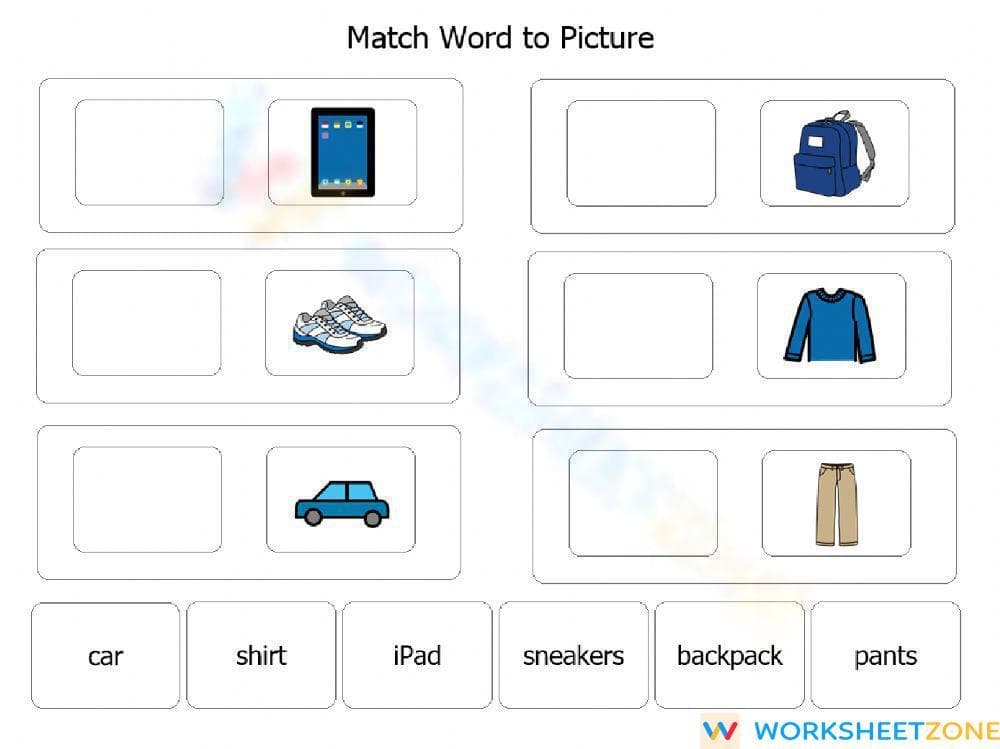


Grade K-2 Sight Words — Printable No-Prep Worksheet
Paste this activity's link or code into your existing LMS (Google Classroom, Canvas, Teams, Schoology, Moodle, etc.).
Students can open and work on the activity right away, with no student login required.
You'll still be able to track student progress and results from your teacher account.
Mastering Sight Words with Visuals
This worksheet provides essential practice for early readers in associating written words with their corresponding objects. Students will strengthen foundational vocabulary and sight word recognition by matching 12 common words to clear, simple pictures. It's an effective tool for independent practice or literacy centers in Kindergarten through Grade 2 classrooms.
At a Glance
- Grade: K–2 · Subject: ELA
- Standard:
CCSS.ELA-LITERACY.RF.1.3.G— Recognize and read grade-appropriate irregularly spelled words.- Skill Focus: Sight Word Recognition
- Format: 2 pages · 12 problems · Answer key included · PDF
- Best For: Independent practice, literacy centers
- Time: 10–15 minutes
What's Inside
This two-page PDF worksheet offers clear, focused practice. It contains 12 picture-matching problems split across two pages, with a word bank at the bottom of each. Students match common nouns to images. A full answer key is included for easy grading.
A True Print-and-Go Resource
This activity is designed for efficiency. Its self-explanatory format is perfect for sub plans, early finishers, or homework.
- Print: The two-page PDF is ready to print without adjustments.
- Distribute: The "match the word" task requires no extra instruction.
- Review: Use the included answer key for fast, objective grading.
The entire workflow takes less than 5 minutes.
Connecting to Core Standards
This worksheet directly supports foundational reading skills from the Common Core State Standards. The primary alignment is CCSS.ELA-LITERACY.RF.1.3.G, which focuses on recognizing and reading grade-appropriate words automatically. The task of instantly connecting a visual word form to its object builds the automaticity essential for reading fluency. It also supports kindergarten standards for using common nouns. Both standard codes can be copied directly into lesson plans, IEP goals, or district curriculum mapping tools.
Flexible Classroom Application
Use this as a quick pre-assessment, as independent practice during literacy centers, or as a post-lesson check for understanding. Observe which words cause hesitation to gather instant formative data. Most K-2 students can complete this in 10-15 minutes, making it a perfect warm-up or transition task. It is also effective for reinforcing vocabulary with English Language Learners.
Ideal for Early Readers
This resource is built for students in Kindergarten through Grade 2 mastering basic word recognition. The design is accessible, and for added support, can be used with a classroom word wall or picture dictionary. It provides a concrete step for students moving from decoding to reading whole words at a glance.
This worksheet provides targeted practice on a critical early literacy skill: orthographic mapping, the process of connecting phonemes to graphemes for instant word recognition. Aligned with CCSS.ELA-LITERACY.RF.1.3.G, it helps students build a bank of familiar words they can read automatically, a prerequisite for fluent reading comprehension. Research consistently shows that a large sight vocabulary is a key differentiator in early reading success. The 2024 RAND AIRS report on foundational skills emphasized the importance of repeated, varied exposure to high-frequency words in primary grades. By asking students to explicitly match a word's form to its meaning (represented by a picture), this activity strengthens that mental connection. This simple task structure is effective because it minimizes cognitive load, allowing students to focus solely on the word-recognition component, which is a cornerstone of evidence-based reading instruction.


