


























Views
Downloads

Irregular Past Tense Verbs | Grade 1 Printable ELA
Paste this activity's link or code into your existing LMS (Google Classroom, Canvas, Teams, Schoology, Moodle, etc.).
Students can open and work on the activity right away, with no student login required.
You'll still be able to track student progress and results from your teacher account.
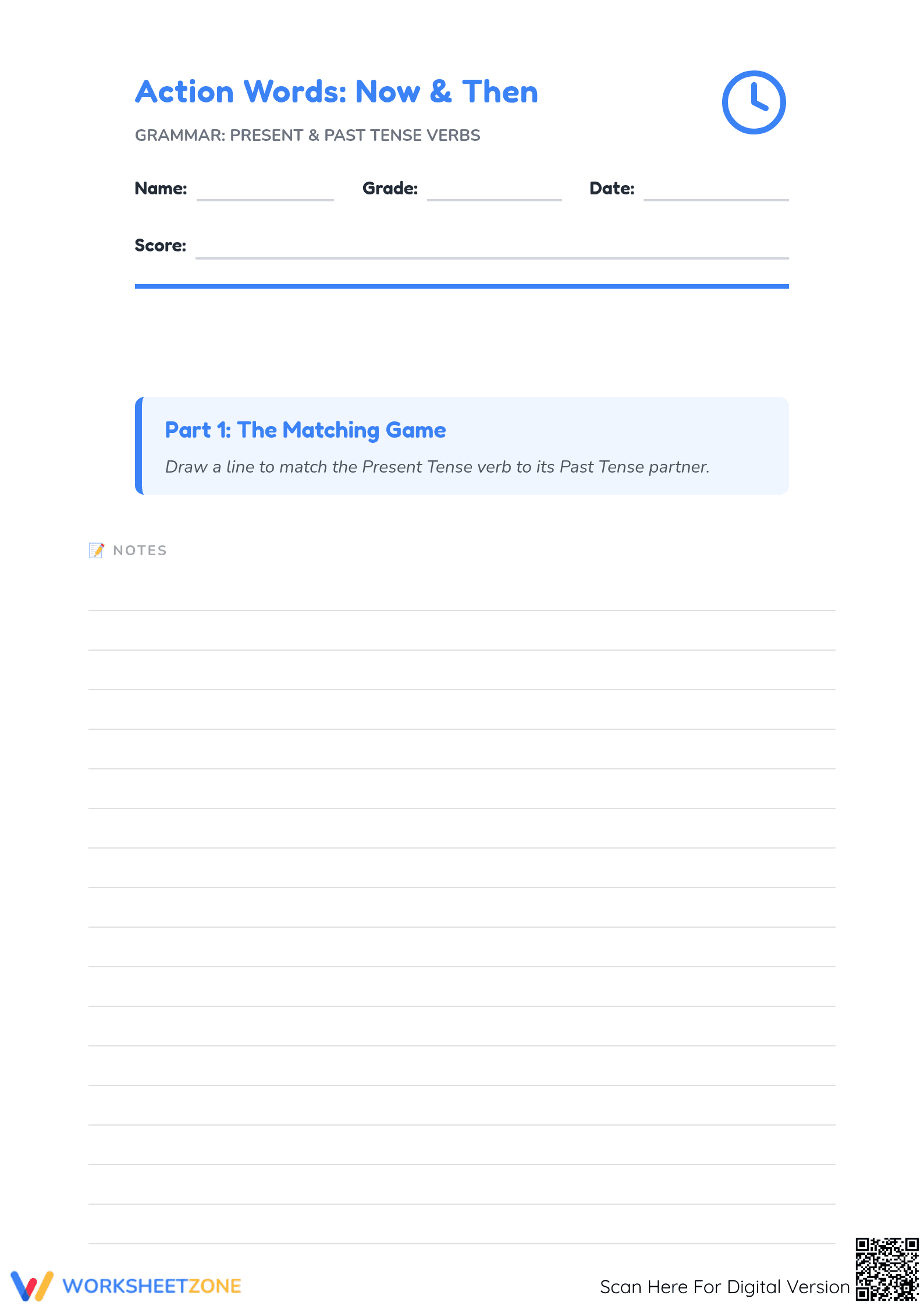
This Grade 1 irregular past tense verbs worksheet provides students with a comprehensive framework for identifying and using non-standard verb forms. By moving from recognition to application, learners build the linguistic foundation necessary for fluent storytelling and accurate recount writing. This resource ensures students can confidently transition between "now" and "then" in their daily communication.
At a Glance
- Grade: 1 · Subject: ELA
- Standard:
CCSS.ELA-LITERACY.L.1.1.E— Use verbs to convey a sense of past, present, and future- Skill Focus: Irregular past tense verb forms
- Format: 4 pages · 22 problems · Answer key included · PDF
- Best For: Independent grammar practice and formative assessment
- Time: 20–30 minutes
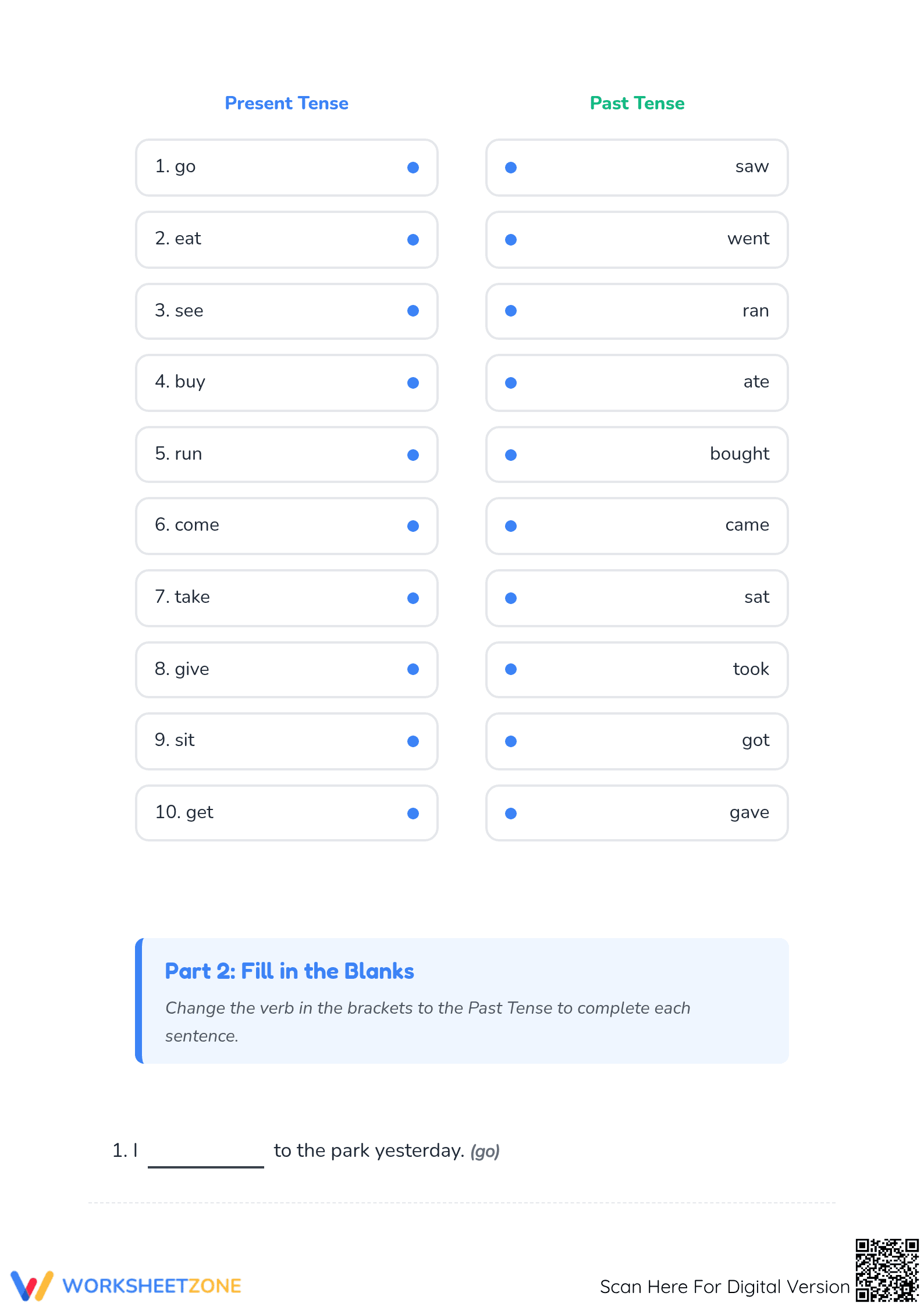
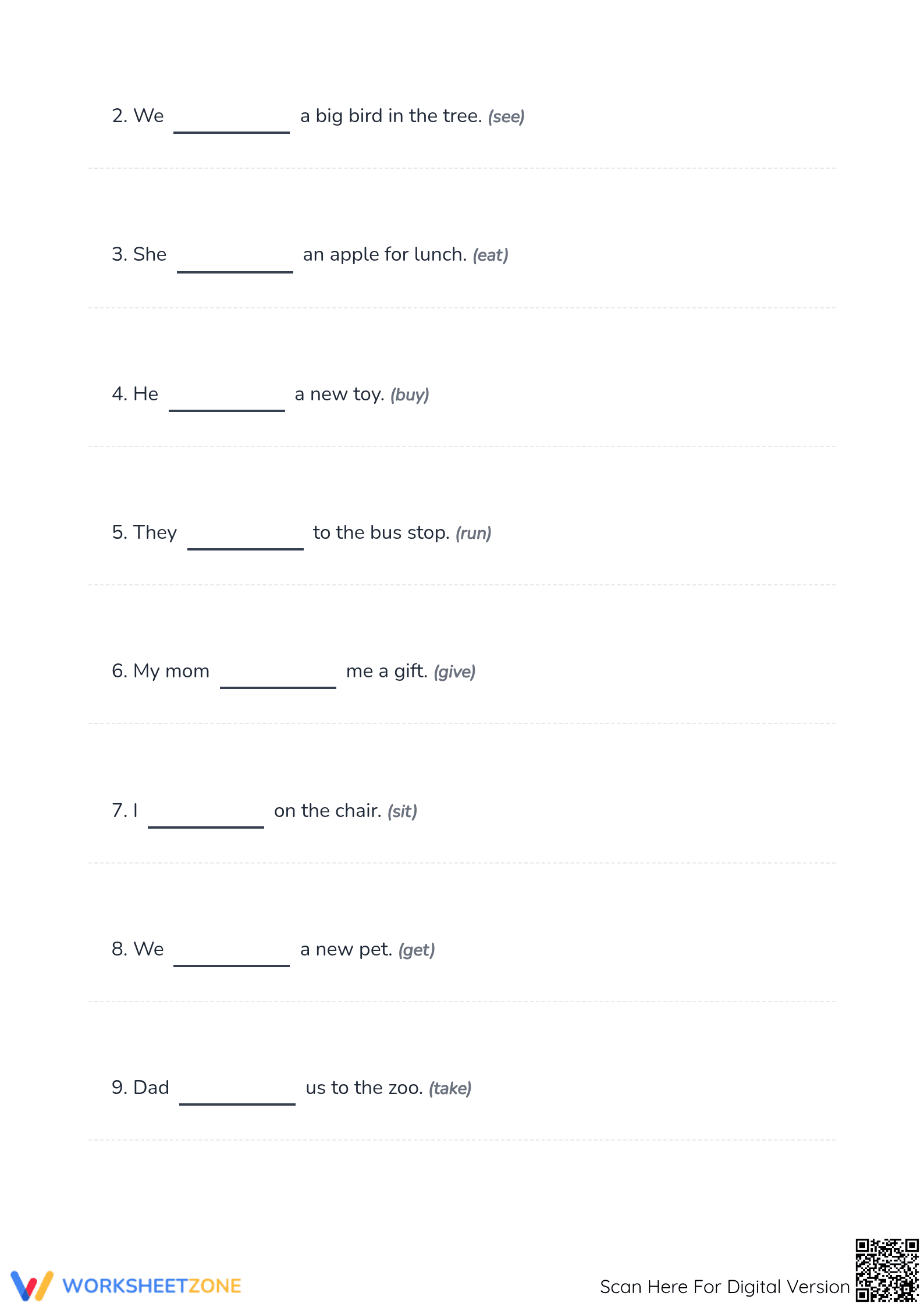
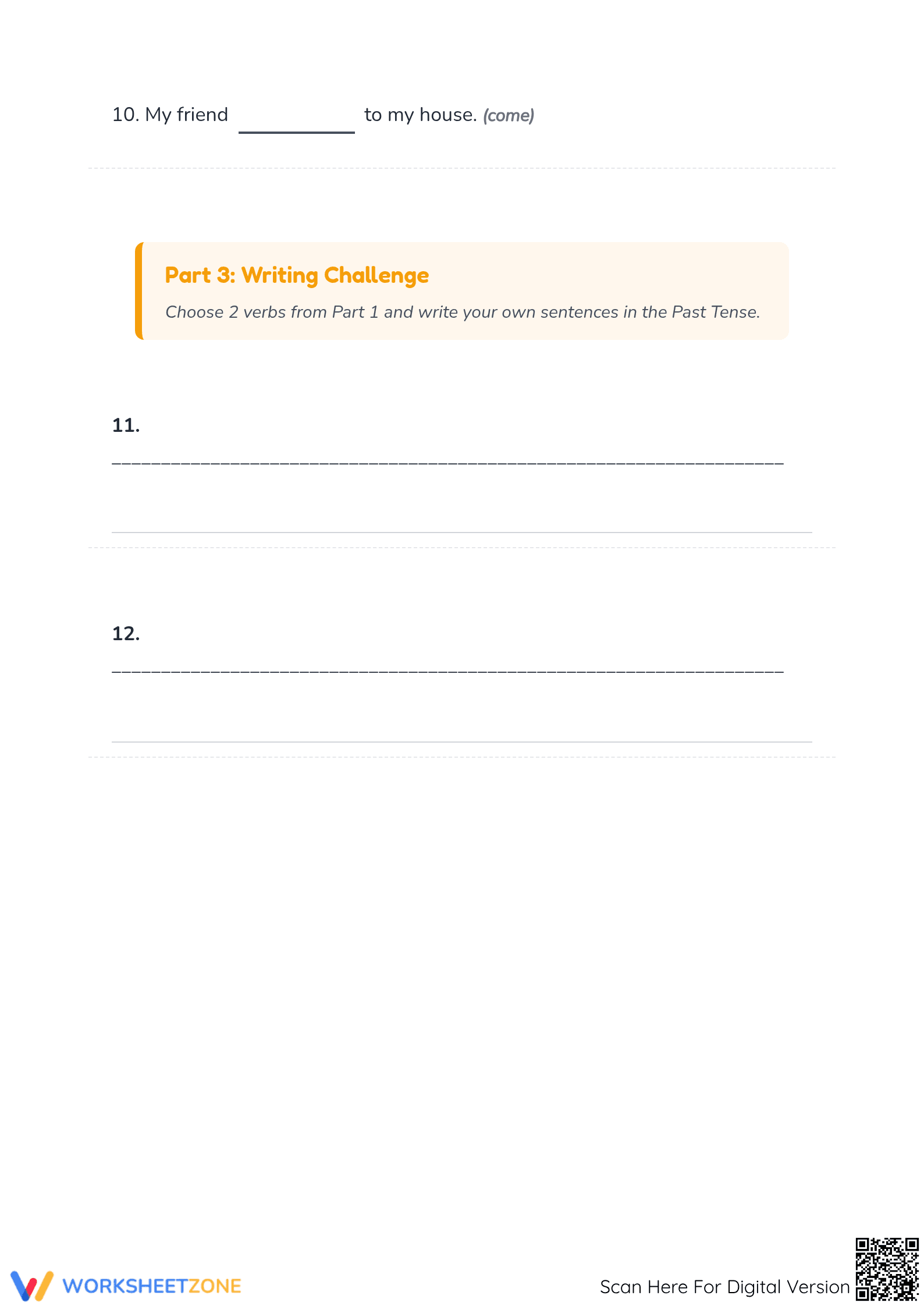
What's Inside: This 4-page instructional packet contains 22 distinct tasks designed to reinforce high-frequency irregular verbs. The layout includes a visual matching section for 10 verb pairs, a sentence-level cloze activity with 10 items, and a creative writing extension. A full answer key is provided to facilitate quick grading or student self-correction, making it an ideal choice for busy classroom environments.
Skill Progression
- Guided Practice: Students begin with "The Matching Game," connecting 10 present-tense base verbs to their irregular past-tense counterparts. This visual association reduces cognitive load while introducing tricky pairs like "go/went" and "eat/ate."
- Supported Practice: The second phase features 10 fill-in-the-blank sentences. Students must transform a provided base verb into the correct past-tense form within a contextual sentence, bridging the gap between isolated words and functional syntax.
- Independent Practice: The final "Writing Challenge" requires students to select two verbs and generate original sentences. This high-order task ensures students can internalize the grammar rules and apply them without external prompts.
This gradual-release model follows the research-backed "I Do, We Do, You Do" instructional strategy to ensure student mastery.
Standards Alignment
This resource is specifically designed to meet `CCSS.ELA-LITERACY.L.1.1.E`: "Use verbs to convey a sense of past, present, and future." While many first-grade resources focus on the addition of "-ed," this worksheet targets the more challenging irregular forms that often cause developmental errors. Both standard codes can be copied directly into lesson plans, IEP goals, or district curriculum mapping tools.
How to Use It
Use this worksheet during the "independent practice" portion of a grammar lesson or as a targeted intervention for students struggling with verb tense consistency. It serves as an excellent formative assessment tool; teachers should observe if students can correctly identify the "go" to "went" transition in Part 2. Completion typically takes 20 to 30 minutes depending on writing speed.
Who It's For
This packet is optimized for first-grade students but is also highly effective for second-grade review or English Language Learners (ELL) who are navigating the complexities of English verb conjugation. It pairs naturally with a classroom anchor chart featuring common irregular verbs or a shared reading passage focused on personal narratives.
According to Fisher & Frey (2014), the gradual release of responsibility is essential for linguistic mastery in early childhood education. This worksheet applies those principles by scaffolding the transition from simple recognition in the 10-item matching section to complex production in the writing challenge. By targeting CCSS.ELA-LITERACY.L.1.1.E, the resource addresses the specific developmental need for Grade 1 students to move beyond regular suffix rules and memorize high-frequency irregular forms. The inclusion of 22 total tasks provides sufficient repetition to move these forms into long-term memory, a key requirement for literacy as noted in the NAEP framework. Educators can use the provided answer key to identify specific patterns of error, allowing for data-driven small-group instruction that targets specific verb pairs like "buy/bought" or "see/saw" effectively.


