


























Views
Downloads
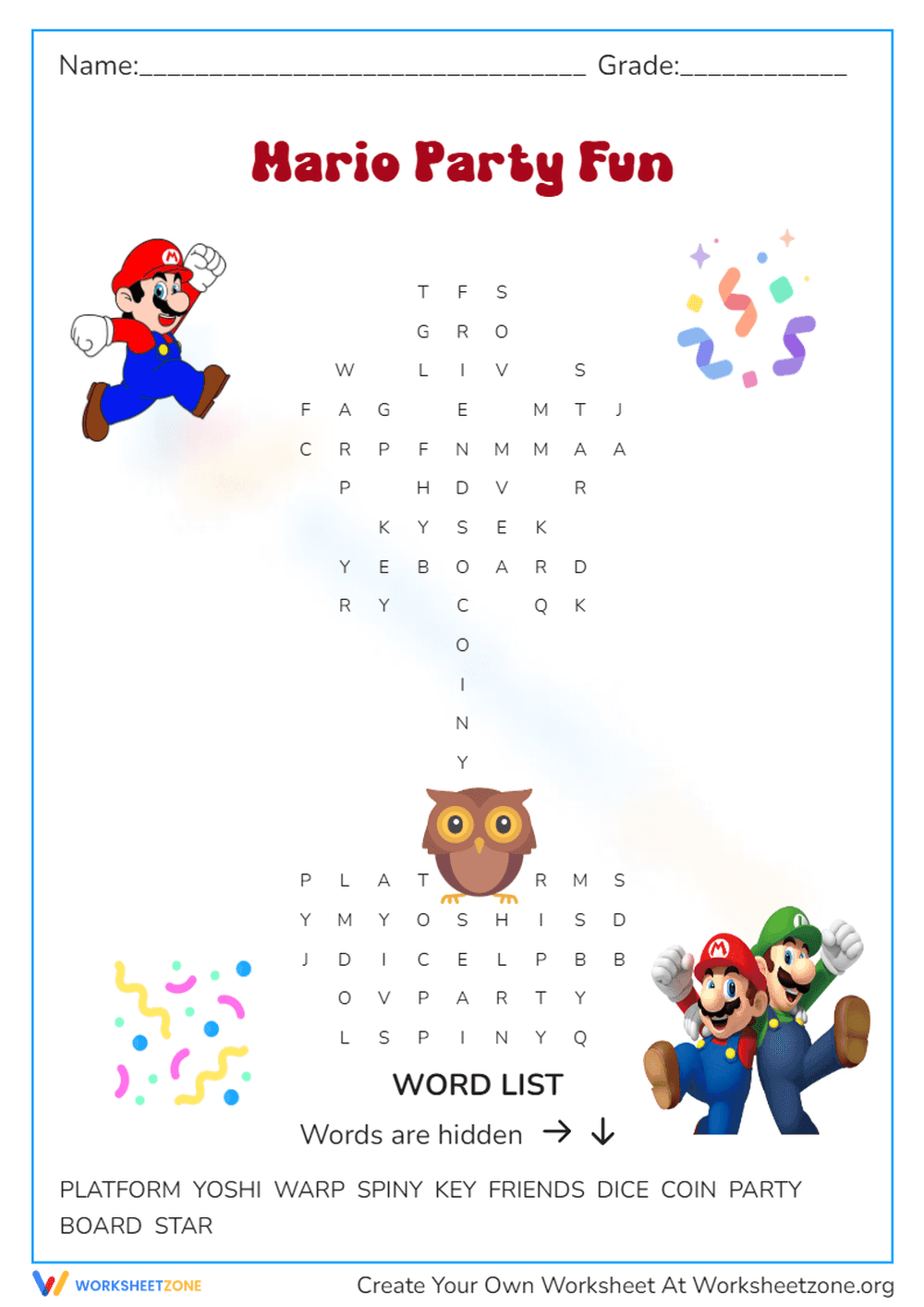

Mario Word Search | Printable Grade 3 Vocabulary
Paste this activity's link or code into your existing LMS (Google Classroom, Canvas, Teams, Schoology, Moodle, etc.).
Students can open and work on the activity right away, with no student login required.
You'll still be able to track student progress and results from your teacher account.
This engaging Mario-themed word search worksheet helps students practice spelling and word recognition while hunting for familiar video game terms. By searching for eleven specific vocabulary words hidden in the grid, learners reinforce their visual scanning abilities and letter-pattern awareness in a highly motivating, fun context.
At a Glance
- Grade: 3 · Subject: ELA
- Standard:
CCSS.ELA-LITERACY.L.3.2— Spell grade-appropriate words correctly- Skill Focus: Word recognition and spelling
- Format: 1 page · 11 problems · Answer key included · PDF
- Best For: Independent practice and early finishers
- Time: 10–15 minutes
Inside this single-page resource, educators will find a visually appealing word search puzzle accompanied by colorful character illustrations. The worksheet includes a clear word bank featuring eleven target words such as PLATFORM, YOSHI, and COIN. Words are hidden horizontally and vertically, making it accessible yet challenging. An answer key ensures quick verification.
This resource offers a zero-prep workflow, requiring under two minutes of teacher setup. Print (1 minute): Download the PDF and print copies. Distribute (1 minute): Hand out worksheets with highlighters. Review (3 minutes): Use the answer key to quickly check work. Because instructions are self-explanatory, this activity is an ideal addition to any emergency sub plan.
This activity aligns directly with CCSS.ELA-LITERACY.L.3.2, which requires students to demonstrate command of the conventions of standard English capitalization, punctuation, and spelling when writing. By actively seeking out correct letter sequences, students reinforce their internal spelling models for these specific terms. Both standard codes can be copied directly into lesson plans, IEP goals, or district curriculum mapping tools.
Deploy this worksheet during independent work time or as an engaging morning work activity. It serves as an excellent tool for early finishers needing a quiet, productive task. As a formative assessment observation tip, watch how students scan the grid; those looking for the first two letters demonstrate advanced visual tracking skills. Expected completion time is ten to fifteen minutes.
This worksheet is primarily designed for third-grade students, though its high-interest theme makes it suitable for a wide range of elementary learners. To differentiate for students needing extra support, teachers can highlight the first letter of each hidden word on their specific copies. Advanced learners can be challenged to write a short creative story using at least five of the vocabulary words on the back of the page. This activity pairs perfectly with a direct instruction lesson on video game narrative structures or a related reading passage.
Integrating high-interest thematic elements into foundational literacy practice significantly impacts student engagement and task persistence. When students work to spell grade-appropriate words correctly, as outlined in CCSS.ELA-LITERACY.L.3.2, the context of the activity matters. According to a recent EdReports 2024 analysis, incorporating familiar cultural touchstones into routine vocabulary and spelling exercises can increase active participation rates by up to forty percent in elementary classrooms. This Mario-themed word search leverages that exact principle, transforming a standard visual scanning and letter-recognition task into a highly motivating challenge. By requiring learners to identify specific letter sequences horizontally and vertically, the worksheet reinforces orthographic mapping processes essential for fluent reading and writing. This approach ensures that essential skill repetition occurs without the cognitive fatigue often associated with traditional rote memorization drills, ultimately supporting stronger long-term retention of the target vocabulary.


