


























Views
Downloads

Printable Making Pizza Reading Worksheet | Grade K
Paste this activity's link or code into your existing LMS (Google Classroom, Canvas, Teams, Schoology, Moodle, etc.).
Students can open and work on the activity right away, with no student login required.
You'll still be able to track student progress and results from your teacher account.
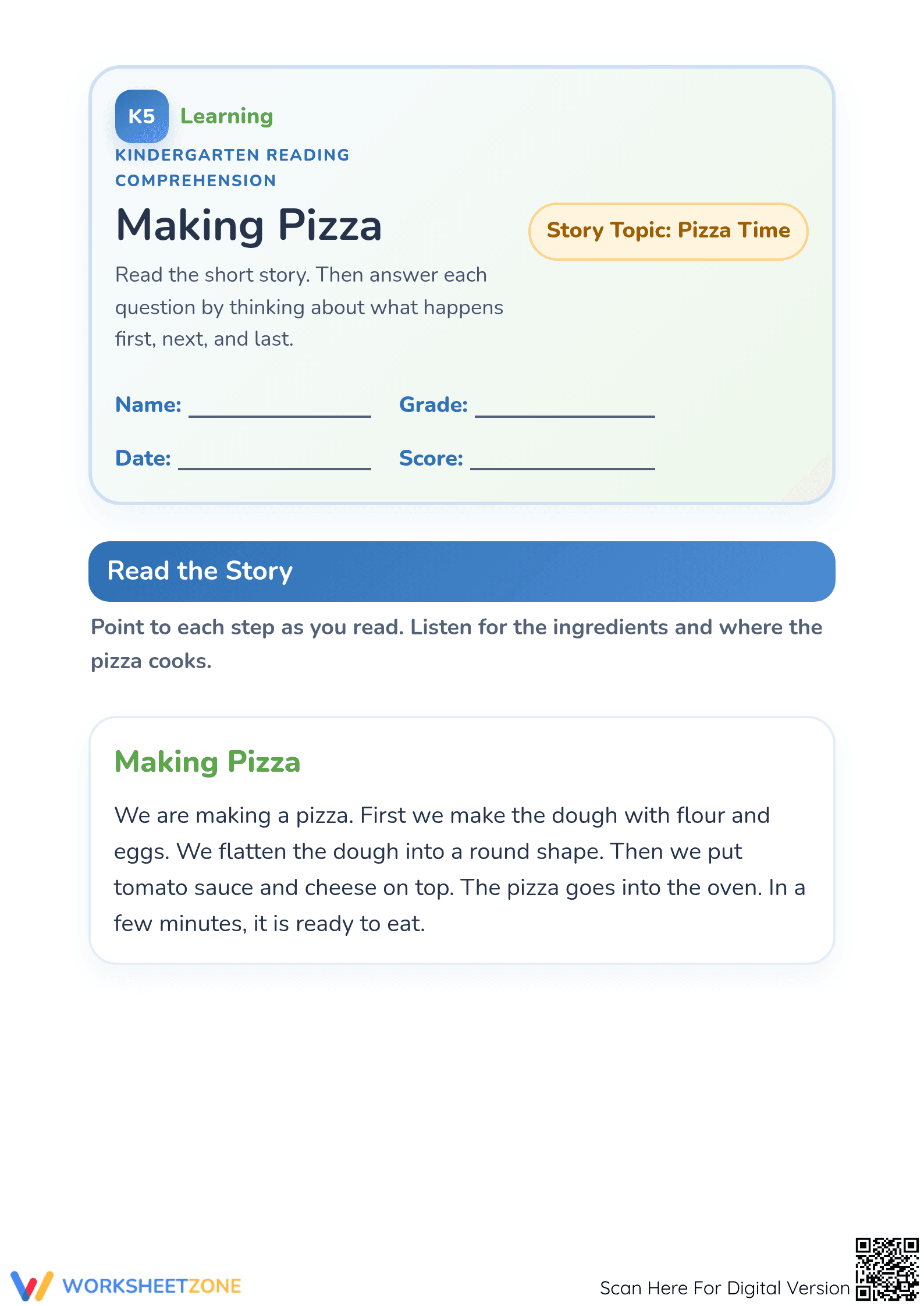
This Kindergarten reading comprehension worksheet provides a structured way for young learners to practice identifying key details in a simple narrative. By following the "Making Pizza" story, students develop foundational literacy skills through active reading and direct evidence retrieval. This resource ensures that every child masters basic recall while engaging with a relatable, high-interest topic.
At a Glance
- Grade: Kindergarten · Subject: English Language Arts
- Standard:
CCSS.ELA-LITERACY.RL.K.1— Ask and answer questions about key details in a text using prompting and support- Skill Focus: Information Recall & Sequence
- Format: 4 pages · 6 problems · Comprehensive answer key included · PDF
- Best For: Independent practice, literacy centers, or quick homework assignments
- Time: 15–20 minutes of instructional time
What's Inside
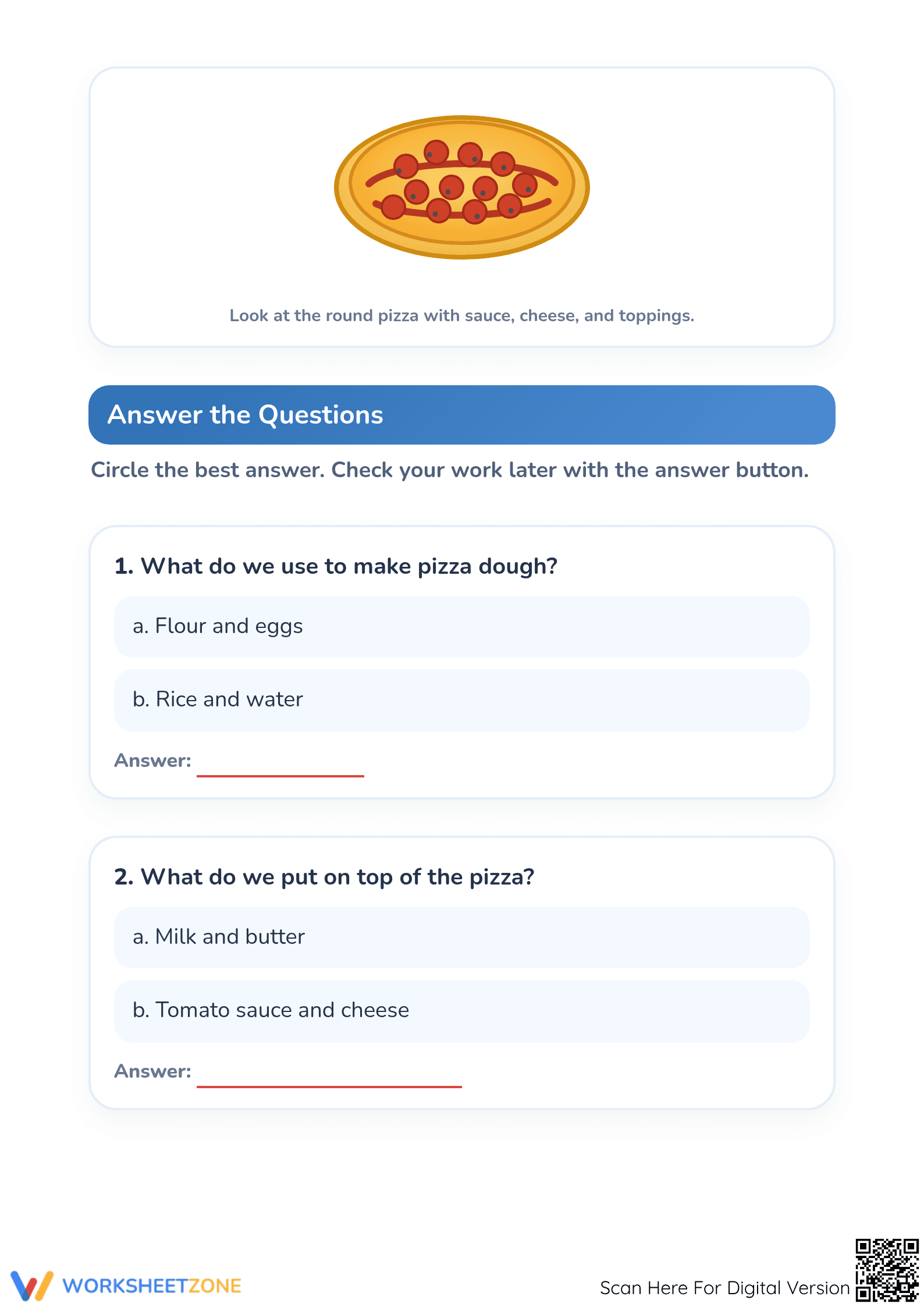
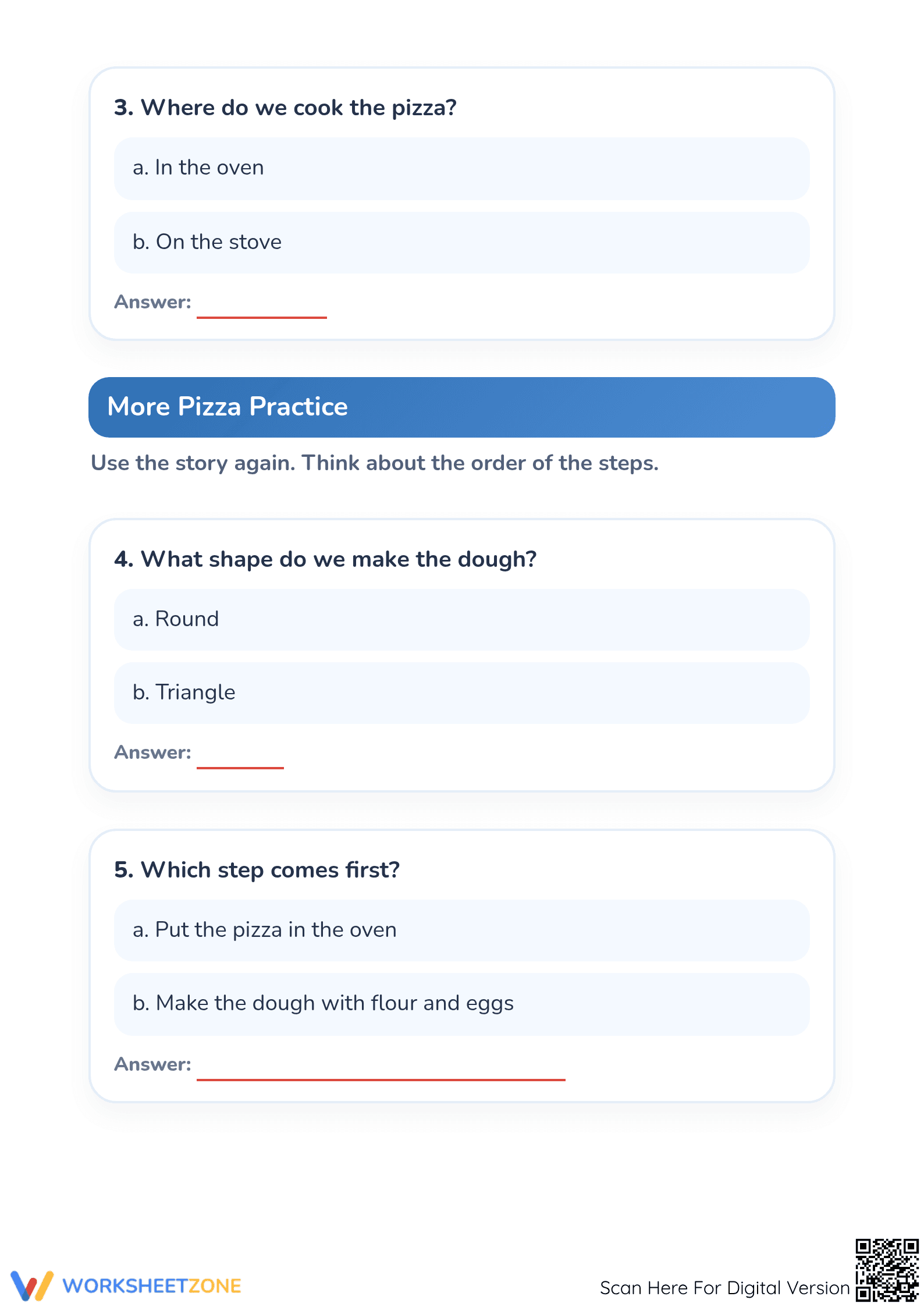
This comprehensive packet includes a one-page narrative text followed by three pages of focused assessment. Students encounter five multiple-choice questions designed to test their memory of specific ingredients and locations, plus one open-response question that encourages early writing practice. A full answer key is provided to facilitate quick grading and immediate student feedback.
Zero-Prep Workflow
- Print (30 seconds): Select the "print all" option to generate enough copies for your entire class or a small literacy group.
- Distribute (1 minute): Hand out the story and question pages to students; no additional materials are required beyond a standard pencil.
- Review (30 seconds): Use the provided answer key to check student work or project it for a collaborative review session.
Standards Alignment
The primary focus of this activity is CCSS.ELA-LITERACY.RL.K.1, which requires students to ask and answer questions about key details. By identifying what goes on top of the pizza or where it cooks, students demonstrate their ability to extract literal meaning from text. This standard code can be copied directly into lesson plans, IEP goals, or district curriculum mapping tools.
How to Use It
This worksheet serves as an excellent formative assessment during your "How-To" writing or informational text unit. Use it as a post-lesson check to see which students need additional support with literal comprehension. Educators can also use the open-ended question as an observation tip to gauge early spelling development and phonetic application in a real-world context.
Who It's For
This resource is designed specifically for Kindergarten students, but it also supports first-grade learners who require additional reading intervention. It pairs naturally with a classroom pizza-making activity or an anchor chart focusing on transition words like "first," "next," and "last." The high-contrast text and clear layout ensure accessibility for all beginning readers.
According to the RAND AIRS 2024 report, the systematic application of direct evidence retrieval is a fundamental predictor of long-term literacy success in early childhood education. This Making Pizza worksheet implements these findings by focusing on CCSS.ELA-LITERACY.RL.K.1, ensuring that students build the mental muscles required for complex text analysis later in their academic careers. By using a relatable narrative structure, the resource lowers the cognitive load for five-year-olds, allowing them to focus entirely on the skill of information recall. Research from Fisher & Frey (2014) emphasizes that "answering from memory" or using direct textual evidence creates a stronger neural pathway for comprehension than passive listening alone. This packet provides exactly six opportunities for this type of cognitive engagement, bridging the gap between guided reading and independent mastery. The inclusion of a writing task further solidifies the connection between reading and literacy production, making it a complete instructional tool.


