




























Views
Downloads

Making Inferences Worksheet | Grade 6 Reading Essential

Paste this activity's link or code into your existing LMS (Google Classroom, Canvas, Teams, Schoology, Moodle, etc.).
Students can open and work on the activity right away, with no student login required.
You'll still be able to track student progress and results from your teacher account.
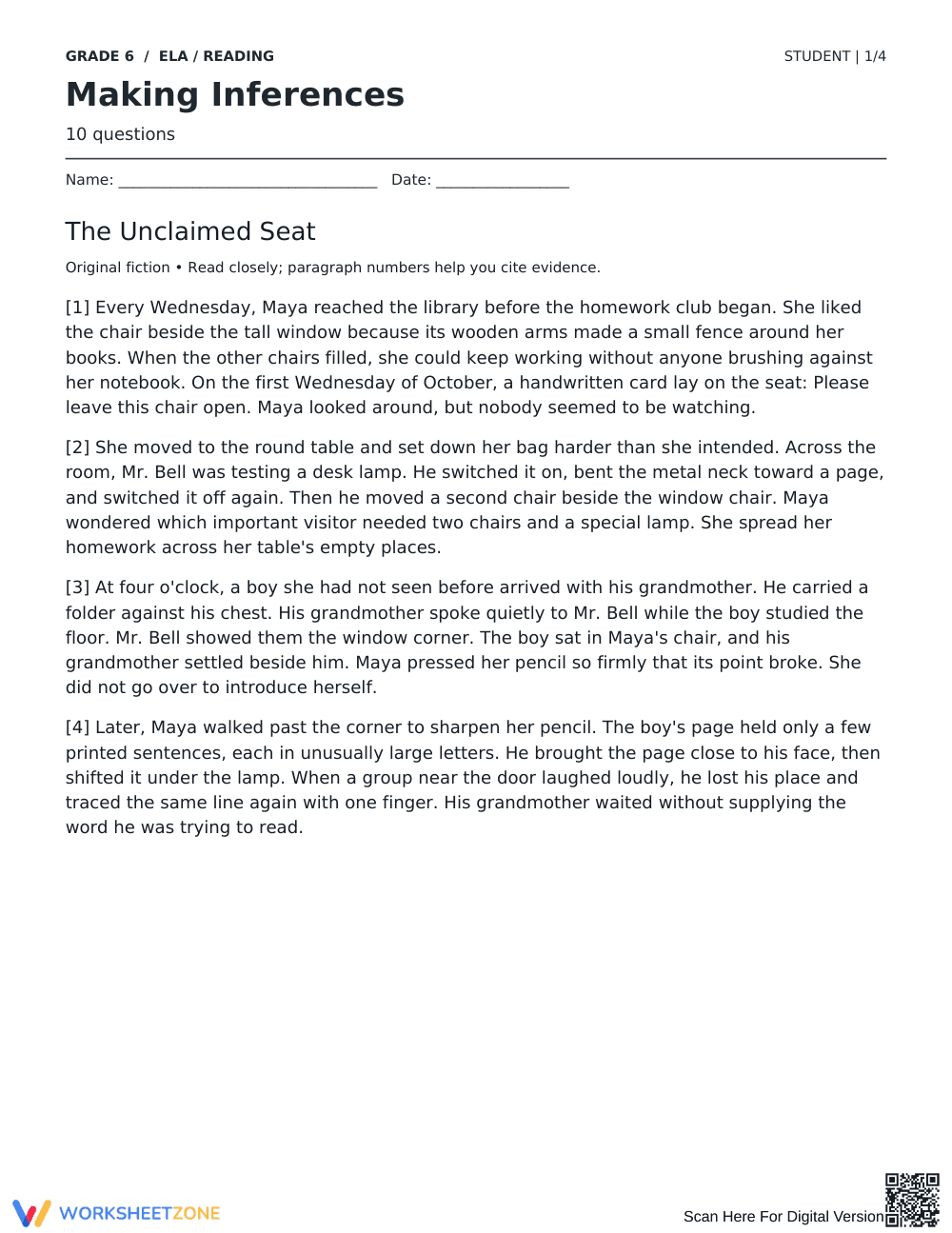
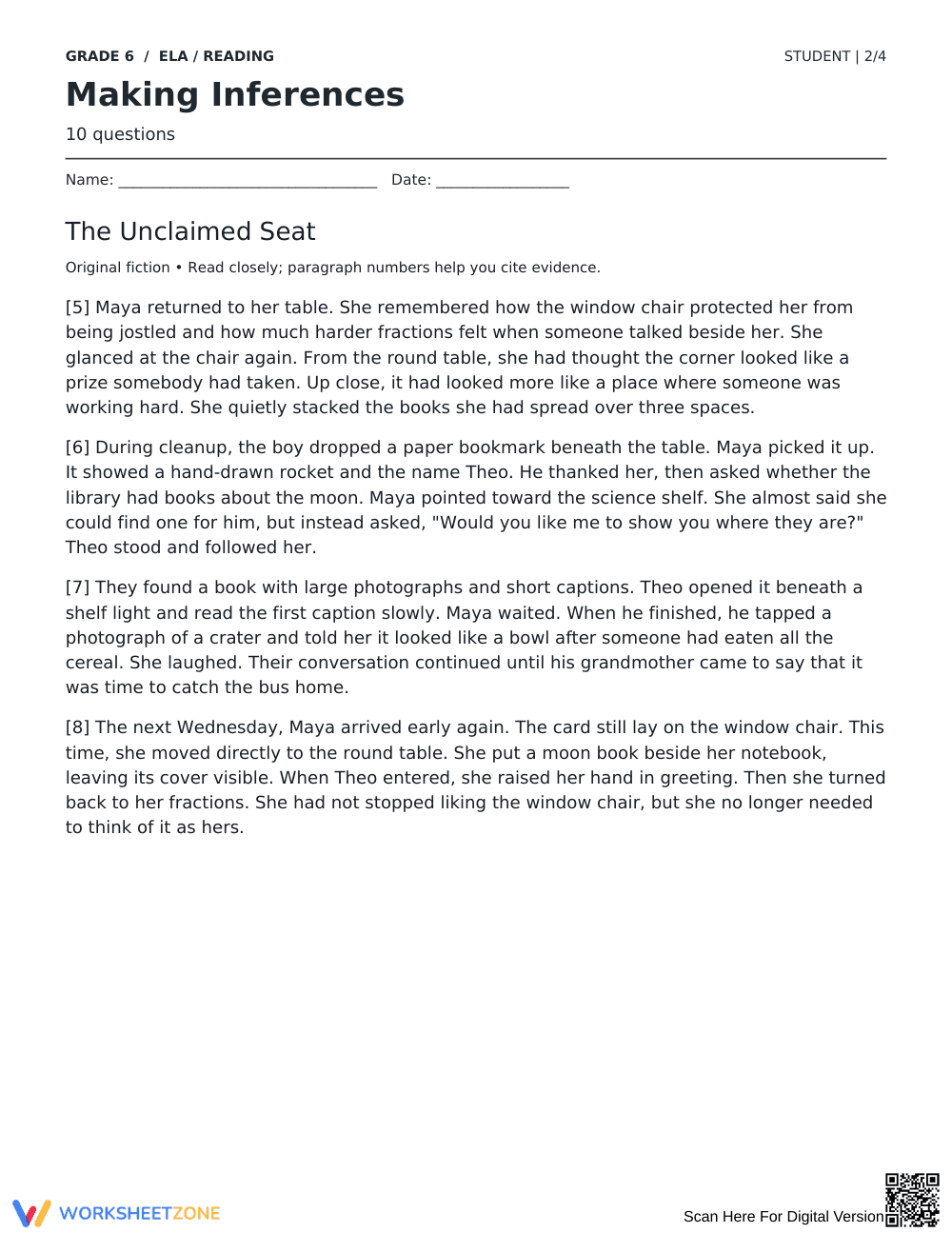
This Grade 6 reading comprehension worksheet develops student ability to draw inferences from literary text and cite textual evidence. Through an original short story, "The Unclaimed Seat," students analyze character behaviors, setting clues, and interpersonal dynamics to deduce unstated motivations and themes across ten targeted questions.
At a Glance
- Grade: 6 · Subject: Reading
- Standard:
CCSS.ELA-LITERACY.RL.6.1— Cite textual evidence to support inferences drawn from stories- Skill Focus: Inferential comprehension and evidence citation
- Format: 4 pages · 10 problems · Answer key included · PDF
- Best For: Independent practice and close reading
- Time: 25–35 minutes
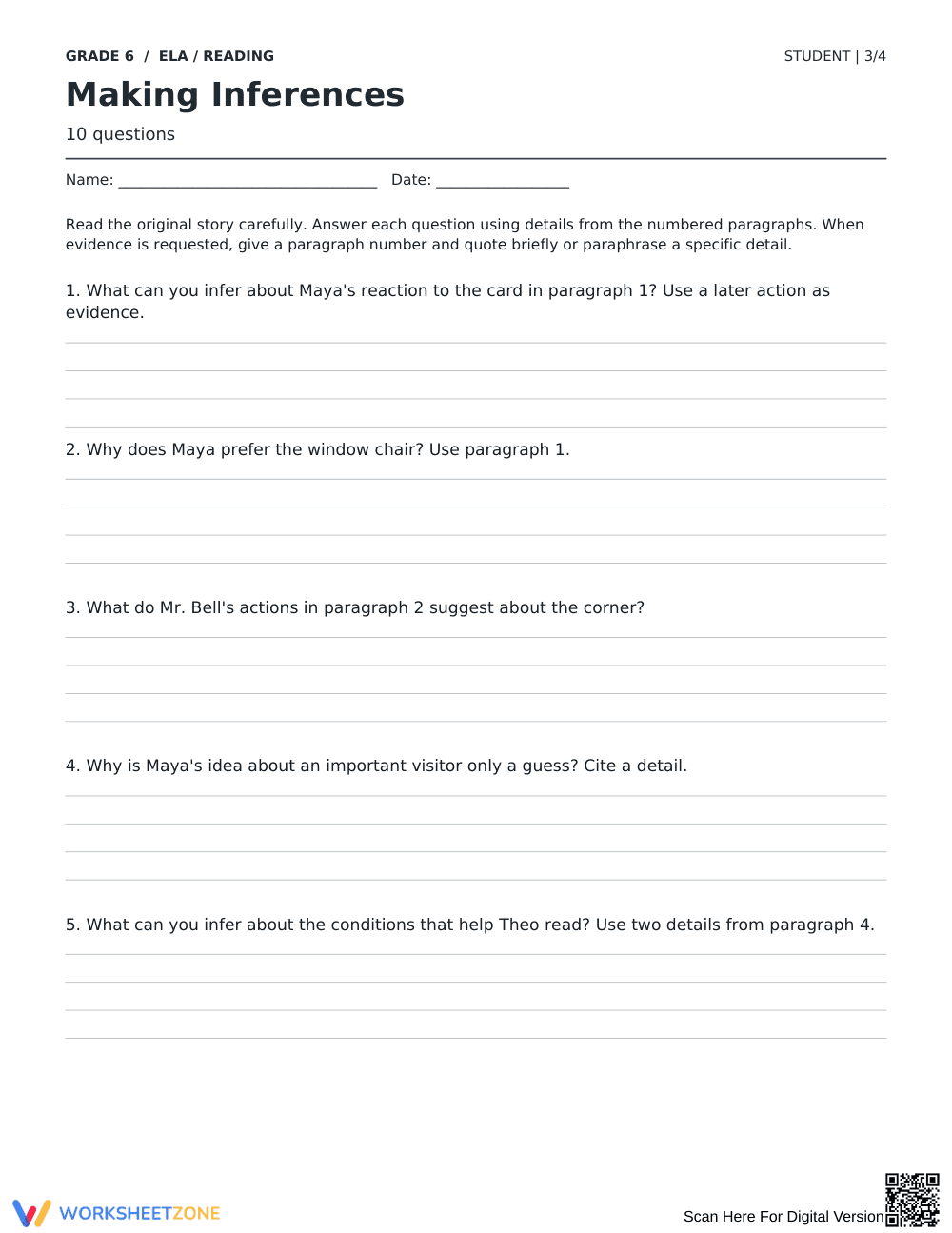
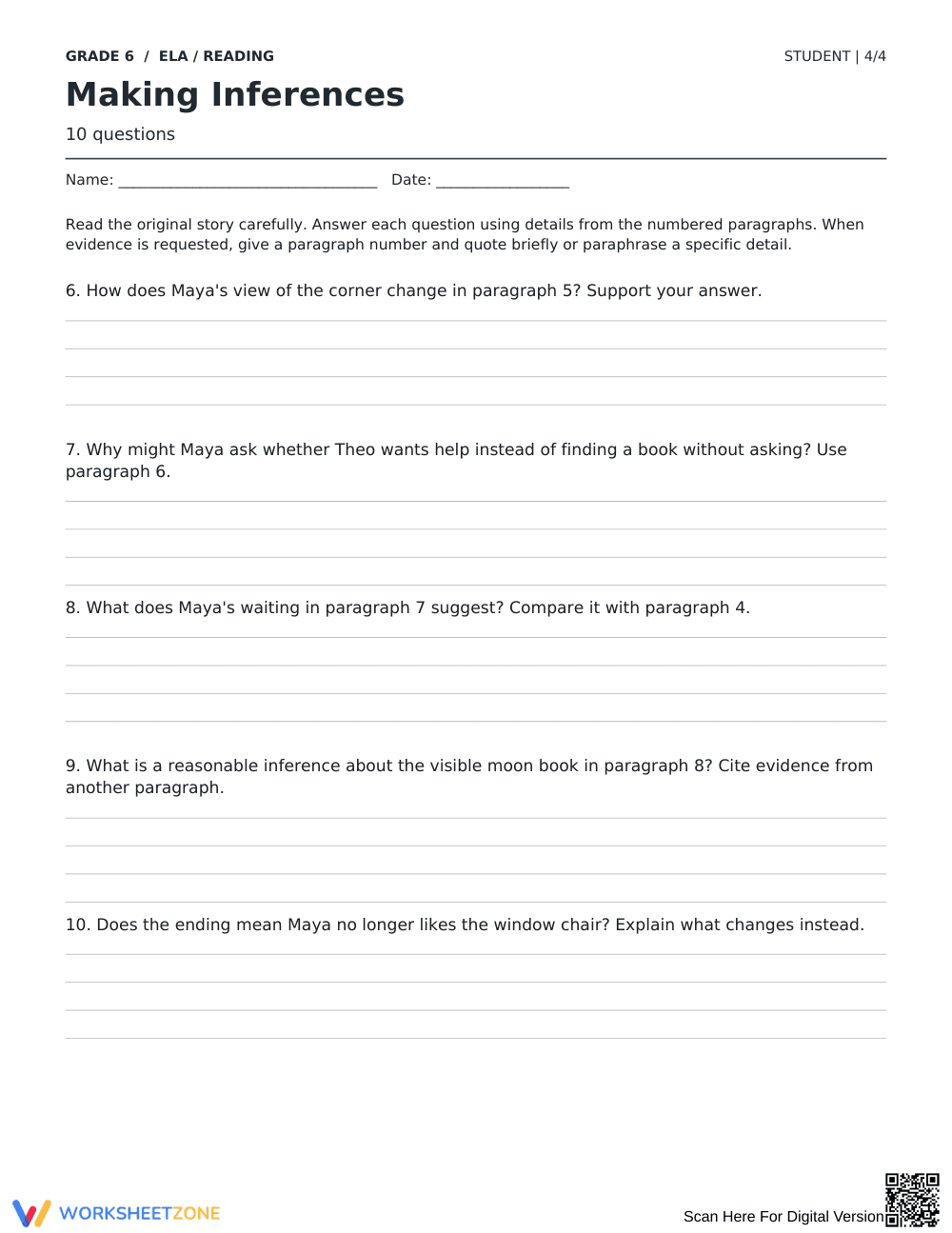
The four-page student packet features a two-page numbered narrative followed by 10 open-response analytical questions that require paragraph numbers and brief text citations. A two-page answer key provides clear scoring guidance and model responses for every item.
Skill Progression
- Guided practice (Questions 1–3): Prompts focus on immediate emotional cues and physical actions, directing students to specific paragraphs to establish evidence-citing habits.
- Supported practice (Questions 4–6): Prompts require evaluating character motivations and contrasting assumptions with reality using multiple textual details.
- Independent practice (Questions 7–10): Questions challenge students to synthesize multi-paragraph clues, compare separate scenes, and explain character growth.
This gradual-release structure moves learners from scaffolded evidence location toward independent textual analysis.
Standards Alignment
The primary standard addressed is `CCSS.ELA-LITERACY.RL.6.1`, requiring students to cite textual evidence to support explicit analysis and inferences drawn from literary texts. This worksheet also supports `CCSS.ELA-LITERACY.RL.6.3` by prompting students to trace how characters respond as the plot unfolds. Both standard codes can be copied directly into lesson plans, IEP goals, or district curriculum mapping tools.
How to Use It
Use this worksheet after direct instruction on close reading strategies, either during small-group rotations or as an independent task. As a formative check, observe whether students merely locate facts or explain how their cited details justify each inference. Most students complete the 10 questions within 25 to 35 minutes.
Who It's For
This resource serves general education sixth-grade classes, reading intervention groups, and middle schoolers needing structured evidence-based writing routines. It pairs effectively with an anchor chart illustrating the formula for making inferences using text clues plus background knowledge.
Aligned with CCSS.ELA-LITERACY.RL.6.1, this Grade 6 worksheet develops the foundational reading comprehension skill of drawing logical inferences and citing textual evidence from literature. Research by Fisher & Frey (2014) demonstrates that close reading routines requiring students to return directly to numbered paragraphs for text-dependent evidence significantly improve reading comprehension and analytical writing in adolescent learners. By engaging with 10 structured open-ended prompts linked to a coherent 8-paragraph narrative, students learn to distinguish between what an author states explicitly and what must be deduced through subtle character behaviors and contextual details. The included two-page answer key provides clear scoring criteria and model responses, offering teachers an efficient tool to diagnose inferential reasoning gaps and track progress toward grade-level mastery. As students construct written arguments grounded in textual proof, they build the critical habits necessary for rigorous secondary literary analysis.


