


























Views
Downloads

Printable Making 10 Worksheet | Grade 1-3 Essential
Paste this activity's link or code into your existing LMS (Google Classroom, Canvas, Teams, Schoology, Moodle, etc.).
Students can open and work on the activity right away, with no student login required.
You'll still be able to track student progress and results from your teacher account.
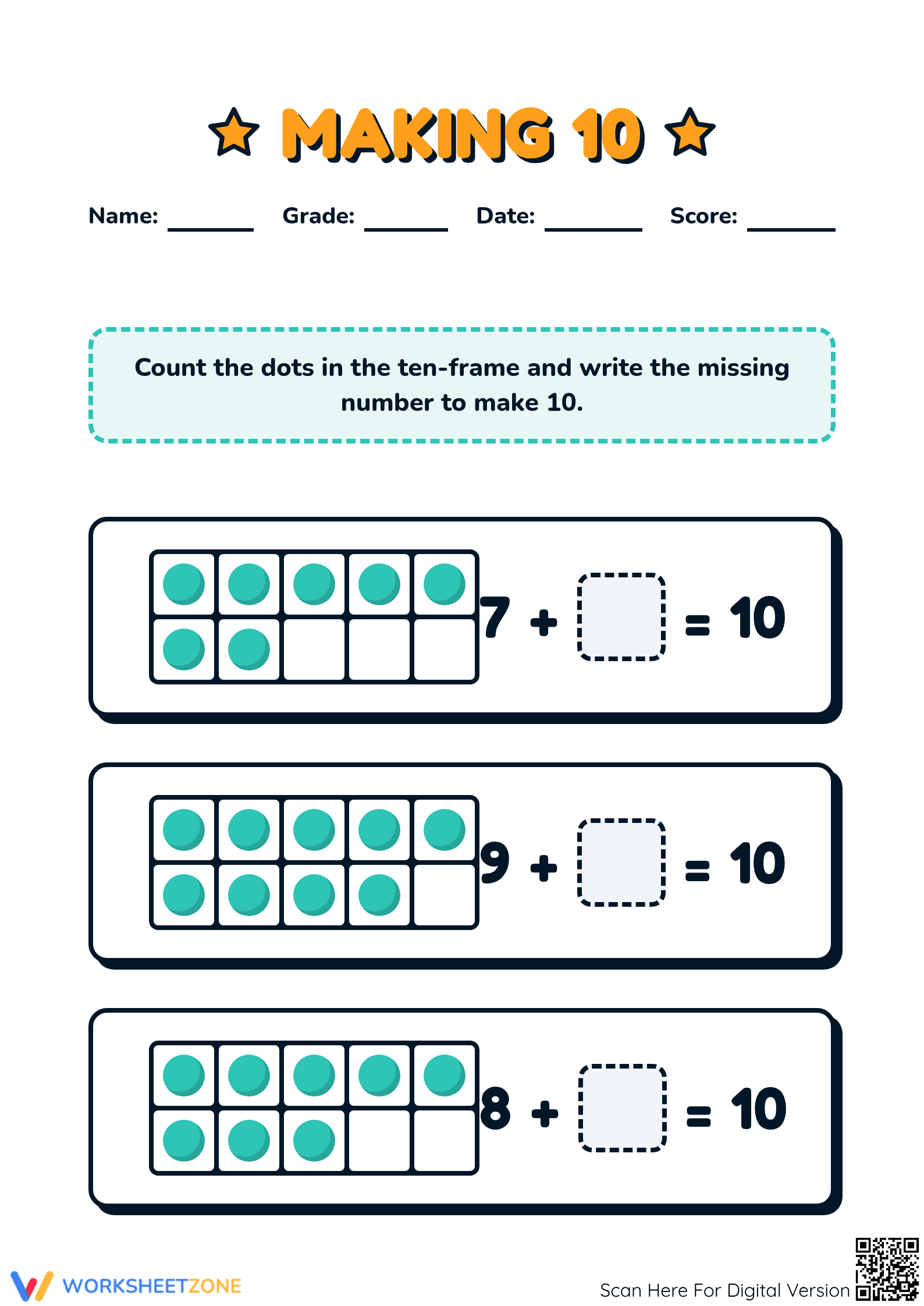
This printable math worksheet helps students master the foundational skill of making ten using visual ten-frame models. By counting existing dots and identifying the missing addend, learners build the mental math fluency required for complex arithmetic. This resource ensures students transition from concrete counting to abstract number sense with confidence and accuracy.
At a Glance
At a Glance
- Grade: 1-3 · Subject: Math
- Standard:
CCSS.MATH.CONTENT.1.OA.C.6— Find number pairs that sum to ten using visual ten-frame models- Skill Focus: Making 10 with Ten-Frames
- Format: 3 pages · 8 problems · Answer key included · PDF
- Best For: Daily math warm-ups and morning work
- Time: 10–15 minutes
What's Inside
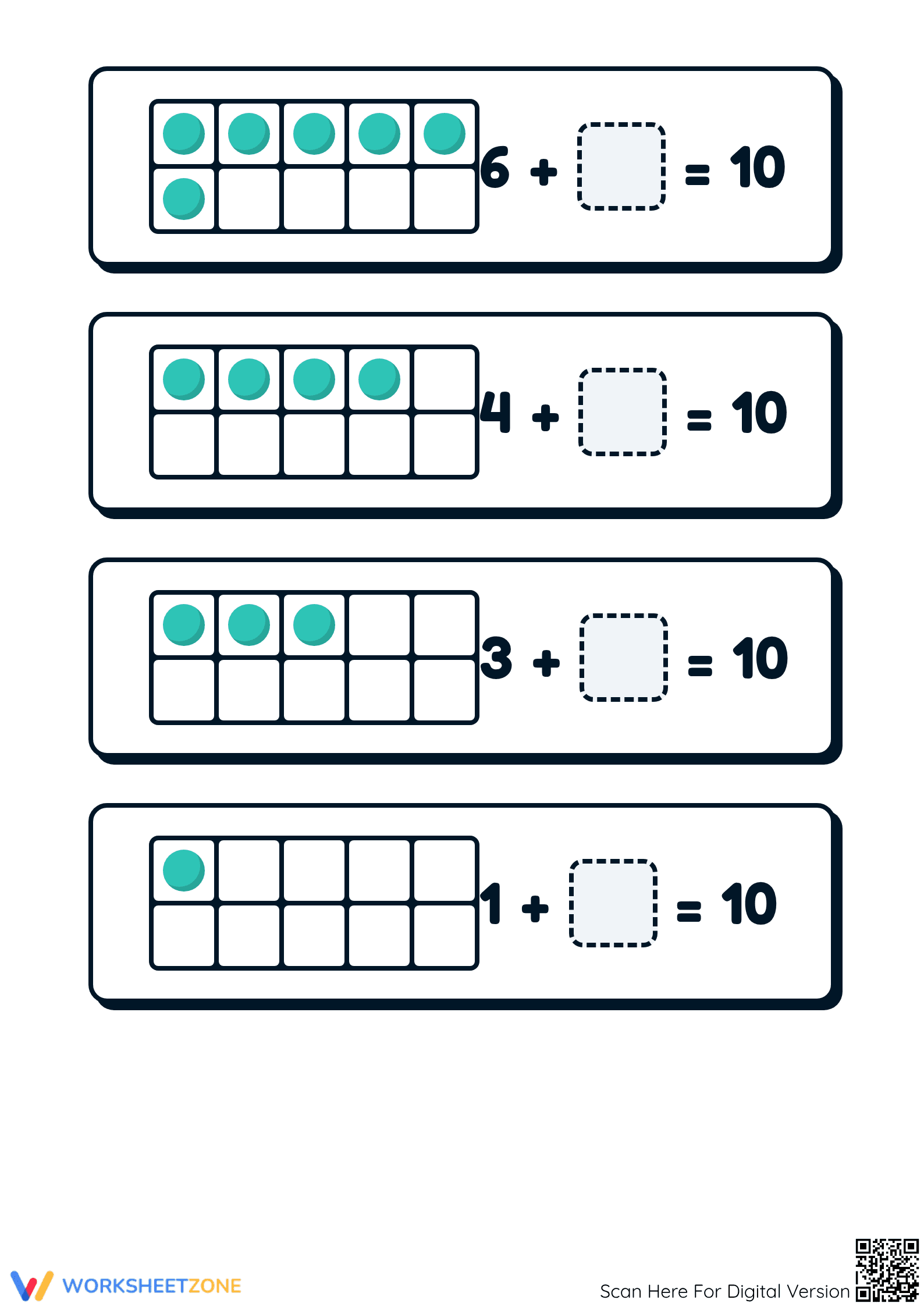
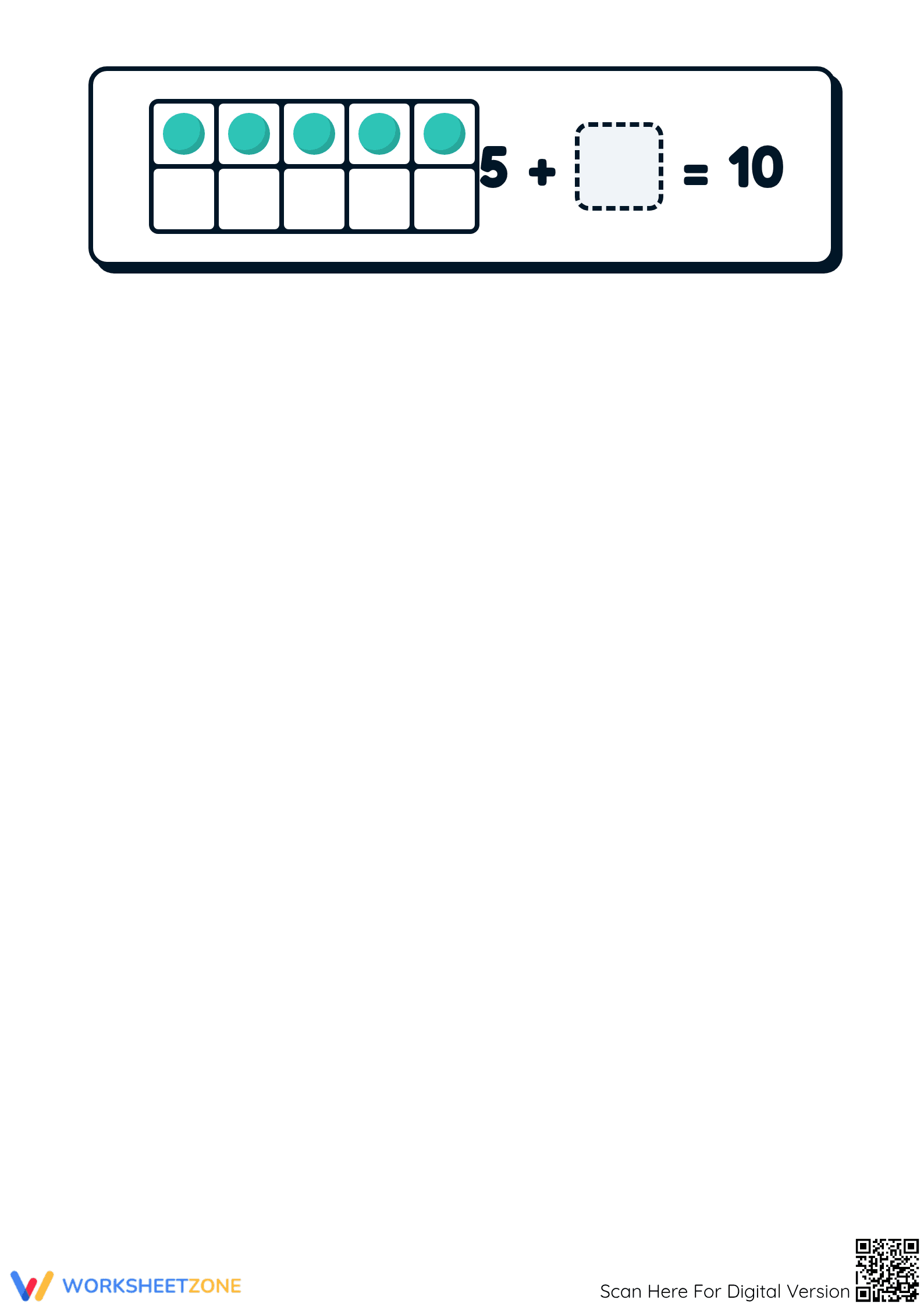
The worksheet contains eight structured ten-frame tasks spread across three pages. Each problem features a clear ten-frame visualization with a specific number of dots already filled in. Students must count the dots, determine how many more are needed to reach ten, and write the corresponding digit in the provided box. A complete answer key is included for rapid grading.
Zero-Prep Workflow
This resource is designed for immediate classroom use with a total teacher prep time under two minutes. Step one: Print the three-page PDF and make copies for your student roster. Step two: Distribute the worksheets as a transition activity or sub plan. Step three: Review the visual models as a whole class or allow for independent completion during a quiet work block.
Standards Alignment
The primary standard addressed is CCSS.MATH.CONTENT.1.OA.C.6, which requires students to add and subtract within 20, demonstrating fluency for addition and subtraction within 10. This activity also supports CCSS.MATH.CONTENT.K.OA.A.4 by providing the visual scaffolds necessary to find the number that makes 10 when added to any given number. Both standard codes can be copied directly into lesson plans, IEP goals, or district curriculum mapping tools.
How to Use It
Use this worksheet during your Number Talk or morning meeting to reinforce decomposition. For a formative-assessment observation, watch if students count the empty boxes one-by-one or if they see the missing number instantly. Most students will complete the entire set within 10 to 15 minutes, making it an ideal exit ticket to gauge readiness for teen-number operations.
Who It's For
This resource is tailored for first-grade students but serves as an excellent intervention tool for second and third graders who need a visual refresher on number pairs. It pairs perfectly with physical manipulatives like counters or an anchor chart displaying the rainbow of friends of ten. The large, clear ten-frame graphics support learners who struggle with abstract notation alone.
Mathematical fluency is not merely the speed of recall but the ability to use relationships between numbers strategically. This Making 10 worksheet utilizes the ten-frame as a semi-concrete representational model to bridge the gap between physical objects and numeric symbols. According to Fisher & Frey (2014), the gradual release of responsibility begins with such focused, scaffolded tasks that allow students to internalize patterns before moving to unassisted problem-solving. By isolating the specific goal of reaching the ten-sum, this resource reduces cognitive load and allows students to focus on the structure of the base-ten system. Research from NAEP suggests that early mastery of these foundational anchors is a significant predictor of later success in multi-digit addition and subtraction. Using the standard code CCSS.MATH.CONTENT.1.OA.C.6, teachers can document student progress toward the core fluency requirements of the primary grades while providing the visual support necessary for diverse learners.


