


























Views
Downloads

Grade 3 Magnetism — Printable No-Prep Worksheet
Paste this activity's link or code into your existing LMS (Google Classroom, Canvas, Teams, Schoology, Moodle, etc.).
Students can open and work on the activity right away, with no student login required.
You'll still be able to track student progress and results from your teacher account.
This Grade 3 science worksheet helps students identify magnetic and non-magnetic objects through visual sorting. By evaluating everyday items and determining their magnetic properties, young learners build a foundational understanding of physical forces in a highly engaging, accessible format.
At a Glance
- Grade: 3 · Subject: Science
- Standard:
3-PS2-3— Determine magnetic interactions between objects- Skill Focus: Identifying magnetic and non-magnetic objects
- Format: 2 pages · 2 tasks · Answer key included · PDF
- Best For: Independent practice or science centers
- Time: 10–15 minutes
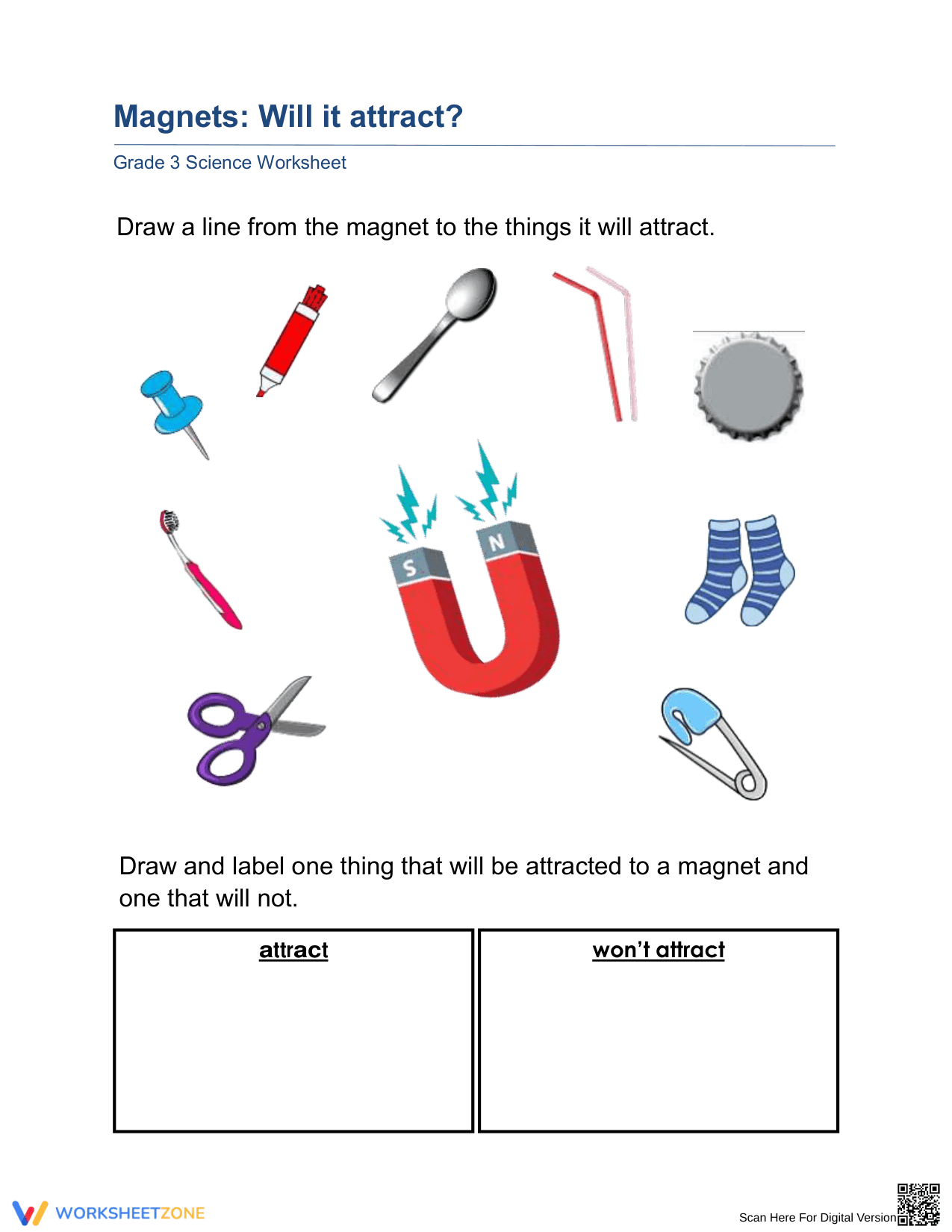
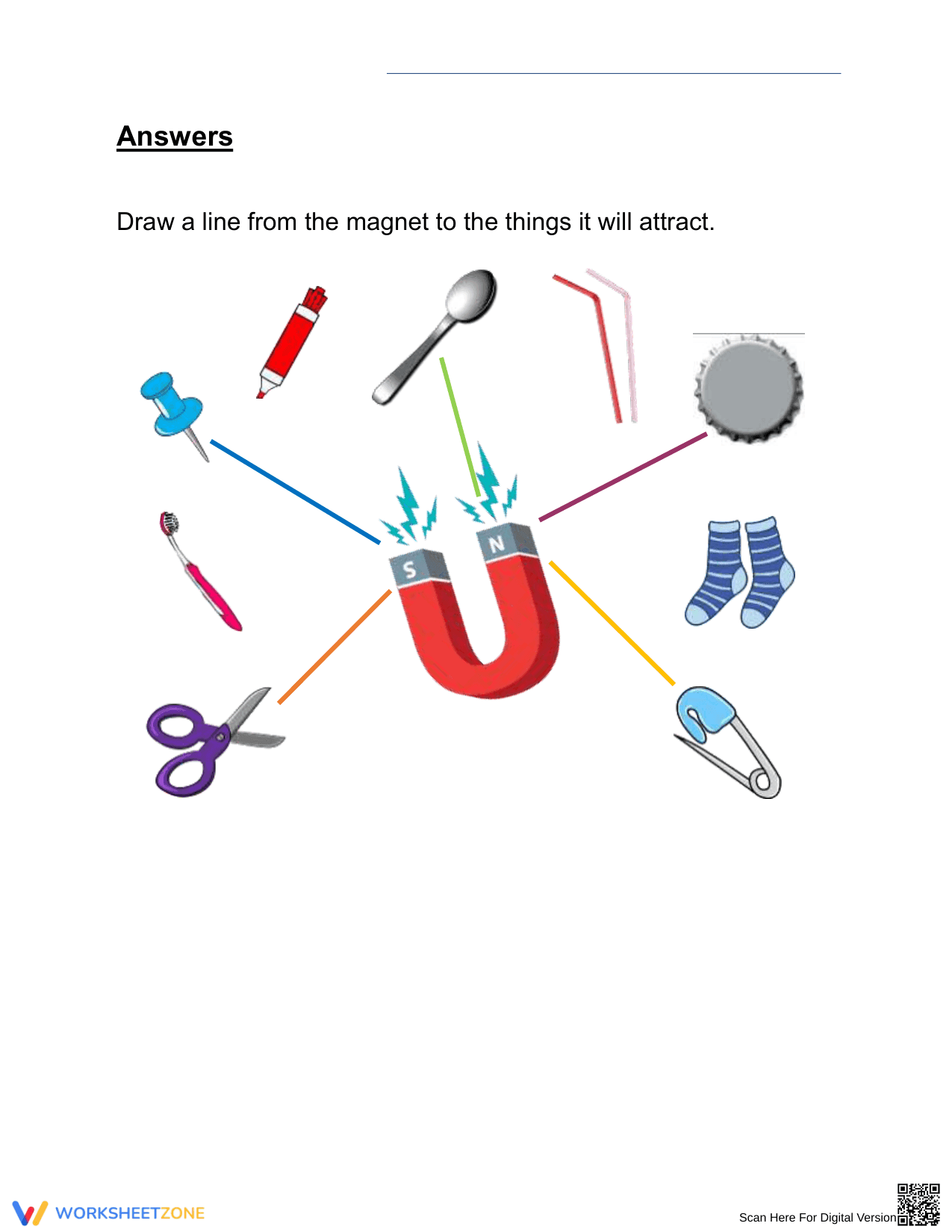
This resource features a single-page activity sheet accompanied by a complete visual answer key. The primary task requires students to draw lines connecting a central horseshoe magnet to various everyday objects, such as a metal spoon and paperclip, while ignoring non-magnetic items like socks. A secondary task prompts students to draw and label one original example of an object that will attract to a magnet and one that will not.
Designed for immediate classroom implementation, this worksheet requires zero teacher setup.
- Print (1 minute): Simply print the PDF.
- Distribute (1 minute): Hand out the activity sheet during your science block.
- Review (1 minute): Use the included visual answer key to quickly check student work.
With a total prep time of under two minutes, this resource is an excellent addition to any emergency sub plan.
This activity is aligned to 3-PS2-3: Ask questions to determine cause and effect relationships of magnetic interactions between two objects. By categorizing materials based on their magnetic properties, students gather observational evidence of these forces. Both standard codes can be copied directly into lesson plans, IEP goals, or district curriculum mapping tools.
This worksheet fits perfectly into the "You Do" phase of a gradual release lesson model. After a whole-class demonstration using real magnets, assign this sheet to assess individual comprehension. As a formative assessment tip, observe which objects students choose to draw in the second task; this reveals if they understand that material composition determines magnetic attraction. Expect students to complete the activity in 10 to 15 minutes.
This resource is designed for third-grade students, though it serves as an excellent review for older students. The clear visuals make it highly accessible for English Language Learners. Pair this worksheet with a hands-on sorting station where students can test real magnets against the exact items pictured on the page.
Understanding physical forces through direct observation is a critical component of early elementary science education. When students practice identifying magnetic and non-magnetic objects, they are building the foundational schema required for more complex physics concepts in later grades. According to a ScienceDirect TpT Analysis, instructional materials that combine visual matching with generative tasks—such as drawing and labeling original examples—significantly improve long-term retention of scientific vocabulary and concepts. This resource directly supports 3-PS2-3 by requiring learners to categorize materials based on their unseen physical properties. Providing immediate visual feedback through structured activities allows educators to quickly identify misconceptions regarding material science. By integrating these targeted practice sheets into a broader curriculum, teachers ensure that students develop a robust, evidence-based understanding of how the physical world operates, setting the stage for future scientific inquiry.


